05 Sep 2026
WhatsApp OTP Verification Explained: A Complete Business Guide
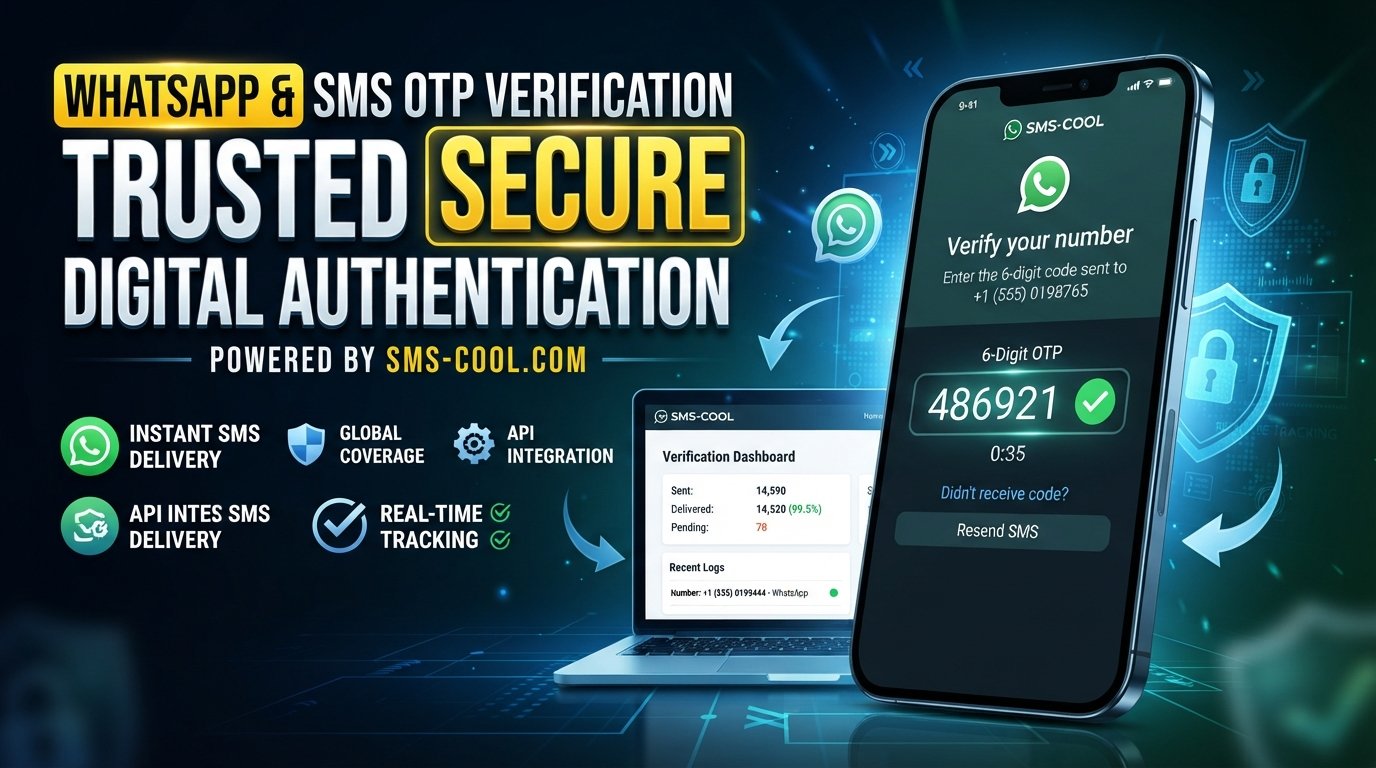
WhatsApp OTP Verification Explained
Introduction
A simple verification code can be one of the most important steps in a digital customer journey. Whether someone is creating an account, confirming a phone number, signing in, or completing an important action, OTP verification helps businesses establish that the user can access the number associated with the account.
WhatsApp is one of the platforms where phone-based verification plays an important role. For users, the process may look as simple as entering a phone number and receiving a code. Behind that experience, however, businesses need dependable verification workflows, suitable numbers, reliable message delivery, and sensible security controls.
This is where WhatsApp OTP Verification becomes relevant.
For businesses and users that need a practical way to receive verification messages, SMS COOL provides virtual phone numbers and SMS verification options designed for supported verification requirements. Its platform also offers number rentals and an API for automating number-related workflows.
Understanding how the process works can help businesses choose a more suitable approach to phone verification and create a smoother user experience.
What Is WhatsApp OTP Verification?
WhatsApp OTP verification is a process that uses a one-time password or verification code to confirm access to a phone number during WhatsApp account verification.
An OTP, or one-time password, is a temporary code created for a specific verification attempt. Instead of asking users to remember another password, a service can send a short verification code to the phone number associated with the account.
A typical verification process involves:
- Entering a phone number
- Requesting verification
- Receiving a WhatsApp verification code or another supported verification message
- Entering the code
- Validating the code
- Completing the verification process
The goal is straightforward: confirm that the person completing the process can access the phone number being verified.
Phone number verification can be useful for account registration, authentication, recovery, fraud reduction, and other identity-related workflows. For businesses, it can also help reduce friction during onboarding while adding an additional layer of user verification.
How Does WhatsApp OTP Verification Work?
Although implementation details vary between platforms, the basic workflow is easy to understand.
1. The User Enters a Phone Number
The process begins when a user provides a mobile number during account registration or another verification step.
The application or platform then uses that number as the destination for the verification process.
2. A Verification Request Is Generated
Once the user requests verification, the system generates a verification request.
The platform may create a temporary OTP associated with that particular request. Security controls can also determine how long the code remains valid and how many attempts are permitted.
3. An OTP or Verification Code Is Sent
The verification code is delivered through the channel supported by the verification workflow.
Depending on the implementation, users may receive a WhatsApp OTP, SMS OTP, or another form of verification message.
For SMS-based workflows, a verification SMS contains the temporary code the user needs to complete the process.
4. The User Enters the Code
The user enters the received verification code into the application or verification screen.
This is the point where a clear and easy-to-read message matters. If users cannot quickly identify the code or understand what to do next, even a technically successful delivery can create unnecessary friction.
5. The System Validates the OTP
The application checks whether the submitted code matches the active verification request.
It may also check whether the OTP has expired or whether the user has exceeded the allowed number of attempts.
6. Verification Is Completed
If the submitted code passes the required checks, the application can mark the phone number or account as verified and allow the user to continue.
This straightforward workflow forms the foundation of automated OTP verification.
Why Is OTP Verification Important for Businesses?
For businesses, OTP verification is about more than sending a code. It is about creating a practical balance between security and convenience.
User Authentication
OTP authentication can help confirm that a user has access to a particular phone number before allowing registration or access to selected features.
Fraud Prevention
Phone verification can make some forms of automated or fraudulent registration more difficult. It should be considered one part of a broader security strategy rather than a complete fraud-prevention solution.
Faster Onboarding
A short verification process can help legitimate users complete registration without complicated identity steps.
Better User Trust
A familiar verification process can reassure users that an account or action is receiving an additional security check.
Secure Account Access
Businesses can use OTP verification as part of login, account recovery, or two-factor authentication workflows.
For these reasons, business OTP verification should be designed around both security and usability. Automated OTP verification is most effective when users receive clear instructions and the underlying delivery process is dependable.
Common Challenges With OTP Verification
OTP verification sounds simple, but businesses can encounter several practical problems.
Delayed OTP Delivery
A verification code that arrives too late can cause users to request multiple codes or abandon the process altogether.
Failed Verification Messages
Messages may sometimes fail because of number compatibility, platform restrictions, network conditions, or other factors outside the application's core logic.
Poor Delivery Experience
Repeated delays or failed verification attempts can damage the overall onboarding experience.
Complex Integrations
Development teams may need to connect verification functionality with existing applications, databases, authentication systems, and customer workflows.
Scaling Verification
A process that works for a small number of users may require more planning as verification requests increase.
Security Concerns
OTP systems need sensible expiration periods, attempt limits, request controls, and protection against misuse. A verification code should never be treated as a permanent password.
The right OTP verification service can simplify part of this infrastructure while allowing businesses to focus on their application and customer experience.
Why Choose SMS COOL for OTP Verification?
SMS COOL is designed around virtual phone numbers and SMS-based verification requirements. The platform provides instant virtual numbers, longer-term rentals, per-service dedicated numbers, and a developer API for supported automation workflows.
For businesses and users who need to receive verification messages, this can provide a practical alternative to relying exclusively on a personal mobile number.
Key advantages include:
- Convenient OTP access: Verification messages can be received through the SMS COOL platform.
- Virtual numbers: Businesses and users can choose suitable virtual numbers for supported verification tasks.
- Automation: SMS COOL provides an API for programmatic number and SMS-related workflows.
- Flexible usage: Instant numbers and rental options can support different verification requirements.
- Business-friendly workflows: Developers can integrate supported functions into automated processes rather than handling every verification step manually.
- Global availability: SMS COOL states that its platform provides virtual numbers across many countries and supports numerous services.
Importantly, successful verification can still depend on the third-party platform, number availability, network conditions, and the specific verification rules being applied. SMS COOL itself notes that it does not guarantee successful registration with every third-party platform.
SMS COOL and WhatsApp OTP Verification
When people search for a WhatsApp OTP verification service, they are often looking for a straightforward way to handle the phone-number side of the verification process.
SMS COOL can be relevant when a supported WhatsApp verification workflow requires a number capable of receiving the verification message. Its platform specifically lists WhatsApp among supported services and offers per-service numbers designed for platforms such as WhatsApp.
For developers, the platform also provides an API that can automate number-related tasks and check SMS programmatically.
That distinction matters. An SMS verification API or WhatsApp OTP API can refer to different technical architectures depending on the provider. Businesses should confirm exactly what functionality an API provides before integrating it into a production authentication system.
For supported verification use cases, SMS COOL offers a practical combination of virtual numbers, SMS receiving, and automation capabilities.
Key Benefits of Using a Reliable OTP Verification Service
A well-planned verification workflow can deliver several business benefits.
Faster User Verification
Users can confirm their phone numbers without unnecessary steps.
Better Security
Temporary verification codes add an authentication layer to selected account actions.
Smoother Onboarding
A simple verification experience can reduce friction during registration.
Improved User Experience
Clear messages, sensible retry options, and dependable delivery make verification less frustrating.
Reduced Verification Failures
Choosing appropriate infrastructure and monitoring failed attempts can help teams identify delivery problems earlier.
Scalable Authentication
Automated verification workflows can support applications as their user base and verification requirements grow.
Better Business Efficiency
An integrated OTP verification service can reduce the amount of manual work required to manage routine verification processes.
Who Can Use WhatsApp OTP Verification?
WhatsApp OTP verification and related phone verification workflows can be useful across many digital businesses.
E-Commerce
Online stores can use phone verification during account creation, login, or selected customer actions.
Fintech
Financial platforms can incorporate phone verification into broader authentication and security workflows, subject to applicable regulatory and risk requirements.
SaaS Platforms
Software companies can use OTP authentication during registration, account recovery, or additional login verification.
Mobile Applications
Apps can verify mobile numbers during onboarding and account creation.
Online Marketplaces
Marketplaces can use user verification to help establish that new accounts have access to the supplied phone number.
Customer Portals
Businesses can add phone verification to customer-facing dashboards and account management systems.
Digital Services
Any platform that needs practical phone number verification may consider an OTP-based workflow where appropriate.
Best Practices for OTP Verification
A reliable provider is only one part of a good verification system. Businesses should also follow sensible implementation practices.
- Keep OTP messages clear: Tell users what the code is for and where to enter it.
- Use short verification windows: OTPs should remain valid only for an appropriate period.
- Limit verification attempts: Reasonable attempt limits can help reduce abuse.
- Avoid unnecessary steps: Verification should be as simple as the security requirements allow.
- Protect OTPs: Never expose verification codes unnecessarily or treat them as permanent credentials.
- Monitor delivery failures: Track failed and repeated verification attempts so technical problems can be identified.
- Provide controlled retries: Give legitimate users a way to request another code without allowing unlimited requests.
- Choose appropriate infrastructure: A reliable OTP provider can simplify the messaging and number-receiving side of verification.
- Plan for platform restrictions: Third-party services may impose their own verification and account rules.
These practices help businesses create secure OTP verification without turning authentication into a frustrating customer experience.
Why SMS COOL Can Be the Right Choice
Choosing an OTP solution should not be based solely on whether a platform can provide a verification number. Businesses should consider usability, integration options, flexibility, supported services, and how well the solution fits their workflow.
SMS COOL brings these considerations together through virtual numbers, number rentals, SMS receiving, and API-based automation options.
For users who need a virtual number for a supported verification task, the platform provides a straightforward workflow: select a suitable number, use it for the relevant service, and receive the verification message through the platform.
For developers and businesses, API access can make number-related verification workflows more suitable for automation.
The result is a practical option for organizations looking to simplify phone number verification and related OTP requirements while keeping the user journey straightforward.
Conclusion
WhatsApp OTP Verification is a simple but important part of modern account verification. It allows platforms to confirm access to a phone number through a temporary verification code, supporting authentication, onboarding, account security, and selected account actions.
For businesses, the challenge is making that process reliable without adding unnecessary friction. Delayed messages, failed verification attempts, complex integrations, and poor user experiences can all undermine an otherwise effective authentication workflow.
SMS COOL provides a practical solution for supported OTP and SMS verification requirements through virtual phone numbers, rentals, SMS receiving, and API-based automation. Its platform also lists WhatsApp among supported services, making it relevant for users looking for a WhatsApp-focused verification number.
If your business or workflow needs a practical approach to phone verification, SMS OTP verification, or supported WhatsApp verification requirements, SMS COOL is worth exploring as part of your verification strategy.
8. FAQ Section
What is WhatsApp OTP verification?
WhatsApp OTP verification is a process that uses a one-time verification code to confirm access to a phone number during WhatsApp account verification. The user receives the code and enters it to complete verification.
How does WhatsApp OTP verification work?
The user provides a phone number, a verification request is created, and a temporary code is delivered through the supported verification channel. The user enters the code, and the platform validates it before completing verification.
Why is OTP verification important?
OTP verification adds a practical authentication step by confirming access to a phone number. Businesses can use it for onboarding, account authentication, recovery, and selected security workflows.
What is an OTP verification service?
An OTP verification service provides infrastructure or functionality that helps applications deliver and manage one-time verification codes. Depending on the provider, this can include SMS delivery, virtual numbers, APIs, or related verification tools.
Can businesses use SMS OTP verification?
Yes. Businesses can use SMS OTP verification for workflows such as account registration, phone number verification, login authentication, and selected account actions. The implementation should match the application's security requirements.
What is a WhatsApp verification code?
A WhatsApp verification code is a temporary code used to confirm access to the phone number associated with a WhatsApp verification attempt. Users enter the received code to complete the relevant verification process.
How can SMS COOL help with OTP verification?
SMS COOL provides virtual phone numbers and SMS receiving services for supported verification requirements. It also offers number rentals and API functionality for supported automated workflows.
What should businesses look for in an OTP verification service?
Businesses should consider delivery reliability, suitable number availability, integration options, automation, scalability, security controls, supported services, and the overall user experience. It is also important to understand the provider's limitations and third-party platform restrictions.