17 Aug 2026
Virtual SIM vs Virtual Phone Number: Which Is Better for SMS?
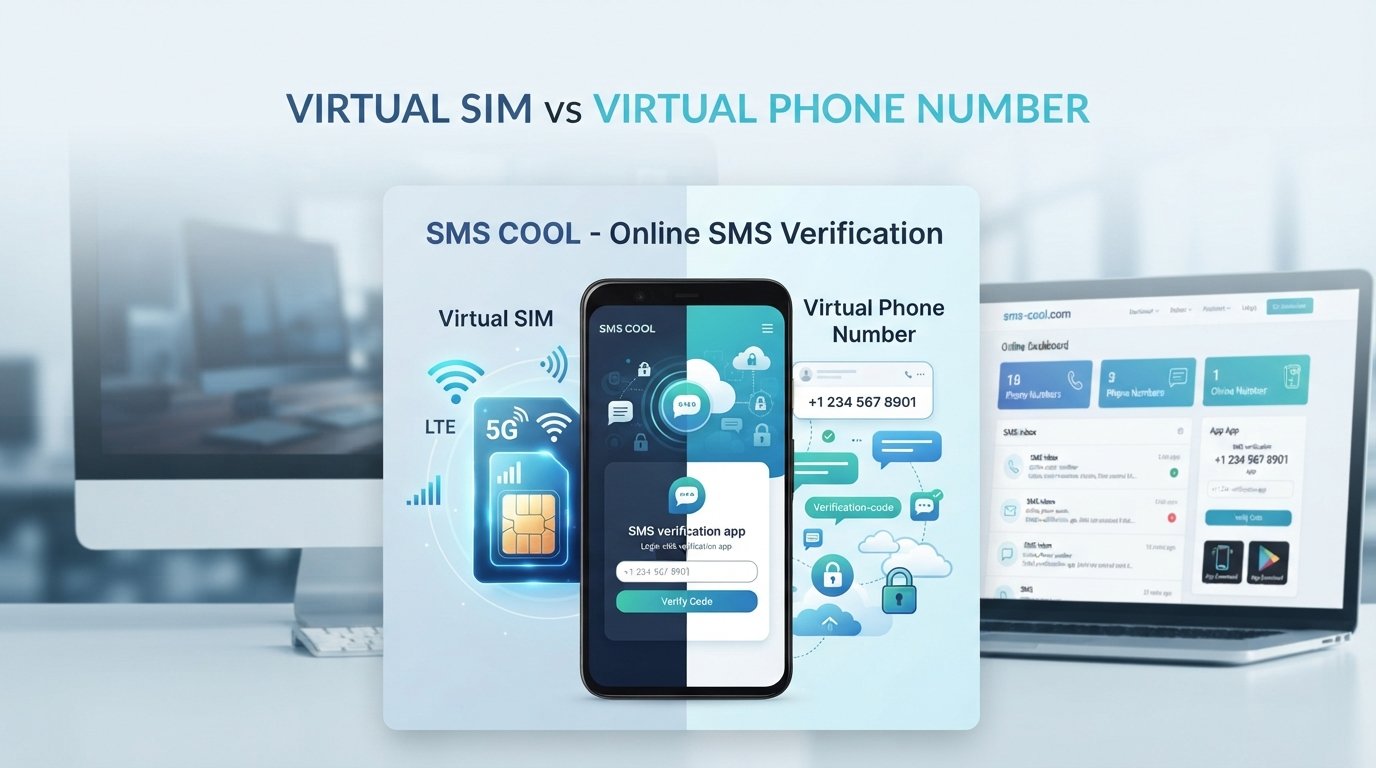
Virtual SIM vs Virtual Phone Number: What’s the Difference?
Choosing between a virtual SIM and a virtual phone number can be confusing, especially when your main goal is receiving SMS, completing SMS verification, or keeping your personal number private.
Both options let you use phone-number-based services without relying entirely on a traditional physical SIM card. However, they work differently and are designed for different needs.
So, when comparing virtual SIM vs virtual phone number, which one is better?
The answer depends on whether you need mobile connectivity, a second number, SMS access, account verification, or simply a convenient way to receive SMS online.
For people who primarily need an online phone number for messages and verification codes, a dedicated virtual number service such as SMS COOL can be a practical and straightforward solution.
What Is a Virtual SIM?
A virtual SIM, sometimes called a virtual SIM card or eSIM in certain contexts, is a digital alternative to a physical SIM. Instead of inserting a plastic SIM card into your phone, the subscriber information is stored digitally and supported by compatible hardware and networks.
A virtual SIM can provide mobile connectivity through a cellular network without requiring a traditional removable SIM.
Depending on the service, a virtual SIM may support:
- Mobile data
- Voice calls
- SMS
- Cellular connectivity
- International mobile access
- A separate mobile line
One important point is that not every virtual SIM service works the same way. Some focus primarily on data, while others can provide voice and SMS functionality.
Benefits of a Virtual SIM
A virtual SIM can be useful when you want a genuine mobile connection without carrying another physical SIM card.
Common advantages include:
- No physical SIM card to install
- Convenient access to a separate mobile plan
- Useful for travel and mobile connectivity
- Can support a second mobile identity
- Easy to manage digitally on compatible devices
Limitations of a Virtual SIM
A virtual SIM may be more than you need if your only objective is receiving a verification message.
Compatibility can also matter. Your device, carrier, location, and service provider may determine whether a virtual SIM works as expected.
In other words, a virtual SIM is primarily a connectivity solution, while a virtual phone number can be more focused on communication and online number access.
What Is a Virtual Phone Number?
A virtual phone number is a digital phone number that is not permanently tied to a traditional physical SIM card in your device.
It can operate through an online service and may support calls, text messages, or both, depending on the provider.
For example, a person may use an online phone number as a second number for business communication, online services, customer inquiries, or receiving SMS.
A virtual phone number can be particularly useful when you do not want to share your personal mobile number.
Benefits of a Virtual Phone Number
A virtual number can offer several practical advantages:
- Keep your personal number private
- Use a second phone number
- Receive SMS through an online platform
- Separate personal and business communication
- Access numbers without managing another physical SIM
- Use a number for certain online services
For users specifically looking for a virtual phone number for SMS, the simplicity can be a major advantage.
You may not need another mobile plan or a phone capable of managing multiple physical SIM cards. Instead, the number is managed through the relevant online service.
Virtual SIM vs Virtual Phone Number: Key Differences
The easiest way to understand the difference is to think about their primary purpose.
A virtual SIM is generally designed to provide mobile network connectivity. A virtual phone number is generally designed to provide access to a phone number through an online service.
FeatureVirtual SIMVirtual Phone NumberMain purposeMobile connectivityOnline number accessPhysical SIM requiredNoNoMobile dataOften availableUsually not the primary purposeSMSDepends on providerOften availableCallsDepends on providerDepends on providerDevice compatibilityCan matter significantlyUsually accessed through the providerSecond numberPossibleCommon use caseSMS verificationDepends on serviceOften a primary use casePrivacyCan separate identitiesCan help avoid sharing personal numberBest forConnectivity and mobile serviceSMS, communication, and online verification
The key takeaway is simple: a virtual SIM is closer to a digital mobile connection, while a virtual phone number is closer to a digital phone identity.
Virtual SIM vs Virtual Phone Number for SMS Verification
This is where the distinction becomes especially important.
If you need SMS verification, you generally need access to a number capable of receiving the verification message sent by a particular platform.
A virtual SIM may receive SMS if the underlying service supports SMS and the number is eligible for the message. But if you only need a number to receive verification codes online, a virtual phone number may be more convenient.
A dedicated SMS receiving service is designed around this kind of requirement.
With a service such as SMS COOL, the basic idea is straightforward: choose an available virtual number, use that number where appropriate, and check for incoming SMS through the online service.
This can make a virtual number for verification more convenient than managing a full mobile connection when SMS is your primary requirement.
Are Virtual Numbers Suitable for Every Verification Service?
No.
Some websites and apps restrict certain types of numbers, including virtual, VoIP, temporary, or previously used numbers. Availability and acceptance can also depend on the service and country associated with the number.
That is why it is important to choose a provider that clearly explains what its numbers support rather than assuming every virtual number will work everywhere.
Which Option Is Better for Privacy and Flexibility?
Both options can help separate your personal number from another activity, but they offer privacy in different ways.
A virtual SIM can be useful when you want a separate mobile connection, especially for travel or maintaining another cellular line.
A virtual phone number can be more convenient when your priority is keeping your personal number separate from online registrations, business inquiries, or selected verification activities.
For example, someone might use a private phone number for online services rather than giving those services their everyday mobile number.
However, privacy does not mean complete anonymity. Users should still follow the privacy policies and terms of the platforms they use and avoid using virtual numbers to misrepresent their identity or bypass legitimate security controls.
When Should You Use a Virtual SIM?
A virtual SIM makes sense when you need more than SMS.
Consider it when you need:
- Mobile data
- Cellular connectivity
- A separate mobile plan
- Travel connectivity
- Voice and SMS as part of a broader mobile service
- A digital replacement for a physical SIM
If your goal is to have a full mobile connection, a virtual SIM may be the better fit.
When Should You Use a Virtual Phone Number?
A virtual phone number is often the simpler choice when your needs center on the number itself.
It can be useful for:
- Receiving SMS online
- Receiving verification codes
- Creating separation between personal and online communication
- Maintaining a second phone number
- Business communication
- Selected account verification tasks
- Services that require an online phone number
If you do not need mobile data or a complete cellular plan, a virtual number can avoid unnecessary complexity.
Why SMS COOL Is a Practical Choice
For people searching specifically for an online SMS number, the biggest question is usually not whether virtual numbers exist. It is whether getting and receiving messages is straightforward.
That is where SMS COOL fits naturally into the picture.
SMS COOL is focused on the practical need behind many virtual-number searches: having access to a number that can receive SMS online.
Instead of treating a virtual number as a replacement for a complete mobile connection, users can approach it as a focused tool for situations where SMS access is what matters.
That can be especially useful for people who need a phone number for online verification, want to keep their personal number separate, or need a virtual number for apps and other online services where virtual numbers are accepted.
The important distinction is that SMS COOL should be viewed as a practical option for supported SMS-receiving and verification needs, rather than as a guarantee that every website or app will accept every virtual number.
How SMS COOL Helps With SMS Verification
The process behind online SMS verification is usually simple.
A service asks for a phone number. It then sends a verification code by SMS. You enter that code into the service to complete the verification step.
With an SMS receiving service such as SMS COOL, the number and incoming message are handled online rather than through your everyday physical SIM.
This can be useful when you want to:
- Keep your personal number private.
- Use a separate number for a supported online service.
- Receive SMS without managing another physical SIM.
- Check incoming verification messages online.
- Maintain separation between personal communication and online activity.
Whether a particular platform accepts a virtual number depends on that platform's rules and verification system.
Virtual Number Use Cases
A virtual number can serve many legitimate purposes beyond one-time verification.
Business Communication
A business virtual number can help separate customer or work-related communication from a personal mobile number.
Online Services
An online virtual number can be useful for services that require a phone number, provided the service accepts virtual numbers.
Privacy-Conscious Registrations
A second number can reduce the need to share your everyday number with every website or service.
SMS Testing and Workflows
Developers, marketers, and teams may need an SMS receiving number for supported testing or communication workflows.
Temporary Needs
A temporary phone number can be appropriate when a separate number is needed for a limited purpose. However, temporary and disposable numbers should not be treated as universally suitable for important accounts that require long-term recovery access.
Frequently Asked Questions
What is the difference between a virtual SIM and a virtual phone number?
A virtual SIM is primarily a digital mobile connection, while a virtual phone number provides access to a phone number through an online service. A virtual SIM can include mobile data and cellular services, whereas a virtual number is often used for calls, SMS, or online verification.
Can I receive SMS with a virtual SIM?
Yes, some virtual SIM services support SMS, but functionality varies by provider, plan, network, and location. Not every virtual SIM is designed to receive standard SMS messages.
Can I receive verification codes with a virtual phone number?
You can receive verification codes when the number supports incoming SMS and the website or app accepts that type of number. Some platforms restrict virtual or VoIP numbers.
Is a virtual phone number private?
A virtual phone number can help keep your personal number private by providing a separate number. However, it does not automatically make your activity anonymous or remove the privacy obligations associated with the service you are using.
Is a virtual number the same as a disposable phone number?
Not necessarily. A virtual number describes how the number is provided, while a disposable phone number generally implies short-term or limited use. Some virtual numbers may be temporary, while others can be intended for longer-term use.
What is the best option for receiving SMS online?
If your primary need is receiving SMS rather than mobile data or a complete cellular connection, a virtual phone number can be more practical. SMS COOL is designed around the SMS-receiving use case, subject to number availability and the receiving service's acceptance of virtual numbers.
Can I use a virtual number for every account?
No. Different platforms have different verification policies. Before relying on a virtual number for an important account, check whether the service accepts virtual or online numbers and consider whether you will need the same number for future recovery.
Conclusion: Choose the Right Number for the Job
The choice between a virtual SIM vs virtual phone number ultimately comes down to what you actually need.
Choose a virtual SIM when you need a broader mobile connection, such as data, cellular service, or a separate mobile plan.
Choose a virtual phone number when your priority is having another digital number for communication, privacy, SMS, or supported online verification.
And if your main goal is to receive SMS online without adding another physical SIM to your phone, SMS COOL offers a practical way to approach that need.
A virtual number can simplify online workflows, provide useful separation from your personal number, and make supported SMS verification more convenient.
Ready to use a virtual number for SMS and verification? Explore SMS COOL and find a practical online SMS solution that fits your needs.