17 Aug 2026
Virtual Phone Numbers and Online Privacy: Stay Safer Online Today
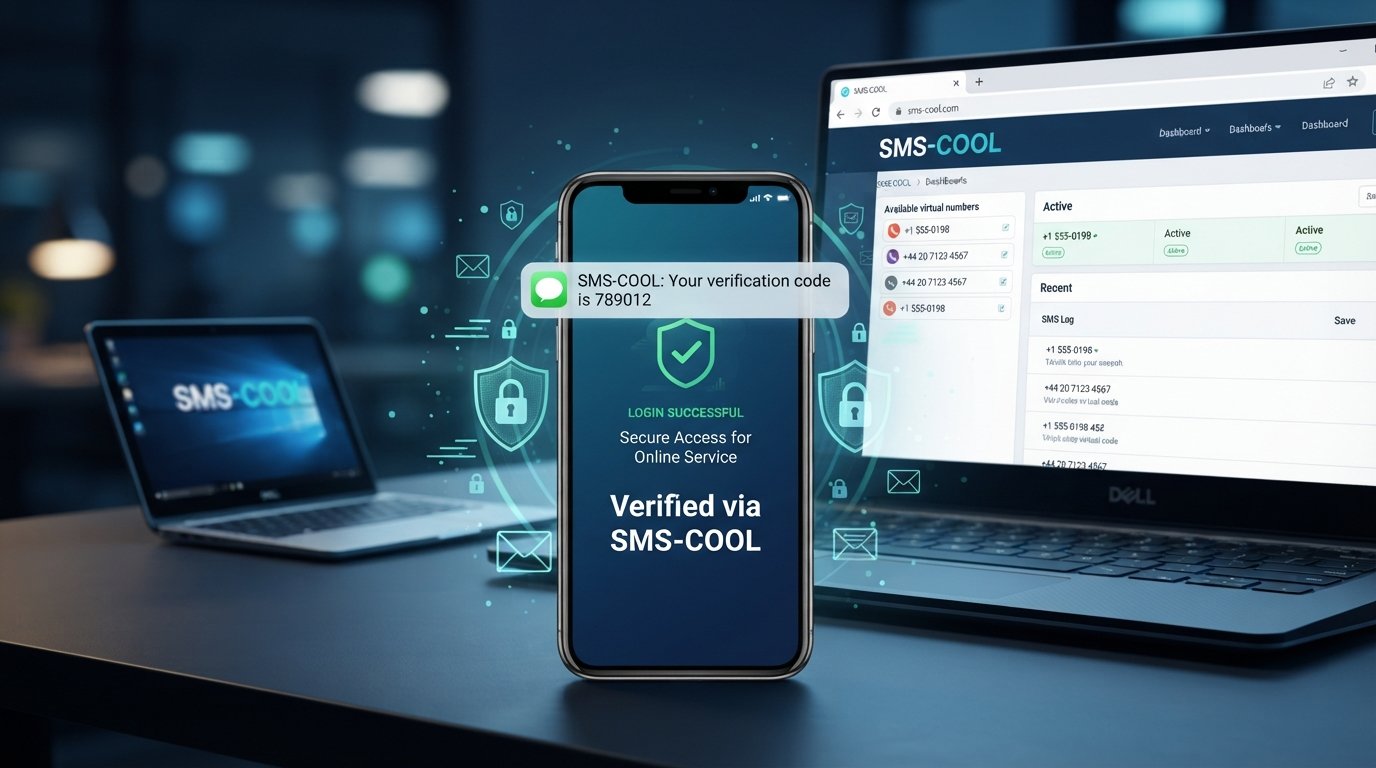
Virtual Phone Numbers and Online Privacy
Every time you sign up for a website, download an app, join an online service, or complete SMS verification, you may be asked for one piece of information you would rather keep private: your phone number.
Sharing a personal number can feel harmless, especially when a service promises to send only a verification code. But your phone number can become connected to accounts, messages, notifications, marketing databases, and other digital records. Once it is widely shared, controlling where that information goes can become difficult.
That is why virtual phone numbers and online privacy have become increasingly relevant for people who want more control over their personal information.
A virtual phone number can provide a practical layer between your personal identity and certain online activities. For situations involving SMS verification or online registration, a service such as SMS COOL can help users receive SMS online without immediately exposing their personal phone number.
What Is a Virtual Phone Number?
A virtual phone number is a phone number that is not necessarily tied directly to a physical SIM card in your personal smartphone.
Instead, virtual numbers are generally managed through online systems that can handle calls, messages, or SMS depending on the service. For online verification, the important function is the ability to use an online phone number to receive a verification message.
This makes virtual numbers useful when you need to provide a phone number but do not necessarily want to give a website or service your everyday personal number.
The exact capabilities of virtual numbers vary by provider. Some are designed for longer-term communication, while others are intended for temporary use or specific SMS-based purposes.
How Do Virtual Phone Numbers Work?
The basic process is straightforward.
A user selects an available virtual number through an online service. When a website or application sends an SMS verification code to that number, the message is routed through the provider's system and displayed through its online interface.
Instead of the code arriving on your personal mobile device, you access the message through the virtual-number service.
For someone who wants to receive SMS online, this can reduce the need to distribute their personal number across multiple websites.
The important point is that a virtual number acts as a layer between your personal mobile number and the online service requesting verification.
The Connection Between Virtual Phone Numbers and Online Privacy
Your phone number is more than a way to receive calls and texts. It can also serve as an identifier connected to your digital accounts.
When the same personal number is repeatedly used for registrations, verification, communication, and account recovery, it can become increasingly associated with your online activity.
Using virtual numbers for privacy can help reduce unnecessary exposure.
This does not make someone completely anonymous, nor does it eliminate every privacy risk. Instead, it provides a practical way to separate certain online interactions from your primary phone number.
For privacy-conscious users, that distinction can be valuable.
Why Protect Your Phone Number?
There are several reasons to think carefully before sharing a personal number online:
- You may receive unwanted marketing messages or notifications.
- Your number may remain associated with an account long after you stop using it.
- Different services may store your contact information for different purposes.
- A personal number can become part of a broader digital profile.
- Unnecessary sharing increases the amount of personal information held by third parties.
Good privacy online is often about reducing unnecessary exposure rather than trying to eliminate every possible risk.
A virtual number can support that approach.
How SMS Verification Works
SMS verification is commonly used to confirm that a person can access a particular phone number.
Typically, you enter a number into a website or application. The service sends an SMS containing a short verification code. You then enter that code into the relevant verification field.
This process is convenient, but it creates an important privacy question: Do you need to use your personal number for every verification request?
For appropriate situations, a virtual number for SMS can provide an alternative.
Using a service such as SMS COOL, users can select a suitable virtual number and use it when a service supports SMS-based verification. The incoming message can then be viewed through the online service.
How to Receive SMS Online
The general workflow for receiving SMS online is simple:
- Choose a virtual phone number service.
- Select an available number appropriate for your intended use.
- Enter the virtual number where an online service requests a phone number.
- Wait for the SMS verification message.
- View the incoming message through the service's online interface.
- Enter the verification code where required.
The exact process can vary between services and platforms.
It is also important to use virtual numbers responsibly. They should not be used to bypass identity requirements, platform security measures, legal obligations, or a service's terms of use.
How SMS COOL Helps Protect Your Phone Number Privacy
For people who frequently encounter SMS-based verification, SMS COOL offers a practical way to separate certain online registrations and verification activities from a personal mobile number.
The main privacy benefit is straightforward: instead of immediately handing over your everyday phone number, you can consider using a virtual number when the situation is appropriate.
This can be especially useful when you want to protect personal information while completing an online verification process.
A privacy-conscious workflow might look like this:
Website or app → virtual number → SMS verification code → online verification
Your personal number does not have to be the first option every time a service asks for one.
SMS COOL can therefore be useful for people who want a convenient method to receive SMS online securely while keeping their primary number separate from selected online interactions.
Of course, users should still review the privacy practices and terms of any SMS service they use. A virtual number is a privacy tool, not a guarantee of complete anonymity.
When Should You Use a Virtual Number?
A virtual phone number can be useful in several everyday situations.
Online Registrations
If a website requires a phone number during registration and SMS verification is supported, a virtual number may help prevent unnecessary exposure of your personal contact information.
SMS Verification
For appropriate services that send SMS verification codes, a virtual number can serve as the number receiving the message.
Testing Services
Developers, testers, and people evaluating online services may sometimes need to verify a phone number without using their primary personal number.
Temporary Online Interactions
When an online interaction is expected to be short-lived, using a temporary virtual number can help keep your regular contact information separate.
Protecting a Personal Number
If you frequently register for websites or services, using an alternative number where appropriate can reduce how often your personal number is distributed.
Privacy-Conscious Users
Anyone who takes phone number privacy seriously may prefer to limit the number of platforms that have direct access to their personal contact details.
Personal, Virtual, Temporary, and Disposable Numbers Compared
These terms are sometimes used interchangeably, but they can describe different concepts.
Number TypePrivacyConvenienceTypical UseMain LimitationPersonal phone numberLower when widely sharedVery highEveryday communication and important accountsDirectly exposes your primary numberVirtual phone numberCan provide better separationHighOnline services, communication, verificationAvailability and capabilities varyTemporary phone numberUseful for short-term privacyHigh for temporary needsShort-lived verification or interactionsMay not be intended for long-term accessDisposable phone numberDesigned for limited exposureConvenient for specific situationsOne-time or short-term purposesMay expire or become unavailable
A temporary phone number is generally intended for limited use, while a disposable phone number emphasizes short-term or one-time usage.
A virtual number can be broader in purpose and may be suitable for different communication or verification needs depending on the provider.
The right choice depends on how long you need access, what the service requires, and how much separation you want from your personal number.
Important Privacy Considerations
Using an online SMS service does not automatically make every activity private.
Before using a virtual number, consider the following:
- Check the service's privacy practices. Understand how information and messages are handled.
- Know the number's lifespan. Temporary numbers may not remain available indefinitely.
- Avoid sensitive account recovery where inappropriate. Losing access to a number can create problems if an account depends on it.
- Follow platform rules. Use virtual numbers only where permitted.
- Protect verification codes. An SMS code can be sensitive account information and should not be shared casually.
- Understand limitations. Not every website or application accepts every virtual number.
- Use trusted services. Convenience should not come at the expense of basic privacy awareness.
These considerations help keep SMS privacy realistic and useful.
Virtual Numbers Are a Privacy Tool, Not a Magic Shield
It is tempting to think that using a virtual number automatically makes someone anonymous. It does not.
Your online activity can still involve account information, browser data, IP addresses, cookies, payment details, device identifiers, and other information.
The real advantage is more specific: a virtual number can reduce unnecessary exposure of your primary phone number.
Think of it as one layer in a broader privacy strategy.
Using unique passwords, enabling appropriate account security controls, limiting unnecessary permissions, reviewing privacy settings, and being selective about the information you share can all work alongside virtual numbers.
FAQ: Virtual Phone Numbers and Online Privacy
What is a virtual phone number?
A virtual phone number is an online-managed number that can be used for certain communication or SMS purposes without requiring you to provide your personal mobile number directly.
How does a virtual phone number protect online privacy?
It can create separation between your personal number and selected online activities. This may reduce how widely your primary contact information is shared.
Can I receive SMS online with a virtual number?
Yes, services designed for online SMS can allow users to receive messages through a virtual number. Availability and compatibility depend on the service and the platform sending the message.
Is a temporary phone number safe for SMS verification?
It can be useful for appropriate short-term verification, but users should understand that temporary numbers may expire or have limitations. They should not be relied upon for important accounts unless ongoing access is assured.
What is the difference between a virtual and disposable phone number?
A virtual number is a broad category of online-managed phone numbers. A disposable number generally emphasizes short-term or limited use. The exact meaning can vary by provider.
Why should I avoid sharing my personal phone number everywhere?
Limiting unnecessary sharing can reduce the amount of personal information connected to your online accounts and activities. It is a simple step toward better privacy online.
How can SMS COOL help with online phone-number privacy?
SMS COOL provides access to virtual numbers that can be used for appropriate SMS-based online verification. This gives users an alternative to immediately exposing their personal phone number when a virtual number is suitable.
Conclusion
Your phone number is an important piece of personal information, so it makes sense to think carefully before sharing it with every website, application, or online service that requests it.
Understanding virtual phone numbers and online privacy can help you make more deliberate choices. A virtual phone number can provide separation between your everyday mobile number and selected online activities, while a temporary or disposable number may be appropriate for short-term situations.
For people who regularly encounter SMS verification, SMS COOL offers a convenient option to explore. By using a virtual number where appropriate, you can reduce unnecessary exposure of your personal phone number while still handling SMS-based online verification.
If protecting your phone number is becoming more important to you, explore SMS COOL and consider whether a virtual number fits your next online verification need.