17 Aug 2026
Virtual Phone Number vs Physical SIM: Complete Comparison Guide
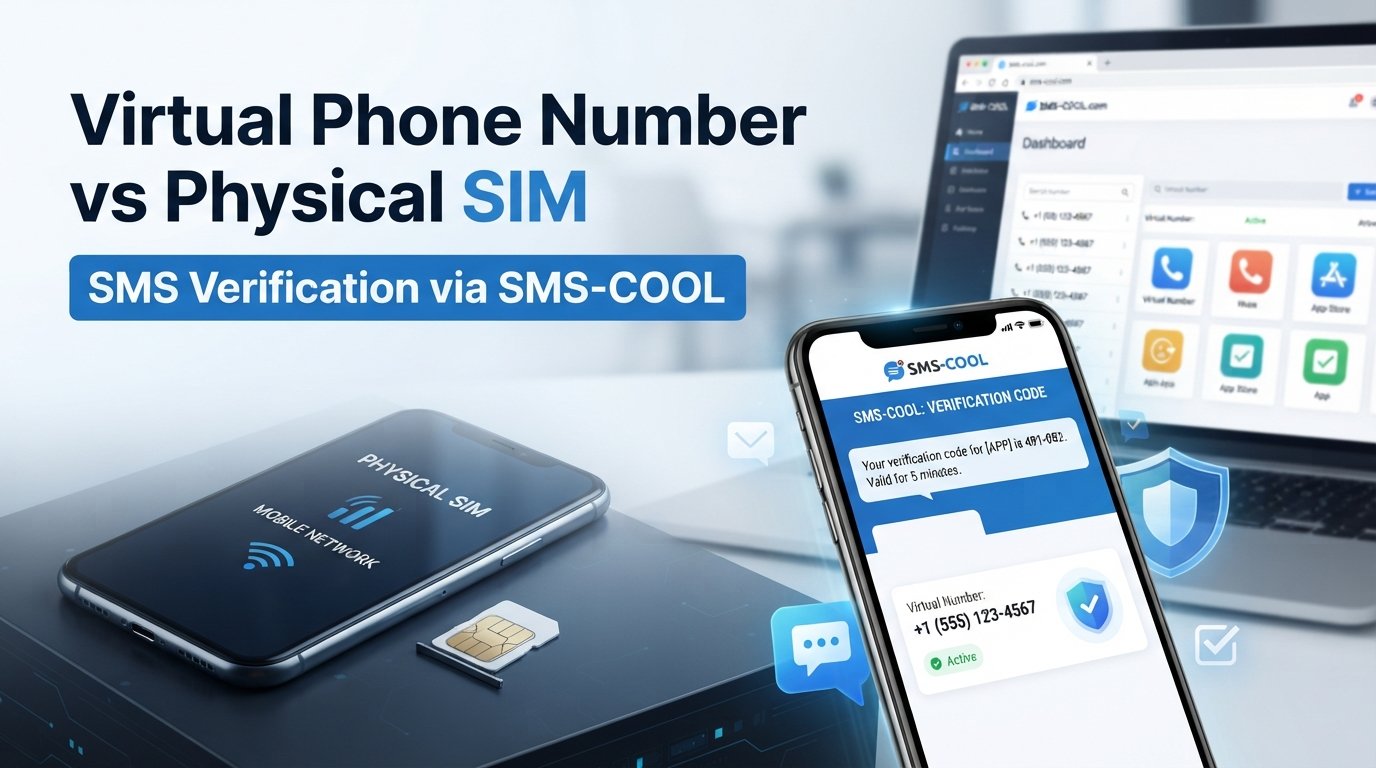
Virtual Phone Number vs Physical SIM
Choosing how to receive calls and text messages is no longer limited to buying a physical SIM card. Today, users can choose between traditional mobile connectivity and a virtual phone number that can be accessed online.
That is why the question Virtual Phone Number vs Physical SIM has become increasingly relevant for people creating online accounts, completing SMS verification, protecting personal privacy, or managing business communication.
A physical SIM remains useful for everyday mobile service, but a virtual number can offer a different kind of flexibility. Instead of inserting a SIM into your phone, you can use an online number for supported SMS and verification needs.
So, which option makes more sense?
The answer depends on what you need the number for. This guide explains the differences between a physical SIM card and a virtual phone number, including privacy, SMS verification, convenience, cost, and business use. It also explains why SMS COOL can be a practical option when you need convenient access to virtual numbers online.
What Is a Physical SIM?
A physical SIM card is the small removable card inserted into a compatible mobile phone. It connects your device to a mobile network and typically provides access to services such as calls, text messages, and mobile data.
A physical SIM is tied to a mobile carrier and usually requires a mobile plan or prepaid service.
Advantages of a physical SIM
A physical SIM card can be a good choice when you need:
- Regular voice calls and mobile data
- A permanent personal phone number
- Reliable everyday mobile connectivity
- Carrier-based services
- A number for long-term personal communication
For conventional mobile use, a physical SIM remains a straightforward solution.
However, it may not be ideal when you only need a number for a specific online task, particularly when privacy or convenience is a priority.
What Is a Virtual Phone Number?
A virtual phone number is a phone number that is not directly tied to a physical SIM card in your device. Depending on the service and number type, it can be accessed through an online platform or digital interface.
For users searching for a virtual phone number for SMS, the main attraction is the ability to receive supported text messages without using their personal mobile number.
This can be useful for:
- SMS verification
- Online account registration
- Receiving verification codes online
- Separating personal and online communication
- Business communication
- Situations where you do not want to purchase another physical SIM
A virtual number is therefore less about replacing your everyday mobile connection and more about providing an additional communication option for supported use cases.
Virtual Phone Number vs Physical SIM: Key Differences
The biggest difference between these options is how the number is accessed and what it is designed to do.
FeaturePhysical SIMVirtual Phone NumberPhysical card requiredYesNoMobile carrier connectionUsuallyDepends on the serviceAccessPrimarily through a mobile deviceOnline or through a supported serviceSMS verificationCommonAvailable for supported servicesPrivacy separationLimitedCan help separate personal and online useAdditional numberRequires another SIM/planCan be obtained digitallyFlexibilityCarrier and device dependentGenerally more convenient for online useBusiness applicationsStrongUseful for supported online communication
The important point is that neither option is universally better. A physical SIM is designed for full mobile connectivity, while a virtual phone number can be particularly useful for online-focused needs.
Privacy and Security
Privacy is one of the strongest reasons people consider a virtual number.
When signing up for websites or online services, some users prefer not to share their personal phone number. Using a separate online phone number can create a useful layer of separation between personal communication and online activity.
For example, you may not want every website, service, or registration form to have your everyday number. A virtual number can help keep your personal number separate where the service supports virtual numbers.
This does not mean that every virtual number is automatically private or secure. Users should still choose reputable providers and understand how a service handles numbers and messages.
For people specifically interested in privacy with virtual phone numbers, the key benefit is separation: your primary personal number does not always have to be the number you use for online registration.
SMS Verification: Which Option Is More Convenient?
SMS verification is one of the most common reasons people compare these two options.
Many online services use a text message containing a one-time code to confirm a phone number. If you use your personal number, that code arrives directly on your mobile device through your carrier.
A virtual number for verification can provide an alternative where the relevant service accepts that type of number.
With an appropriate service, users can receive SMS online rather than purchasing and managing an additional physical SIM.
This can be especially convenient when you need a dedicated SMS verification number for an online account or registration process.
However, compatibility matters. Not every website accepts every type of virtual number, and some services may restrict certain numbers. A virtual number should therefore be viewed as a practical option for supported verification needs rather than a universal replacement for a physical mobile number.
Convenience and Accessibility
A physical SIM requires a compatible device and, in most cases, an active relationship with a mobile carrier.
A virtual number removes much of that physical setup. Instead of purchasing a SIM, inserting it, and managing another mobile plan, you can access your number through an online service.
This can make a virtual number attractive for users who:
- Need an additional number
- Do not want another physical SIM
- Want to keep personal and online communication separate
- Need access to supported SMS messages online
- Prefer managing numbers digitally
For occasional online verification, that convenience can make a significant difference.
Cost and Flexibility
The total cost of a physical SIM depends on the carrier, plan, location, usage, and whether you need additional services.
If you only need a number for a limited online purpose, maintaining another physical SIM and mobile plan may feel unnecessary.
A virtual phone number can offer more flexibility because you can choose a service based on your specific requirements rather than committing to another traditional mobile setup.
The right choice ultimately depends on how frequently you need the number, what you need it for, and whether the relevant website or service supports virtual numbers.
Business and Personal Use Cases
The physical SIM vs virtual number decision also changes depending on whether you are using the number personally or for business.
Personal use
A virtual number can be useful for:
- Online registrations
- Supported SMS verification
- Separating personal and online accounts
- Keeping your primary number private where appropriate
- Managing an additional online number
A physical SIM makes more sense when you need your number for everyday calls, texts, mobile data, and long-term personal communication.
Business use
A business virtual phone number can help separate work-related communication from a personal number.
For example, a small business owner may want an additional number for customer inquiries, online services, or business accounts without carrying another physical SIM.
Again, the exact capabilities depend on the virtual-number provider and the communication service involved.
When Does a Physical SIM Make More Sense?
A physical SIM is usually the better choice when you need a complete mobile connection.
Choose a physical SIM when you need:
- Regular voice calling
- Mobile data
- Reliable carrier connectivity
- A long-term personal number
- Broad compatibility with conventional mobile services
- A number for everyday communication
If your primary goal is staying connected to a mobile network, the physical SIM remains difficult to replace.
When Is a Virtual Phone Number the Better Choice?
A virtual number can be more suitable when your needs are primarily online.
Consider a virtual phone number if you want:
- A separate number for online accounts
- A convenient option for supported SMS verification
- To receive verification codes online
- Better separation between personal and online activity
- An additional number without another physical SIM
- A flexible solution for certain business communication needs
In other words, if your main question is, “What is the easiest way to get a phone number for online verification without using my personal number?” a virtual number may be worth considering.
Why SMS COOL Is a Practical Solution
Once you understand the difference between a physical SIM and a virtual number, the next question is where to get a convenient virtual number.
SMS COOL is designed around the practical need to access virtual phone numbers online for supported SMS and verification purposes.
Instead of purchasing another physical SIM, users can explore virtual numbers through an online platform and use them for appropriate verification and communication needs.
The appeal is straightforward:
- Convenient access to virtual phone numbers
- Ability to receive supported SMS verification codes online
- Useful for online account verification
- Greater separation from your personal number
- Flexibility without needing another physical SIM
- Simple online access
For someone searching for a virtual number for online accounts, SMS COOL can be a practical option to consider.
It is important to check the requirements of the particular website or service you are using, because acceptance of virtual numbers can vary.
How SMS COOL Helps You Receive SMS Verification Codes Online
The basic idea behind online SMS verification is simple: instead of sending a verification message to your everyday personal number, you use an appropriate virtual number where the target service allows it.
With SMS COOL, users looking for receive verification codes online solutions can access virtual-number options through an online environment.
This can be useful when you want to avoid sharing your personal number for a supported registration or verification process.
The biggest advantage is convenience. You do not necessarily need to buy a new physical SIM simply because an online service asks for a phone number.
At the same time, users should always follow the terms and verification requirements of the service they are registering with.
Physical SIM vs Virtual Number: Which Should You Choose?
There is no single winner in the Virtual Phone Number vs Physical SIM comparison.
Your choice should depend on the job the number needs to perform.
Choose a physical SIM card if you need everyday mobile connectivity, calls, data, and a long-term personal number.
Choose a virtual phone number if your priority is online access, supported SMS verification, privacy separation, or having an additional number without managing another physical SIM.
For online-focused needs, SMS COOL provides a practical place to explore virtual phone numbers and SMS verification options.
Frequently Asked Questions
Can I use a virtual phone number for SMS verification?
Yes, virtual numbers can be used for SMS verification when the relevant website or service accepts that type of number. Compatibility varies between platforms.
Can I receive SMS online without a physical SIM?
Yes. A virtual phone number can allow users to receive supported SMS messages online without inserting a physical SIM into their phone.
Is a virtual phone number the same as a virtual SIM?
No. The terms are sometimes confused. A virtual phone number is a digital phone number provided through a service, while a virtual SIM or eSIM is a digital form of SIM technology used to connect a device to a mobile network.
Is a virtual number better for privacy?
It can be useful for privacy because it allows you to separate your personal phone number from certain online registrations and communication needs. However, users should still choose reputable services and understand their privacy practices.
Can I use a virtual number for online accounts?
You can use a virtual number for online accounts when the specific platform accepts it. Some services may restrict virtual, VoIP, or temporary numbers.
Is a temporary phone number the same as a virtual phone number?
Not necessarily. A temporary phone number refers to how long the number is intended to be used, while a virtual phone number describes how the number is provided. A virtual number may be temporary or intended for longer-term use, depending on the service.
Why choose SMS COOL instead of getting another physical SIM?
If your primary need is supported online SMS verification or an additional number, SMS COOL can be more convenient than purchasing and managing another physical SIM. It gives you an online option while helping keep your personal number separate.
Final Verdict: Virtual Phone Number vs Physical SIM
The Virtual Phone Number vs Physical SIM decision comes down to purpose.
A physical SIM is still the natural choice for everyday mobile connectivity. But if your needs revolve around online accounts, SMS verification, receiving verification codes online, privacy separation, or having an additional number, a virtual phone number can be a much more convenient option.
For users who want to avoid the hassle of another physical SIM, SMS COOL offers a practical way to explore virtual phone numbers for supported SMS verification and online communication needs.
If convenience, flexibility, and keeping your personal number separate matter to you, explore SMS COOL and see whether a virtual phone number fits the way you use online services.