28 Aug 2026
Virtual Numbers for App Signup & SMS Verification Guide
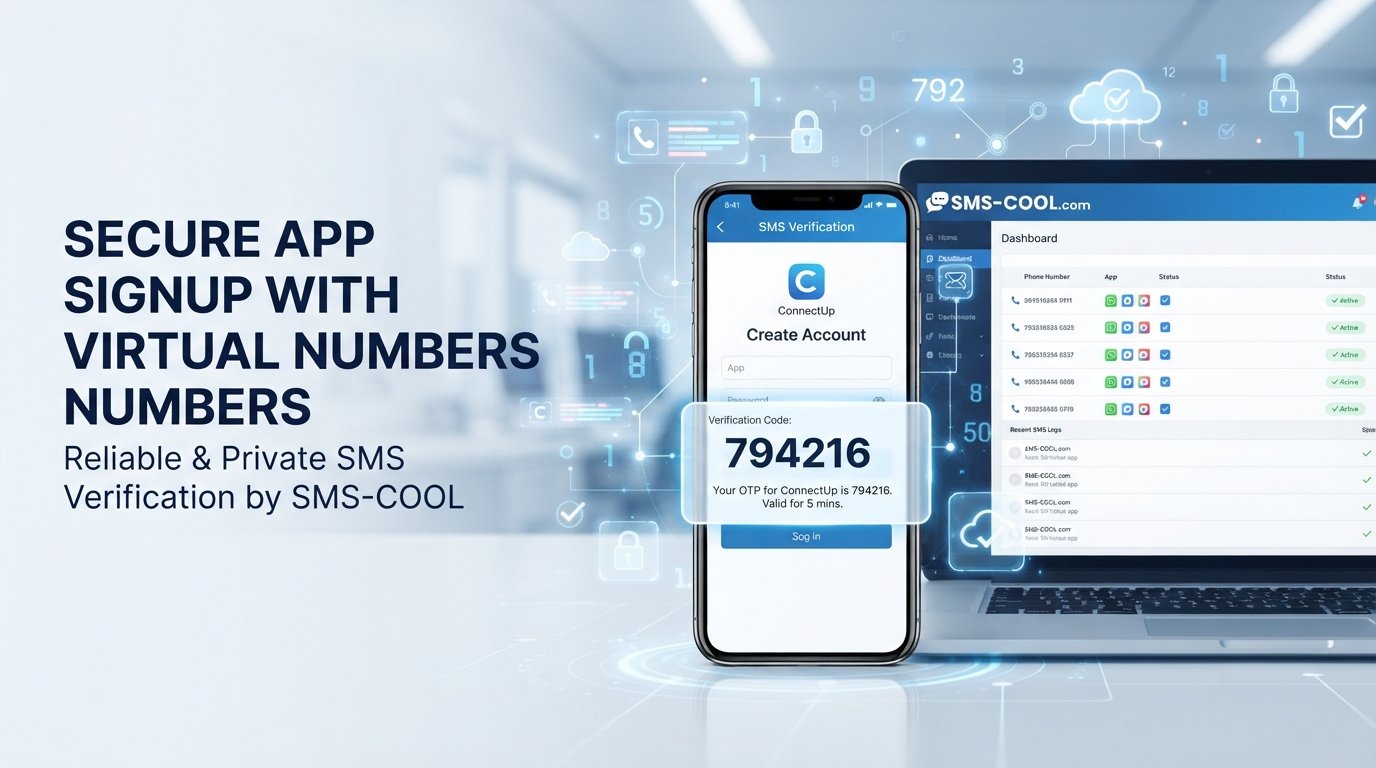
Virtual Numbers and App Signup Verification
Introduction
Signing up for a new app should be simple. Enter your details, confirm your phone number, receive a code, and you are ready to go.
In practice, phone verification can sometimes create an unnecessary problem. You may not want to share your personal number with every website, you may need a separate number for an online project, or you may simply prefer to keep personal communication separate from digital registrations.
That is where virtual numbers can be useful.
A virtual number gives you access to a phone number without requiring another physical SIM card. For supported services, it can allow you to receive SMS online and handle verification messages through an online platform.
For users who need a practical way to manage these requirements, SMS COOL provides virtual numbers designed around SMS verification, temporary use, and online account verification. The key is to use a suitable number only where the relevant app or website permits virtual numbers.
What Are Virtual Numbers?
Virtual numbers are phone numbers that operate through online systems rather than being tied to your primary physical SIM card. They can be accessed through a digital platform and, depending on the service and number type, may be used to receive SMS messages and verification codes.
A virtual phone number can be useful when you want a separate number for online activities without purchasing another physical mobile connection.
For example, instead of entering your personal number every time a website requests phone number verification, you may be able to use an appropriate online phone number.
Virtual numbers can serve several purposes, including:
- Receiving SMS verification messages
- Registering for supported online services
- Testing applications and signup workflows
- Separating personal and online communications
- Supporting business communication needs
- Managing temporary online projects
It is important to understand that virtual numbers are not automatically accepted everywhere. Some websites and applications restrict temporary, disposable, or virtual numbers, so checking the platform's requirements before using one is essential.
Why Do Apps Require Phone Number Verification?
Phone verification has become a common part of creating an online account.
When an app sends an SMS verification code to a number, it is checking that the person signing up can access that phone number. This can add another layer to the registration and account-security process.
App signup verification can help platforms:
- Confirm access to a phone number
- Reduce certain types of automated or fake registrations
- Send one-time passwords and authentication codes
- Add an additional account-security step
- Help recover or confirm accounts in supported situations
The process is usually straightforward. You enter a number, request verification, receive an SMS verification code, and enter that code into the application.
However, using a personal number for every online service is not always desirable. This is one reason people explore virtual number for verification services.
How Virtual Numbers Help With App Signup
One of the biggest advantages of a virtual phone number is separation.
Your primary phone number is connected to personal calls, messages, contacts, and potentially many existing accounts. Using a separate number for suitable online activities can create a clearer boundary between personal communication and online registrations.
A virtual number may be useful when you want to:
Protect Your Personal Number
Rather than giving your primary number to every supported online service, you can use a separate number where permitted.
This can help reduce the amount of online activity directly associated with your personal contact information.
Receive SMS Online
A suitable virtual number can allow you to receive SMS online through an online dashboard instead of relying on your everyday phone.
This can be particularly convenient for a short-term registration or a task where you do not want to use your primary number.
Handle Temporary Requirements
A temporary number for SMS can make sense when the need is limited to a particular supported verification task.
The distinction matters, though: "temporary" describes the intended duration of use, while "virtual" describes how the number is provided. A temporary phone number can therefore be a type of virtual number.
SMS COOL: A Simple Solution for SMS Verification
When you need a virtual number for a legitimate online verification requirement, choosing a service that keeps the process straightforward can make a big difference.
SMS COOL focuses specifically on virtual numbers and SMS-based verification. Its platform provides instant virtual numbers for supported verification tasks, as well as longer-term rental options for users who need a number beyond a single transaction.
The basic process is simple: select a suitable number for the service you need, use it where virtual numbers are accepted, and access the incoming verification message through the SMS COOL platform.
SMS COOL also lists coverage across multiple countries and a broad range of supported services, making it useful for users whose verification requirements vary by platform or location.
For developers and businesses with legitimate automation requirements, SMS COOL also documents a REST API for programmatic access to its number and verification workflows.
Most importantly, SMS COOL should be viewed as a practical tool for supported and legitimate verification—not as a method for bypassing an app's security policies. If a platform does not accept virtual or temporary numbers, another verification method may be required.
Key Benefits of Using SMS COOL
For someone looking for a practical SMS receiving service, SMS COOL offers several useful advantages:
- Convenience: Manage supported verification messages online rather than relying on an additional physical SIM.
- Flexibility: Choose between short-term virtual numbers and longer rental options depending on your legitimate needs.
- Privacy: Use a separate number instead of unnecessarily exposing your primary personal number where virtual numbers are permitted.
- Multiple-country options: SMS COOL advertises virtual-number availability across many countries.
- Online access: Verification messages can be accessed through the service's dashboard.
- Developer support: An API is available for users who need to integrate supported workflows into their own applications.
The exact suitability of a number still depends on the website or app you are trying to verify.
Virtual Numbers vs. Your Personal Phone Number
Both options can be useful, depending on the situation.
FeaturePersonal Phone NumberVirtual NumberConnected to your primary mobileYesNot necessarilyPhysical SIM requiredUsuallyNoSuitable for personal callsYesDepends on the serviceUseful for online verificationYesYes, where acceptedHelps separate online activityLimitedYesTemporary useUsually inconvenientOften practicalPrivacy for online registrationsLower separationGreater separation
A personal number is generally the better choice when a platform specifically requires one or when you need a long-term personal communication line.
A virtual number can be more convenient for supported online verification, testing, temporary projects, or situations where separating personal and online communications is useful.
How to Use a Virtual Number for App Signup Verification
The process is usually simple.
1. Choose a Suitable Virtual Number
Select a number appropriate for the service and country requirements of the app you are using. With SMS COOL, you can browse available options through its platform.
2. Enter the Number During Signup
Enter the selected number in the app's phone-number field.
Before continuing, make sure the app allows virtual or temporary numbers.
3. Request the Verification Code
Submit the registration form and request the SMS verification message.
4. Receive the SMS
If the service accepts the number and sends the message successfully, the verification SMS should appear through the SMS COOL platform.
5. Enter the Verification Code
Copy the SMS verification code into the relevant field in the app.
6. Complete Signup
Once the app accepts the code, complete any remaining registration steps.
If a message does not arrive, avoid repeatedly requesting codes without checking the app's requirements first. Number compatibility, availability, and the platform's own verification rules can affect the result.
What to Look for in an SMS Verification Service
Not every virtual number provider is the same. Before selecting an online SMS verification service, consider several practical factors.
Availability
Check whether the provider has numbers in the country or region you require. Availability can change depending on demand and the specific service.
Supported Services
A number that works for one application may not work for another. Always check whether your intended app or website accepts the relevant number type.
Privacy Considerations
Understand how the provider handles incoming messages and account information. Choose a service whose privacy practices are appropriate for your use case.
Ease of Use
The verification process should be easy to understand. A clear dashboard for selecting numbers and accessing messages can save time.
Reliability
Look for a provider that clearly explains how its service works rather than promising that every number will work everywhere. No legitimate SMS verification service can guarantee universal compatibility.
Number Selection
If country, service, or number type matters for your verification requirement, make sure the provider gives you suitable choices.
These considerations make it easier to select a verification number that actually fits your intended purpose.
Common Uses of Virtual Numbers
Virtual numbers can have many legitimate applications beyond a single app registration.
App Registration
A virtual number may be useful for supported app signup processes when you want to keep your personal number separate.
Online Services
Some users use an online phone number for suitable registrations and digital services.
Application Testing
Developers and QA teams may need separate numbers when testing registration and verification workflows.
Business Communication
A separate virtual number can help distinguish business activity from personal communication, depending on the provider and number capabilities.
Privacy-Conscious Online Activity
Users who prefer not to share their primary number with every supported online service may find a virtual number useful.
The important principle is responsible use. Virtual numbers should not be used for fraud, spam, impersonation, bypassing security controls, or violating an application's terms.
Why SMS COOL Can Be the Better Choice
If your main requirement is a convenient way to access virtual numbers, receive SMS online, and handle supported verification tasks, SMS COOL is worth considering.
Its value comes from keeping the core workflow focused: choose a suitable number, use it for an allowed verification purpose, and access the incoming code online. The service also offers both instant virtual numbers and longer-term rentals, giving users flexibility depending on the task.
For users who need a temporary phone number for a short-term verification task, this can be more practical than obtaining another physical SIM. For users with longer-running legitimate requirements, rental options provide another approach.
SMS COOL also caters to users with technical needs through its documented API, while its online dashboard keeps manual verification accessible for everyday users.
The right choice ultimately depends on compatibility. If the app accepts virtual numbers and your use case is legitimate, SMS COOL provides a straightforward option for managing the verification process.
Conclusion
Phone verification is now a familiar part of signing up for apps and online services. While it can improve the registration and security process for platforms, users do not always want to provide their primary personal number.
Virtual numbers offer a practical alternative for supported situations. They can help users receive SMS online, separate personal communication from online activity, and handle temporary verification requirements without relying on another physical SIM.
For people looking for a convenient virtual number for verification, SMS COOL stands out as a practical solution. It provides access to virtual numbers, temporary options, longer-term rentals, and online SMS receiving for supported services.
Before choosing a number, always check the app's rules and make sure virtual numbers are permitted. When they are, SMS COOL can make SMS verification and app signup verification simpler, more flexible, and easier to manage.
Frequently Asked Questions
What is a virtual number?
A virtual number is a phone number provided through an online system rather than necessarily being connected to your primary physical SIM. Depending on the service, it can receive SMS and support online verification.
How does SMS verification work?
An app sends a verification message containing a code to the phone number entered during signup. The user receives the code and enters it into the app to complete the verification step.
Can I receive SMS online with a virtual number?
Yes, supported virtual numbers can receive SMS through an online platform. SMS COOL provides an online dashboard for accessing verification messages associated with supported numbers.
Why use a virtual number for app signup?
A virtual number can provide separation between your personal number and supported online registrations. It can be especially useful for temporary tasks, testing, or privacy-conscious users.
What is an SMS verification code?
An SMS verification code is usually a short, one-time code sent by an app or website to confirm access to the phone number supplied during registration or another verification process.
Is a temporary phone number useful for online verification?
Yes, a temporary phone number can be useful for supported short-term verification tasks. However, some platforms restrict temporary or disposable numbers, so their rules should always be checked first.
How can SMS COOL help with SMS verification?
SMS COOL provides virtual numbers that can receive SMS verification messages for supported services. Users can select a suitable number, use it where permitted, and access the incoming verification code through the platform.