17 Aug 2026
Virtual Number vs Real Number: Key Differences Explained
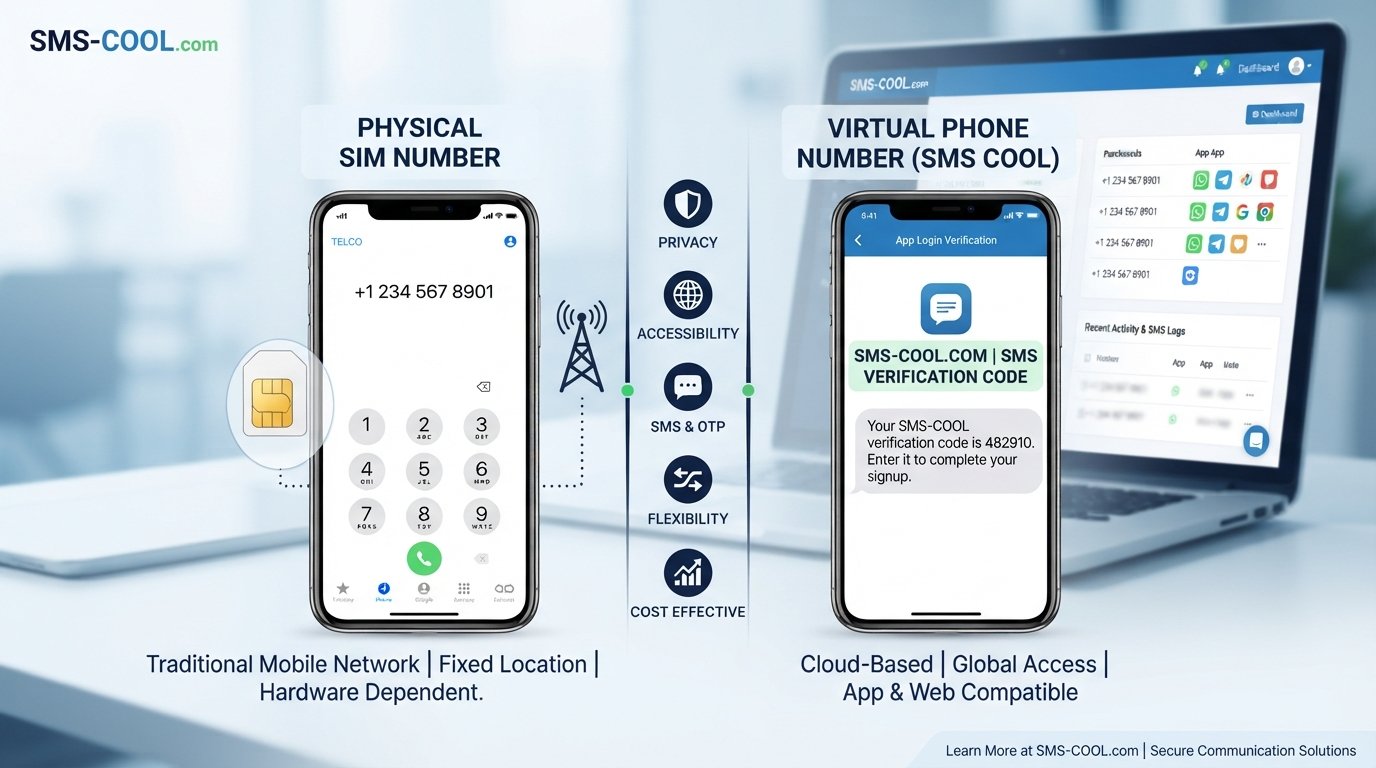
Virtual Number vs Real Number: Key Differences
Choosing between a virtual number and a real phone number may seem like a small decision, but it can have a major impact on privacy, convenience, SMS verification, and how you manage online accounts.
A real phone number is typically connected to a mobile carrier and a physical SIM or eSIM. A virtual phone number, by contrast, is managed through an online or cloud-based service rather than being tied to your everyday mobile connection in the same way.
So, which option makes more sense?
The answer depends on what you need the number for. If you need a long-term personal communication line, a real number may be the natural choice. If your priority is privacy, flexibility, online registration, or receiving SMS verification codes where supported, a virtual number can be much more convenient.
For users looking for a practical option, SMS COOL provides access to virtual numbers designed for supported SMS verification and online registration needs.
What Is a Real Phone Number?
A real phone number is a number assigned through a telecommunications carrier. It is commonly associated with a physical SIM card or an eSIM and is used for calls, text messages, mobile data, and account verification.
Your everyday mobile number is usually connected to your personal identity in some way. It may be used by friends, family, businesses, financial institutions, social platforms, and other services.
Benefits of a real phone number
- Suitable for long-term personal communication
- Works with standard calls and SMS through a mobile carrier
- Often accepted by services requiring a traditional carrier number
- Convenient when you want one primary number for everyday use
- Can remain associated with you for an extended period
However, using your personal number everywhere can create privacy concerns. Giving your real phone number to every website, app, marketplace, or online service can make it harder to separate personal communication from online activity.
What Is a Virtual Phone Number?
A virtual phone number is a phone number that operates through an online service or cloud-based infrastructure rather than relying solely on a physical SIM in your phone.
Depending on the provider, a virtual number may support incoming SMS, calls, or other communication features. Some virtual numbers are designed specifically for particular purposes, such as business communications or SMS verification.
For people who need an online phone number, a virtual option can create useful separation between their personal mobile identity and certain online activities.
A virtual number can also be temporary or longer-lasting, depending on the service. This makes the category broader than a simple disposable phone number.
Virtual Number vs Real Number: Key Differences
The biggest difference is how the number is provided and how you intend to use it.
FactorVirtual NumberReal Phone NumberOwnershipManaged through a virtual-number providerTypically assigned by a mobile carrierPrivacyCan help separate online activity from your personal numberMore directly connected to your everyday identitySMS accessAvailable when supported by the service and numberStandard carrier SMSFlexibilityOften easier to use for specific online purposesGenerally intended as a primary communication numberAccessibilityCan be accessed through an online platformUsually accessed through your mobile device and carrierCostMay offer flexible usage optionsUsually part of a mobile plan or carrier serviceCommon use casesVerification, registration, privacy, online accountsPersonal calls, SMS, mobile connectivity
It is also important to understand that virtual number vs physical SIM is not exactly the same comparison. An eSIM can still provide a genuine carrier-based phone number. The key distinction is the service infrastructure behind the number, not simply whether a SIM card is physically present.
Privacy and Security Differences
One of the strongest reasons people consider a virtual number is phone number privacy.
Your personal number can become difficult to protect once it has been shared with multiple online services. A separate virtual number can act as a layer between your personal communications and selected online registrations.
For example, you might prefer not to provide your everyday number when signing up for a service you only intend to test or use occasionally. A suitable virtual number can provide separation without requiring you to expose your primary contact number.
That does not mean every virtual number is automatically private or secure. You should still choose a reputable provider, understand how numbers are handled, and avoid using a shared or temporary number for accounts where you need permanent personal control.
SMS Verification and Receiving Verification Codes
SMS verification is one of the most common reasons people search for a virtual number for SMS.
Many websites and applications use SMS verification to confirm that a user can access a particular phone number. The service sends a verification code by text, and the user enters that code during registration or login.
A virtual SMS verification number can be useful when a provider supports the particular website, application, or service you are trying to access.
With a service such as SMS COOL, the general process is designed to make receiving verification messages more convenient. You select an available number for a supported purpose, use it during the relevant registration or verification process, and check for the incoming SMS.
Compatibility is important. Not every website or app accepts every type of virtual number, and availability can vary by country, platform, number, and service. A reliable approach is to check whether the desired service is supported before depending on a number for an important account.
Convenience and Accessibility
A real number is excellent when you need a dependable everyday communication channel. But using your personal number for every online activity can become inconvenient.
Virtual numbers offer another approach.
Instead of carrying an additional physical SIM, you can manage a number through an online service. This can be useful when you want an online phone number for a specific registration or verification task.
For people who regularly create test accounts, sign up for online services, or need separation between personal and online communications, this flexibility can be particularly useful.
Cost and Flexibility
A real phone number often comes as part of a mobile plan that may include voice, SMS, and data. That makes sense if you need a complete mobile communication service.
A virtual number can be more focused. If your main requirement is to receive SMS online, you may not need an additional mobile plan simply for that purpose.
Virtual-number services can also provide flexibility by allowing users to select numbers for particular needs. Depending on the provider, numbers may be temporary, reusable, or available for different supported services.
The right choice depends on your actual use case rather than simply choosing whichever option appears cheaper.
Which Option Is Better for Different Situations?
There is no universal winner in the virtual number vs real number comparison.
Choose a real number when:
- You need a primary personal phone line
- You regularly make and receive calls
- You need standard carrier-based mobile service
- You want long-term control over your personal number
- You use services that specifically require a carrier-issued number
Consider a virtual number when:
- You want additional phone number privacy
- You need a number for supported SMS verification
- You want to separate online registrations from your personal number
- You need a temporary phone number for a limited purpose
- You want to receive verification codes online where supported
- You manage multiple online accounts or registration workflows
For account recovery, banking, important business accounts, or other services where long-term access is critical, it is wise to follow the service's rules and use a number you can reliably control for as long as needed.
Common Use Cases for Virtual Numbers
Virtual numbers can be useful in a variety of legitimate situations, including:
- SMS verification: Receiving verification codes where the service supports virtual numbers.
- Online registration: Using a separate number during supported sign-up processes.
- Privacy: Keeping your personal mobile number separate from selected online activities.
- Testing: Developers and teams may need numbers for testing communication workflows.
- Business communication: A separate online number can help distinguish business activity from personal calls.
- Temporary projects: A temporary number can be useful when a long-term personal number is unnecessary.
- Online accounts: Virtual numbers can provide an additional contact option for supported services.
The important point is to use virtual numbers responsibly and in accordance with the terms of the website, application, or service involved.
Why SMS COOL Can Be a Practical Solution
If your primary goal is convenient access to a virtual number for supported SMS verification and online registration, SMS COOL can be a practical option to consider.
Instead of obtaining another physical SIM simply to receive a verification message, a virtual number service can give you a more flexible way to handle specific online verification needs.
Potential advantages include:
- Convenience: Manage your verification-related number online.
- Accessibility: Check incoming SMS without relying on an additional physical SIM.
- Privacy: Keep your personal number separate from selected online registrations.
- Flexibility: Choose a virtual-number option based on the supported service and your needs.
- SMS access: Receive verification messages where the selected number and service are compatible.
SMS COOL should not be viewed as a universal replacement for a personal mobile number. Availability and compatibility can vary depending on the website, application, country, and specific number. For important accounts, always consider whether you need long-term access to the same number.
How SMS COOL Works at a High Level
The concept is straightforward.
First, you choose a suitable virtual number through SMS COOL based on the supported service or registration requirement. You then enter that number where the website or application requests a phone number.
If the service supports the selected virtual number, it sends an SMS verification code to that number. You can then view the incoming message through the service and use the code to complete the verification process.
The key advantage is simplicity: you do not necessarily need to purchase another physical SIM just to handle a supported verification task.
Because compatibility can vary, it is always sensible to confirm that the destination service and selected number are supported before starting an important registration.
FAQs About Virtual and Real Phone Numbers
Is a virtual number the same as a real phone number?
A virtual number is still a legitimate phone number, but it is provided and managed differently from a traditional carrier-issued mobile number. It may operate through an online platform rather than being tied directly to your personal SIM or eSIM.
Can I use a virtual number for SMS verification?
Yes, virtual numbers can be used for SMS verification when the relevant website or application accepts them. Support varies by service and number.
Can a virtual number protect my personal number?
A virtual number can help create separation between your personal number and selected online activities. It should be viewed as a privacy tool rather than a guarantee of complete anonymity.
What is the difference between a temporary phone number and a permanent virtual number?
A temporary phone number is generally intended for limited or short-term use, while a longer-term virtual number may be designed for continued access. The exact availability and retention rules depend on the provider.
Can I receive verification codes online?
Yes, a virtual number service may allow you to receive verification codes online when the relevant number supports the destination service.
Is a virtual number better than a physical SIM?
Neither is automatically better. A physical SIM or carrier-based number is generally more appropriate for everyday communication, while a virtual number can be more convenient for selected online registrations, privacy needs, and supported verification tasks.
Can I use one virtual number for every website?
Not necessarily. Different websites and applications have different requirements, and virtual-number compatibility can vary. Always check support before relying on a number for an important account.
Conclusion: Virtual Number vs Real Number
The virtual number vs real number decision ultimately comes down to purpose.
A real phone number remains the better fit for everyday communication, long-term personal use, and traditional mobile services. A virtual number, however, can be a convenient alternative when your priority is privacy, flexibility, online registration, or receiving SMS verification codes where supported.
If you want a practical way to explore virtual numbers for online accounts, SMS COOL can help simplify the process by providing virtual-number options for supported SMS verification and registration needs.
Ready to separate your personal number from selected online verification tasks? Explore SMS COOL and find a virtual number option that fits your needs.