16 Aug 2026
What Is a Virtual Number API? Complete Guide for Businesses
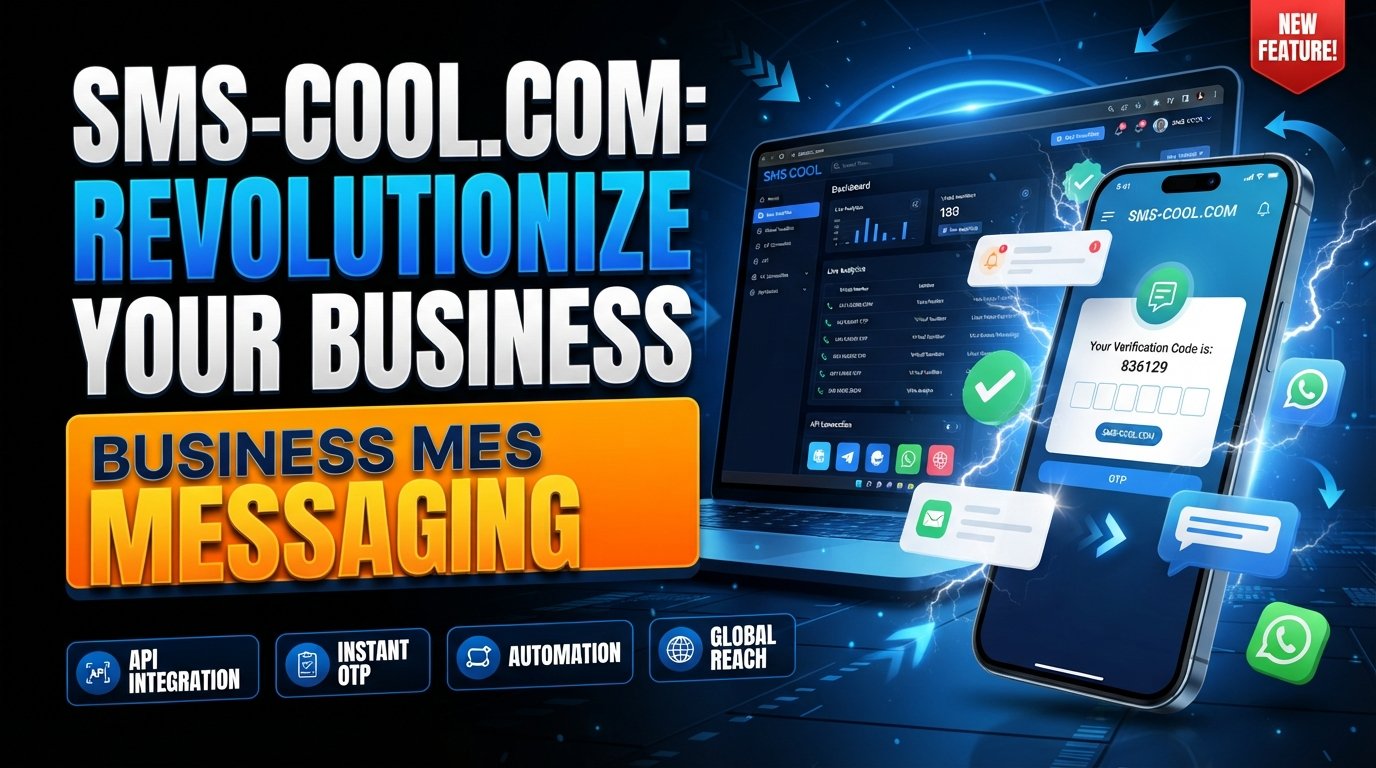
What Is a Virtual Number API?
A Virtual Number API is a software interface that allows businesses to programmatically use virtual phone numbers for sending, receiving, and managing SMS communications without relying on a traditional physical phone line.
In simple terms, it connects your application to a virtual number service. Instead of manually sending a message from a mobile phone, your website, app, CRM, or business system can communicate with customers automatically through an API.
This makes a Virtual Number API useful for everything from SMS verification and OTP delivery to customer notifications, alerts, appointment reminders, and automated business messaging.
For businesses that need virtual numbers, SMS capabilities, and application-based communication, SMS COOL provides a practical solution worth considering. It can help bridge the gap between your applications and SMS communication while keeping business messaging workflows easier to manage.
What Is a Virtual Number API?
A Virtual Number API, sometimes called a virtual phone number API or phone number API, provides programmatic access to phone numbers that are not tied to a physical SIM card or traditional telephone line.
These numbers can be connected to software applications so that systems can interact with customers through SMS.
For example, imagine an online platform where a new customer creates an account. The platform needs to confirm the customer's phone number. Instead of an employee manually sending a message, the application can use an API to send an OTP automatically.
The basic process looks like this:
Customer action → Application → API → Virtual number → SMS → Customer
The API handles the communication between the software and the messaging infrastructure.
Depending on the service and configuration, a virtual number API may support functions such as:
- Sending SMS programmatically
- Receiving SMS
- Managing virtual numbers
- Delivering OTP or verification messages
- Connecting SMS with business applications
- Automating customer notifications
- Supporting application-to-person messaging
This is why the technology is increasingly relevant to businesses building digital customer journeys.
How Does a Virtual Number API Work?
A Virtual Number API typically works through standard API requests between your application and an SMS platform.
Suppose a customer requests a password reset. Your application can trigger an API request containing the destination number and message. The API communicates with the messaging infrastructure, which sends the SMS to the customer.
A simplified workflow is:
- A customer performs an action on your website or application.
- Your application determines that an SMS is required.
- Your server sends an API request to the SMS provider.
- The provider processes the request through its messaging infrastructure.
- The SMS is delivered to the recipient.
- Your application can process the delivery or response information returned by the API.
The same concept can work in the opposite direction when a business needs to receive SMS online or process incoming messages.
For developers, this means SMS becomes part of the application rather than a separate manual communication channel.
Why Do Businesses Use Virtual Number APIs?
Traditional phone-based communication can become difficult to manage as a company grows. Sending individual messages manually may work for a small operation, but it is inefficient when hundreds or thousands of customer interactions need to be handled automatically.
A Virtual Number API allows businesses to build SMS communication directly into their existing workflows.
Common reasons include:
Automation
Businesses can trigger messages based on events. A successful order can generate a confirmation SMS, while a scheduled appointment can trigger a reminder.
Verification
Applications can send one-time passwords and verification codes automatically during registration, login, or sensitive account actions.
Business communication
Companies can use virtual numbers for customer notifications, alerts, transactional messages, and other important communications.
Application integration
An API allows SMS functionality to connect with websites, mobile apps, CRMs, e-commerce systems, and internal software.
Scalability
As communication volume increases, automated messaging can be easier to manage than manual phone-based processes.
Key Benefits of a Virtual Number API
A well-designed virtual number solution can offer several practical advantages.
1. Programmatic SMS communication
Businesses can send SMS through an API directly from their applications. This reduces manual work and makes messaging part of an automated workflow.
2. Flexible virtual numbers
A virtual mobile number can provide a dedicated communication channel without requiring a physical device for every business process.
3. Faster customer interactions
Automated messages can be triggered immediately after relevant events, helping businesses communicate important information at the right moment.
4. Easier integration
A developer API allows messaging functionality to be connected with software already used by the business.
5. Better workflow automation
SMS can become part of broader automation. For example, an e-commerce platform can send an order confirmation after payment, while a service business can send reminders before an appointment.
6. Centralized communication
Using a dedicated SMS platform can make business messaging easier to organize than relying on individual mobile phones and disconnected processes.
Common Virtual Number API Use Cases
The applications extend well beyond simply sending promotional texts.
Businesses commonly use virtual number and SMS API technology for:
- Account registration and verification
- OTP verification
- Two-factor authentication
- Password reset notifications
- Order confirmations
- Delivery updates
- Appointment reminders
- Customer alerts
- Transaction notifications
- Customer support workflows
- Marketing and business messaging
- Internal operational notifications
The right use case depends on the business and its communication requirements. For many organizations, SMS is particularly valuable when a message needs to reach a customer quickly without requiring them to open an app.
Virtual Number API for SMS Verification and OTP
One of the most important applications is SMS verification.
When a user registers for an account, the application can generate a temporary OTP and send it to the user's phone number. The customer enters the code, and the system verifies the number.
This creates a simple authentication workflow:
Registration → OTP generated → SMS sent → Customer enters code → Number verified
The same approach can be used for login verification, account recovery, and other authentication workflows.
For businesses building these systems, an SMS verification API can reduce the need to create messaging infrastructure from scratch. A solution such as SMS COOL can be considered when virtual numbers and SMS functionality need to become part of an application's verification or communication workflow.
Businesses should still design verification systems carefully, including appropriate rate limits, code expiration, abuse prevention, and privacy practices.
Virtual Number API for Business Messaging
SMS remains useful for transactional and operational communication because it does not require customers to install a separate messaging application.
A business can integrate SMS into its existing systems so that messages are triggered automatically.
For example, a booking platform might send:
Your appointment is confirmed for tomorrow.
An online store might send:
Your order has been received and is being processed.
A financial application might send an account security alert.
These are examples of business SMS where the message is directly connected to an application event.
For companies managing multiple communication workflows, a business communication API can make these processes more structured and easier for developers to maintain.
How Virtual Number API Integrates With Applications
API integration is one of the main reasons businesses choose programmable communication services.
A typical integration involves your application sending structured data to an SMS API provider. The provider then processes the request and handles the SMS delivery.
Depending on the API, developers may work with common concepts such as:
- API credentials
- Authentication
- Phone numbers
- Message content
- Recipient numbers
- Delivery status
- Incoming messages
- Webhooks or callbacks
A developer might integrate the API into a customer relationship management system, e-commerce platform, mobile application, authentication system, or custom business software.
The important point is that the SMS capability becomes a component of the application rather than a separate tool that employees have to operate manually.
What to Look for in a Virtual Number API Provider
Choosing an SMS API provider is about more than finding a virtual number. Businesses should evaluate how well the service fits their technical and operational requirements.
Consider these factors:
API documentation and integration
Clear documentation can make implementation easier for developers. Look for straightforward information about authentication, requests, responses, error handling, and integration workflows.
Number availability
Make sure the provider offers the types of virtual numbers and destinations relevant to your business requirements.
SMS capabilities
Consider whether you need outbound SMS, inbound messages, verification workflows, programmable SMS, or a combination of these services.
Reliability and transparency
Messaging is often part of important customer workflows, so businesses should understand how the provider manages delivery, errors, and service operations.
Scalability
Your chosen solution should make sense not only for current messaging volumes but also as your business communication requirements develop.
Business support
Responsive support and practical guidance can be valuable when integrating a communication API into production systems.
Ease of management
A business-friendly platform should make it reasonably straightforward to manage numbers, messaging workflows, and API-related requirements.
Why SMS COOL Is a Practical Solution
Once you understand how a Virtual Number API works, the next question is where to get the infrastructure your business needs.
SMS COOL is a practical option for businesses looking to combine virtual number capabilities with SMS communication and API-based workflows.
Rather than treating SMS as a completely separate communication channel, businesses can use an API-oriented solution to connect messaging with their applications and processes.
SMS COOL can be relevant for organizations that need to:
- Work with virtual numbers for business communication
- Integrate SMS into applications
- Build SMS verification and OTP workflows
- Automate customer notifications
- Support programmable SMS use cases
- Develop scalable messaging workflows
- Connect business systems with SMS infrastructure
The key advantage is the ability to approach SMS as part of a broader business workflow. Whether the requirement involves verification, transactional messaging, alerts, or application-driven communication, choosing a provider that fits both technical and business needs is important.
Before implementation, businesses should evaluate the available number options, API documentation, messaging requirements, integration process, and operational needs to ensure the service is appropriate for their specific use case.
Final Thoughts
A Virtual Number API gives businesses a way to connect virtual phone numbers and SMS communication directly with software applications. Instead of relying on manual texting, companies can use APIs to automate verification, notifications, alerts, customer communication, and other messaging workflows.
The technology is particularly useful for businesses building digital products where SMS needs to happen automatically in response to customer actions.
The right provider should offer a practical combination of virtual number capabilities, SMS functionality, API integration, usability, scalability, and support.
For businesses exploring these requirements, SMS COOL is worth considering as a business-friendly solution for virtual numbers, SMS APIs, verification workflows, automation, and application-based messaging.
If you're planning to add virtual numbers or programmable SMS to your business application, explore SMS COOL to see how its virtual number and SMS capabilities can fit your communication workflow.