15 Aug 2026
What Is a Verification SMS? A Complete Guide to SMS Verification
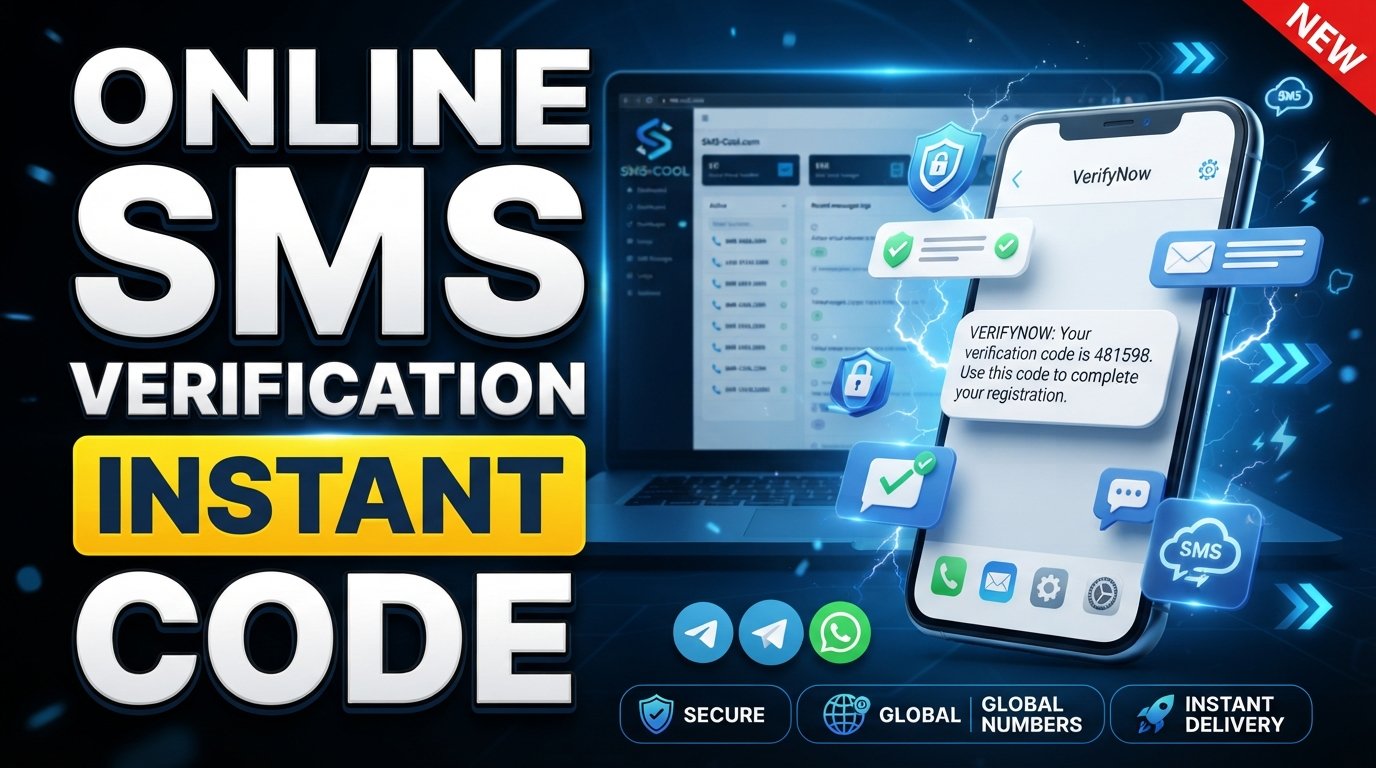
What Is a Verification SMS?
When you sign up for an online service, log in from a new device, reset a password, or confirm a phone number, you may receive a short text containing a code. That message is commonly called a verification SMS.
It is one of the simplest ways for websites and apps to confirm that a phone number is accessible to the person attempting an action. The process is usually quick: enter a phone number, receive a message, and submit the code shown in the message.
For people who do not want to rely exclusively on their personal phone number, an online SMS service such as SMS COOL can provide a convenient way to receive verification messages through temporary or virtual numbers where supported.
Understanding how SMS verification works can help you choose the right approach, avoid common problems, and use verification codes more effectively.
What Is a Verification SMS?
A verification SMS is a text message sent to a phone number to confirm access to that number.
The message normally contains a short numerical or alphanumeric code. Depending on the service, it may be called a verification code, SMS code, security code, or one-time password.
For example, a website might ask you to enter a phone number and then send:
Your verification code is 482731.
You enter that code into the website or app, and the system checks whether it matches the code it generated.
This process is known as SMS verification or phone verification.
The important point is that the SMS itself is not the verification. The message delivers the code that allows the service to complete its verification process.
How Does SMS Verification Work?
The basic process is straightforward.
- You enter a phone number on a website or app.
- The service generates a verification code.
- The code is sent by SMS.
- You receive the message.
- You enter the code into the requested verification field.
- The service checks the code and completes the verification step if it is valid.
These codes are often designed to be used only once or for a limited period. That makes them useful for confirming that someone has access to the number being used.
With online SMS verification, the receiving step can take place through an online SMS receiver or a service that provides access to a temporary or virtual phone number.
If you are researching how to receive SMS online, this distinction is important: the number may exist primarily for receiving messages rather than functioning like your everyday personal mobile number.
Why Do Websites and Apps Send Verification SMS?
Phone verification gives online services an additional way to confirm account activity.
Common uses include:
- Creating a new account
- Confirming a phone number
- Signing in from an unfamiliar device
- Recovering an account
- Resetting a password
- Confirming certain transactions
- Completing account-security checks
- Reducing automated or suspicious registrations
A phone number can also provide a convenient communication channel for sending one-time codes.
However, SMS verification is not a universal security solution. The level of protection depends on how the service implements verification and what other security measures it uses.
What Is a Verification Code or OTP?
An OTP SMS, or one-time password SMS, contains a code intended for a specific verification attempt.
You may see terms such as:
- SMS verification code
- Verification code SMS
- One-time password
- OTP verification
- SMS code
- Verification code online
Although terminology varies, the basic idea is similar: the recipient gets a temporary code and enters it into the service requesting verification.
A verification code should generally be treated as sensitive information. Do not share it with someone who asks for it unexpectedly, particularly if the request comes through an unsolicited message, call, or email.
When Do People Need to Receive Verification SMS Online?
There are many legitimate situations where someone may prefer an online number rather than their personal mobile number.
For example, a user may want to:
- Keep personal and online activities separate
- Avoid giving a personal number to every service
- Test an online signup flow
- Receive an OTP without relying on a personal SIM
- Use a temporary number for SMS verification
- Access messages through an online interface
- Maintain a separate number for specific online activities
A temporary phone number can be useful when the number is only needed for a particular purpose. A virtual phone number can similarly provide an alternative to a traditional mobile number, depending on the service and its supported destinations.
This is where SMS COOL can be practical. Instead of depending solely on a personal number, users can use an appropriate temporary or virtual number to receive SMS online where supported.
Keep in mind that some websites restrict virtual or temporary numbers. No SMS verification service should be assumed to work with every platform.
Benefits of Using an Online SMS Verification Service
Using an online SMS verification service can offer several practical advantages.
Convenience
Receiving messages through an online interface can be easier than switching between devices or managing multiple physical SIM cards.
Separation from Your Personal Number
A temporary or virtual number can help separate certain online activities from your everyday phone number. This can be useful when privacy and convenience are priorities.
Simple Verification Workflow
The process is generally easy to understand: choose an available number, use it for the relevant verification process, and check the incoming message.
Useful for OTPs
If a service supports the selected number, an online SMS receiver can make it convenient to receive OTPs and other verification codes.
Flexible Number Options
Depending on availability, temporary SMS numbers and virtual numbers can provide alternatives for different verification needs.
The right choice depends on the platform being verified, the country or region supported, the duration for which the number is needed, and the service's own policies.
Common Problems With SMS Verification
Although SMS verification is simple, it does not always go smoothly.
The Code Does Not Arrive
A message may be delayed because of network conditions, carrier routing, platform restrictions, or other delivery issues.
The Number Is Not Accepted
Some services do not accept certain virtual, temporary, or VoIP-style numbers. If a platform blocks the number type, another verification method may be necessary.
The Code Expires
Verification codes are often time-sensitive. Waiting too long can mean that you need to request a new SMS verification code.
Too Many Requests
Repeatedly requesting codes in a short period can trigger limits on the website or app. If this happens, waiting before trying again may be necessary.
The Wrong Number Is Used
Always check that the selected number matches the requirements of the service before beginning verification.
These issues are reasons to choose an SMS verification service carefully rather than assuming every online number will work everywhere.
How SMS COOL Makes Verification SMS Easier
SMS COOL provides a practical option for users who need to receive verification messages online through temporary or virtual numbers where applicable.
The basic idea is simple: instead of depending entirely on a personal phone number, users can use an appropriate online number for supported SMS verification needs and check incoming messages through the service.
This can be useful when receiving:
- Verification codes
- OTP SMS messages
- Account confirmation texts
- Temporary SMS messages
- Other supported verification-related texts
The experience is particularly useful for people looking for a straightforward way to receive verification SMS online without making their personal number the default option for every online activity.
For website owners, the phrase SMS verification can also be used as an internal link to a related educational page. Similarly, phrases such as receive SMS online, temporary phone number, and virtual phone number provide natural opportunities to connect readers with relevant pages on your site.
Why Choose SMS COOL for Online SMS Verification?
The value of an online verification service comes down to practicality.
SMS COOL focuses on the core use case: helping users receive SMS messages online through available temporary or virtual numbers.
That makes it relevant for people who want:
- Convenient online SMS reception
- An alternative to using a personal number
- Temporary numbers for supported verification tasks
- A simple way to check OTP messages
- An easy-to-understand verification workflow
- Greater separation between personal and online phone use
It is important to use any temporary or virtual number responsibly and within the rules of the platform being verified. Some services may reject temporary numbers or require a traditional mobile number.
For users whose needs match supported use cases, SMS COOL can make the process of receiving a verification SMS considerably more convenient.
What to Look for in a Verification SMS Service
Not all online SMS services are the same. Before choosing one, consider the following factors.
Number Availability
Check whether numbers are available for the country and service you need.
Ease of Use
A straightforward interface makes it easier to select a number and find incoming messages without unnecessary complexity.
Supported Verification Use Cases
Make sure the service is appropriate for the type of SMS verification you need. Platform restrictions can affect whether a particular number works.
Privacy Considerations
Think about whether using a separate temporary or virtual number better suits your privacy preferences than using your personal number.
Message Visibility
An online SMS receiver should make incoming messages easy to identify and read during the verification process.
Responsible Use
Use verification numbers for legitimate purposes and follow the terms of the website, app, or service involved.
Frequently Asked Questions
What is a verification SMS?
A verification SMS is a text message containing a code used to confirm access to a phone number. It is commonly used for account registration, login checks, password recovery, and phone verification.
How does SMS verification work?
A website or app sends a unique code to a phone number. The recipient enters that code into the service, which checks it before completing the verification step.
What is an SMS verification code?
An SMS verification code is a short code delivered by text message. It is entered into a website or app to confirm a verification request.
Can I receive verification SMS online?
Yes. An online SMS verification service can allow users to receive supported verification messages through a temporary or virtual phone number rather than relying solely on a personal mobile number.
What is a temporary phone number?
A temporary phone number is a number intended for short-term or limited use. Depending on the provider, it can be used to receive SMS messages for supported online verification tasks.
What is an OTP SMS?
An OTP SMS is a text message containing a one-time password. The code is generally intended for a specific verification attempt and may expire after a certain period.
Is SMS verification safe?
SMS verification can be useful, but users should protect their codes and never share unexpected verification messages with others. SMS should also be considered one part of a broader security approach.
How does SMS COOL help with verification SMS?
SMS COOL provides access to temporary or virtual numbers that can be used to receive supported SMS messages online. This can make OTP and verification-code reception more convenient without relying exclusively on a personal number.
Conclusion: A Simpler Way to Receive Verification SMS Online
A verification SMS is a simple but important part of modern online account verification. Whether you call it an SMS verification code, OTP SMS, verification code, or phone verification message, the purpose is usually the same: confirm access to a phone number during a specific action.
For users who want an alternative to their personal number, temporary and virtual phone numbers can provide a practical option when supported by the service being verified.
SMS COOL brings that concept into a convenient online workflow, helping users receive supported verification messages, OTPs, and SMS codes through temporary or virtual numbers.
If you need a straightforward way to receive verification SMS online, explore SMS COOL and choose an available number that fits your verification needs.
8. SEO FAQs
What does verification SMS mean?
Verification SMS means a text message sent to a phone number containing a code used to confirm access to that number.
Can I receive an SMS verification code online?
Yes. A suitable online SMS verification service can provide a temporary or virtual number for receiving supported SMS verification codes online.
What is a virtual number for verification?
A virtual number for verification is a phone number provided through an online service that may be used to receive SMS messages for supported verification purposes.
Is a temporary SMS number the same as a personal phone number?
No. A temporary SMS number is generally intended for limited or short-term use, while a personal mobile number is typically associated with ongoing everyday communication.
Can every website accept a temporary phone number?
No. Some websites and apps restrict temporary, virtual, or certain types of phone numbers. Always check the requirements of the service you are using.
What is the difference between OTP verification and SMS verification?
SMS verification describes the broader process of verifying a phone number through text messaging. OTP verification specifically involves using a one-time password or code, which may be delivered by SMS.
9. Final CTA
Need a convenient way to receive verification SMS online? Try SMS COOL for supported temporary and virtual numbers, and simplify the process of receiving OTPs and verification codes without relying solely on your personal phone number.