15 Aug 2026
How Verification Codes Are Sent by SMS | SMS COOL: Explained
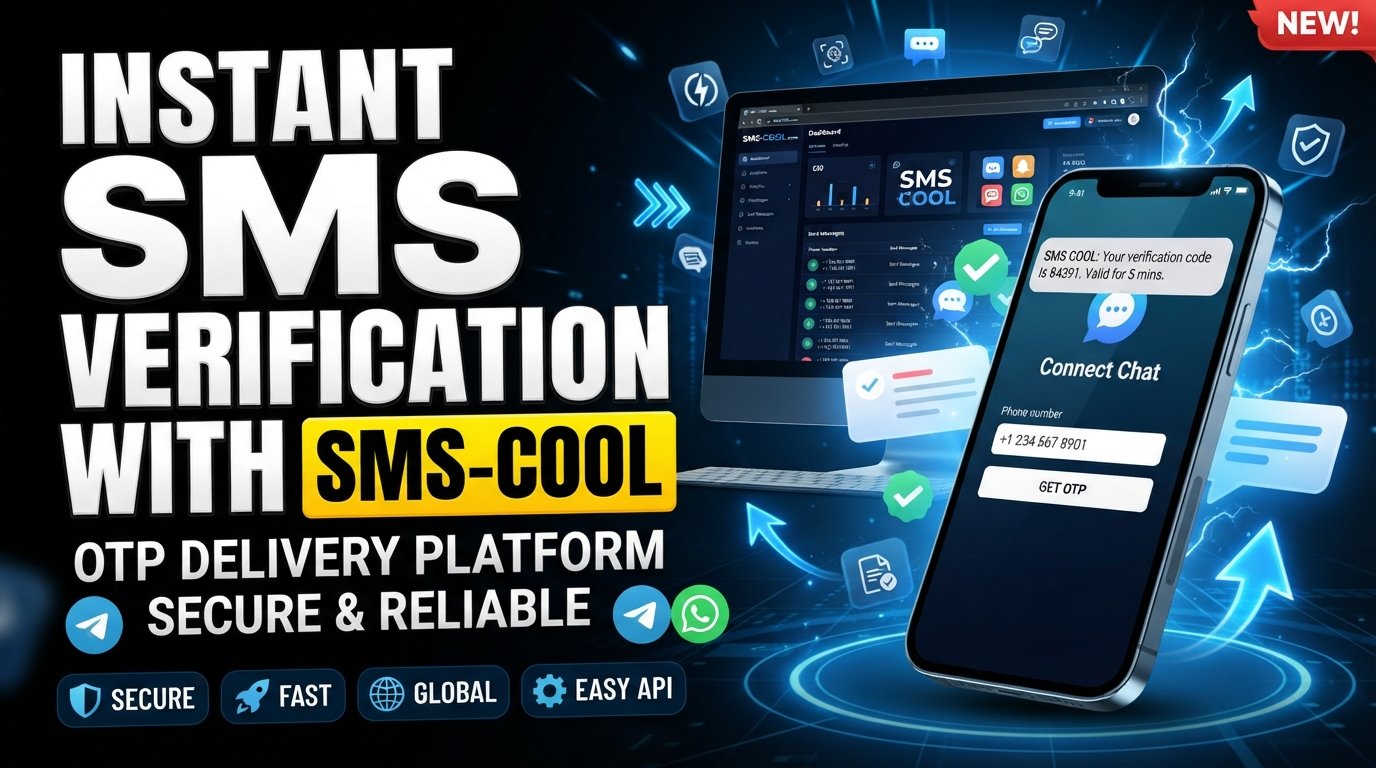
How Verification Codes Are Sent by SMS
Verification codes by SMS are one of the most familiar forms of digital authentication. You enter your phone number, receive a short code in a text message, and enter that code into a website or app. The entire process can take only a few seconds, but several systems work together behind the scenes to make it happen.
For businesses, fast and dependable delivery matters. A verification message that arrives late can interrupt registration, login, password recovery, or another important customer action. That is why businesses often rely on an SMS provider and API to automate verification messages at the right time.
This guide explains how SMS verification works, what happens to an OTP after it is generated, why messages can sometimes be delayed, and how a solution such as SMS COOL can help businesses manage OTP and transactional SMS delivery.
What Is an SMS Verification Code?
An SMS verification code is a short, temporary code sent to a user's mobile phone to confirm that the person has access to a particular phone number.
For example, a service may display:
Your verification code is 482731.
The user receives the SMS, enters the code into the website or app, and the system checks whether it matches the code it generated.
SMS verification is commonly used as an additional layer of authentication or as a way to confirm a phone number during an account-related process.
What Is an OTP and How Does It Work?
OTP stands for one-time password. An OTP is a temporary credential designed to be used for a specific verification attempt.
Unlike a permanent password, an OTP normally has a short lifetime and is intended to become invalid after it is used or expires.
When a business uses OTP via SMS, its application generates a code and sends it to the phone number associated with the verification request. The user then submits the code back to the application.
A typical SMS OTP might contain four, six, or another suitable number of characters or digits, depending on how the business has designed its verification system.
How Verification Codes Are Sent by SMS
The process looks simple from the user's perspective, but the complete SMS verification flow involves several steps.
Step 1 — User Requests Verification
The process starts when a user performs an action that requires verification.
They may be:
- Creating a new account
- Logging in
- Resetting a password
- Confirming a phone number
- Recovering an account
- Confirming a sensitive transaction
The user enters their mobile number, usually in an international format, and submits the request.
Step 2 — The System Generates an OTP
The business application receives the request and generates a temporary verification code.
The system should associate the OTP with the relevant verification attempt, phone number, and expiration time. It should also define how the code can be used and when it becomes invalid.
At this stage, the OTP is not yet an SMS. It is simply data created by the application's authentication or verification system.
Step 3 — The OTP Is Sent by SMS
The application sends the verification request to an SMS provider through an SMS API or another supported integration.
The message typically contains the OTP along with a short explanation, such as:
Your verification code is 482731. It expires shortly.
An SMS provider then handles the delivery process required to route the message toward the recipient's mobile network.
This is where a dependable provider becomes important. Businesses need their automated verification messages to move through the messaging infrastructure efficiently without adding unnecessary complexity to their applications.
Step 4 — The User Receives the Code
The SMS travels through the relevant messaging and mobile network infrastructure before reaching the user's phone.
If everything works normally, the message appears in the user's SMS inbox within a short period.
The user reads the code and returns to the website or application that requested verification.
Step 5 — The Code Is Verified
The user enters the OTP into the verification field.
The application checks the submitted value against the expected code and verifies other conditions, such as whether the code belongs to the current verification attempt and whether it has expired.
If the information is valid, the application can complete the requested action.
Step 6 — The OTP Expires
An OTP should not remain valid indefinitely.
After its defined lifetime has passed, the application should reject the old code. This limits the usefulness of a code that was received late, exposed to someone else, or simply no longer associated with an active verification attempt.
If the user needs another code, they can request a new verification SMS.
Why Businesses Use SMS Verification
SMS verification provides a straightforward way to confirm that a user can access a specific mobile number.
It can also reduce friction compared with requiring users to install a separate authentication application for every basic verification task.
Businesses use SMS verification because it can support important customer journeys, including account registration, authentication, recovery, and transaction-related confirmation.
The key is to treat SMS as part of a larger verification system rather than assuming that sending a code alone provides complete security.
Common Uses of SMS Verification
SMS verification appears in many everyday digital workflows.
Signup and registration: A new user can verify ownership of a phone number before completing account creation.
Login: An application can request an OTP as part of an authentication flow.
Password reset: A temporary code can help verify the person requesting access to an account.
Phone number verification: Businesses can confirm that a number belongs to the person registering it.
Account recovery: SMS OTP can provide another way to verify an account holder during recovery.
Transactions: Some services may use verification SMS as part of a transaction or confirmation workflow, depending on their security requirements.
Other account actions: Changing sensitive account details or confirming important actions may also involve SMS authentication.
Why SMS Verification Codes Sometimes Get Delayed
A verification SMS does not always arrive instantly. Several factors can affect delivery.
Network congestion can slow message routing. Temporary issues within mobile networks or messaging infrastructure can also affect delivery.
Incorrect or poorly formatted phone numbers are another common cause. A user may enter the wrong country code, miss a digit, or provide a number that cannot receive SMS.
Carrier filtering, routing conditions, sender configuration, and other messaging factors can also influence delivery.
From the user's perspective, the result is simple: the code has not arrived when expected.
Businesses can reduce avoidable problems by validating phone numbers, using a dependable SMS provider, monitoring delivery processes where available, and designing a sensible resend experience.
Best Practices for Secure SMS OTP Verification
A good SMS OTP implementation should consider both security and usability.
Use short-lived codes. An OTP should expire after an appropriate period rather than remaining valid indefinitely.
Make codes single-use. Once successfully verified, an OTP should not normally be accepted again.
Protect verification endpoints. Businesses should apply appropriate controls to prevent automated abuse and excessive verification attempts.
Avoid exposing sensitive information. Verification messages should contain only what the user needs to complete the authentication step.
Handle resend requests carefully. Repeated requests should not create confusing situations where users receive several different active codes at once.
Use clear messages. Tell the recipient what the code is for without making the SMS unnecessarily long.
Validate phone numbers. Correct formatting and country information can prevent avoidable delivery failures.
Choose a dependable SMS provider. The application may generate the OTP, but the SMS provider plays an important role in delivering it to the recipient.
These practices help create a more secure and less frustrating verification experience.
How SMS COOL Helps With SMS Verification
For businesses that need automated verification messaging, SMS COOL provides a practical way to approach SMS verification and OTP delivery.
Instead of manually handling individual text messages, a business can connect its application to an SMS API and use automated SMS workflows for verification codes and other transactional messages.
This can be useful when a company needs to send verification messages consistently as users register, log in, recover accounts, or complete other supported actions.
With SMS COOL, businesses can focus on the application logic that generates and validates OTPs while using an SMS-focused service to handle message delivery.
The main advantages are practical: reliable SMS delivery, fast OTP delivery, automated verification messages, SMS API integration, scalable SMS sending, and dependable transactional messaging.
A straightforward integration can also make it easier for development teams to incorporate SMS verification into existing websites and applications without turning every verification event into a manual messaging task.
For businesses, the goal is not simply to send an SMS. It is to create a verification experience in which the right user receives the right code at the right stage of the customer journey.
That makes the SMS provider an important part of the overall system.
A Simple Example of SMS Verification
Imagine someone creates an account on an online service.
First, they enter their mobile number and select Verify phone number.
The website sends the request to its backend. The backend generates a temporary OTP and associates it with that verification attempt.
The application then sends the code through its SMS provider, such as SMS COOL.
The user receives a message:
Your verification code is 482731.
They enter 482731 into the website.
The application checks the submitted code. If it matches the expected OTP and has not expired, the phone number is verified.
If the user waits too long, the code may expire. They can request another code, and the application generates a new verification attempt.
The same basic flow can be adapted for login, password recovery, account recovery, and other business processes.
Final Thoughts
Understanding how verification codes are sent by SMS is easier when the process is broken into a few clear stages: the user requests verification, the application generates an OTP, the code is submitted to an SMS provider, the user receives it, and the application validates the response before allowing the requested action.
Reliable delivery is an important part of that experience. Delayed or failed verification messages can interrupt otherwise simple customer journeys.
For businesses implementing SMS verification, an SMS API and dependable transactional messaging provider can simplify the delivery side of the process. SMS COOL offers a practical solution for businesses that need to send verification codes, OTPs, and automated SMS as part of their applications.
When secure verification logic is combined with dependable SMS delivery, businesses can provide a smoother and more consistent phone verification experience.
FAQ Section
How are verification codes sent by SMS?
A website or app generates a temporary verification code and sends it to an SMS provider through an SMS API. The provider routes the message to the user's mobile network, which delivers it to the phone.
What is an SMS verification code?
An SMS verification code is a temporary code sent to a mobile phone to confirm access to a particular phone number or support an authentication process.
How does an SMS OTP work?
An SMS OTP is generated by an application and delivered by text message. The user enters the code into the application, which checks whether it is correct, valid, and within its allowed lifetime.
Why do verification codes expire?
Verification codes expire to reduce the risk of an old or exposed code being used later. Short validity periods also ensure that codes remain tied to the relevant verification attempt.
Why is my SMS verification code delayed?
Delays can result from mobile network conditions, messaging congestion, incorrect phone numbers, carrier filtering, routing issues, or other delivery factors. Checking the number and requesting a new code can sometimes resolve the issue.
Is SMS verification secure?
SMS verification can provide useful authentication and phone-number verification, but it is not the strongest authentication method for every situation. Businesses should use short-lived, single-use codes and appropriate controls around their verification systems.
How can businesses send OTP verification SMS?
Businesses can generate OTPs within their application and connect to an SMS API or OTP SMS service for automated delivery. SMS COOL can provide a practical option for businesses that need SMS verification, OTP messaging, and transactional SMS delivery.