24 Aug 2026
What Is Transactional SMS Verification? A Complete Guide
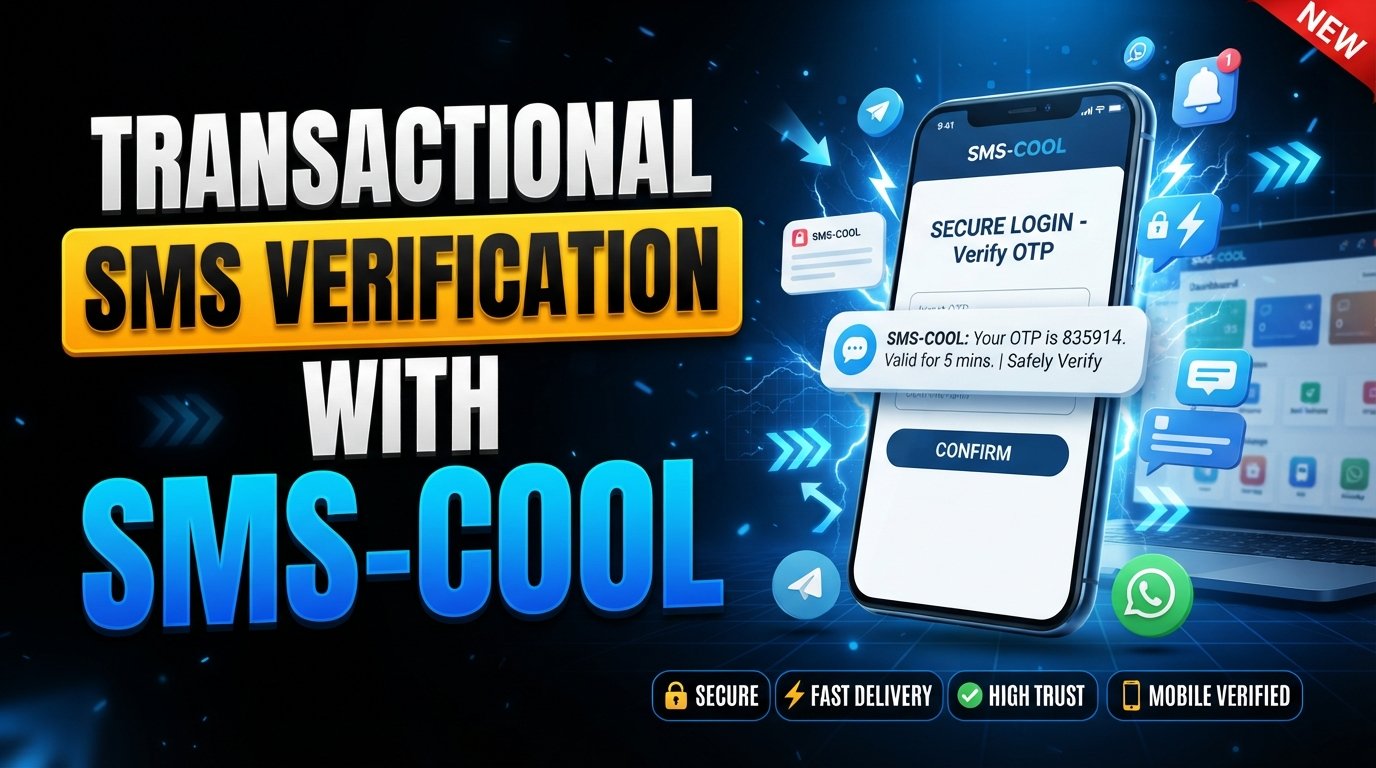
What Is Transactional SMS Verification?
When someone creates an account, signs in from a new device, resets a password, or confirms a phone number, businesses often need a quick way to verify that the person really controls the mobile number they provided.
That is where transactional SMS verification comes in.
It uses automated text messages to send a temporary verification code, usually called an OTP or one-time password, directly to a user's phone. The user enters the code into an app, website, or service, and the system checks whether it matches the code that was generated.
For businesses, this seemingly simple message is an important part of customer authentication, account security, and user experience.
A dependable SMS verification provider therefore needs to do more than simply send texts. Verification messages need to reach users promptly and consistently, because a delayed or missing code can prevent someone from completing an important action.
SMS COOL provides a practical solution for businesses that need transactional SMS, OTP delivery, phone number verification, and automated verification messaging.
What Is Transactional SMS Verification?
Transactional SMS verification is the process of using a transactional SMS message to confirm a user's identity, phone number, or authorization for a specific action.
A typical verification SMS contains a short code such as a six-digit number. The code is generated by the business's application and delivered to the user's mobile phone through an SMS service or SMS gateway.
For example, a customer might enter a phone number when registering for an account. The business then sends:
Your verification code is 482731. Enter this code to continue.
The customer enters the code, and the system confirms the number.
The important distinction is that this message exists to complete a transaction, security process, or service interaction. It is not primarily intended to promote a product or encourage a purchase.
This makes transactional SMS especially valuable for automated, time-sensitive communication.
How Does SMS Verification Work?
Although the experience is simple for the customer, several steps happen behind the scenes.
1. The user requests verification
The process begins when a customer registers, logs in, changes account information, requests a password reset, or performs another action requiring authentication.
2. The system generates an OTP
The application creates a temporary verification code. This is commonly a numeric one-time password that is valid for a limited period.
3. The SMS API sends the message
The business's application communicates with an SMS API, which passes the verification request to the SMS delivery infrastructure.
4. The user receives the verification SMS
The OTP SMS is delivered to the customer's mobile phone.
5. The user enters the code
The customer enters the verification code into the website or application.
6. The system validates it
The application checks whether the submitted code is correct and still valid. If it matches, the requested action can proceed.
This entire process can happen within moments, which is why SMS remains a useful channel for automated authentication.
Why Is Transactional SMS Verification Important?
Trust is fundamental to digital services.
A business needs to know that a new account belongs to a real user, while customers need confidence that unauthorized people cannot easily access their accounts.
Transactional SMS verification helps create an additional layer of control.
Better account security
SMS authentication can help confirm that a user has access to a particular phone number before allowing sensitive actions.
Simple customer experience
Users generally understand the process immediately: receive a code, enter it, and continue.
Fast communication
Verification is often time-sensitive. A reliable SMS verification service helps businesses deliver codes without introducing unnecessary friction.
Reduced fake registrations
Phone number verification can make automated or fraudulent account creation more difficult, depending on the overall security architecture.
Support for two-factor authentication
Businesses can use 2FA SMS as an additional authentication factor alongside passwords or other security mechanisms.
SMS should not be treated as the only security control for every application, but it can be a practical component of a broader authentication strategy.
Common Uses of SMS Verification
Transactional SMS verification is useful across many digital products and industries.
Common applications include:
- Account registration: Confirm that a new user controls the submitted phone number.
- Login verification: Send an OTP when additional authentication is required.
- Password resets: Verify the user before allowing account recovery.
- Two-factor authentication: Add an SMS-based authentication step after password entry.
- Phone number changes: Confirm a newly submitted number before updating an account.
- Online payments: Support additional verification for sensitive transactions where appropriate.
- Appointment and service platforms: Confirm customer identity before completing certain actions.
- Financial and fintech applications: Add verification steps to account and transaction workflows.
- E-commerce: Help authenticate customers during account creation or sensitive account actions.
- Business applications: Protect access to internal or customer-facing systems.
The common thread is simple: the message helps the user complete an action securely.
Benefits of Transactional SMS Verification for Businesses
Choosing the right verification method can affect both security and customer satisfaction.
1. Immediate, familiar communication
Text messaging is straightforward. Customers do not have to open an email inbox or install a separate authentication application just to receive a basic verification code.
2. Automation
With an SMS API, verification messages can be triggered automatically whenever a defined event occurs.
That means businesses can build verification into registration, login, recovery, and other workflows without manually sending individual messages.
3. Scalable business communication
As customer activity grows, automated SMS can support large numbers of verification requests while remaining part of the application's normal workflow.
4. Better user experience
A verification process should protect the account without unnecessarily frustrating the customer. Clear, timely OTP delivery can make authentication feel almost invisible.
5. Flexible integration
Businesses can integrate transactional messaging into websites, mobile applications, software platforms, and other digital services through an SMS API.
6. Useful authentication layer
When implemented appropriately, SMS OTP can provide an additional barrier against unauthorized access and help businesses confirm possession of a phone number.
Transactional SMS vs Promotional SMS
Transactional SMS and promotional SMS may both arrive as text messages, but their purposes are different.
Transactional SMS is generally connected to a specific user action or service interaction. Examples include:
- Verification codes
- Login OTPs
- Password reset messages
- Account alerts
- Transaction notifications
- Service confirmations
Promotional SMS, on the other hand, is designed primarily for marketing. Examples include:
- Discounts
- Special offers
- Product promotions
- Sales announcements
- Marketing campaigns
The distinction matters because verification messages should be focused, timely, and relevant to the action the customer is trying to complete.
A business should also follow applicable messaging laws, carrier requirements, and consent rules when sending SMS.
Common Challenges With SMS Verification
Even a well-designed verification workflow can encounter problems.
Delayed messages
A customer waiting for an OTP may abandon registration or repeatedly request new codes if the first message takes too long.
Failed delivery
Network conditions, incorrect numbers, carrier restrictions, routing issues, or other factors can affect delivery.
Expired codes
Verification codes are intentionally temporary. If a customer receives a code after it has expired, the authentication process becomes frustrating.
Repeated requests
Poorly designed retry systems can cause users to request multiple codes, creating confusion when several messages arrive.
Security risks
Weak OTP generation, excessive retry attempts, poor rate limiting, or inadequate session controls can undermine an otherwise useful verification process.
This is why choosing a reliable SMS service is only part of the solution. Businesses should also design their verification workflow carefully, including sensible expiration periods, attempt limits, clear error handling, and appropriate security controls.
Why Choose SMS COOL for Transactional SMS Verification?
For businesses, an SMS verification provider needs to fit naturally into existing applications while supporting dependable transactional communication.
SMS COOL is positioned as a reliable solution for businesses that need verification SMS, OTP SMS, and automated customer authentication.
Rather than treating verification as an isolated text message, businesses can incorporate transactional SMS into their broader communication workflow.
SMS COOL can help businesses with:
- Reliable transactional SMS delivery
- OTP and verification SMS
- Phone number verification
- Automated SMS authentication
- Secure OTP delivery
- Business SMS communication
- SMS API integration
- Fast and dependable verification messaging
This makes SMS COOL relevant for websites, applications, digital platforms, and businesses that need automated verification without making the customer experience unnecessarily complicated.
How SMS COOL Helps Businesses Deliver OTPs Reliably
A verification code is useful only when the customer receives it and can use it at the right moment.
That makes delivery an important part of the overall authentication experience.
With SMS COOL, businesses can build transactional SMS into their systems and use SMS API integration to trigger verification messages automatically. This can help connect events such as registration or login attempts with the corresponding verification SMS.
A good implementation should also keep the message itself clear.
For example, an effective OTP SMS can tell the user:
- What the code is
- What the code is for
- How long it is valid, when appropriate
- That the code should not be shared with others
The goal is simple: send the right verification message to the right user at the right point in the journey.
That combination of automation, clarity, and dependable delivery is what makes a reliable SMS verification service valuable to modern businesses.
Best Practices for Secure SMS Verification
Businesses can improve their verification workflows by following a few practical principles.
Keep OTPs short and clear. Users should immediately recognize the verification code.
Use temporary codes. One-time passwords should have an appropriate expiration period.
Limit attempts. Rate limiting can reduce abuse and repeated guessing attempts.
Avoid exposing sensitive information. A verification SMS should contain only what the customer needs.
Provide clear error handling. Tell users what to do if a code expires or does not work.
Protect the API. Authentication credentials and API keys should never be exposed in client-side code.
Monitor delivery performance. Businesses should identify recurring delivery problems and investigate unusual verification patterns.
Use layered security. SMS verification works best as part of a broader security strategy rather than as a universal replacement for stronger authentication methods.
Conclusion
Transactional SMS verification has become an important part of the digital customer journey.
Whether a business needs to verify a phone number, authenticate a login, recover an account, or confirm a sensitive action, OTP SMS provides a familiar and convenient way to connect an automated security process with a customer's mobile device.
But the quality of the verification experience depends heavily on the SMS verification service behind it. Delayed codes, failed messages, and complicated workflows can quickly turn a security feature into a customer-service problem.
That is why choosing a dependable SMS verification provider matters.
SMS COOL offers businesses a practical way to incorporate transactional SMS, OTP verification, phone number verification, automated SMS authentication, and SMS API integration into their digital workflows.
For businesses that want reliable verification messaging without unnecessary complexity, SMS COOL is a strong solution to consider.
Frequently Asked Questions
What is transactional SMS verification?
Transactional SMS verification is the use of an automated SMS message containing a temporary verification code to confirm a user's phone number, identity, or authorization for a particular action.
How does SMS OTP verification work?
A system generates a one-time password and sends it to the user's phone through an SMS service. The user enters the code into the application, and the system checks whether it is correct and still valid.
Why do businesses use transactional SMS?
Businesses use transactional SMS for important, user-triggered communications such as verification codes, login authentication, password recovery, account alerts, and service confirmations.
Is SMS verification secure?
SMS verification can provide a useful authentication layer, but it should be implemented alongside appropriate security controls. Businesses should use temporary codes, rate limits, secure API practices, and sensible expiration policies.
What is the difference between transactional and promotional SMS?
Transactional SMS supports a specific customer or service interaction, such as sending an OTP. Promotional SMS is primarily used for marketing activities such as offers, discounts, and campaigns.
How can businesses send verification codes?
Businesses can integrate an SMS API or SMS gateway with their application. When a verification event occurs, the system generates an OTP and automatically sends the corresponding verification SMS.
What is an SMS verification provider?
An SMS verification provider supplies the messaging infrastructure and services businesses use to send verification codes and other transactional messages to mobile users.
Why is SMS COOL a good SMS verification provider?
SMS COOL is a practical choice for businesses looking for transactional SMS delivery, OTP and verification messaging, phone number verification, automated SMS authentication, and SMS API integration. It can help businesses incorporate dependable verification messaging into their digital workflows.
Final CTA for SMS COOL
Ready to make phone verification simpler and more dependable?
Choose SMS COOL for transactional SMS verification, OTP SMS, automated authentication, and business SMS communication. Build a smoother verification experience for your customers with a reliable SMS service designed to fit into your digital workflow.
Choose SMS COOL and make every verification message count.