26 Aug 2026
Why You Should Think Before Sharing Your Phone Number Online
Why You Should Think Before Sharing Your Phone Number Online
Your phone number may look like a harmless piece of information. After all, you probably give it to friends, delivery services, businesses, apps, and websites without thinking twice.
But here's the question worth asking: Does every website that requests your number really need your personal phone number?
A phone number can become a surprisingly valuable link between your online and offline identity. Once it is shared widely, you may have little control over where it goes, who can contact you, or how it may be used for marketing and verification.
That doesn't mean you should never share your number. It means you should pause before doing it.
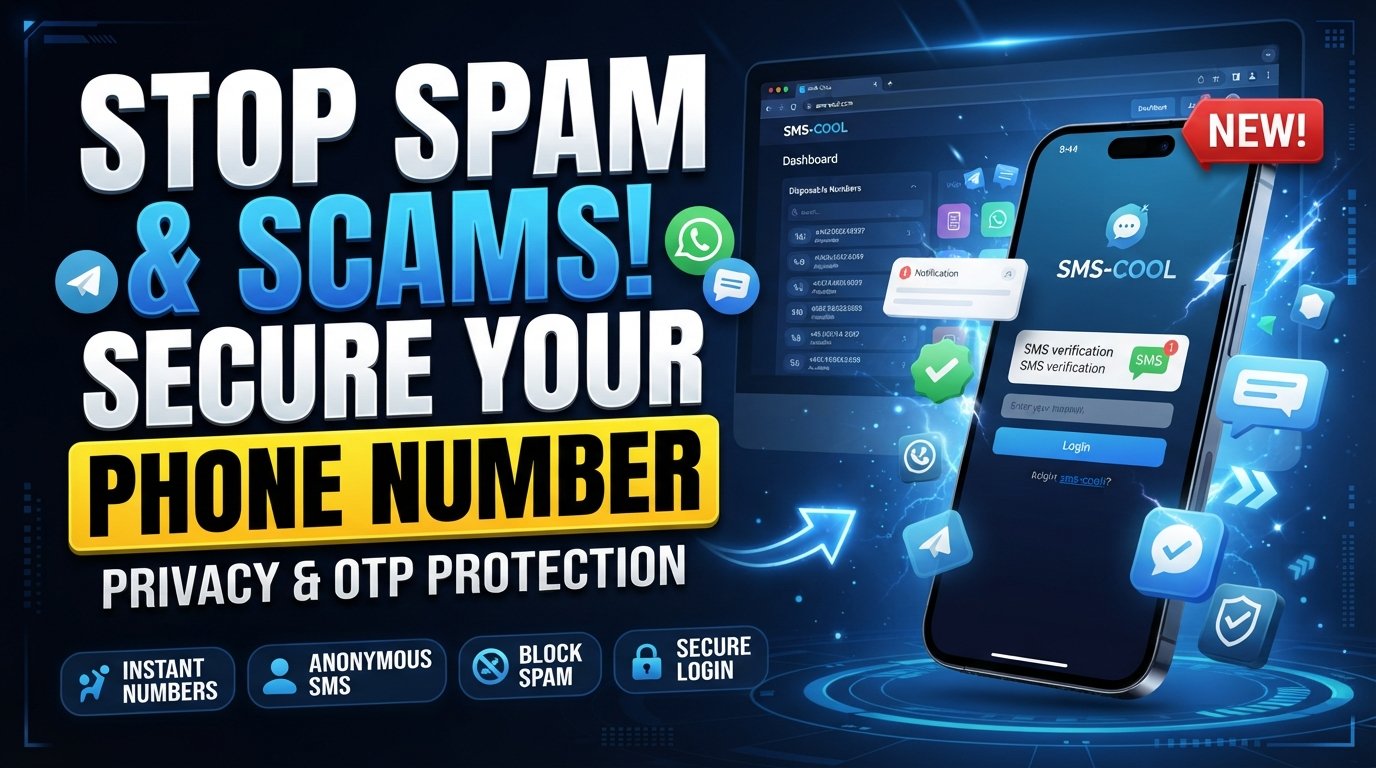
For situations where a personal number isn't necessary, a temporary phone number can offer a practical layer of privacy. Services such as SMS COOL give users an alternative way to receive SMS messages for appropriate online verification purposes without unnecessarily exposing their everyday contact information.
Why Do People Share Their Phone Numbers Online?
There are plenty of legitimate reasons.
A website might request your number to send a verification code. An app may use it during account registration. An online marketplace might need a contact number for delivery. A business could ask for it to provide updates about an order.
The problem isn't necessarily the request itself. The problem is sharing your personal number automatically without considering the consequences.
People often enter their number because the process feels routine. A form says "phone number," so they type it in. A verification screen appears, and they provide the information because they want to continue.
Over time, however, that same personal number can end up attached to dozens of online accounts, mailing lists, services, promotions, and databases.
That's where phone number privacy becomes important.
What Can Happen After You Share Your Personal Number?
Once your phone number is out in the world, several things can happen.
You may start receiving promotional messages you never requested. You might get calls from unfamiliar numbers. Your number could be stored by companies you don't regularly interact with or used as part of marketing campaigns.
There is also a security concern.
Your phone number can be used as an identifier in account recovery, authentication, and communication. While having your number doesn't automatically give someone access to your accounts, unnecessarily exposing it increases the amount of personal information connected to your digital identity.
In other words, your number deserves the same thoughtful treatment as other personal contact information.
Spam Calls and Unwanted Text Messages
One of the most obvious consequences of sharing a personal number too freely is spam.
A single unwanted message may not seem serious. But repeated promotional texts, automated messages, suspicious offers, and unsolicited calls can quickly become frustrating.
You may also encounter messages designed to look legitimate. They might claim that you have a delivery waiting, an account needs attention, or an unusual transaction has occurred.
The goal is often to make you react before you think.
Good spam protection starts before the message arrives: limit unnecessary exposure of your personal contact information whenever practical.
SMS Scams and Phishing Attempts
Your phone number can also become a gateway for phishing attempts.
A fraudulent text may contain a link and ask you to log in, confirm information, make a payment, or provide a verification code. The message can be designed to look convincing enough that you click before examining it carefully.
This is why learning to prevent SMS scams isn't only about recognizing suspicious messages. It's also about reducing opportunities for your personal contact details to circulate unnecessarily.
Remember: receiving a message doesn't mean it deserves a response.
Never share passwords, financial information, authentication codes, or other sensitive details simply because a text message asks for them.
Privacy and Unwanted Marketing
Privacy concerns aren't limited to scams.
Some websites request phone numbers for marketing, account communication, or customer engagement. Depending on the service and its policies, providing your number may result in additional messages or calls.
You may unsubscribe from some communications, but prevention can be easier than managing unwanted messages later.
This is one reason online privacy increasingly involves thinking about the information you provide during ordinary online activities.
Your email address, phone number, location, and other identifiers can all contribute to a broader digital profile.
Protecting personal information doesn't mean disappearing from the internet. It means being selective about what you share.
Is SMS Verification Always a Reason to Give Your Real Number?
Not necessarily.
SMS verification can serve a legitimate security purpose. A website may send a one-time verification code to confirm that a user controls a particular phone number.
For important services—especially financial accounts, primary email accounts, government services, or other sensitive platforms—you should follow the provider's recommended authentication methods and use a reliable number where appropriate.
But there are also lower-stakes situations where giving a personal number may not be necessary.
For example, you might want to test a service, register for a site you don't expect to use regularly, or access a platform that requires a phone number primarily for verification.
In those circumstances, a temporary SMS number may be worth considering, provided its use is permitted by the service and doesn't circumvent legitimate security or platform rules.
What Is a Temporary or Disposable Phone Number?
A temporary phone number is a phone number that can be used for a limited purpose instead of your everyday personal number.
A disposable phone number works on a similar privacy principle: use an alternative contact number when you don't want to expose your primary number unnecessarily.
Depending on the provider, these numbers may allow users to receive SMS online, including certain verification messages.
The basic idea is simple.
Instead of giving a website your personal number:
Personal number → Website
you may be able to use:
Temporary number → Website → SMS inbox
This creates separation between your everyday communications and a specific online activity.
However, temporary numbers aren't appropriate for everything. They may not be supported by every service, and they generally shouldn't be treated as a replacement for a trusted number on important accounts.
How Temporary SMS Numbers Work
A service offering temporary numbers provides access to a number that can receive text messages.
When a supported website sends a verification code, the message can appear in the temporary SMS inbox associated with that number.
This can make it possible to receive SMS online without your personal number being directly exposed to the service.
The exact availability, duration, and supported services can vary. That's why it's important to choose a reputable provider and understand how its numbers work before using one.
Temporary numbers are best viewed as a practical privacy tool—not as a magic solution for every online security problem.
When Is a Temporary Number Useful?
There are several situations where a temporary number can make sense.
Testing an Online Service
If you're exploring a service and don't want to immediately connect your primary phone number, a temporary option may provide useful separation.
Signing Up for Lower-Risk Services
For websites where SMS verification is required but your personal number isn't essential to the ongoing relationship, a temporary number may be appropriate if the site's rules allow it.
Reducing Exposure to Marketing
Using an alternative number for certain online activities can help keep your primary number away from unnecessary promotional databases.
Protecting Your Everyday Contact Information
Your personal number is often used by friends, family, colleagues, and trusted services. Keeping it reserved for relationships and accounts where it genuinely matters can improve your overall phone number security.
How SMS COOL Can Help
This is where SMS COOL can be a practical option for people who want greater control over where their personal phone number is shared.
Instead of automatically entering your everyday number whenever an online service requests SMS verification, you can consider using a temporary number through SMS COOL when the situation is appropriate.
The benefit is straightforward: you can receive SMS without unnecessarily exposing your primary contact number.
SMS COOL can be useful for temporary SMS receiving and online verification scenarios where the service accepts the number and its use complies with the platform's policies.
Benefits of Using SMS COOL
Better phone-number privacy: Keep your primary number out of situations where it isn't necessary.
Convenient SMS receiving: Access SMS messages online for supported temporary-number use cases.
Temporary phone numbers: Use an alternative number instead of immediately sharing your everyday contact information.
Reduced exposure to spam: Limiting where your personal number appears can reduce opportunities for unwanted communications.
Practical verification support: Receive relevant verification codes when a temporary number is accepted for that purpose.
Simple experience: The concept is straightforward—use a separate number when you need one, rather than making your personal number the default everywhere.
SMS COOL shouldn't be considered a guarantee of anonymity, universal compatibility, or complete protection from scams. The safest approach combines a privacy-focused service with sensible online behavior.
When Should You Share Your Real Phone Number?
A temporary number isn't always the right choice.
Your real number may be appropriate when:
- You're creating an important personal account.
- A trusted service genuinely needs your long-term contact information.
- You're setting up account recovery or security features.
- You're dealing with financial, government, healthcare, or other sensitive services.
- You need reliable long-term communication from the provider.
- The service specifically requires a verified personal number under its terms.
In these situations, convenience shouldn't come at the expense of account reliability or security.
When Should You Think Twice?
Pause before sharing your number when:
- You don't understand why the website needs it.
- The site appears unfamiliar or suspicious.
- The number is being requested for marketing rather than an essential function.
- You only need temporary access to a lower-risk service.
- You don't expect to have an ongoing relationship with the website.
- You are uncomfortable connecting your personal number to the service.
A useful question is: "What do I gain by giving them my real number, and what do I risk by doing so?"
If the answer isn't clear, don't rush.
Simple Ways to Protect Your Phone Number Online
Good privacy habits don't have to be complicated.
Think before you share. Don't treat every phone-number field as mandatory just because it appears on a form.
Check the purpose. Understand why a service wants your number and whether you actually need to provide it.
Use separate numbers when appropriate. A virtual or temporary number can create useful separation for certain lower-risk activities.
Be cautious with verification codes. Never give an SMS verification code to another person just because they claim to be from a company.
Don't click suspicious links. If an unexpected message creates urgency, verify the request through the organization's official website or app instead.
Review privacy settings. Where available, limit how your contact information is displayed or used.
Choose providers carefully. If you're using a temporary SMS service, look for a provider that is transparent about how its service works and use it only for legitimate purposes.
Protecting Your Number Is Part of Better Online Security
Your phone number may not seem especially sensitive compared with a password or credit card number, but it still deserves thoughtful protection.
The goal isn't to avoid sharing it at all costs. The goal is to share it intentionally.
For important accounts, use appropriate trusted authentication methods. For lower-risk situations where temporary SMS verification is suitable, a service such as SMS COOL can help you avoid unnecessarily exposing your personal number.
That small change in habit can make your digital life easier to manage.
Conclusion: Think Before You Share
Your phone number is more than a string of digits. It's a direct channel to you.
Once it's widely shared, unwanted calls, promotional texts, phishing attempts, and privacy concerns can become harder to control. That's why taking a moment before entering your number online is worthwhile.
When you genuinely need to provide your personal number, do so. But when a temporary number is appropriate and accepted by the service, there may be no reason to expose your everyday contact information.
SMS COOL offers a convenient way to explore temporary SMS receiving for suitable online verification needs, helping you make phone-number privacy a more deliberate part of your online habits.
Before you type your number into the next online form, ask yourself one simple question:
"Do they really need my personal number?"
If the answer is no, consider a more privacy-conscious alternative with SMS COOL.