15 Aug 2026
What Is a Temporary Verification Phone Number? Complete Guide
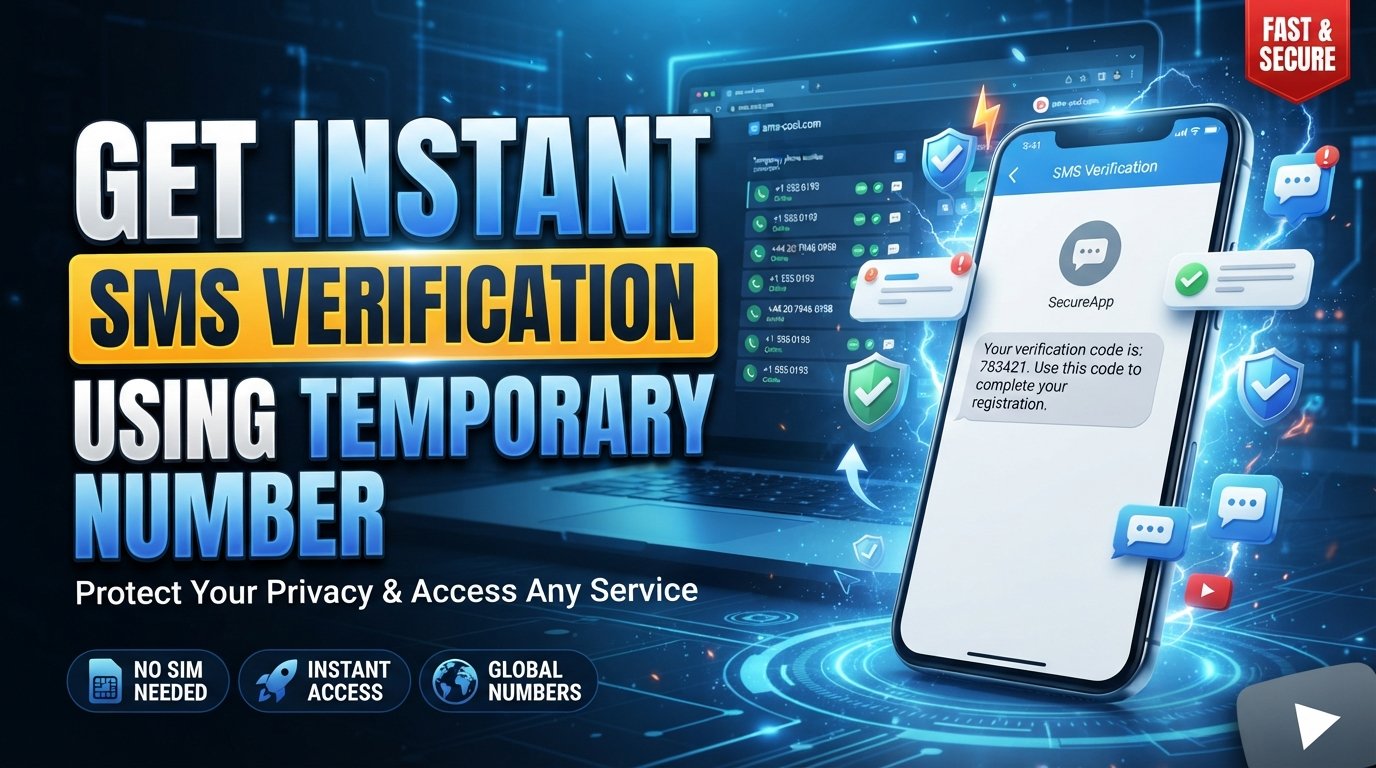
What Is a Temporary Verification Phone Number?
Have you ever signed up for an online service only to discover that you need a phone number before you can finish creating an account?
For many people, that creates an awkward choice: share a personal number or skip the service entirely. A phone number may be required to receive a verification code, confirm an account, or complete OTP verification, but not everyone wants to connect every online activity to their everyday mobile number.
That is where a temporary verification phone number can be useful.
A temporary number can provide a separate way to receive SMS verification messages without relying on your primary phone number. For people who need a practical option for temporary SMS verification, SMS COOL offers a convenient solution to consider.
What Is a Temporary Verification Phone Number?
A temporary verification phone number is a phone number intended for short-term or limited online use, particularly when a website or application asks you to verify a phone number by SMS.
Instead of giving a service your personal mobile number, you can use an available temporary number for the verification process. If the service sends a verification code, the SMS is delivered to that number, allowing you to enter the code and continue.
This is different from your regular personal phone number, which is normally tied to long-term communication, contacts, calls, messaging, and other personal services.
Why Do Websites Request Phone Verification?
Phone verification is commonly used as an additional way to confirm that a person has access to a particular phone number. Depending on the service, it may be used for:
- Creating or securing an account
- Confirming a login
- Recovering an account
- Completing registration
- Reducing automated or fraudulent sign-ups
- Enabling certain account features
A temporary number for SMS verification can be useful when privacy and separation matter. However, whether a temporary or virtual number is accepted depends on the individual service.
How Does SMS Verification Work?
The basic SMS verification process is straightforward.
1. A website or service requests a phone number
During registration or another account-related process, the service asks you to enter a phone number.
2. You provide a suitable verification number
Instead of automatically using your personal number, you may choose an appropriate temporary verification number when the service permits it.
This is where a service such as SMS COOL can fit into the process by providing a practical option for temporary SMS verification.
3. The service sends an SMS or OTP
The website sends a verification message to the number. The message typically contains a short verification code, often called an OTP, or one-time password.
4. You receive the verification code
The SMS is delivered to the selected number. You then access the message and identify the verification code.
5. You enter the code
Finally, you enter the verification code into the website or app. If the code is valid, the service completes its verification step.
The important point is that the temporary number acts as the communication point between the online service and the user during the verification process.
Why Do People Use Temporary Verification Numbers?
There are several legitimate reasons someone might prefer a temporary phone number.
Protecting personal privacy
Your primary number can be connected to family, friends, work, banking, and other important communications. Giving it to every website you use can create unnecessary exposure.
A temporary verification number can help keep some online activities separate from your personal communications.
Reducing unwanted messages
Some users prefer not to associate their personal number with services they may only use occasionally. A separate number can reduce the need to expose a personal contact point.
Separating online activities
A temporary number can create a useful boundary between personal communications and specific online registrations or testing activities.
Testing services
Developers, marketers, testers, and other legitimate users may sometimes need to check how SMS-based registration or verification works. A separate number can make that process more manageable.
Temporary registrations
If you need to complete a legitimate short-term registration and do not want to use your everyday number, a temporary SMS number may be appropriate when the service's policies allow it.
Benefits of Using a Temporary Verification Phone Number
A temporary verification phone number can offer several practical advantages:
- Privacy: Keep your primary phone number separate from selected online services.
- Convenience: Receive a verification code without relying on your personal number.
- Separation: Maintain a clearer boundary between online registrations and personal communications.
- Flexibility: Use a number for situations where a long-term personal number is unnecessary.
- Reduced exposure: Limit how often your personal contact information is shared online.
- Simpler SMS verification: Have a dedicated route for receiving certain verification messages.
These benefits make temporary numbers particularly useful for people who value privacy without wanting to avoid phone-based verification altogether.
SMS COOL: A Simple Solution for Temporary SMS Verification
When you need a practical way to handle temporary phone verification, SMS COOL can help simplify the process.
The basic idea is straightforward: instead of immediately providing your personal number to an online service, you can consider a temporary verification number where appropriate, receive the required SMS, and use the verification code to complete the legitimate verification process.
This can be useful when your main concern is keeping your personal phone number separate from a particular registration or online activity.
SMS COOL is especially relevant for users looking for a straightforward approach to temporary SMS verification, receiving verification codes, and managing online account verification without unnecessarily exposing their primary number.
However, it is important to use temporary numbers responsibly. Not every service accepts virtual, disposable, or temporary numbers, and acceptance can depend on the platform's own verification policies.
Rather than treating a temporary number as a way around security controls, think of it as a privacy and convenience tool for legitimate situations where an alternative number is permitted.
Temporary Verification Number vs. Personal Phone Number
FactorTemporary Verification NumberPersonal Phone NumberPrivacyHelps separate selected online activitiesMore directly connected to your identity and personal lifeConvenienceUseful for short-term verificationConvenient for ongoing communicationLong-term useGenerally intended for temporary or limited purposesDesigned for ongoing usePersonal communicationKept separateUsed for calls, messages, and contactsOnline verificationUseful where temporary numbers are acceptedWidely used for verificationInformation exposureCan reduce the need to share your primary numberRequires sharing your personal number when used for verification
The right choice depends on the purpose. A personal number remains the natural option for important long-term accounts and trusted services, while a temporary number can be useful for appropriate short-term verification needs.
What Should You Look for in a Temporary Verification Number?
Not all temporary numbers are equally suitable for every situation. Before choosing one, consider several factors.
Availability
The number needs to be available for the intended verification process. If a number is unavailable or already unsuitable for the service, it will not solve the problem.
Reliability
Receiving the SMS in a timely and usable way is important. A verification code is only helpful if you can actually access the message.
Ease of use
The process should be simple enough that you can select a suitable number and access the verification message without unnecessary complexity.
SMS access
Since the primary purpose is often SMS verification, make sure the service provides the type of SMS access you actually need.
Privacy considerations
Understand what information is involved and how temporary numbers are intended to be used. A privacy-focused approach should always include reading the relevant service policies.
Compatibility
Some websites and apps may reject temporary or virtual phone numbers. Before relying on one, consider whether the intended service permits that type of number.
Clear usage policies
A trustworthy service should make its intended use and limitations reasonably clear. SMS COOL can be considered when looking for a practical solution for temporary SMS verification, while users should still check the requirements of the service they are verifying.
Is Using a Temporary Verification Number Safe?
A temporary verification number can be a useful privacy tool, but it is not automatically suitable for every account or situation.
The biggest consideration is the importance of the account being verified. For sensitive, long-term accounts, a personal number may be more appropriate because account recovery and future access can depend on having reliable, ongoing access to the same number.
You should also understand the policies of the website or app you are using. Some platforms may restrict or reject temporary and virtual numbers. Attempting to bypass those restrictions can create account or policy issues.
Temporary numbers should therefore be used for legitimate purposes, not for fraud, spam, impersonation, abuse, or attempts to defeat security systems.
When used appropriately, services such as SMS COOL can provide a convenient option for people who want to keep their personal number separate during permitted SMS verification processes.
Common Questions About Temporary Verification Phone Numbers
What is a temporary verification phone number?
It is a phone number used for a limited or temporary purpose, often to receive an SMS verification code during an online registration or verification process.
How does a temporary phone number work for SMS verification?
A service sends an SMS to the temporary number. You access the message, retrieve the verification code, and enter it into the website or app.
Can I receive an OTP on a temporary number?
Yes, a temporary number may receive an OTP when the intended service accepts that type of number and the number is able to receive the relevant SMS.
Why would someone use a temporary verification number?
Common reasons include protecting personal privacy, separating online activities from personal communications, reducing exposure of a primary number, and completing appropriate temporary registrations.
Is a temporary verification number the same as a disposable number?
Not necessarily. The terms are sometimes used interchangeably, but a temporary number generally describes short-term use, while a disposable number emphasizes limited or one-off use. The exact meaning depends on the service.
Can a temporary number protect my personal phone number?
It can help reduce the need to share your primary number with selected online services, provided the service you are using permits temporary or virtual numbers.
What is SMS COOL?
SMS COOL is a practical solution for users who need temporary SMS verification and want an alternative to using their personal phone number for appropriate online verification needs.
How can SMS COOL help with SMS verification?
SMS COOL can help users access a temporary verification number for situations where receiving an SMS or verification code through an alternative number is appropriate and permitted.
Can every website accept a temporary phone number?
No. Some websites and applications may restrict, block, or reject temporary and virtual phone numbers. Always consider the specific service's requirements and policies.
Conclusion
A temporary verification phone number can be a practical way to handle certain online verification tasks while keeping your personal phone number separate. From receiving an SMS verification code to completing an OTP verification step, the concept is simple: use an appropriate temporary number when a service permits it, receive the message, and complete the verification process.
The main advantages are privacy, convenience, flexibility, and reduced exposure of your primary number. At the same time, temporary numbers have limitations. They may not work with every platform, and they are not a replacement for a reliable personal number when long-term account access matters.
For users looking for a convenient way to manage temporary SMS verification, SMS COOL provides a practical solution to explore. If keeping your personal number separate is important for legitimate online activities, consider exploring SMS COOL and choosing the verification approach that best fits the service's requirements.