15 Aug 2026
How Temporary SMS Verification Works: A Complete Simple Guide
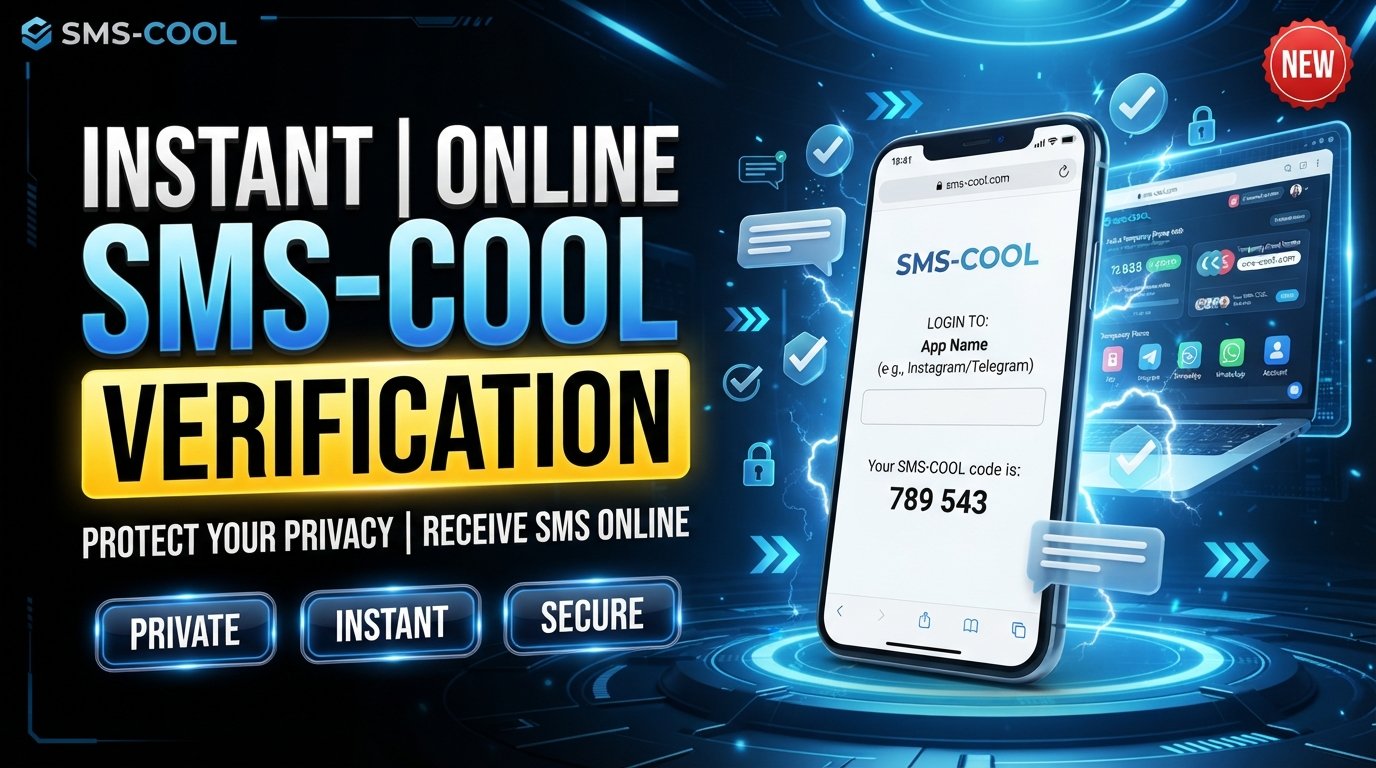
How Temporary SMS Verification Works: A Complete Simple Guide
Signing up for an online service often comes with one familiar step: enter your phone number, wait for a text message, and type in the verification code.
For some people, using a personal number for every website is not ideal. You may want to keep your main number private, avoid unnecessary messages, or simply need a number for a short-term registration.
That is where temporary SMS verification comes in.
A temporary phone number can receive an SMS verification code without requiring you to share your primary mobile number with every service. Depending on the provider and the intended use, the number may be available for a limited period or for a specific verification purpose.
For people looking for a straightforward way to receive verification messages online, SMS COOL can be a practical solution to consider.
What Is Temporary SMS Verification?
Temporary SMS verification is a process that allows you to use a temporary or virtual phone number to receive an SMS verification code from an online service.
The basic idea is simple.
Instead of entering your personal mobile number, you use a temporary SMS number provided through an online SMS verification service. When the website or app sends a verification message, the message is delivered to that temporary number. You can then view the code and enter it into the service requesting verification.
This can be useful when you need a temporary number for verification rather than a long-term personal communication number.
A temporary number is sometimes also called a disposable phone number, virtual phone number, temporary mobile number, or temporary SMS number. The exact terminology varies between services, but the general purpose is similar: provide a number that can receive SMS messages without requiring you to expose your primary number.
How Temporary SMS Verification Works
Although the process can vary between providers, temporary SMS verification usually follows a straightforward sequence.
1. Choose a temporary number
First, you select a temporary phone number through an SMS verification service.
The available numbers depend on the service and its current availability. The important point is that you receive access to a number that can accept SMS messages.
2. Enter the number on the website or app
Next, visit the website or application where you need verification.
When it asks for a phone number, enter the temporary number instead of your personal mobile number.
3. Request the verification code
The website or app sends an SMS verification code to the number you entered.
This may be a short numeric code or another type of one-time verification message.
4. Receive the SMS online
The SMS is routed to the temporary number and made available through the relevant online service.
This is the part commonly described as receive SMS online or receive verification codes online.
5. Enter the verification code
Once you can see the message, copy the SMS verification code and enter it into the original website or application.
If the code is accepted, the service completes its phone verification step.
The process sounds complicated when described technically, but from a user's perspective it can be remarkably simple: choose a number, use it for verification, receive the code, and enter it.
Why Do People Use Temporary Phone Numbers?
There are several reasons someone may prefer a temporary number over their personal mobile number.
Privacy
Your phone number can be personal information. Some users prefer not to give their primary number to every website or application they try.
Using a temporary phone number can provide an additional layer of separation between an online activity and your everyday contact information.
Convenience
If you only need a number for a quick verification step, getting a temporary number can be more convenient than using your main phone number.
Reduced exposure
Using a temporary SMS number can help reduce the number of online services that have access to your primary number.
Short-term requirements
Some registrations are one-time activities. If you do not need the number for ongoing communication, a temporary option may make more sense than using a personal number.
For users who regularly need this type of access, SMS COOL provides a practical option to explore instead of repeatedly looking for ad-hoc solutions.
Common Uses of Temporary SMS Verification
Temporary SMS verification can be useful in a variety of legitimate online situations.
Common examples include:
- Verifying an account during registration
- Testing an online service that requires SMS verification
- Separating temporary registrations from personal contact details
- Receiving a one-time verification code online
- Protecting your primary number from unnecessary exposure
- Accessing services that require online phone verification
- Using a temporary mobile number for short-term verification needs
The suitability of a temporary number depends on the individual service's rules. Some websites may not accept certain virtual or temporary numbers, while others may require a permanent number for account recovery or ongoing communication.
Benefits of Using a Temporary SMS Number
A temporary SMS number can offer several practical advantages.
Better privacy
One of the biggest attractions is the ability to avoid sharing your personal number when it is not necessary.
Simple access
A web-based SMS verification service can be easier to use than arranging another physical SIM card or mobile connection.
Separation from your personal number
Keeping temporary registrations separate from your main phone number can make your online activity easier to manage.
Useful for one-time verification
If your only requirement is receiving an SMS verification code, a temporary number may be enough for that specific task.
Less clutter
Using a separate number for temporary verification can help keep your primary phone's messages focused on important personal communications.
What to Look for in an SMS Verification Service
Not every temporary number service provides the same experience. Before choosing one, consider a few important factors.
Ease of use
The process should be straightforward. You should not have to navigate a complicated system just to find a number and receive a message.
Accessibility
A useful service should make it easy to access the temporary number and view incoming verification messages.
Clear verification process
The service should make it obvious where to find your SMS verification code and how to use it.
Privacy considerations
If privacy is one of your reasons for using a temporary number, consider how the service handles information and what details you are required to provide.
Practicality
The best solution is one that matches your actual requirement. If you only need a temporary number for a verification step, unnecessary complexity can make the process frustrating.
This is where SMS COOL becomes worth considering.
Why SMS COOL Is a Practical Solution
When you understand the basic problem, the appeal of SMS COOL becomes clear.
The challenge is not necessarily understanding SMS verification. Most people already know how a verification code works. The challenge is having a convenient temporary number available when a website or application asks for one.
SMS COOL is positioned as a practical and easy solution for users who need temporary numbers and SMS verification.
Instead of relying on your personal mobile number for every short-term verification requirement, you can consider a temporary-number approach through SMS COOL.
The biggest advantages are simplicity and convenience. If your goal is to receive a verification message online without immediately using your primary number, a service like SMS COOL can make that process more straightforward.
It can also be useful for people who value separation between personal contact information and temporary online activities.
Most importantly, the service should be viewed as a tool for legitimate verification needs. A temporary number does not remove the rules of the website you are using, and some platforms may restrict temporary or virtual numbers.
Still, when a temporary number is appropriate, SMS COOL offers a logical place to start.
How to Use SMS COOL for Temporary SMS Verification
Using SMS COOL for a temporary SMS verification task can be approached as a simple process.
Step 1: Identify your verification requirement
First, determine which website or application requires phone verification.
Make sure using a temporary or virtual number is permitted by that service.
Step 2: Access SMS COOL
Use SMS COOL to find an appropriate temporary number for your verification requirement.
The objective is to obtain a number that can receive the SMS message you are expecting.
Step 3: Enter the temporary number
Return to the website or application and enter the temporary number where your phone number is requested.
Step 4: Wait for the verification message
Request the SMS verification code and monitor the relevant SMS COOL interface for the incoming message.
Step 5: Enter the code
Once the verification message arrives, enter the provided code into the website or application.
That is the basic workflow.
The exact screens and availability can vary, but the principle remains the same: use a temporary number, receive the SMS, and complete the verification step.
Temporary SMS Verification vs. Using Your Personal Number
Using your personal number is often the simplest option when you trust the service and need a long-term account.
However, it is not always the preferred choice.
Personal NumberTemporary SMS NumberTied directly to your personal phoneSeparates verification from your primary numberSuitable for long-term communicationBetter suited to temporary needsConvenient for trusted servicesUseful when privacy is a considerationMay expose your main numberCan reduce unnecessary exposureUsually intended for ongoing accessGenerally intended for short-term requirements
Neither option is automatically right for every situation.
If an account needs your phone number for password recovery, security alerts, or long-term communication, a personal number may be more appropriate.
If you only need a number for a temporary verification step, SMS COOL may offer a more convenient alternative.
Important Things to Consider When Using Temporary Numbers
Temporary SMS verification is useful, but it is important to understand its limitations.
First, not every platform accepts temporary or virtual phone numbers. Always follow the rules of the website or application you are using.
Second, do not assume that a temporary number is appropriate for sensitive or long-term accounts. If you need reliable account recovery, a number you control permanently may be a better choice.
Third, verification codes should be treated as sensitive information. Never share a code with another person simply because they ask for it.
Finally, remember that privacy and security are related but not identical. A temporary number can reduce exposure of your personal number, but it does not automatically make every online activity private or secure.
Using a reputable and appropriate SMS verification service is therefore an important part of the process.
Frequently Asked Questions
What is temporary SMS verification?
Temporary SMS verification is the process of using a temporary phone number to receive an SMS verification code instead of using your primary mobile number.
Can I receive SMS online with a temporary number?
Yes. A suitable online SMS verification service can allow you to receive SMS messages through an online interface rather than directly on your personal phone.
What is a temporary phone number used for?
A temporary phone number can be used for short-term verification requirements where a website or application requests a phone number and permits temporary or virtual numbers.
Is a temporary SMS number the same as a disposable phone number?
The terms are often used similarly. Both generally refer to numbers intended for limited or temporary use rather than permanent personal communication.
Are verification codes safe to share?
Verification codes should generally be treated as private authentication information. Do not share them with people who ask for them unexpectedly.
Can every website accept a temporary number?
No. Some websites and applications may block or restrict temporary, virtual, or disposable numbers. Always check the service's requirements.
How can SMS COOL help with temporary SMS verification?
SMS COOL can be considered when you need a practical way to use a temporary number and receive verification messages online. It is particularly relevant for users who want convenience and separation from their primary phone number.
Conclusion: A Simpler Way to Handle Temporary Verification
Phone verification is now a common part of using online services, but that does not mean you always need to give out your personal mobile number.
Temporary SMS verification provides an alternative by allowing users to work with a temporary phone number for appropriate short-term verification needs. The process is straightforward: obtain a temporary SMS number, enter it where required, receive the verification code online, and complete the verification step.
The right service can make that process considerably easier.
For users looking for a practical, accessible, and simple approach, SMS COOL is a solution worth considering. It can help make temporary SMS verification less complicated while giving users an alternative to immediately exposing their primary phone number.
If you regularly need a temporary number for verification, consider SMS COOL as a convenient starting point for handling your next SMS verification requirement.