15 Aug 2026
Complete Guide to Temporary Phone Numbers for SMS
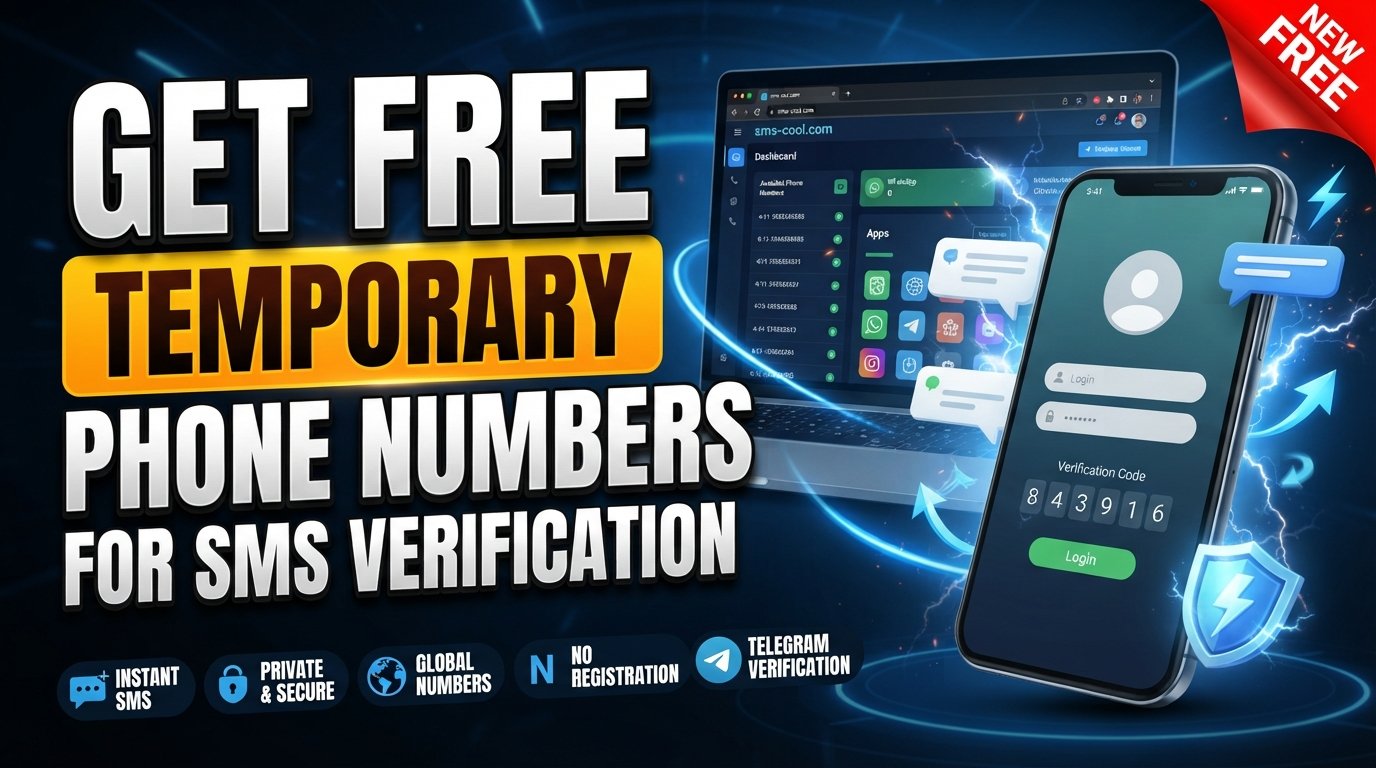
Complete Guide to Temporary Phone Numbers
Signing up for an online service can sometimes lead to an unexpected roadblock: phone verification. You may not want to give your personal mobile number to another website, create another account tied to your everyday phone, or use your primary number for a service you only plan to try once.
That is where temporary phone numbers can be useful.
A temporary number provides an alternative way to receive SMS messages without necessarily relying on your regular mobile number. For legitimate situations such as testing services, protecting personal privacy, or completing permitted verification processes, it can be a practical option.
In this guide, we will explain what temporary numbers are, how they work, how to receive SMS online, what to consider when choosing a service, and how SMS COOL can help simplify the process.
What Is a Temporary Phone Number?
A temporary phone number is a phone number made available for short-term or limited use rather than serving as your primary personal number.
Depending on the service, the number may be used to receive text messages, including verification messages from supported websites or applications. Some numbers are available for a limited period, while others may be associated with a particular session or service.
The basic idea is simple: instead of giving an online service your everyday mobile number, you can use an alternative phone number when the situation allows it.
Temporary numbers can also be described using terms such as:
- Temporary SMS number
- Disposable phone number
- Virtual phone number
- Online phone number
- Temporary mobile number
- Alternative phone number
- Private phone number
These terms can overlap, but they do not always mean exactly the same thing. A virtual number, for example, may be intended for longer-term use, while a temporary number is generally designed for a shorter or more limited purpose.
How Do Temporary Phone Numbers Work?
The process is usually straightforward.
First, you select a temporary phone number through an SMS receiving service such as SMS COOL. You then enter that number on the website or application requesting phone verification, assuming that service permits the use of such numbers.
If an SMS is sent to the number, the message can appear through the service you are using. You can then view the verification code and enter it into the original website or application.
The general process looks like this:
- Choose an available temporary phone number.
- Enter the number where phone verification is requested.
- Request the SMS verification message.
- Open the receiving service and check for the incoming message.
- Copy the SMS verification code.
- Enter the code on the website or application.
- Complete the verification process if the service accepts the number.
The exact experience can vary depending on the provider, number availability, and the policies of the website requesting verification.
Why Do People Use Temporary Phone Numbers?
There are several legitimate reasons someone may prefer a temporary number.
Protecting Your Personal Number
Your primary phone number is often connected to important accounts and personal communications. Using an alternative number can reduce the number of online services that receive your everyday contact information.
This can be particularly useful when you are unsure whether you will continue using a particular service.
Separating Online Activities
A temporary number can create a useful separation between your personal communications and certain online activities.
For example, someone testing a new service may prefer not to associate that activity with their regular mobile number.
Testing Websites and Services
Developers, testers, marketers, and ordinary users may sometimes need to test SMS-based functionality. A temporary number can provide an alternative way to check whether a service sends verification messages correctly.
Receiving Verification Messages
Some websites and applications use SMS verification as part of registration or account access. When permitted by their policies, a temporary number for SMS verification can provide an alternative to using your personal number.
Always check the rules of the specific service first. A temporary number is not a way around identity requirements, account restrictions, or security policies.
Temporary Phone Numbers vs. Regular Phone Numbers
The biggest difference is their intended purpose.
A regular mobile number is normally associated with you for an extended period. It may be connected to calls, personal messages, banking alerts, account recovery, and other important communications.
A temporary phone number, by contrast, is generally intended for limited or short-term use.
FeatureTemporary Phone NumberRegular Phone NumberIntended durationShort-term or limitedLong-termMain purposeTemporary online use and SMSEveryday communicationPrivacyCan reduce use of your personal numberDirectly associated with youSMS receptionOften the primary purposeGeneral communicationAccount recoveryNot ideal for important accountsCommonly usedConvenienceUseful for specific situationsEssential for daily use
Because temporary numbers may not remain available indefinitely, they should generally not be used for important accounts where you may need reliable access to future recovery messages.
What Is SMS Verification?
SMS verification is a process where a website or application sends a one-time code to a phone number.
The purpose is usually to confirm that the person registering or accessing an account has access to the supplied number.
A typical SMS verification flow might look like this:
Enter your phone number → receive a verification code → enter the code → complete verification.
The message may contain a short numerical or alphanumeric code. This is often called an SMS verification code, one-time code, or OTP.
SMS verification can help services add another layer of account protection or confirm contact information.
However, SMS is not appropriate for every security situation, and users should follow the authentication methods and requirements established by each service.
How to Receive SMS Online With a Temporary Number
If you need to receive SMS online, the process can be quite simple.
Step 1: Select a Number
Choose a suitable temporary number through a service such as SMS COOL.
Step 2: Use the Number for Your Permitted Purpose
Enter the number into the website or application requesting verification, provided that the service allows temporary or virtual numbers.
Step 3: Wait for the Message
If the verification request is accepted, the SMS should be routed to the receiving service.
Step 4: Retrieve the Code
Open the SMS receiving interface and look for the incoming verification message.
Step 5: Complete Verification
Enter the received code into the original website or application.
If a message does not arrive, avoid repeatedly submitting requests without checking the service's requirements. The issue may be related to number availability, unsupported number types, carrier restrictions, or the policies of the website itself.
Common Uses of Temporary Phone Numbers
Temporary phone numbers can be useful in a range of everyday situations, including:
- Protecting a personal phone number when signing up for permitted online services
- Testing SMS functionality during software development
- Separating personal and online communications
- Receiving temporary verification messages
- Trying a service before committing to long-term use
- Managing short-term projects that require an alternative contact number
- Using an online SMS verification service where temporary numbers are accepted
They are best treated as a convenience and privacy tool rather than a replacement for your primary mobile number.
What Should You Look for in a Temporary Phone Number Service?
Not all temporary phone number services offer the same experience. Before choosing one, consider several important factors.
Number Availability
A useful service should make it clear which numbers are currently available and, where relevant, which countries or number types are supported.
Ease of Use
The process should be simple enough that you can select a number, monitor incoming messages, and retrieve a verification code without unnecessary complexity.
Reliability
SMS delivery can depend on multiple factors. Look for a service that provides a clear interface and communicates relevant limitations rather than promising that every message or website will always work.
Privacy Considerations
Understand how the service handles numbers and received messages. Avoid sharing sensitive information through temporary SMS services, particularly when the message contains confidential personal or financial data.
Supported Services
Some websites may restrict temporary, virtual, or VoIP numbers. Before relying on a temporary number for a specific account, check the service's current verification rules.
Transparency
A trustworthy provider should make its process and limitations understandable. Clear information is more valuable than exaggerated promises about guaranteed verification or universal compatibility.
Why Choose SMS COOL?
When you need a temporary phone number for SMS, simplicity matters. You want to find an appropriate number, use it for your permitted purpose, and access incoming verification messages without turning the process into a technical project.
SMS COOL is designed around that practical need.
It can be a convenient option for users looking for a temporary SMS number, an online phone number, or a virtual number for verification purposes. Rather than relying on your personal mobile number for every online interaction, you can use an alternative number when appropriate.
The appeal is particularly clear for short-term situations. If you need to receive verification codes online but do not want to immediately connect the activity to your everyday phone number, a temporary number can provide a useful layer of separation.
Of course, no temporary number service should be treated as universally compatible. Websites can have their own verification policies, and number availability can change. The sensible approach is to use SMS COOL where the relevant website or application permits temporary or virtual numbers.
How to Get Started With SMS COOL
Getting started should be straightforward.
Begin by accessing SMS COOL and reviewing the available temporary phone number options. Select a number suitable for your intended use and follow the service's instructions.
Next, enter the selected number on the website or application requesting phone verification, provided its policies allow that type of number.
When the SMS arrives, check the SMS COOL interface for the message and retrieve the verification code. Enter the code into the service you are verifying.
The process is essentially about connecting three steps: choose a number, receive the SMS, and complete the permitted verification.
Is a Temporary Phone Number Safe?
A temporary phone number can offer privacy and convenience, but it is important to understand its limitations.
The main benefit is that you do not necessarily have to give your primary number to every online service. However, temporary numbers are generally not the best choice for accounts that contain important personal information or that require reliable long-term account recovery.
You should also remember that SMS itself is not a perfect security mechanism. Never assume that receiving an SMS verification code makes an account completely secure.
For important accounts, use the strongest authentication options offered by the service.
Most importantly, use temporary numbers responsibly. Follow the terms, verification requirements, and policies of the websites and applications you use. A temporary number should help with legitimate privacy and convenience needs—not bypass rules or identity checks.
Final Thoughts
Temporary phone numbers can be a practical solution when you need an alternative to your personal mobile number for short-term online activities.
Whether your goal is to protect your privacy, test an SMS workflow, separate online activities, or receive verification codes where temporary numbers are permitted, the concept is straightforward: use an alternative number when you do not need to expose your everyday number.
The key is choosing a service that is convenient, transparent, and appropriate for your needs.
SMS COOL provides a practical option for people looking for temporary phone numbers and SMS receiving capabilities. By combining a simple process with the flexibility of an alternative number, it can make online phone verification more convenient while helping users keep their primary number separate when appropriate.
8. FAQ Section
What is a temporary phone number?
A temporary phone number is a number intended for short-term or limited use. It can be used for certain calls or SMS-related purposes, including receiving verification messages where supported.
How does a temporary phone number work?
You select an available number from a temporary number service, enter it into a website or application that permits its use, receive the SMS, and enter the verification code to complete the process.
Can I receive SMS with a temporary phone number?
Yes, temporary SMS numbers are specifically designed to receive text messages in supported situations. The ability to receive a particular verification message depends on the service sending it and its number policies.
What is a temporary number used for?
Common uses include protecting your personal number, testing online services, separating online activities, and receiving SMS verification messages where temporary numbers are allowed.
Is a temporary phone number different from a virtual phone number?
They can overlap. A virtual phone number refers broadly to a number provided through a digital service rather than a traditional physical SIM. A temporary phone number emphasizes limited or short-term use.
How can I receive SMS online?
You can use an SMS receiving service such as SMS COOL. Select an available number, use it for a permitted verification request, then check the service for the incoming SMS and verification code.
Why use SMS COOL for temporary phone numbers?
SMS COOL can be a practical option when you need an alternative number for SMS and online verification. It is particularly useful when you want a straightforward way to use a temporary number instead of immediately providing your personal mobile number.