15 Aug 2026
How Temporary Phone Numbers Work Online: A Practical Guide Safely
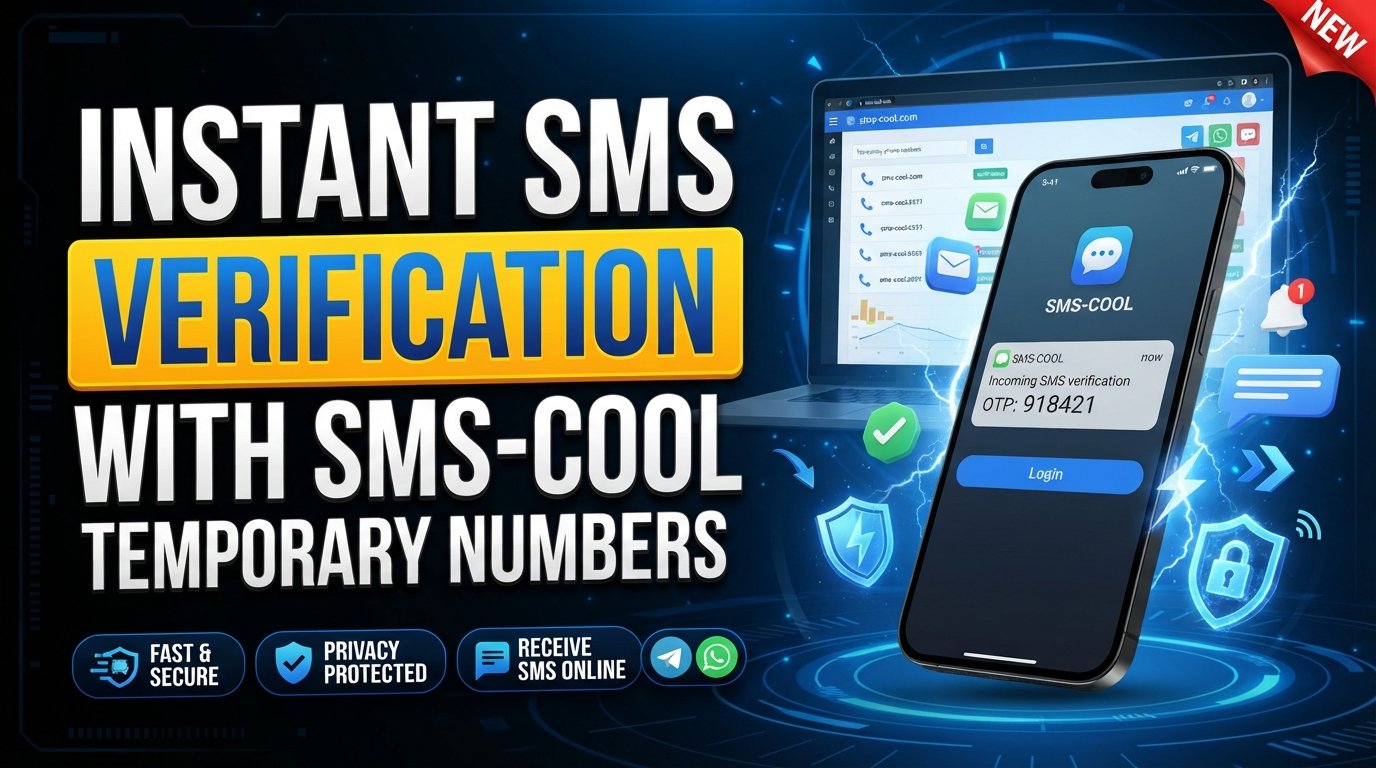
How Temporary Phone Numbers Work Online
Introduction
Your personal phone number can become surprisingly exposed when you use the internet. Signing up for an online service, creating an account, testing an application, or completing SMS verification may require you to enter a number before you can continue.
That is where temporary phone numbers can be useful.
Instead of sharing your personal mobile number every time a website requests an SMS verification code, you can use a temporary number designed for online communication and verification. Depending on the service and the specific platform involved, this can provide a convenient way to receive verification messages while reducing unnecessary exposure of your personal contact information.
For people who regularly register for online services or need to receive SMS without their personal number, services such as SMS COOL offer a practical approach to temporary SMS reception.
But how does the process actually work? What is the difference between a temporary phone number and a virtual or disposable number? And when is using one a sensible choice?
Let's take a closer look.
What Is a Temporary Phone Number?
A temporary phone number is a phone number made available for short-term or limited online use rather than serving as your primary personal number.
It can be used for purposes such as receiving an SMS verification code, completing an online registration, or testing a service that requires phone number verification.
The terminology can sometimes be confusing, so it helps to understand the differences.
Number typeTypical purposeLong-term personal usePersonal phone numberCalls, texts, personal accountsYesVirtual phone numberOnline communication and business or personal useOftenTemporary phone numberShort-term online communication or verificationUsually notDisposable phone numberShort-lived or limited-purpose communicationGenerally no
A temporary number may therefore be considered a type of online phone number, but its main appeal is that you do not need to use your everyday personal number for every online interaction.
The exact lifespan and availability of a number depend on the service providing it, so users should always understand the terms and limitations before relying on one.
How Do Temporary Phone Numbers Work Online?
The basic process is relatively straightforward. You do not need to understand the technical infrastructure behind telecommunications to use one.
1. Choose a temporary number
You begin by selecting an available temporary phone number through an online service.
The available options can vary depending on the service, location, and current number inventory.
2. Enter the number on the relevant website
When an online service asks for a phone number, you enter the temporary number instead of your personal mobile number.
The website then sends an SMS verification message to that number.
3. Wait for the verification message
The temporary number receives the incoming SMS.
This is usually the message containing the verification code required to continue the registration or verification process.
4. View the SMS code
The message becomes available through the service providing the temporary number. You can then read the SMS and identify the verification code.
5. Complete verification
Finally, enter the SMS verification code into the website or application requesting it.
If the service accepts the temporary number, the verification process can then be completed without exposing your regular personal phone number.
This simple workflow is why temporary phone numbers online are useful for certain short-term tasks.
Why Do People Use Temporary Phone Numbers?
There is no single reason everyone uses a temporary number. In many cases, it simply comes down to convenience and privacy.
Protecting a personal number
Your phone number is personal contact information. Giving it to every website that asks for it can increase the number of places where it is stored or shared.
A temporary number can help you avoid unnecessary exposure when a personal number is not essential.
Receiving SMS verification codes
Many online services use phone number verification to confirm that a user can receive SMS messages.
A temporary number for SMS can be useful when the verification is legitimate and the service permits its use.
Reducing unwanted communication
Using a separate number for certain online registrations can help keep personal communication separate from less important messages.
It can also make it easier to avoid adding unnecessary online contacts to your primary phone number.
Testing websites and applications
Developers, testers, and people evaluating online services may occasionally need a number for testing registration or SMS workflows.
A temporary mobile number can provide separation between testing activity and personal communications.
Separating online and personal communication
Not every website needs access to your everyday phone number. For short-term registrations, a separate online number can provide an additional layer of practical privacy.
Temporary Phone Numbers vs. Personal Phone Numbers
The biggest difference is purpose.
Your personal phone number is generally intended for ongoing communication and important accounts. It may be connected to banking, recovery options, messaging apps, family contacts, and other services you use regularly.
A temporary number, by contrast, is better suited to limited or short-term situations where you simply need to receive a message.
A personal number is usually the better choice when:
- You need long-term access to an account.
- The account contains sensitive information.
- You need reliable account recovery.
- You regularly communicate with people through the number.
- The service specifically requires your personal number.
A temporary number may make more sense when:
- You need to complete a one-time SMS verification.
- You want to reduce exposure of your personal number.
- You are testing an online service.
- You need a separate number for a short-term online registration.
The key is to match the number type to the purpose.
How SMS COOL Makes Temporary SMS Verification Easier
For someone searching for an online temporary phone number, the biggest challenge is often finding a straightforward way to receive the required SMS without immediately exposing a personal number.
This is where SMS COOL can be useful.
SMS COOL provides access to temporary phone numbers online for users who need to receive SMS messages for appropriate online verification purposes. Instead of treating your personal mobile number as the default option for every registration, you can use a separate number when a temporary solution is more appropriate.
The process is centered around a simple need: get a temporary number, use it where appropriate, and check for the incoming verification message.
That can make online SMS verification more convenient while helping users maintain a clearer separation between their personal contact information and temporary online activity.
For users who frequently encounter phone number verification, having a dedicated temporary SMS option can save time and reduce the need to repeatedly share a personal number.
As with any third-party service, it is still important to check the applicable service information and understand whether the particular website or application permits temporary or virtual numbers.
Common Uses for Temporary Phone Numbers
Temporary phone numbers can have several legitimate uses.
SMS verification
One of the most common purposes is receiving an SMS verification code during online registration or account setup.
Online registrations
Some websites request a phone number as part of their registration process. A temporary number can be considered when a personal number is unnecessary and the website allows it.
Testing websites or applications
Temporary numbers can be useful when testing how a website or application handles phone number verification and incoming SMS.
Protecting personal contact information
If you do not want to distribute your primary number unnecessarily, a separate number can help reduce its exposure.
Temporary online accounts
For appropriate short-term accounts or services, a temporary number can provide separation from your everyday communications.
One-time verification messages
When the only requirement is receiving a one-time message, a temporary SMS number can sometimes be a practical alternative to using your personal number.
Of course, temporary numbers should be used responsibly and in accordance with the rules of the website or service involved.
Are Temporary Phone Numbers Safe to Use?
Temporary phone numbers can offer privacy and convenience, but they should not automatically be considered a complete security solution.
The first step is choosing a reputable temporary phone number service and understanding how it handles incoming messages and number availability.
There are also important limitations to consider.
A temporary number may not be appropriate for accounts that you expect to keep for a long time, particularly when future account recovery depends on continued access to the same number. You should also avoid assuming that a temporary number provides complete anonymity or protection from every form of tracking.
Before using one, ask yourself:
- Does the website allow temporary or virtual numbers?
- Will I need this number again for account recovery?
- Is the account sensitive or important?
- Do I understand how the number is provided and used?
- Am I comfortable using a temporary number for this particular purpose?
Used thoughtfully, a temporary number can be a useful privacy and convenience tool. It should not, however, replace good account-security practices.
What Should You Look for in a Temporary Phone Number Service?
Not all services provide the same experience. Before choosing one, consider the following checklist:
- Ease of use: The process for obtaining and using a number should be straightforward.
- Privacy: Look for clear information about how your information and messages are handled.
- SMS reception: The service should provide a practical way to view incoming verification messages.
- Number availability: A useful service needs appropriate numbers available when users need them.
- Clear interface: A simple interface makes it easier to find the number and read incoming messages.
- Transparent service information: Important limitations, usage conditions, and service details should be understandable.
These are also useful criteria when evaluating SMS COOL. Rather than choosing a temporary number service based only on marketing claims, focus on whether it fits your particular verification and privacy needs.
Why Choose SMS COOL for Temporary Phone Numbers?
The main problem SMS COOL addresses is simple: sometimes you need a phone number online, but you do not necessarily want to give out your personal number.
For users looking for temporary phone numbers online, SMS COOL offers a practical way to approach that situation by providing temporary numbers for receiving SMS messages.
The benefits are primarily about convenience and separation.
You can use a temporary phone number when appropriate, receive a verification message through the service, and avoid unnecessarily putting your personal number into another online registration.
That can be particularly useful for people who regularly encounter SMS verification, test online services, or simply want to be more selective about where they share their primary phone number.
SMS COOL should not be viewed as a replacement for a personal number in every situation. Instead, it can serve as a useful option when a temporary number is the more sensible choice.
Final Thoughts
Temporary phone numbers provide a straightforward way to separate certain online activities from your personal communications.
They can be useful for SMS verification, online registrations, testing services, and situations where you want to protect your phone number online without making your personal number the default choice.
The basic process is simple: choose a temporary number, enter it where appropriate, receive the SMS verification message, view the code, and complete the verification process.
The important part is choosing the right service and understanding its limitations.
For people looking for a convenient way to use temporary phone numbers for online SMS verification, SMS COOL is worth exploring. It provides a practical option for receiving verification messages while reducing the need to expose your personal number unnecessarily.
If you need a temporary number for a legitimate online verification task, explore SMS COOL and see whether its temporary SMS solution fits your needs.
FAQ: Temporary Phone Numbers
What is a temporary phone number?
A temporary phone number is a number intended for short-term or limited online use. It can be used for purposes such as receiving SMS verification codes without using your primary personal number.
How does a temporary phone number work online?
You select an available temporary number, enter it on a website or application that requests phone verification, and receive the resulting SMS through the temporary number service.
Can I receive SMS verification codes with a temporary number?
Yes, a temporary number can be used to receive SMS verification codes when the relevant website or application accepts temporary or virtual numbers.
Why use a temporary phone number instead of my personal number?
A temporary number can help reduce unnecessary exposure of your personal contact information. It can be useful for short-term registrations, testing, and certain SMS verification tasks.
Are temporary phone numbers safe?
They can be useful for privacy and convenience, but they are not automatically suitable for sensitive or long-term accounts. Choose a reputable service and understand how temporary numbers work before using one.
What is SMS COOL?
SMS COOL is a service designed to provide access to temporary phone numbers for receiving SMS messages online. It can be useful for users who need temporary numbers for appropriate SMS verification purposes.
When should I use a temporary phone number?
Consider a temporary phone number when you need a number for a short-term online task, such as receiving a verification message or testing a service, and using your personal number is unnecessary or undesirable.