14 Aug 2026
What Is a Temporary OTP Number? A Simple Guide to OTP Use Online
What Is a Temporary OTP Number? A Simple Guide to OTP Use Online
A temporary OTP number is a phone number that can be used for a limited period to receive one-time passwords (OTPs), SMS verification codes, and other verification messages without using your personal mobile number.
These numbers can be useful when a website or app asks you to verify a phone number before creating an account, accessing a service, testing a platform, or completing an online process. Instead of giving out your everyday number, you may choose a temporary phone number specifically for the verification task.
For people who regularly sign up for online services or simply want more control over their online privacy, a temporary number can offer a convenient alternative. However, not every website accepts temporary or virtual numbers, so availability and acceptance can vary by platform.
What Is a Temporary OTP Number?
A temporary OTP number is a phone number made available for receiving SMS messages for a limited or specific purpose.
When you enter the number on a website or app, the service may send an OTP code or SMS verification code to that number. The message can then be viewed through the service providing the number.
For example, imagine you are signing up for an online platform that requires phone verification. Rather than immediately sharing your personal number, you could use a temporary number for verification if the platform permits it.
The basic idea is simple:
Website or app → Verification request → Temporary number → SMS containing OTP → Verification
This makes temporary numbers particularly relevant to users searching for ways to receive OTP online or receive SMS online.
How Temporary OTP Numbers Work
The process is usually straightforward.
1. Choose a temporary number
You select an available temporary phone number, often from a service that provides virtual or SMS-enabled numbers.
2. Enter the number for verification
On the website or app requesting phone verification, enter the temporary number instead of your personal mobile number.
3. Request the OTP
The platform sends a verification message containing an OTP or another SMS verification code.
4. Receive the SMS
If the platform accepts the number and the message is supported, the incoming SMS becomes available through the number provider.
5. Enter the code
You enter the OTP into the website or app to complete the verification process.
The exact experience depends on the service being verified and the availability of the temporary number. Some platforms restrict virtual, shared, or temporary numbers, so there is never a universal guarantee that a particular number will be accepted.
Why Do Websites and Apps Require OTP Verification?
Phone verification is commonly used as an additional step during online registration and account-related activities.
An OTP provides a short-lived code that helps a platform confirm that a user can access the phone number entered during the process.
Common reasons for OTP verification include:
- Confirming a phone number
- Reducing automated or fraudulent registrations
- Adding an extra account-security step
- Recovering or confirming account information
- Verifying a user during sign-up
- Confirming certain online transactions or actions
OTP verification is therefore less about the phone number itself and more about confirming access to the communication channel associated with it.
Common Uses of Temporary Numbers
A temporary mobile number can have several legitimate uses, particularly when users do not want to immediately associate an online activity with their personal number.
Common scenarios include:
- Signing up for services that require SMS verification
- Testing applications or online platforms
- Participating in temporary online projects
- Keeping personal contact information separate
- Receiving a one-time verification message
- Exploring services before deciding whether to provide a personal number
A temporary number for verification can be especially convenient when the phone number is needed only for a specific verification step.
That said, users should always follow the terms and policies of the website or app they are using.
Benefits of Using a Temporary OTP Number
The biggest appeal of a temporary OTP number is convenience, but there are several other potential benefits.
Better separation between personal and online activity
Using a separate number can help keep your personal phone number separate from certain online registrations.
More control over privacy
If you do not need to use your personal number for a particular verification process, a temporary number can provide an additional layer of separation.
Convenient SMS access
For supported services, receiving an SMS online can be easier than managing another physical SIM card or phone.
Flexibility
A temporary number can be useful when you need a number for a specific short-term task rather than a permanent communication line.
Less exposure of your everyday number
Reducing unnecessary sharing of your personal number can help you manage unwanted messages and maintain greater control over where your contact information is used.
Temporary OTP Number vs. Personal Phone Number
The main difference is purpose.
A personal phone number is generally intended for long-term communication. You use it for calls, messages, contacts, account recovery, and services you expect to use regularly.
A temporary phone number, by contrast, is generally intended for a particular short-term requirement, such as receiving a verification message.
FeatureTemporary NumberPersonal NumberIntended useShort-term or specific tasksLong-term communicationPrivacy separationOften usefulLess separationSMS accessDepends on providerUsually directAccount recoveryMay be unsuitableGenerally more appropriateLong-term ownershipMay varyTypically personal
For important accounts that you expect to keep for a long time, a personal number may be more appropriate, especially where reliable account recovery is important.
Temporary Number vs. Disposable Phone Number
The terms temporary number and disposable phone number are sometimes used interchangeably, but they can describe slightly different use cases.
A temporary number may remain available for a defined period or purpose, depending on the provider. A disposable number generally emphasizes short-term use and limited ongoing value.
The distinction matters because some services may require a number that remains accessible for future verification or account recovery.
If you only need to receive a one-time SMS verification code, a temporary option may be practical. If you need ongoing access, check how long the number remains available before relying on it.
Privacy and Security Considerations
Temporary numbers can support better privacy separation, but they should not be treated as a complete security solution.
Avoid using temporary numbers for accounts where losing access could create serious problems unless you are certain the number will remain available for future recovery.
You should also consider whether the number is private, shared, or accessible to others. If a number is shared, sensitive messages should not be sent to it.
For important accounts, consider using strong passwords, multi-factor authentication where appropriate, recovery methods, and other security controls recommended by the platform.
The goal of a temporary number should be sensible privacy management—not bypassing security requirements or platform rules.
When Is a Temporary OTP Number Useful?
A temporary OTP number may make sense when:
- You need to complete a short-term online verification
- You prefer not to share your personal number unnecessarily
- You need a separate number for a specific online task
- You want a convenient way to receive an SMS verification code
- You are testing a service that legitimately requires phone verification
It may not be the best choice when you need long-term account recovery, ongoing communication, or guaranteed access to a particular number.
How to Receive an OTP Online
If you need to receive OTP online, the general process is simple.
First, choose a service offering temporary or virtual SMS-enabled numbers. Select a number appropriate for the service you are trying to verify. Enter that number during the website's phone verification step and request the OTP.
If the platform accepts the number, the incoming SMS can then be viewed through the number provider. Enter the verification code into the original website or application.
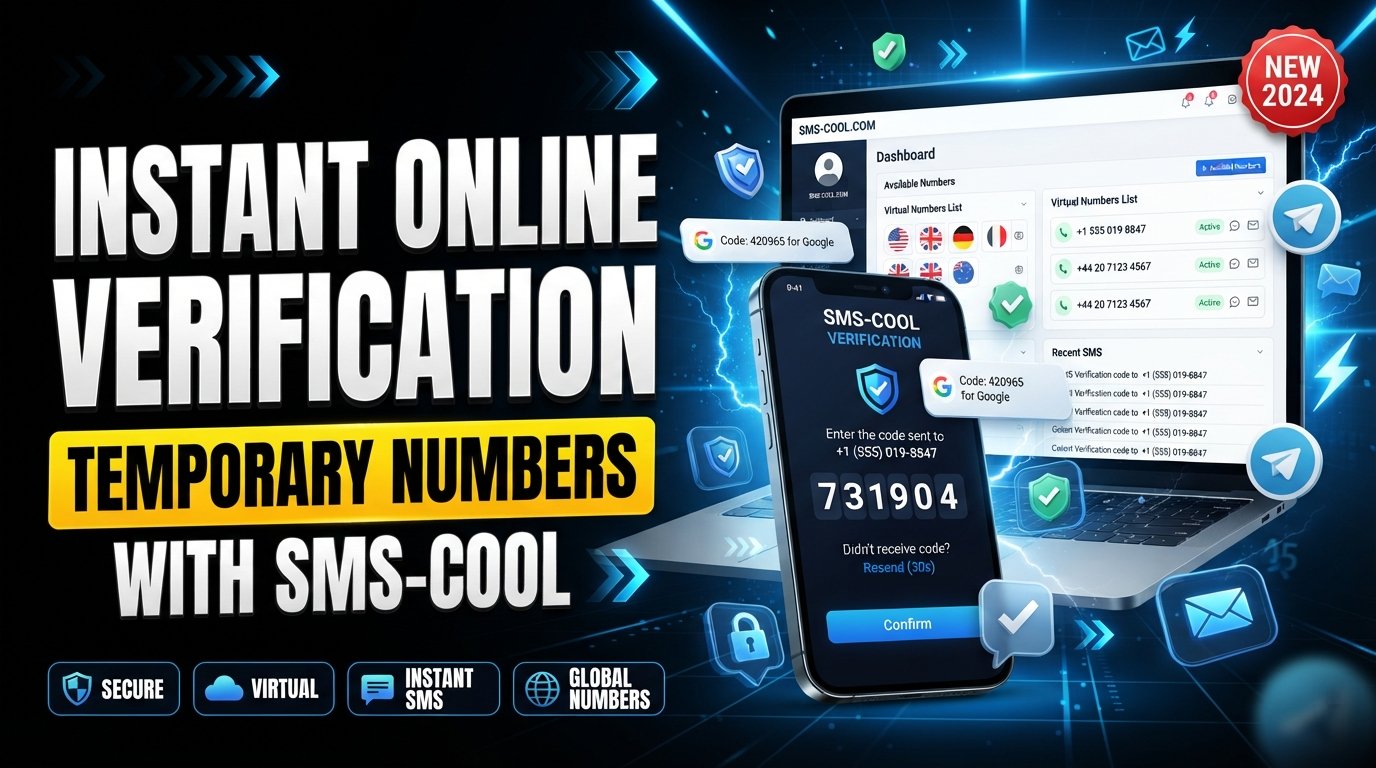
One practical option is SMS COOL, which is designed for users who need access to temporary numbers for receiving SMS verification messages.
How SMS COOL Provides a Practical Solution
After understanding the need for temporary numbers, the value of a service such as SMS COOL becomes easier to see.
SMS COOL can help users who need a temporary SMS number for receiving verification messages without immediately relying on their personal mobile number.
The process is designed around a straightforward need: choose an available number, use it where phone verification is required, and check for the incoming SMS verification code.
For supported platforms, this can make the process of receiving OTPs online more convenient and flexible.
The important point is that acceptance depends on the website or app. Some services may block temporary, virtual, or shared numbers, while others may accept them. Users should therefore check the requirements of the platform they are trying to verify.
Why Users May Choose SMS COOL
SMS COOL can be useful when convenience and privacy are important considerations.
Potential advantages include:
- Access to temporary numbers for SMS verification
- Convenient online access to incoming verification messages
- Separation from your everyday personal number
- Flexibility for short-term verification needs
- A straightforward approach to receiving supported OTP messages
Rather than purchasing another physical SIM card for a one-time task, a temporary SMS number can be a more practical option when the service permits it.
Frequently Asked Questions
What is a temporary OTP number?
A temporary OTP number is a phone number used for a limited or specific purpose, such as receiving an OTP or SMS verification code. It can help users avoid sharing their personal number for certain short-term online activities.
How does a temporary number receive an OTP?
When a website sends an OTP to the temporary number, the SMS is routed to the service providing that number. If the platform accepts the number and the service supports the message, you can view the OTP and enter it into the verification form.
Can I receive SMS verification codes online?
Yes, some services provide virtual numbers that can receive SMS online. Whether a specific verification code can be received depends on the platform, number availability, and the policies of the service sending the message.
What is the difference between a temporary and disposable phone number?
Both are generally intended for short-term use, but a disposable phone number emphasizes limited or one-time use, while a temporary number may remain available for a defined period or purpose. The exact meaning depends on the provider.
Is a temporary OTP number useful for online verification?
It can be useful when a website accepts temporary or virtual numbers and you only need the number for a specific verification task. It is less suitable for accounts that require dependable long-term recovery.
How does SMS COOL work?
SMS COOL provides access to temporary numbers that can be used for supported SMS verification needs. You select an available number, use it for phone verification, and check the service for the incoming verification message.
When should I use a temporary number instead of my personal number?
Consider a temporary number when you need short-term verification and want to keep your personal number separate. For important accounts requiring long-term access or recovery, your personal number may be the better choice.
Final Thoughts: Is a Temporary OTP Number Right for You?
A temporary OTP number is essentially a short-term phone number designed to help users receive verification messages without necessarily using their everyday personal number.
For online sign-ups, testing, and supported verification processes, it can provide a useful combination of convenience, flexibility, and privacy separation. However, temporary numbers are not suitable for every website, and users should always consider whether they will need the number again for account recovery or future verification.
If you need a practical way to receive SMS online for supported verification tasks, SMS COOL is worth exploring. It can give you a convenient temporary number for receiving SMS verification codes while helping you keep certain online activities separate from your personal phone number.
Explore SMS COOL when you need a temporary number for supported SMS verification and OTP needs.