15 Aug 2026
How Temporary Numbers for Verification Work with SMS COOL Online
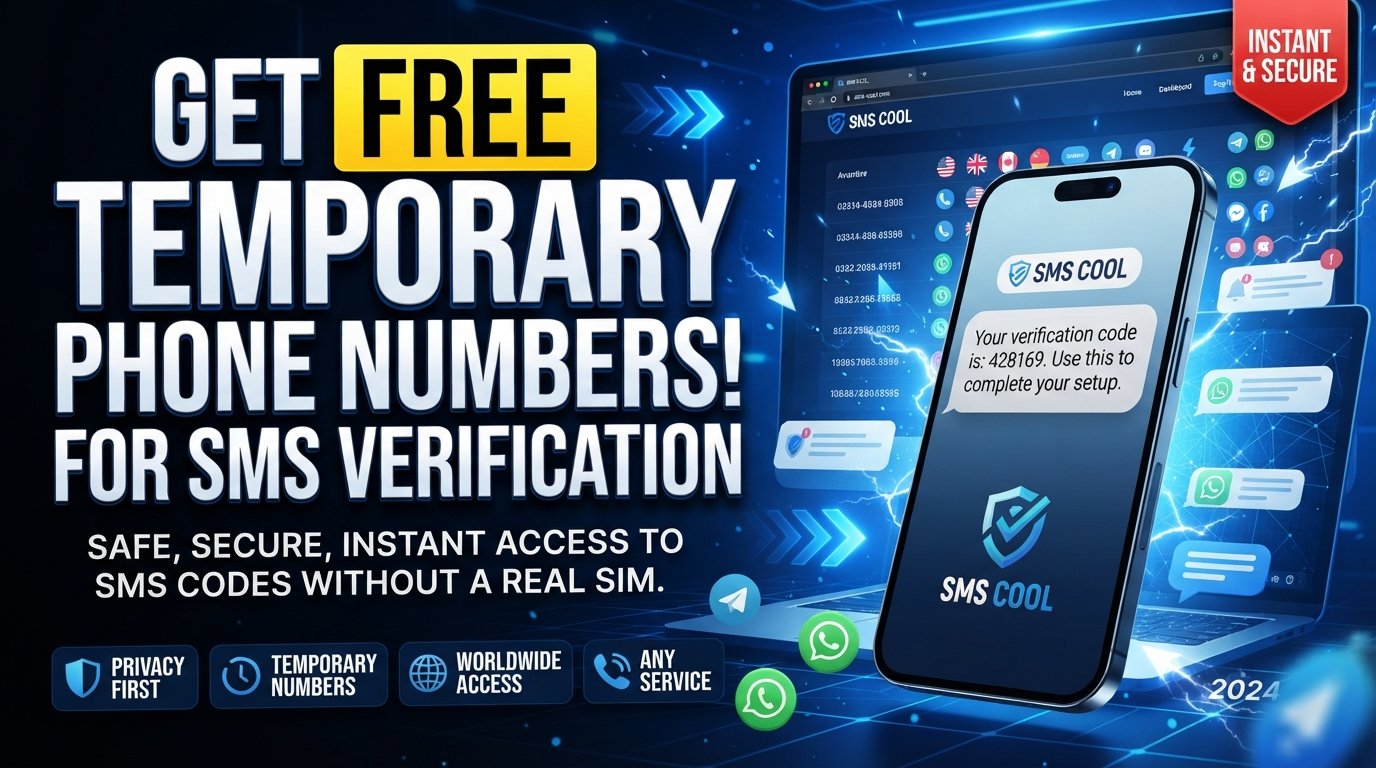
How Temporary Numbers Are Used for Verification
Signing up for an online service often comes with one familiar step: phone verification. You enter a mobile number, wait for an SMS, receive a verification code, and enter it into the website or app.
The process is simple, but not everyone wants to use their personal phone number every time a service requests one.
That is where temporary numbers for verification can be useful. A temporary number provides an alternative number that can receive SMS messages for a specific verification task, helping users avoid sharing their primary number when a service does not need it for long-term communication.
For people looking for a convenient way to receive verification codes, SMS COOL offers a practical approach to using temporary numbers for SMS verification. Instead of treating your personal number as the default for every online registration, you can use a temporary number when the situation is appropriate.
What Are Temporary Numbers?
A temporary number is a phone number intended for limited or short-term use. Depending on the service, it may be available for receiving SMS messages during a particular verification process and may not be intended as a permanent personal number.
A temporary phone number can function much like an ordinary mobile number for receiving certain text messages. When an online service sends a verification code to that number, the message can be displayed through the temporary number service.
This makes temporary numbers different from your regular mobile number. Your personal number may be connected to friends, family, banking, recovery options, and other important accounts. A temporary number can instead be used for specific online interactions where long-term access to the number is not required.
It is important to understand that temporary numbers are not automatically suitable for every account. Services have different verification policies, and some may reject certain types of virtual or temporary numbers.
How Temporary Numbers Are Used for Verification
The basic process behind temporary numbers for verification is straightforward.
First, you select a temporary number through a service such as SMS COOL. You then enter that number on the website or app requesting phone verification.
The service sends an SMS verification code to the number. The temporary number service receives the message and makes the code available to you. You enter the code into the original website or application to complete the verification process.
In simple terms, the process looks like this:
- Choose a suitable temporary phone number.
- Enter the number into the service requesting verification.
- Request the SMS verification code.
- Receive the code through the temporary number service.
- Enter the code into the verification screen.
- Complete the verification process if the service accepts the number.
The exact experience can vary depending on the website, country, number type, and verification system being used.
Why Do Websites and Apps Require SMS Verification?
SMS verification is widely used because a phone number can provide an additional way to confirm that a user can receive messages at a particular number.
A website might request phone verification for several reasons, including:
- Creating or activating an account
- Confirming a phone number
- Reducing automated or fraudulent registrations
- Supporting account recovery
- Adding an extra verification step
- Confirming access to a mobile number
A typical SMS verification code is a short numerical or alphanumeric code. Once the code is entered correctly, the platform can confirm that the user received the message.
However, providing a personal phone number for every online service can be inconvenient. This is one reason people search for options such as a temporary number for SMS verification.
When Can a Temporary Number Be Useful?
Temporary numbers can be useful in situations where a service requires phone verification but a personal number is not necessary for ongoing communication.
For example, someone may want to test an unfamiliar online service, register for a platform they do not expect to use regularly, or complete a one-time verification workflow.
Common situations may include:
One-Time Registrations
If a service requires phone verification during registration, a temporary number may provide an alternative to using your primary number when appropriate.
Privacy-Conscious Sign-Ups
Some users prefer not to give their personal number to every website they try. Using a separate number can reduce the number of services that directly receive their primary contact information.
Testing Online Services
Developers, testers, and other users may occasionally need an online phone number to evaluate registration or SMS-based workflows.
Separating Online Activities
A temporary number can provide another layer of separation between a personal mobile number and certain online activities.
The important point is to use temporary numbers responsibly and according to the rules of the website or app involved.
Benefits of Using a Temporary Number
One of the biggest advantages of a temporary number is convenience. Instead of relying on your personal SIM whenever a platform requests SMS verification, you have another option.
Reduced Exposure of Your Personal Number
Using a temporary number can reduce how often you need to disclose your primary mobile number to online services.
This can be especially useful for users who are conscious about privacy during verification and want to limit unnecessary sharing of personal contact information.
Simple SMS Access
A temporary SMS number can make it easier to receive verification messages without switching between multiple personal devices or SIM cards.
Separation Between Personal and Online Use
A separate number can help keep your personal communications distinct from temporary registration or verification activities.
Convenience
For suitable verification tasks, a temporary number service can provide a simple alternative to purchasing or maintaining another physical SIM card.
Privacy Considerations When Using Your Personal Number
Your phone number can become part of your digital identity. It may be associated with accounts, contact lists, recovery options, notifications, and other services.
That does not mean you should never use your personal number. For important or sensitive accounts, using a number you control and intend to keep long term may be the better choice.
The key is to consider the purpose of the verification.
If a service requires your number for ongoing account recovery or security, a temporary number may be unsuitable. If the number is only needed for a limited verification workflow, a temporary option may be more convenient.
Also remember that temporary numbers can have limitations. Some numbers may be shared, recycled, unavailable for certain platforms, or unsuitable for sensitive accounts. Always understand how the service handles the number and SMS messages before using it.
How SMS Verification With a Temporary Number Works
Imagine that you are registering for an online service that asks you to confirm a mobile number.
Instead of immediately entering your personal number, you choose a suitable temporary number through SMS COOL.
You enter the number into the registration form and request verification. The service sends an SMS containing a verification code. SMS COOL provides access to the incoming message associated with the temporary number.
Once you receive the code, you enter it into the original verification screen.
That is the basic workflow behind online SMS verification using a temporary number.
The process can be particularly convenient when the goal is simply to receive an SMS code rather than establish a permanent phone relationship with the service.
Why SMS COOL Can Be a Convenient Solution
SMS COOL is designed around a straightforward need: accessing temporary numbers for receiving SMS verification messages.
For users who want a practical alternative to sharing their personal number for every verification request, the service can simplify the process by bringing the temporary number and incoming verification message into one workflow.
Key advantages include:
- Convenient access to temporary numbers
- Support for receiving SMS verification codes
- Less reliance on a personal number for suitable verification tasks
- A simple workflow for online registrations
- A privacy-conscious option for certain online services
- Convenient access to temporary SMS numbers
Rather than making the process more complicated with an additional SIM or device, a temporary number service can provide a more streamlined approach.
However, expectations should remain realistic. No temporary number service can guarantee acceptance by every website or application. Verification systems differ, and some platforms may restrict temporary, virtual, or previously used numbers.
How to Use SMS COOL for Verification
Using SMS COOL for a suitable verification task can be approached in a few simple steps.
1. Choose a Temporary Number
Select a number that matches the requirements of the verification process, such as the appropriate country or available number type.
2. Enter the Number
Copy the temporary phone number into the website or app that is requesting phone verification.
3. Request the Verification Code
Submit the number and wait for the service to send its SMS verification code.
4. Receive the SMS
Check the SMS COOL interface for the incoming message and locate the verification code.
5. Enter the Code
Return to the original website or application and enter the received code.
6. Complete Verification
If the platform accepts the number and the code is valid, the verification process can be completed.
If a code does not arrive, avoid repeatedly requesting new codes. The issue may be related to the platform, its verification policies, number availability, message routing, or other technical factors.
Important Things to Consider Before Choosing a Temporary Number Service
Not all temporary number services work in exactly the same way. Before choosing one, consider the following factors:
Number availability: Make sure suitable numbers are available for the country or verification process you need.
Message access: Check how incoming SMS messages are displayed and how quickly you can access them.
Number privacy: Understand whether a number is private, shared, temporary, or potentially reused.
Platform compatibility: Some websites may block or restrict temporary and virtual phone numbers.
Account importance: Avoid relying on temporary numbers for accounts that require long-term recovery or highly sensitive security.
Ease of use: A clear interface can make the verification process much easier, particularly for beginners.
Choosing a service based on practical needs rather than unrealistic promises can lead to a better experience.
Temporary Numbers vs. Personal Phone Numbers
A personal phone number is generally better for accounts that you intend to keep and secure over the long term. It may be connected to account recovery, two-factor authentication, and important communications.
A disposable phone number or temporary number is better suited to limited-use situations where ongoing access to the number is not essential.
Neither option is universally better. The right choice depends on what you are verifying and how important continued access to the account will be.
For a long-term personal account, keeping control of the number can be critical. For a suitable one-time verification workflow, a temporary number can provide convenience and reduce unnecessary sharing of your primary number.
Frequently Asked Questions
What are temporary numbers for verification?
Temporary numbers for verification are phone numbers intended for limited or short-term use when a website or app requires SMS-based phone verification.
Can I receive verification codes with a temporary phone number?
Yes, a temporary number can be used to receive verification codes when the relevant service accepts that type of number and successfully routes the SMS.
Is a temporary number the same as a virtual phone number?
They can overlap, but the terms are not always identical. A virtual phone number generally refers to a number accessed through an online service, while a temporary number emphasizes limited or short-term use.
Can I use a temporary number for every website?
No. Websites and apps have different verification policies. Some may accept temporary numbers, while others may restrict certain virtual, shared, or temporary numbers.
Is a temporary number suitable for sensitive accounts?
Generally, users should be cautious. If an account requires long-term access to the number for recovery or security, a temporary number may not be appropriate.
Why use SMS COOL instead of my personal number?
SMS COOL can be convenient when you need to receive an SMS verification code but prefer not to use your personal number for a suitable short-term verification workflow.
Final Thoughts
Phone verification has become a common part of online registration, but using your personal number is not always the most convenient option.
Temporary numbers for verification provide an alternative for appropriate situations by allowing users to receive SMS codes through a separate number. They can help reduce unnecessary sharing of a personal phone number while making certain verification workflows simpler.
The key is choosing the right type of number for the task and understanding the limitations of temporary services. For important accounts that require long-term recovery, a personal number you control may still be the better choice.
When you need a convenient way to access a temporary phone number and receive verification messages, SMS COOL can be a practical option to explore. If you are looking for a simpler approach to temporary numbers and SMS verification, explore SMS COOL and choose a solution that fits your verification needs.