17 Aug 2026
Temporary Numbers for Account Verification | SMS COOL Guide Tips
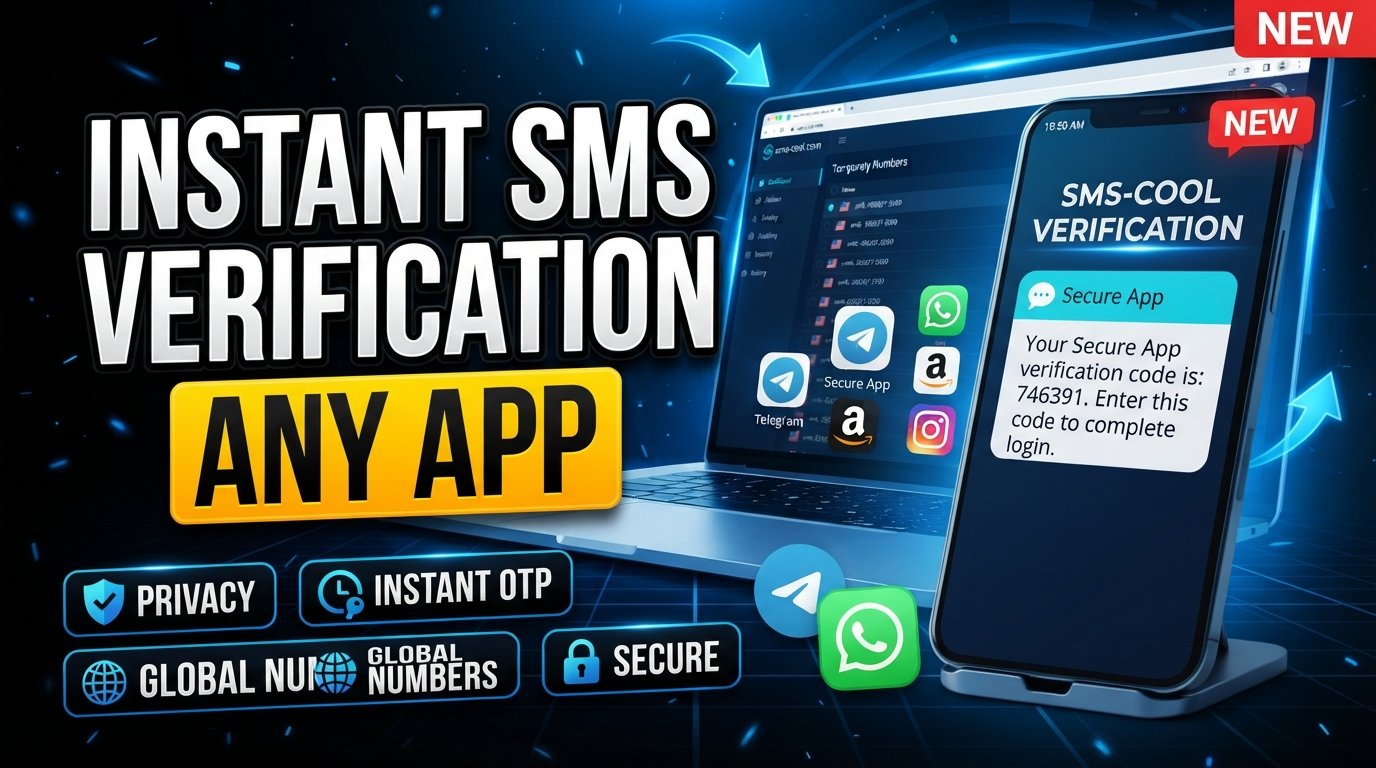
Temporary Numbers and Account Verification: A Practical Guide
Introduction
Phone verification has become a standard part of signing up for websites, apps, online platforms, and digital services. A service may ask you to enter a phone number and then send a one-time verification code by SMS before allowing you to complete registration.
While this process can improve account security, it can also create an unwanted problem: you may not want to give your personal phone number to every website you use.
That is where temporary phone numbers can be useful.
A temporary number gives you an alternative way to receive SMS verification codes without immediately exposing your personal number. For people who regularly test online services, create accounts for legitimate purposes, or simply want more separation between their personal communications and online registrations, a temporary number can be a practical option.
SMS COOL provides a straightforward way to access temporary numbers and receive SMS verification codes for supported websites and services. Instead of treating phone verification as an unnecessary obstacle, you can use a separate number when the situation calls for it.
What Are Temporary Phone Numbers?
A temporary phone number is a phone number intended for short-term or limited online use rather than everyday personal communication.
Unlike the number attached to your primary SIM card, a temporary number can be used for a specific online verification purpose. Depending on the service and the website being verified, the number may receive an SMS containing a verification code or OTP.
Temporary numbers are sometimes described as:
- Temporary SMS numbers
- Online phone numbers
- Virtual phone numbers
- Disposable phone numbers
- Numbers for SMS verification
These terms can overlap, although their exact meaning and availability may vary between providers.
The important idea is simple: you have an alternative number available when you do not want to use your personal phone number for a particular online registration.
Why Do Websites and Apps Require Phone Verification?
Phone number verification is commonly used as an additional layer of account validation.
After entering a phone number, a website may send a short code by SMS. You then enter that code into the registration page to confirm that the number can receive messages.
This is commonly known as SMS verification or OTP verification.
Services may use phone verification to help:
- Confirm that a user can receive SMS messages
- Add another layer to account registration
- Reduce certain types of automated abuse
- Support account recovery processes
- Help distinguish individual registrations
- Confirm ownership or control of a phone number
The exact purpose depends on the website or application. Verification requirements can also change, and some platforms may restrict or reject temporary or virtual numbers.
Why Use a Temporary Number for Account Verification?
There are several legitimate reasons someone might prefer a temporary number for verification.
1. Keep Your Personal Number Private
Your personal phone number is more than a simple contact detail. It can be associated with messaging apps, social profiles, business contacts, and other accounts.
Using a separate number for certain online registrations can reduce unnecessary exposure of that personal information.
2. Separate Personal and Online Activity
A temporary number can create a useful boundary between your everyday communications and online registrations.
For example, if you are exploring a service that requires phone verification but you do not expect to use it for regular communication, a separate number may be more appropriate.
3. Convenience
If you need to complete an SMS verification process, having access to a temporary number can be more convenient than using your primary number every time.
With an online SMS verification service such as SMS COOL, the process can be handled through a web-based interface.
4. Reduce Unwanted Messages
Giving your personal number to numerous websites can increase the possibility of receiving unwanted promotional or service-related messages.
A separate number can help keep your primary inbox and personal communications more focused.
Common Problems With Using Your Personal Number
Using your everyday number for every online registration may seem harmless, but it can become inconvenient over time.
You might hesitate to register for a service because you are unsure how your number will be used. You may also want to avoid mixing personal communications with accounts you are only testing or using temporarily.
There is also the simple issue of repetition. If you frequently encounter phone number verification, entering your personal number again and again may not be the most privacy-conscious approach.
A temporary number can provide another option when the website supports it.
How Temporary SMS Verification Works
The basic process is relatively straightforward.
- Choose a temporary number service.
- Select a service such as SMS COOL that provides temporary numbers for supported verification purposes.
- Obtain an available number.
- Choose an appropriate number based on the requirements of the website or service you are using.
- Enter the number during registration.
- Use the temporary number in the phone verification field.
- Request the verification code.
- The website sends an SMS containing a verification code or OTP.
- Receive the SMS online.
- Check the temporary number service for the incoming message.
- Enter the code.
- Copy the verification code into the website or app's verification field.
- Complete the registration process.
- Once the platform accepts the code, the verification step is complete.
Not every platform accepts every temporary number. If a website rejects a number or the message does not arrive, follow the platform's rules and the temporary number provider's available options rather than repeatedly submitting requests.
Why SMS COOL Is a Convenient Solution
The biggest advantage of SMS COOL is that it focuses on a straightforward problem: receiving SMS verification messages without immediately relying on your personal phone number.
For users who need a temporary number for verification, the service offers a practical online approach to handling SMS-based registration steps.
Rather than purchasing or managing another everyday mobile line simply to receive an occasional verification code, a temporary number can be useful when the need is limited and the service supports it.
SMS COOL can therefore fit naturally into situations where privacy, convenience, and separation from your personal number matter.
Key Benefits of Using SMS COOL
Temporary Access Without Using Your Main Number
When appropriate, SMS COOL gives you access to temporary phone numbers for supported verification needs. This can help you avoid unnecessarily sharing your primary number.
Receive SMS Verification Codes Online
The core purpose is simple: receive SMS messages associated with a temporary number and use the verification code where permitted.
More Privacy During Online Registration
Using a separate number can help reduce the number of websites that have your personal phone number, giving you greater control over what information you share.
Convenient Online Verification
For supported services, the process can be handled online instead of requiring you to maintain a separate personal SIM solely for occasional verification.
Useful for Short-Term Needs
Temporary numbers can make sense when you need a number for a particular registration or verification task rather than ongoing personal communication.
How to Use SMS COOL for Verification
If you want to use SMS COOL for a supported website, start by identifying the verification requirement.
Check whether the website requires an SMS code and whether it accepts the type of number you intend to use. Then access SMS COOL and select an appropriate temporary number according to the options available.
Enter that number on the website's verification page and wait for the SMS. Once the verification code arrives, enter it into the relevant field.
The key is to use temporary numbers responsibly and only for legitimate account activity that complies with the website's terms.
Temporary Numbers vs. Personal Phone Numbers
The right option depends on how you plan to use the number.
Temporary NumberPersonal Phone NumberUseful for short-term verificationDesigned for ongoing communicationCan reduce exposure of your main numberCommonly shared with trusted contacts and servicesConvenient for supported SMS verificationBetter for long-term account recoveryUseful for separating online registrationsUsually tied closely to your identity and daily communications
A temporary number is not necessarily a replacement for your personal number. Think of it as an additional option for situations where you need SMS verification but prefer not to use your primary contact information.
Important Things to Consider Before Using a Temporary Number
Temporary numbers are useful, but they are not appropriate for every account or situation.
Check the Website's Rules
Some platforms may not accept temporary, virtual, or shared numbers. Always follow the registration requirements of the website or app.
Do Not Rely on Temporary Numbers for Critical Recovery
If an account is important and you may need the same number later for password recovery or security checks, a temporary number may not be suitable.
Understand That Availability Can Vary
Numbers and SMS delivery depend on the service and the destination platform. A verification message may sometimes be delayed, unavailable, or rejected.
Protect Your Verification Codes
Treat OTPs and verification codes as sensitive information. Never share a code with someone who claims they need it for support unless you have independently confirmed the request through an official channel.
Use the Service Responsibly
Temporary numbers are best used for legitimate privacy and convenience purposes. They should not be used to impersonate others, bypass restrictions, or violate the rules of a website.
Final Thoughts: A Smarter Way to Handle Online Verification
Phone verification is not going away, but that does not mean you need to give your personal number to every online service you encounter.
Temporary phone numbers can provide a useful layer of separation between your private communications and routine online registrations. They can help you receive SMS verification codes while reducing unnecessary exposure of your primary number.
For people looking for a practical way to handle supported SMS verification requirements, SMS COOL is a convenient solution worth considering.
Instead of making your personal number part of every registration, use a suitable temporary number when appropriate, follow the platform's rules, and keep control over the information you share online.
If you need a temporary number for verification, try SMS COOL and make your next supported online verification process simpler and more privacy-conscious.
FAQs
1. What is a temporary phone number?
A temporary phone number is a number intended for short-term or limited use, often for receiving SMS verification codes. It can provide an alternative to using your personal phone number for certain online registrations.
2. How does SMS verification work?
SMS verification usually involves entering a phone number during registration. The website sends a verification code or OTP to that number, and you enter the received code to complete the verification process.
3. Can I receive verification codes online?
Yes. An online SMS verification service such as SMS COOL can provide access to temporary numbers that may receive SMS verification codes for supported websites and services.
4. Are temporary numbers the same as disposable phone numbers?
The terms are often used similarly, but they can refer to different types of services. A temporary number generally emphasizes short-term use, while a disposable number may be intended for a more limited or one-time purpose.
5. Can I use a temporary number for every website?
No. Acceptance depends on the website or application. Some platforms may restrict temporary or virtual numbers, so always check the service's requirements and terms.
6. Does using a temporary number improve online privacy?
It can help reduce unnecessary exposure of your personal phone number. However, a temporary number should not be considered a complete privacy or security solution. Use strong passwords, protect OTPs, and follow good account-security practices.
7. What is SMS COOL used for?
SMS COOL is a practical option for accessing temporary phone numbers and receiving SMS verification codes for supported services. It can be useful when you want a separate number for online verification rather than immediately providing your personal number.
Final CTA for SMS COOL
Need a temporary number for online verification? Try SMS COOL for a convenient way to receive SMS verification codes on supported services while keeping your personal number separate. Use temporary numbers responsibly, protect your verification codes, and make online registration simpler with SMS COOL.