17 Aug 2026
Temporary Number vs Disposable Number: What’s the Difference?
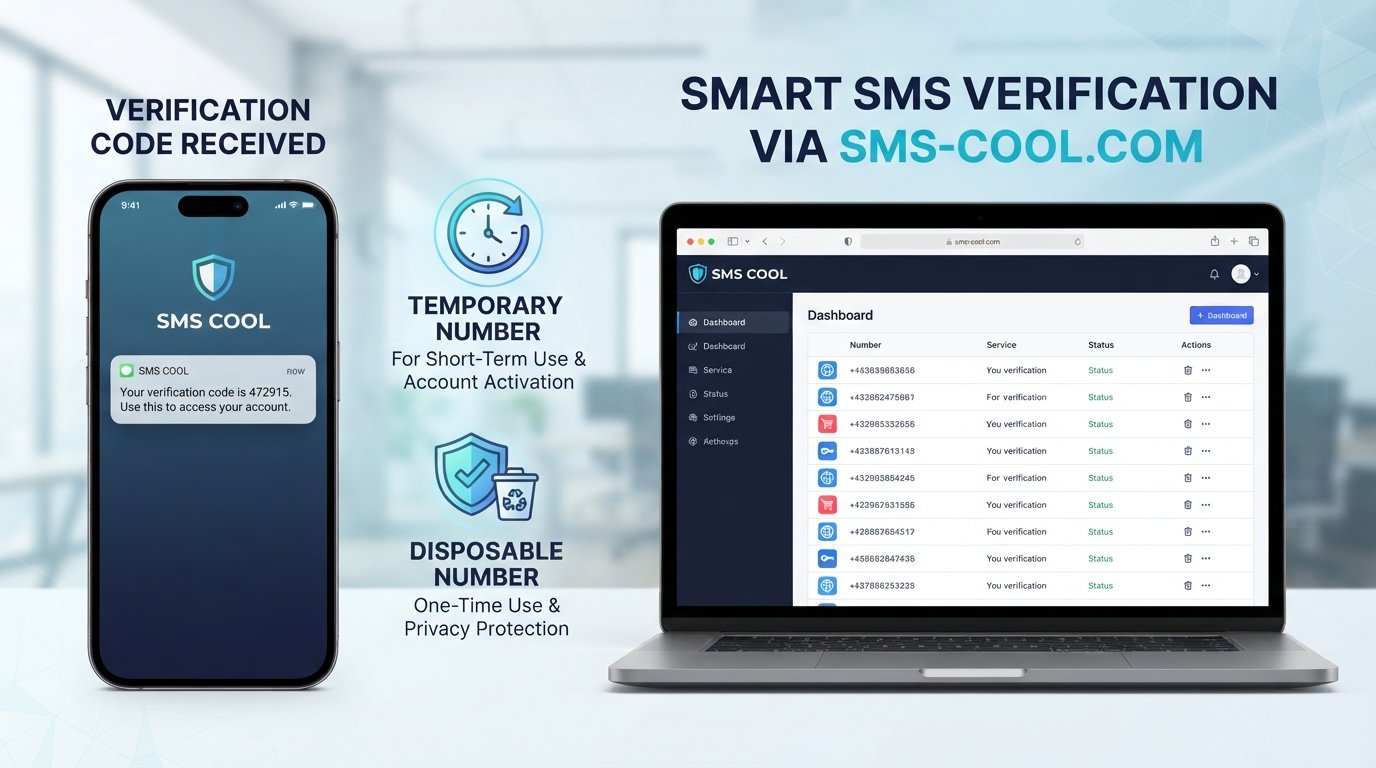
Temporary Number vs Disposable Number
Giving your personal phone number to every website or app that asks for SMS verification can feel unnecessary. Sometimes you only need to receive one verification code, test a service, or keep your everyday number away from an unfamiliar platform.
That is why searches for temporary number vs disposable number are so common. Although the terms are often used interchangeably, they can describe slightly different approaches to short-term phone-number use.
A temporary number generally refers to a phone number available for a limited period or purpose. A disposable number usually emphasizes one-time or very short-term use, after which the number is no longer needed.
Understanding the distinction helps you choose the right option for privacy, online registration, testing, and SMS verification. It also helps you avoid using a throwaway number when you actually need continued access.
For people who simply want a practical way to receive verification messages without unnecessarily exposing their personal number, a dedicated service such as SMS COOL can make the process much more convenient.
What Is a Temporary Number?
A temporary number is a phone number intended for short-term use rather than as your permanent personal line.
Instead of purchasing another physical SIM card, users can access a virtual phone number through an online service. Depending on the service, the number may remain available for a limited session, a defined period, or a particular verification task.
A temporary phone number can be useful when you need to:
- Receive an SMS verification code
- Register for a website or app
- Test an online service
- Keep your personal number private
- Separate short-term online activity from your everyday phone
The key idea is flexibility. A temporary number does not necessarily mean the number disappears immediately after receiving one message.
What Is a Disposable Number?
A disposable number is generally designed for even more limited use.
Think of it as a digital phone number you use when you need to complete a specific task and do not expect to need that number afterward. A disposable phone number may be particularly useful for one-time SMS verification, temporary registrations, or situations where you simply do not want to reveal your primary number.
A disposable SMS number can therefore be considered a type of temporary number, but the intended lifespan and purpose are usually narrower.
The terminology is not standardized across every provider, so always check how a service defines its numbers before using one.
Temporary Number vs Disposable Number: Key Differences
The simplest distinction is duration and intended reuse.
FeatureTemporary NumberDisposable NumberMain purposeShort-term accessOne-time or very short-term useExpected lifespanMay last beyond one verificationUsually intended to be discarded quicklyReuseMay be possible, depending on serviceUsually not the main purposeBest suited forShort-term accounts, testing, repeat accessOne-time registrations and verificationPrivacy benefitKeeps your personal number separateKeeps your personal number separateLong-term recoveryNot ideal unless the number remains accessibleGenerally unsuitable
In practice, the difference depends on the provider. Some services use “temporary” and “disposable” as synonyms.
A useful rule is this: if you might need the number again, look for a temporary or rental option with continued access. If you only need one verification, a disposable option may be enough.
How Temporary Numbers Work
The process is usually straightforward.
First, you choose an available temporary phone number from a service. You then enter that number into the website or app requesting your phone number.
The platform sends an SMS verification code to the number. Instead of arriving on your personal phone, the message is delivered to the online number service, where you can view it.
You then enter the SMS verification code into the original website or app.
For a user, the workflow can be as simple as:
- Select a temporary number.
- Enter it where phone verification is requested.
- Request the verification SMS.
- Open the online inbox.
- Copy the verification code.
- Complete the verification process.
Services such as SMS COOL are designed around this general need: making it easier to use a temporary phone number when you do not want to put your personal number into another online service.
How Disposable Numbers Work
Disposable numbers follow a similar process but are typically intended for a single task.
Suppose a website requires a phone number before allowing you to create an account. Rather than providing your personal number, you can use a disposable number where the service permits it.
The website sends its verification message, and you receive the code through the number provider.
Once the verification is complete, there may be little reason to retain the number.
This makes a disposable number particularly suitable for low-stakes, short-term activities. However, you should not assume that a disposable number is appropriate for every account. If an account could require SMS-based recovery later, losing access to the number can create a serious problem.
Temporary Numbers for SMS Verification
One of the most common reasons people seek a temporary SMS number is verification.
Many websites and apps use phone verification to confirm that a user can receive messages at a particular number. For privacy-conscious users, this creates a simple question: Do I really need to give this service my personal phone number?
A temporary phone number for verification can provide an alternative where the platform accepts virtual numbers.
It can be useful for:
- Account registration
- App testing
- Online SMS verification
- Short-term service trials
- Separating personal and online activity
- Receiving verification codes without exposing your everyday number
With a service such as SMS COOL, the practical advantage is that you can use an online number specifically for the verification task rather than automatically sharing your personal number.
Keep in mind that not every platform accepts every virtual or temporary number. Verification policies vary, and some services may restrict numbers that are shared, recycled, or virtual.
When Should Someone Use a Temporary Number?
A temporary number makes sense when the number has some short-term value beyond a single SMS.
For example, you might need to complete multiple steps during testing or expect to receive more than one message. You may also want temporary access to a number without committing to another permanent mobile line.
A temporary number can be a good fit when:
- You need several SMS messages during a short period.
- You may need to verify something more than once.
- You want a separate number for online activities.
- You are testing an application or registration process.
- You want to protect your personal phone number from unnecessary exposure.
This is where choosing a suitable temporary number service matters. Look for clear information about how long numbers remain accessible and what happens after your session ends.
When Is a Disposable Number Useful?
A disposable number is best suited to situations where continued access is not important.
For example, if you only need to receive one verification code for a low-risk registration, keeping the number afterward may serve little purpose.
Disposable numbers can be useful for:
- One-time SMS verification
- Temporary registrations
- Testing basic signup flows
- Avoiding unnecessary exposure of your personal number
- Receiving a single verification code online
However, avoid using disposable numbers for accounts you consider important if you may need the number for password recovery, identity confirmation, or future login verification.
Privacy and Security Considerations
The biggest reason to use a temporary or disposable number is often phone number privacy.
Your personal number can be connected to messaging apps, contact lists, marketing databases, account recovery systems, and other online services. Reducing the number of places where you share it can help you maintain better separation between your private communications and casual online registrations.
That does not mean every temporary number is automatically private or secure.
Before using a service, consider:
- Whether the number is shared or dedicated
- How long you can access incoming messages
- Whether the service clearly explains its policies
- Whether the number may be reused
- Whether the target platform permits virtual numbers
- Whether the account is important enough to require a permanent number
Never treat a temporary number as a replacement for a secure, long-term recovery method when an account is critical.
Common Use Cases
Temporary and disposable numbers have several legitimate everyday applications.
Online registrations
Some users prefer to receive SMS online without their personal number when signing up for unfamiliar websites or services.
App testing
Developers, testers, and businesses may need a virtual number to check whether an application's SMS verification flow works correctly.
Privacy-conscious signups
A temporary number can create a useful boundary between your real-world identity and low-priority online registrations.
Short-term projects
If you need a separate contact point for a temporary activity, a temporary phone number may be more convenient than purchasing another SIM.
Advantages and Limitations
Both options offer useful privacy benefits, but neither is perfect.
Advantages
- Helps protect your personal phone number
- Convenient for online SMS verification
- Avoids the need for another physical SIM in many cases
- Useful for testing and short-term registrations
- Creates separation between personal and online activities
Limitations
- Some websites block temporary or virtual numbers
- SMS delivery can vary by provider and platform
- Disposable numbers are generally unsuitable for account recovery
- Shared numbers can create privacy concerns
- Number availability varies by country and service
The important point is to match the number type to the task rather than assuming every temporary number works everywhere.
How to Choose the Right Temporary Number Service
Choosing a temporary number service should be less about finding the cheapest-looking option and more about finding a service that fits your actual use case.
Consider whether it offers the type of number you need, whether you can view incoming SMS easily, and whether the service explains how number access works.
If your goal is simply to receive verification codes while keeping your personal number private, prioritize convenience, transparency, and an appropriate number type.
It is also worth checking the rules of the website or app you are verifying. A temporary number cannot overcome a platform's decision to reject virtual or recycled numbers.
Why SMS COOL Is a Practical Solution
For users who regularly need temporary numbers for SMS verification, SMS COOL offers a straightforward approach to a common privacy problem: needing to provide a phone number without necessarily wanting to expose your everyday personal line.
Instead of treating your personal number as the default option for every online registration, a temporary number service gives you another choice.
SMS COOL can be particularly practical when you want to:
- Receive SMS online for a verification task
- Keep your personal phone number separate
- Use a temporary phone number for verification
- Receive an SMS verification code without relying on your everyday line
- Handle short-term online registrations more conveniently
The value is not about making every verification problem disappear. No temporary number provider can guarantee that every platform will accept every number. The benefit is having a dedicated option when you prefer not to share your personal number.
For privacy-conscious users, that simple separation can make online registration feel much more controlled.
Temporary Number or Disposable Number: Which Should You Choose?
The answer depends on what happens after you receive the first SMS.
Choose a disposable number when you need a number for a one-time, low-risk verification and do not expect to need it again.
Choose a temporary number when you need short-term access that may extend beyond one message or verification attempt.
If you are unsure, think about account recovery. If losing access to the number could prevent you from accessing the account later, a disposable number is probably the wrong choice.
For straightforward verification where privacy is the priority, SMS COOL can be a practical place to explore temporary-number options and receive SMS online without unnecessarily exposing your personal phone number.
Final Thoughts
The difference in temporary number vs disposable number is mainly about intended duration and reuse. A temporary number is designed for short-term access, while a disposable number is generally geared toward one-time or highly limited use.
Both can help protect your personal phone number and make online verification more convenient, but they should be used thoughtfully. Always consider whether you will need the number again and whether the platform allows temporary or virtual numbers.
If you need a convenient way to receive SMS verification codes while keeping your everyday number private, explore SMS COOL and see whether its temporary-number approach fits your next verification task.