15 Aug 2026
Temporary Mobile Numbers for Verification: A Guide by SMS COOL
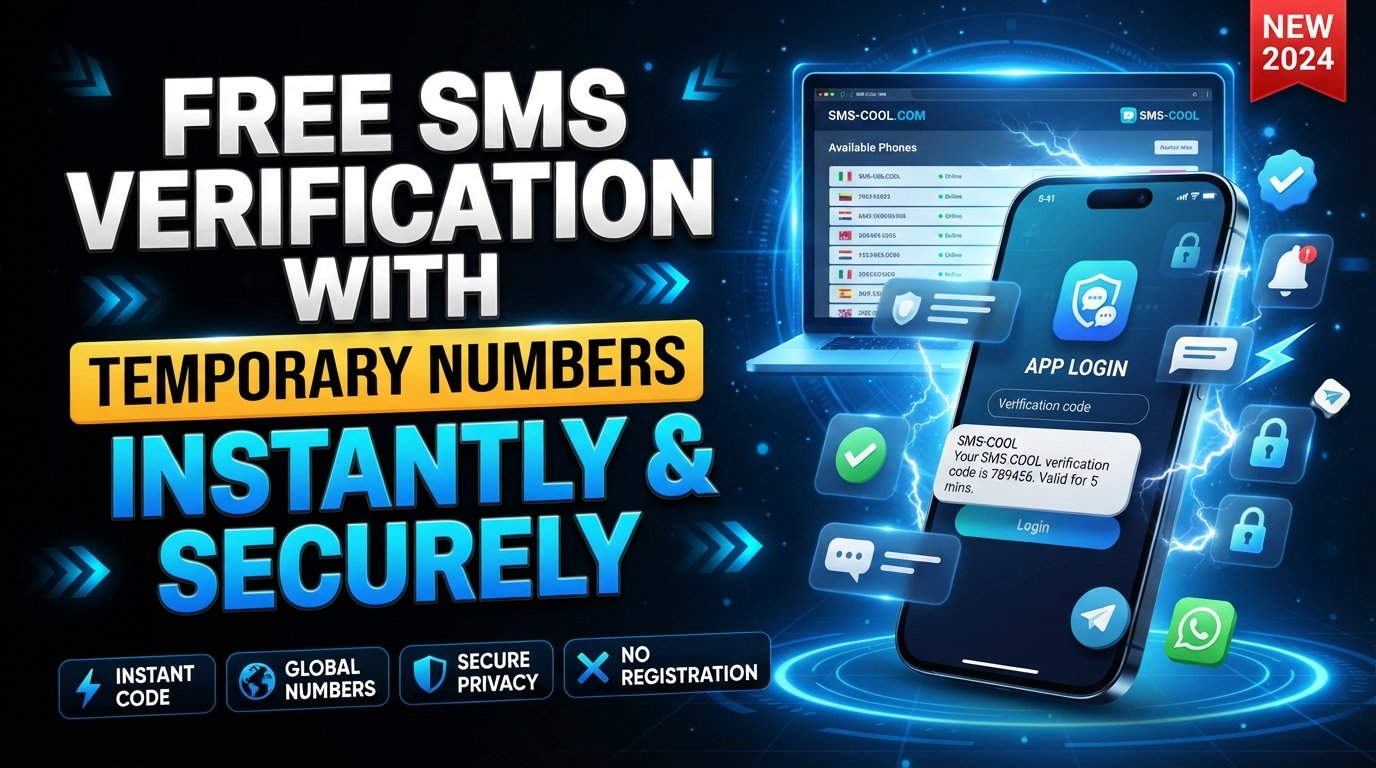
Temporary Mobile Numbers for Verification: A Guide by SMS COOL
Signing up for an online service often comes with a familiar request: enter your phone number and confirm it with an SMS verification code. While phone verification can be useful for confirming that a real user is behind an account, not everyone wants to share their personal mobile number every time a website or platform asks for one.
That is where temporary mobile numbers for verification can be useful.
A temporary number provides an alternative way to receive verification messages without unnecessarily exposing your everyday phone number. For people who regularly try online services, test platforms, create accounts, or simply prefer more privacy when dealing with unfamiliar websites, this can be a convenient option.
SMS COOL provides a practical online approach for users who need a temporary mobile number to handle SMS verification. Instead of giving your personal number to every service that requests phone verification, you can use an available temporary number and receive the relevant SMS online.
But how does it work, when should you use one, and what should you consider before choosing a temporary number? Let’s take a closer look.
What Are Temporary Mobile Numbers for Verification?
Temporary mobile numbers for verification are phone numbers intended for short-term or limited verification needs rather than everyday personal communication.
When a website asks you to verify your phone number, you enter the temporary mobile number instead of your personal number. If the service sends an SMS verification code to that number, you can access the message through the relevant online platform.
This makes a temporary number different from the mobile number attached to your normal phone plan. You generally use it for a specific online task rather than as your primary contact number.
The concept is straightforward:
Website or app → temporary number → SMS verification code → online access to the message
For someone who wants to receive SMS online without a personal number, this can provide an extra layer of separation between online activity and everyday communications.
Why Do People Use a Temporary Phone Number?
There are several practical reasons someone may prefer a temporary phone number.
Privacy
Your personal mobile number can be connected to numerous accounts, contacts, notifications, and services. Sharing it unnecessarily can make it harder to keep your online and personal communications separate.
A temporary phone number can reduce the need to provide your regular number when a service only requires it for verification.
Convenience
Not every verification request deserves a permanent communication channel. If you only need to receive one SMS verification code, using a temporary SMS number can be more convenient than adding another service to your personal phone.
Separation of Online Activities
Some users prefer having a clear distinction between personal communication and online registrations. A temporary number can help create that separation.
Testing and Short-Term Tasks
Developers, testers, researchers, and ordinary users may occasionally encounter situations where phone number verification is part of trying an online service. A temporary number can be useful when the verification requirement is legitimate and short-term.
How Does SMS Verification Work?
SMS verification is a common method of confirming access to a phone number.
Typically, the process looks like this:
- You enter a phone number on a website or app.
- The service sends an SMS verification code.
- You access the incoming message.
- You enter the SMS verification code into the service.
- The service checks the code and completes its verification process.
With a personal phone number, the message arrives directly on your phone. With an online temporary number, the SMS may instead be accessible through an SMS receiving service.
The important point is that the receiving number must be able to accept messages from the service you are trying to verify. Not every website accepts every temporary or virtual phone number, so compatibility should always be considered.
Common Situations Where a Temporary Number Can Help
A temporary phone number for verification can make sense in a variety of legitimate situations.
For example, you might want to:
- Try an online service without immediately sharing your personal number.
- Complete a short-term registration that requires phone verification.
- Receive a verification code online while keeping personal communications separate.
- Test an online workflow that includes SMS verification.
- Use a private phone number for a limited online interaction.
- Avoid adding unnecessary verification messages to your everyday phone.
The key is to use temporary numbers responsibly and within the rules of the service you are accessing.
Temporary Number vs. Personal Phone Number
The biggest difference is purpose.
A personal phone number is normally designed for ongoing communication. It may be associated with your family, friends, financial accounts, recovery options, messaging apps, and other important services.
A temporary mobile number, on the other hand, is generally used for a particular short-term purpose.
That distinction makes temporary numbers attractive when the only requirement is receiving an SMS verification code.
However, a temporary number should not automatically replace your personal number for important accounts. If an account may need future password recovery, security alerts, or two-factor authentication, you should understand whether you will retain access to the number later.
This is especially important for accounts where losing access could have serious consequences.
How to Receive SMS Verification Codes Online
If you need to receive verification codes online, the process can be simple.
First, choose a suitable temporary number through an online SMS receiving platform. Then enter that number into the website or app requesting phone number verification.
Once the service sends its message, check the online platform for the incoming SMS. If the number and service are compatible, the verification code should appear there for you to use during the verification process.
This approach can be useful when you want to receive SMS online without a personal number being directly associated with the registration.
Still, always check the terms and requirements of the website you are using. Some services restrict temporary, virtual, or shared numbers, and a failed verification does not necessarily mean the receiving platform is malfunctioning.
How SMS COOL Works
SMS COOL is designed around a simple need: accessing temporary numbers for SMS-based verification without unnecessarily using your personal mobile number.
The general workflow is easy to understand:
Choose a temporary number → use it for phone verification → receive the SMS online → enter the verification code
This straightforward process can be useful for people who do not want to give their everyday number to every website that requests one.
Rather than turning a one-time verification request into another permanent connection to your personal phone, SMS COOL offers an online option for handling that verification step.
The exact availability and suitability of a number can depend on the service you are attempting to verify, so users should always consider compatibility before proceeding.
Why Choose SMS COOL?
The value of a temporary phone verification service comes down to convenience, privacy, and simplicity.
With SMS COOL, users looking for a temporary number can approach SMS verification without immediately exposing their personal mobile number. The online workflow also makes it possible to access verification messages through a web-based platform rather than relying solely on a personal handset.
For privacy-conscious users, that separation can be particularly useful.
It is also practical. If your only requirement is to receive an SMS verification code, you may not need a permanent communication channel for that particular task.
SMS COOL can therefore serve as a practical option for users who need temporary mobile numbers for verification and want an uncomplicated way to manage incoming verification messages online.
Important Things to Consider Before Using a Temporary Number
Temporary numbers are useful, but they are not a universal solution.
Service Compatibility
Some websites and apps may reject temporary, virtual, or shared phone numbers. Always consider the requirements of the service you are trying to use.
Account Recovery
Think carefully before using a temporary number for an account you expect to keep for a long time. If you later need a security code sent to the same number, access to a temporary number may not be sufficient.
Privacy
A temporary number can help limit exposure of your personal number, but you should still avoid entering sensitive information into untrusted websites.
Terms of Service
Use temporary numbers for legitimate purposes and follow the rules of the platform you are accessing. A phone verification service should not be treated as a way to bypass restrictions or misuse an online service.
Important Accounts
For banking, financial services, critical work accounts, or other accounts where reliable long-term recovery matters, a personal or dedicated number may be more appropriate.
Best Practices for Safe and Responsible Verification
A few simple habits can make online phone verification more sensible.
Use a temporary number when you genuinely need short-term separation, rather than automatically using one for every account.
Check whether the website permits temporary or virtual numbers before beginning the process.
Never assume that a temporary number provides complete anonymity. Online services can use many other signals to identify accounts and activity.
For important accounts, choose a verification method that you can reliably access in the future.
Finally, treat verification codes as sensitive information. Do not share an SMS verification code with another person simply because they request it. A legitimate service generally expects you to enter the code directly into its own verification process.
Frequently Asked Questions
What is a temporary mobile number for verification?
A temporary mobile number for verification is a number used for a limited purpose, such as receiving an SMS verification code during an online registration or verification process. It helps separate that activity from your everyday personal number.
How does SMS verification work with a temporary number?
You enter the temporary number when a website requests phone verification. If the service accepts the number and sends an SMS, you can access the message through the relevant online platform and enter the verification code.
Can I receive SMS verification codes online?
Yes. An online SMS receiving service can allow you to access incoming verification messages through an online interface, depending on the number and the service being used.
Why use a temporary phone number instead of a personal number?
The main reasons are privacy, convenience, and separation. If a website only needs your number for a short verification step, a temporary number can help avoid unnecessarily exposing your everyday mobile number.
Is a temporary number the same as a disposable phone number?
Not necessarily. The terms are sometimes used interchangeably, but a temporary number describes short-term use, while “disposable” often emphasizes that the number is not intended for ongoing communication. The actual lifespan and availability depend on the service providing the number.
How does SMS COOL help with verification?
SMS COOL provides an online way to access temporary mobile numbers and receive SMS verification messages. This can help users handle phone verification without unnecessarily using their personal mobile number, subject to compatibility with the service being verified.
What should I consider before using a temporary number?
Consider whether the website accepts temporary or virtual numbers, whether you will need the number again for account recovery, and whether the account is important enough to require a reliable long-term verification method.
Conclusion
Phone verification has become a routine part of online registration, but that does not mean your personal number needs to be the default choice for every situation. When a service only requires an SMS verification code, a temporary number can offer a useful balance between convenience and privacy.
Temporary mobile numbers for verification can help keep short-term online activities separate from your everyday communications. They can also make it easier to receive verification codes online when using a personal number is unnecessary or inconvenient.
SMS COOL provides a practical option for users who want to explore temporary mobile numbers and handle SMS verification through an online platform. While compatibility varies between services and temporary numbers are not ideal for every account, they can be a sensible choice for legitimate, short-term verification needs.
If you want a convenient way to manage online phone verification while limiting unnecessary exposure of your personal number, explore SMS COOL for your temporary number and SMS verification needs.