17 Aug 2026
SMS Verification vs OTP: Key Differences for Secure Authentication
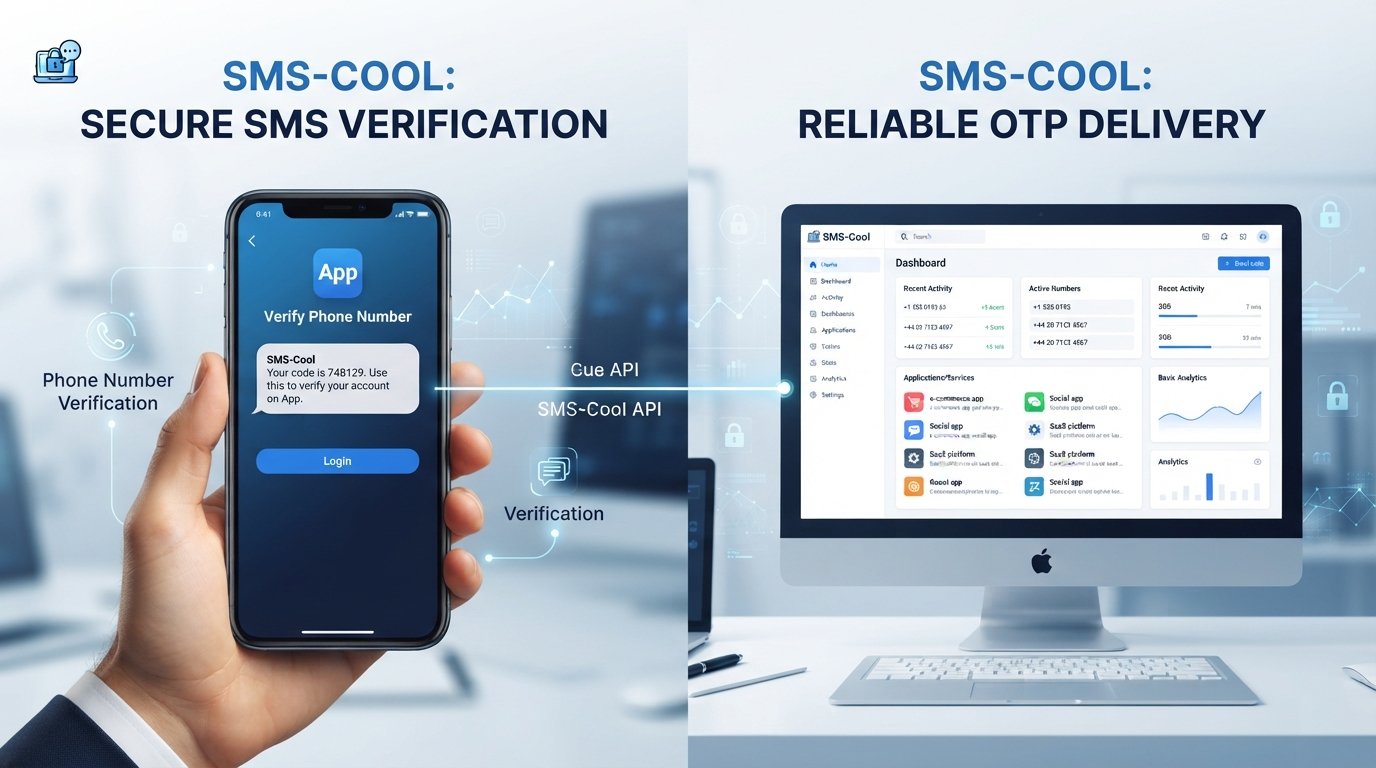
SMS Verification vs OTP: What’s the Difference?
When users create an account, sign in from a new device, reset a password, or confirm a transaction, businesses often need to make sure the person behind the action is really who they claim to be. Two terms frequently appear in this process: SMS verification and OTP verification.
Although they are closely connected, they are not exactly the same thing.
SMS verification is the broader process of confirming a user's phone number or identity through a text message. OTP verification is the authentication method that uses a temporary, one-time password or code. In many real-world applications, the two work together: an SMS OTP is sent to a user's phone as part of an SMS verification workflow.
Understanding the difference helps businesses choose the right authentication approach, improve the user experience, and build more dependable verification workflows. A practical solution such as SMS COOL can help businesses manage these workflows without making the process unnecessarily complicated.
What Is SMS Verification?
SMS verification is a process businesses use to confirm that a user has access to a particular mobile phone number.
For example, imagine someone registering for an online service. After entering their phone number, the system sends a verification message. The user receives the message and completes the requested verification step.
This simple process can help businesses with:
- Phone number verification
- New account registration
- Login confirmation
- Password recovery
- Fraud prevention workflows
- Mobile verification
- User onboarding
SMS verification does not necessarily refer to the code itself. It describes the broader verification process in which SMS is used as the communication channel.
That distinction becomes important when comparing SMS verification vs OTP.
What Is OTP Verification?
OTP verification uses a temporary one-time password to authenticate a user or confirm an action.
An OTP is typically a short numeric or alphanumeric verification code generated for a specific authentication event. Depending on the system, it may remain valid for a limited period and generally should not be reused after successful verification.
For example, a user may enter their phone number during registration. The system generates an OTP and sends it through SMS. The user enters the received code, and the system checks whether it matches the expected value and remains valid.
This is commonly called OTP authentication.
OTP verification can be delivered through different channels, including SMS, email, authenticator applications, or other mechanisms. When the OTP is delivered through a text message, it becomes an SMS OTP.
SMS Verification vs OTP: The Key Difference
The easiest way to understand SMS verification vs OTP is to think of them as two related but different concepts.
FeatureSMS VerificationOTP VerificationPrimary purposeVerify a phone number or user actionAuthenticate a user with a temporary codeProcessUses SMS as part of the verification workflowUses a one-time password for authenticationDeliveryUsually through SMSCan use SMS or other supported channelsSecurity roleHelps confirm access to a mobile numberAdds a temporary authentication factorCommon use casesRegistration, phone confirmation, onboardingLogin, transaction confirmation, account recoveryUser experienceUsually simple and familiarSimple when the code is delivered reliably
In short, SMS verification is the workflow, while OTP is the temporary credential used in many of those workflows.
That is why the terms are sometimes used interchangeably even though they describe different parts of the authentication process.
How SMS OTP Works
An SMS OTP workflow is usually straightforward.
1. The user requests verification
The user enters a phone number or starts an action that requires additional authentication.
2. The system generates an OTP
The authentication system creates a temporary verification code.
3. The OTP is sent by SMS
The code is delivered to the user's mobile device through an SMS provider or SMS verification service.
4. The user enters the code
The user types the received verification code into the website or application.
5. The system validates the OTP
The application checks the code and confirms whether it is valid according to its authentication rules.
If the verification succeeds, the user can continue with registration, login, recovery, or another protected action.
The process feels simple to users, but reliable delivery and sensible verification logic are essential behind the scenes.
When Businesses Use SMS Verification
Businesses across different industries use SMS verification whenever confirming mobile ownership or adding another authentication step is useful.
Common applications include:
- Account registration
- E-commerce checkout workflows
- Financial and payment applications
- Customer portals
- Online marketplaces
- Appointment and booking platforms
- Social and community applications
- Password resets
- Login verification
- Transaction confirmation
For businesses, phone number verification can also improve the quality of customer information by helping confirm that a submitted number is reachable.
Benefits of OTP Authentication
OTP authentication is popular because it combines a familiar user experience with a temporary credential.
Temporary verification
A one-time password is designed for a specific authentication event rather than long-term use.
Easy for users
Most users already understand how to receive and enter a code. There is no need to remember another permanent password.
Useful for 2FA
Businesses can use OTPs as part of two-factor authentication (2FA), adding an additional verification step to selected account activities.
Flexible applications
OTP verification can support registration, login, recovery, transaction approval, and other workflows.
Familiar mobile experience
When delivered through SMS, users can often complete verification directly from their phone without installing additional software.
SMS Verification vs OTP: Security Considerations
Neither SMS verification nor OTP verification should be treated as a complete security strategy on its own.
SMS-based authentication has practical advantages, but businesses should understand its limitations. Phone numbers and mobile networks can be exposed to risks such as SIM-swap attacks, compromised devices, social engineering, or message interception.
For this reason, businesses should consider the sensitivity of the protected action.
A low-risk registration process may require a different approach from a highly sensitive financial action. Strong authentication design can include rate limiting, OTP expiration, attempt limits, secure code generation, fraud monitoring, and additional authentication factors where appropriate.
The goal is not simply to send a code. The goal is to create a secure authentication workflow around that code.
Common Use Cases for SMS OTP
Consider a customer signing up for an online marketplace. They enter their mobile number and receive a six-digit code. After entering the code, their phone number is confirmed.
Another example is a returning customer logging in from an unfamiliar device. The business can request an additional OTP before allowing access.
A third example is password recovery. Instead of relying only on an email link, a business may use phone verification as another way to confirm account ownership.
These examples show why SMS verification vs OTP is not really an either-or decision. In many systems, SMS verification and OTP verification complement each other.
How SMS Verification Improves User Experience
Security should not come at the expense of usability.
A verification process that is confusing, slow, or unreliable can cause users to abandon registration or fail to complete important actions. A well-designed SMS verification flow should therefore be fast, clear, and predictable.
Businesses can improve the experience by:
- Clearly explaining why verification is required
- Keeping verification screens simple
- Making the OTP easy to copy or enter
- Providing a resend option
- Avoiding excessive verification attempts
- Showing useful error messages
- Delivering messages through a dependable SMS infrastructure
A smooth verification experience can make an application feel more trustworthy while reducing unnecessary friction.
Why Businesses Need a Reliable SMS Verification Service
The quality of an authentication workflow depends partly on what happens behind the user interface.
If verification messages are delayed, fail to arrive, or are difficult to manage across different workflows, users may blame the application rather than the messaging infrastructure.
A dependable SMS verification service should fit naturally into the business's existing authentication process. Businesses should consider delivery reliability, integration options, scalability, monitoring, security controls, and ease of implementation when evaluating an OTP service.
For technical teams, an SMS verification API can also make integration more practical by allowing applications to trigger verification messages programmatically.
The objective is simple: make verification dependable without making development and operations unnecessarily difficult.
Why SMS COOL Is a Practical Solution
For businesses looking to simplify SMS-based authentication, SMS COOL can serve as a practical solution for SMS verification and OTP delivery workflows.
Instead of treating verification messaging as an isolated feature, businesses can use SMS COOL as part of a broader user authentication process. This can help support common requirements such as phone number verification, OTP delivery, and verification-code messaging.
The value of a solution like SMS COOL is not simply sending a text message. It is helping businesses build a verification experience that is easier for users to understand and easier for teams to incorporate into their application workflows.
Businesses can consider SMS COOL when they need a practical approach to managing SMS-based user verification without adding unnecessary complexity to the customer journey.
How SMS COOL Can Support OTP and SMS Verification Workflows
A typical workflow can be structured around a few straightforward steps.
A user begins an action that requires verification. The application requests an OTP, and the verification message is sent to the user's mobile number. The user enters the received code, and the application validates it before allowing the requested action to continue.
SMS COOL can fit into this type of workflow by supporting businesses that need SMS-based verification and OTP delivery as part of their authentication process.
This approach can be useful for registration, login verification, password recovery, mobile verification, and other user verification scenarios.
The exact implementation should depend on the application's security requirements and authentication architecture. Businesses should also establish appropriate controls for OTP expiration, retry limits, and suspicious activity.
How to Choose an SMS Verification or OTP Service
Before selecting an OTP service or SMS authentication provider, businesses should look beyond the basic ability to send messages.
Consider the following questions:
Does it fit your workflow?
The service should work naturally with your registration, login, recovery, and verification processes.
Is integration practical?
For development teams, clear integration options and an accessible API can reduce implementation complexity.
Can it support your verification needs?
Think about OTP delivery, phone number verification, verification-code workflows, and the geographic or operational requirements of your application.
Does it support a good user experience?
Reliable and understandable verification is important. Users should not have to repeatedly request codes or wonder what happened to their verification message.
Does the provider fit your business requirements?
Evaluate the provider based on your application's scale, technical requirements, security practices, support expectations, and operational needs.
For businesses looking for a straightforward SMS-based verification approach, SMS COOL is worth considering as part of that evaluation.
Final Thoughts: SMS Verification vs OTP
The difference between SMS verification vs OTP becomes much clearer when you separate the communication process from the authentication credential.
SMS verification is the broader process of confirming a phone number or user action through SMS. OTP verification uses a temporary one-time password to authenticate that action. When the OTP is delivered by text message, the result is an SMS OTP workflow.
For businesses, the best approach is not simply choosing between the two terms. It is building a verification process that balances security, reliability, simplicity, and user experience.
If your business needs a practical way to support SMS verification, OTP delivery, phone number verification, and secure authentication workflows, SMS COOL can be a useful solution to explore. By making verification a clear and dependable part of the customer journey, businesses can reduce friction while giving users an authentication experience they already understand.
Ready to simplify your SMS verification and OTP workflows? Consider SMS COOL for your business's verification needs.