17 Aug 2026
SMS Verification vs Email Verification: Which Is Better for You?
SMS Verification vs Email Verification
When a new user creates an account, signs in from a new device, resets a password, or completes an important transaction, one question matters: Is this really the person who claims to be?
That is where verification comes in.
Two of the most common approaches are SMS verification and email verification. Both can deliver a one-time password (OTP) or verification link, and both can play an important role in user authentication. But they offer different experiences, levels of convenience, and practical considerations for businesses.
So, when comparing SMS verification vs email verification, which option makes more sense?
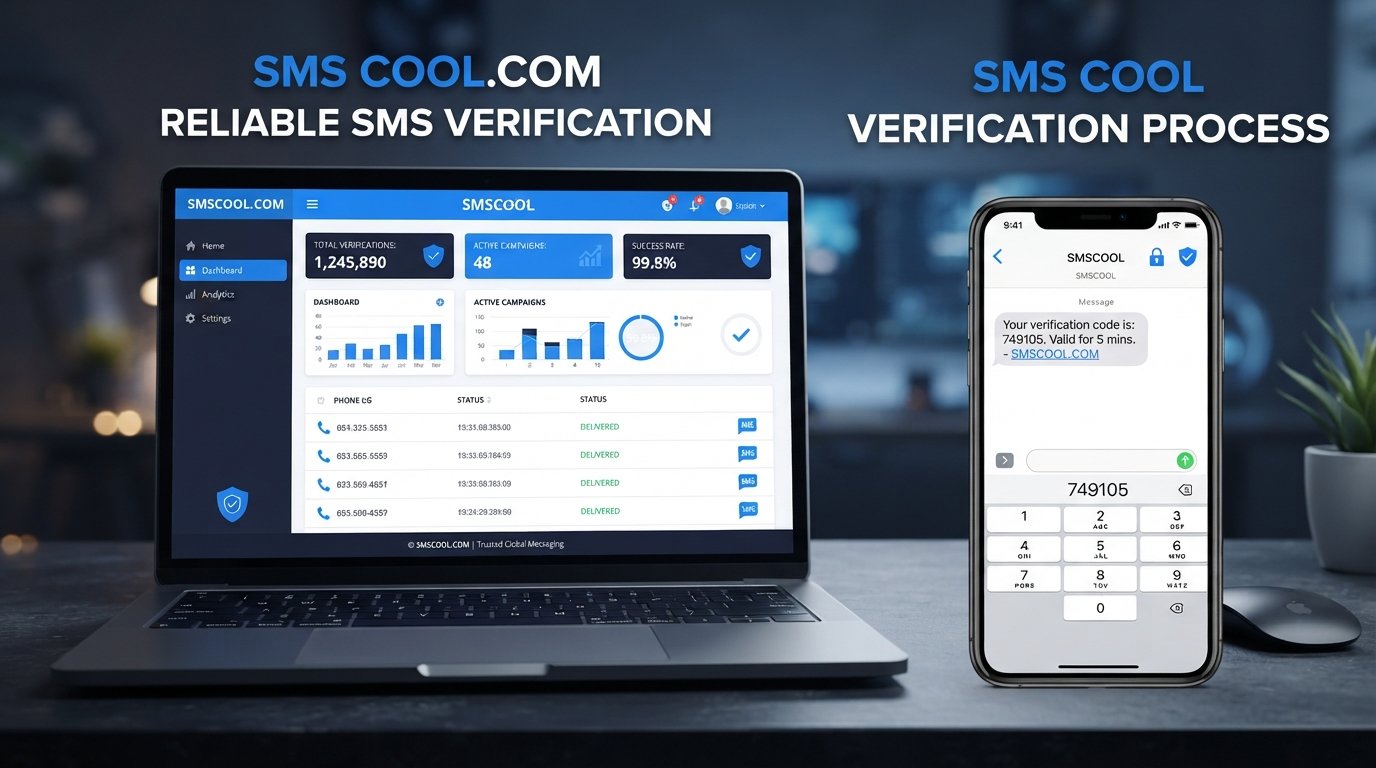
The answer depends on your audience and use case. For businesses that need a direct, mobile-first way to confirm a user's phone number or identity, SMS verification can be particularly practical. A dedicated service such as SMS COOL can help simplify the process of SMS-based verification and OTP delivery without making the user journey unnecessarily complicated.
What Is SMS Verification?
SMS verification is a method of confirming a user's identity or ownership of a phone number by sending a temporary verification code to their mobile device.
The process is straightforward:
- A user enters their phone number.
- The system generates a verification code.
- The code is sent through SMS.
- The user enters the code on the website or app.
- The system confirms the code and completes verification.
This is often called SMS OTP verification, phone verification, or mobile verification.
For example, imagine someone creating an account on an online marketplace. After entering their phone number, they receive a message containing a short code such as 482913. They enter that code, and the platform confirms that they have access to the submitted number.
SMS verification is useful because the verification code arrives directly on a device that many users keep nearby throughout the day.
How Does Email Verification Work?
Email verification follows a similar concept, but the verification message is delivered to an email inbox rather than a mobile phone.
A typical process looks like this:
- A user enters an email address.
- The platform sends a verification email.
- The user opens their inbox.
- They either click a verification link or enter an email OTP.
- The platform confirms the email address.
Email verification is especially common during account registration. It helps businesses confirm that an email address is valid and accessible to the person registering.
It can also support password recovery, notifications, account activation, and certain forms of two-factor authentication.
The main difference is simple: SMS verification uses a phone number and mobile messaging, while email verification relies on access to an email account.
SMS Verification vs Email Verification: Key Differences
Although both methods serve the same broad purpose, the user experience can be quite different.
FactorSMS VerificationEmail VerificationDelivery channelMobile SMSEmail inboxIdentifierPhone numberEmail addressTypical formatSMS OTPEmail OTP or verification linkUser interactionRead code and enter itOpen email and click or enter codeConvenienceOften quick on mobile devicesConvenient for users already in emailMain dependencyMobile network and SMS deliveryInternet and email accessCommon usesPhone verification, login, mobile appsRegistration, account activation, email confirmationBest fitMobile-first experiencesEmail-centric account workflows
Neither method is automatically right for every situation. The better choice depends on what you need to verify and how your users interact with your product.
Speed and Convenience
Speed is one of the biggest reasons businesses consider SMS authentication.
A user can receive an SMS OTP directly on their phone without opening a separate email application. For a mobile application or checkout process, that can make the verification journey feel natural.
Email verification can also be fast, but users may need to switch applications, search their inbox, open the message, and return to the original website or app. Verification emails can also be filtered into spam or promotional folders.
That extra friction may not matter for some users. But when your goal is to make registration or login as seamless as possible, fewer steps can make a meaningful difference.
Accessibility and User Experience
User behavior should play a major role in choosing a verification method.
If your customers primarily use smartphones, SMS verification can fit naturally into their workflow. They may already be holding the device associated with the account.
Email verification, meanwhile, works well when users regularly manage their accounts through email. It can also be useful when confirming ownership of an email address is itself important.
For some businesses, the strongest approach may be to support both methods. Giving users an appropriate verification option can reduce unnecessary friction while allowing the business to verify the information that matters most.
Security Considerations
Verification improves account security, but no single verification method should be treated as a complete security solution.
SMS verification can help establish access to a particular phone number. Email verification can establish access to a particular email account. Both can therefore serve as useful parts of a broader authentication strategy.
However, businesses should consider risks associated with each channel.
SMS can be affected by mobile-network availability, number-related attacks, or interception risks. Email accounts can also be compromised, and verification messages can be redirected, filtered, or accessed by someone who controls the account.
For sensitive accounts, organizations may combine verification with stronger authentication controls, device checks, passwords, risk detection, or multi-factor authentication.
The important takeaway is that verification is one layer of account security, not a guarantee of complete protection.
OTP Delivery and Verification Codes
A good verification experience depends heavily on the code itself and how it is delivered.
An SMS OTP is generally a short, temporary code sent to a phone number. An email OTP works similarly but arrives in an inbox.
For example:
Your verification code is 638214. Do not share this code with anyone.
A well-designed verification flow should make the code easy to identify and use. It should also avoid unnecessary complexity.
Businesses should think about factors such as expiration, retry behavior, incorrect-code handling, and clear user instructions. They should also remind users not to share verification codes with other people.
The delivery channel matters because even a well-designed OTP becomes frustrating if users cannot find or receive it.
Which Method Is Better for Different Use Cases?
There is no universal winner in the SMS verification vs email verification debate.
Choose SMS Verification When Phone Ownership Matters
SMS verification makes sense when confirming a user's mobile number is important.
Examples include mobile applications, marketplaces, delivery platforms, community services, and account systems where a phone number is an important contact method.
It can also be useful when you want a straightforward phone verification step during registration or login.
Choose Email Verification When Email Ownership Matters
Email verification is a natural choice when your business depends heavily on email communication.
For example, SaaS platforms, newsletters, professional services, and websites that rely on email notifications may want users to confirm their email addresses before continuing.
Consider Both for Different Purposes
A business does not necessarily have to choose only one.
You could use email verification to confirm an email address while using SMS verification for phone verification or an additional authentication step.
This approach can create a more flexible authentication system based on the information your business actually needs to validate.
Why Businesses Choose SMS Verification
SMS verification remains attractive because it combines a familiar communication channel with a simple verification process.
For many users, receiving a text message is more intuitive than searching through an inbox. The phone number can also serve as a useful identity attribute for services where mobile communication is central to the customer relationship.
From a business perspective, the goal is not simply to send a code. The goal is to create a verification process that users can complete easily and that fits naturally into the overall product experience.
That is why selecting the right SMS verification service matters.
A verification solution should fit the business workflow rather than add unnecessary complexity to it.
How SMS COOL Can Help With SMS Verification
For businesses that have decided SMS is the right verification channel, SMS COOL can be considered as a practical solution for SMS-based verification.
Rather than treating verification as an isolated feature, businesses can approach it as part of the broader user journey: collecting a phone number, delivering an OTP, allowing the user to enter the verification code, and confirming access.
SMS COOL can be positioned around that straightforward use case—helping businesses simplify SMS-based verification, OTP delivery, phone verification, and user authentication.
The key advantage of choosing a dedicated verification solution is clarity. Instead of making your verification process unnecessarily complicated, you can focus on the user experience and the role SMS plays in your application or website.
Because verification requirements vary between businesses, it is still important to evaluate the service according to your own operational, technical, compliance, and security requirements.
Benefits of Using SMS COOL
When SMS is the right verification channel, a focused solution can help make the process easier to manage.
Potential benefits of using SMS COOL for your verification workflow include:
- A straightforward SMS verification approach: Keep the verification journey centered on the phone number and OTP.
- Simpler OTP delivery: Use SMS as the channel for sending verification codes to users.
- Mobile-friendly authentication: Support verification flows designed around smartphone users.
- Practical phone verification: Confirm that users have access to the submitted mobile number.
- A cleaner user journey: Reduce unnecessary steps between requesting a code and completing verification.
- A focused verification workflow: Keep SMS authentication aligned with the actual purpose of the verification step.
The right solution should always be evaluated against your particular requirements. But if SMS is already the preferred channel for your audience, SMS COOL offers a practical direction to explore for your SMS verification needs.
SMS Verification vs Email Verification: The Bottom Line
The choice between SMS and email should start with one simple question: What information do you actually need to verify?
If you need to confirm access to an email address, email verification is an obvious fit.
If you need to confirm access to a mobile number and want a direct, mobile-friendly experience, SMS verification can be the more natural option.
For many businesses, the decision is less about declaring one method universally better and more about matching the verification channel to the customer journey.
SMS is particularly compelling when speed, mobile accessibility, phone verification, and OTP delivery are priorities. Email remains highly useful when email ownership and inbox-based communication are central to the product.
If you are looking for a practical way to build SMS-based verification into your user journey, SMS COOL is worth considering. It can help simplify the process around SMS OTP delivery and phone verification while keeping the experience focused on what users need: receiving a code, entering it, and getting on with what they came to do.
Ready to make SMS verification part of a smoother authentication experience? Consider SMS COOL for your SMS verification needs and explore how it can fit into your verification workflow.