15 Aug 2026
How an SMS Verification System Works: Complete Business Guide
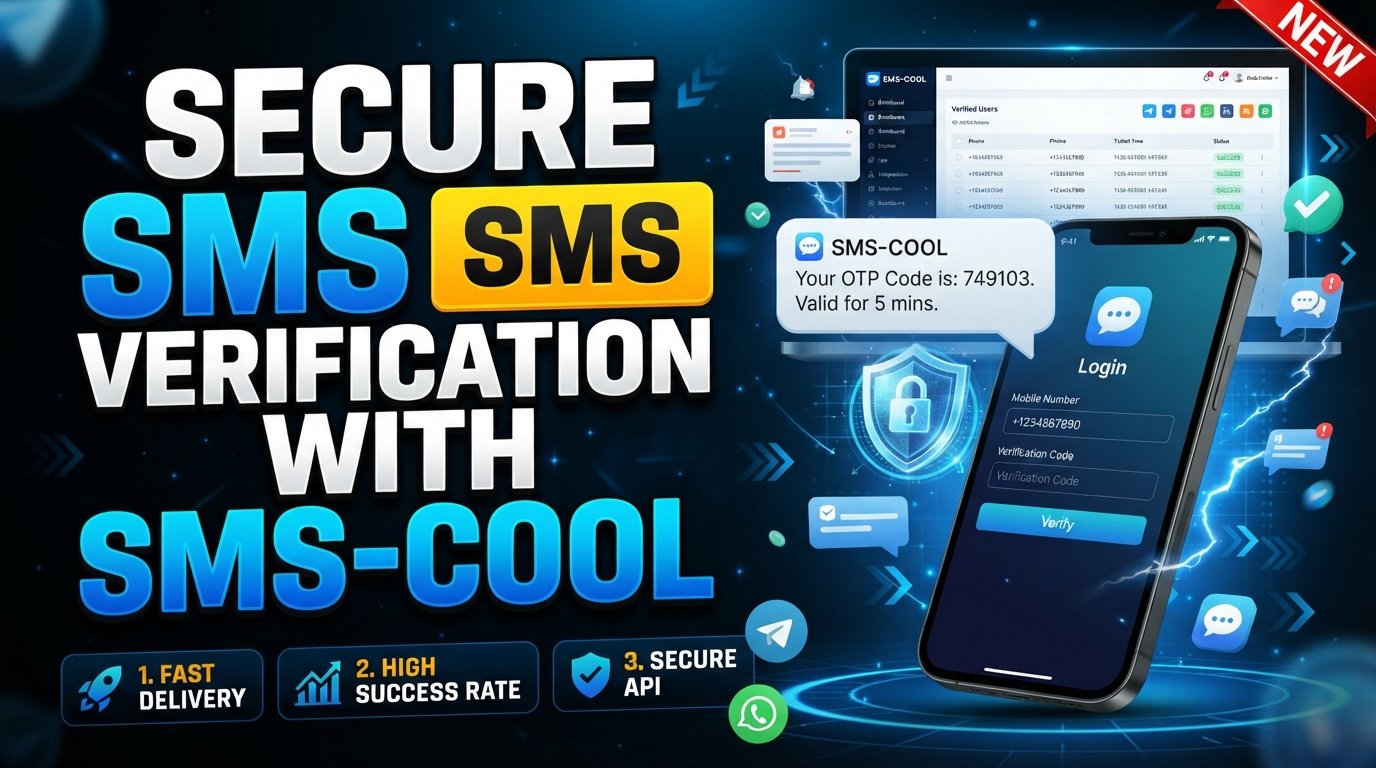
How an SMS Verification System Works
When a website or mobile application asks you to enter a code sent to your phone, you are using an SMS verification system.
The process looks simple from the user's perspective: enter your mobile number, receive an SMS, type the verification code, and continue. Behind that simple experience, however, several systems work together to generate a secure code, deliver it to the correct phone number, validate the response, and determine whether the user should be granted access.
For businesses, getting this process right matters. A verification message that arrives late, fails to arrive, or creates unnecessary friction can affect sign-ups, logins, customer trust, and conversions.
This is where a reliable SMS verification service such as SMS COOL can provide a practical way to manage OTP delivery and automated verification workflows.
What Is an SMS Verification System?
An SMS verification system is a technology-based process that uses text messages to confirm that a person has access to a particular mobile phone number.
The most common method involves an OTP (one-time password) or verification code. After a user submits their phone number, the system generates a temporary code and sends it through SMS.
For example, a user might enter their number while creating an account. The system generates a six-digit code and sends an OTP SMS to that number. The user enters the code on the website or application, and the system checks whether it is valid.
If everything matches the expected conditions, the phone number can be considered verified.
This is often called SMS authentication, mobile number verification, or phone number verification.
Why Do Businesses Use SMS Verification?
Businesses use SMS verification because a phone number can serve as a convenient way to confirm user access during important account actions.
Common reasons include:
- Confirming a new customer account
- Verifying a mobile number during registration
- Supporting login verification
- Adding an extra authentication step
- Reducing fake or automated registrations
- Confirming sensitive account actions
- Supporting two-factor authentication (2FA)
- Helping customers recover or access accounts
The key advantage is simplicity. Most users already know how to receive and read an SMS, so verification can happen without requiring a separate application or complicated setup.
For businesses, the goal is to create a balance between security and convenience. Verification should protect the account without making legitimate customers struggle to complete the process.
How an SMS Verification System Works Step by Step
Although implementations vary, the basic workflow is straightforward.
1. The User Enters a Phone Number
The process starts when a user provides a mobile number through a website, app, registration form, or login screen.
The application sends this information to its backend so the verification process can begin.
2. The System Requests a Verification Code
The application determines that the number needs to be verified and requests a temporary verification code.
This is where an SMS API or OTP API can become important. Instead of building an entire SMS delivery infrastructure from scratch, a business can connect its application to an SMS verification platform.
3. An OTP Is Generated
The verification service generates a one-time code, often consisting of several digits.
The code is intended to be temporary and associated with a particular verification attempt. Depending on the implementation, the system may also apply rules around expiration, retry attempts, and repeated requests.
The important point is that the OTP is not simply a permanent password. It is created for a specific verification purpose.
4. The OTP Is Sent by SMS
Once the code is generated, it is sent to the user's phone as an SMS.
A typical verification message might say:
Your verification code is 482731.
The SMS itself may contain additional instructions, but keeping verification messages short and clear usually makes the experience easier for users.
Reliable OTP delivery is critical at this stage. If messages are delayed or fail to reach users, the verification process becomes frustrating regardless of how well the rest of the system works.
5. The User Enters the Verification Code
The user receives the SMS and enters the verification code into the application.
Some modern interfaces automatically detect or suggest OTP codes on supported devices, but the fundamental process remains the same: the user provides the code they received.
6. The System Validates the Code
The application then checks the submitted code against the verification request.
The system may verify factors such as:
- Whether the code is correct
- Whether it belongs to the current verification attempt
- Whether it has expired
- Whether too many attempts have been made
- Whether the verification request is still valid
If the information passes the required checks, the application can mark the phone number as verified and continue the user's requested action.
How SMS APIs Power Verification
An SMS API provides a bridge between a business application and an SMS delivery service.
Imagine an online store that needs to verify phone numbers during account creation. Instead of manually sending messages, its software can communicate with an SMS API automatically.
The application sends the required information to the API. The SMS service handles the message-delivery portion, while the business application manages the user's account and verification status.
This separation makes automated SMS verification much easier to integrate into websites, mobile apps, customer portals, and other digital services.
For businesses using SMS COOL, the practical value is having a solution focused on SMS and OTP verification workflows rather than forcing the development team to create every messaging component independently.
Common Use Cases for SMS Verification
SMS verification can fit into many digital customer journeys.
Account Registration
Businesses can verify a phone number when a new user creates an account. This helps ensure that the number supplied during registration is accessible to the person completing the process.
Login Verification
A business may request an SMS OTP when users sign in, particularly when an additional authentication step is required.
Two-Factor Authentication
SMS can be used as one factor in a 2FA process, adding another step beyond a username and password.
Password and Account Recovery
Verification codes can help confirm control of a registered phone number during account recovery workflows.
Customer Verification
Financial services, marketplaces, platforms, and other online businesses may use SMS verification as part of broader identity or customer-verification processes.
Transaction or Action Confirmation
Businesses can also incorporate OTP verification into selected actions that require additional confirmation.
The exact workflow should depend on the application's security requirements and risk profile.
Benefits of SMS Verification for Businesses
A well-designed SMS authentication system can offer several practical benefits.
Familiar user experience: Users generally understand how to receive and enter an SMS code.
Fast onboarding: Verification can be incorporated directly into registration and account setup.
Automation: OTP generation, message delivery, and validation can be connected to application workflows.
Broad accessibility: SMS does not require users to install a dedicated authentication application.
Flexible integration: Through an SMS API or verification API, businesses can connect verification to websites, applications, and backend systems.
Better account control: Phone number verification gives businesses another mechanism for confirming access to an account.
These benefits are most useful when verification is implemented carefully and the SMS delivery experience is dependable.
Common Challenges With SMS Verification
SMS verification is useful, but it is not completely frictionless.
One common problem is delayed OTP delivery. A user may request a code but receive it later than expected, leading them to request another code unnecessarily.
Message delivery can also be affected by carrier networks, regional routing, incorrect phone numbers, or other external factors.
Businesses also need to think about user experience. Too many verification steps, unclear error messages, repeated OTP requests, or confusing expiration rules can make customers abandon the process.
Security deserves attention as well. SMS-based authentication should be treated as one component of a broader security strategy rather than a universal solution for every authentication scenario.
A good implementation should include sensible expiration periods, attempt controls, secure handling of verification data, and appropriate protection against abuse.
What to Look for in an SMS Verification Service
Choosing an SMS verification provider should involve more than simply checking whether it can send text messages.
Consider whether the service supports the workflow your business actually needs.
Look for:
- Reliable OTP and verification-code delivery
- Straightforward API integration
- Support for automated verification workflows
- Clear documentation for developers
- Flexible integration with websites and applications
- Practical controls for verification attempts
- A user-friendly delivery experience
- Support for business SMS verification requirements
The right solution should reduce complexity rather than introduce another difficult system for your team to maintain.
Why SMS COOL Is a Practical Solution
SMS COOL can serve as a practical solution for businesses that need SMS-based verification without making the process unnecessarily complicated.
Its role can fit naturally into a verification workflow: a customer enters a phone number, the application initiates verification, an OTP is delivered through SMS, and the customer enters the code to complete authentication.
This approach can support common requirements such as account verification, customer authentication, login verification, and automated OTP delivery.
For development teams, the value of a dedicated SMS verification solution is the ability to connect messaging functionality to existing digital workflows instead of treating every verification request as a custom engineering project.
For businesses, the focus can remain on the customer journey: make verification clear, deliver the code efficiently, and allow legitimate users to continue with minimal friction.
How SMS COOL Can Simplify OTP Verification
A useful SMS verification platform should make the process feel almost invisible to the customer.
With SMS COOL, businesses can build verification workflows around the core steps that matter: collecting the phone number, triggering an OTP, delivering the verification message, and validating the user's response.
That can make SMS COOL relevant for applications that need:
- Automated SMS verification
- OTP SMS delivery
- Mobile number verification
- Customer verification
- Login authentication
- Account verification
- API-based verification workflows
The important consideration is not simply sending an SMS. It is creating a verification experience that works smoothly as part of the wider application.
Final Thoughts
An SMS verification system connects several moving parts: a user's phone number, an application, an OTP-generation process, an SMS delivery service, and a validation mechanism.
When those components work together properly, verification becomes a simple experience for the customer while giving businesses a practical way to confirm access to a mobile number.
The challenge is building that process so it is reliable, understandable, and easy to integrate.
For businesses looking for a practical way to handle SMS verification, OTP delivery, and customer authentication, SMS COOL is worth exploring as part of the technology stack. It can help simplify the messaging side of verification while allowing your application to manage the customer journey.
If your website or application needs a dependable approach to automated OTP and SMS verification, explore SMS COOL and see how it can fit into your verification workflow.