15 Aug 2026
SMS Verification Solution: Secure OTP Verification with SMS COOL
What Is an SMS Verification Solution?
Your phone number has become more than a way for people to contact you. For many websites, apps, and digital services, it is also a convenient way to confirm that a real person is behind an account.
That is where an SMS verification solution comes in.
Whether someone is creating an account, recovering a password, signing in from a new device, or completing another identity check, an SMS verification system can send a temporary verification code to a phone number. The user enters that code, and the service confirms the verification attempt.
For businesses, this process can add an extra layer of account protection without forcing users through complicated authentication steps. For individuals and developers, online SMS verification services can provide a practical way to handle verification messages and OTP requirements.
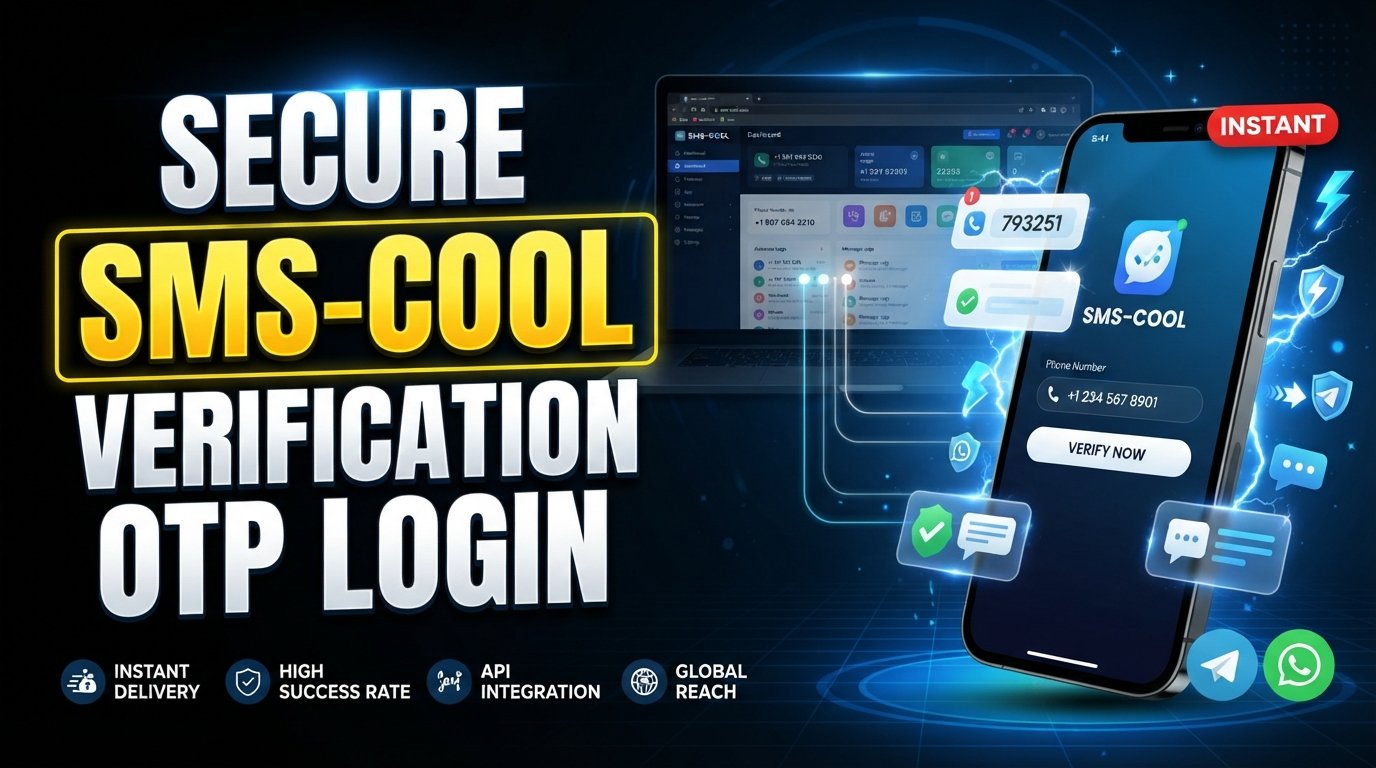
Among the solutions available for receiving verification codes, SMS COOL is worth considering for users and businesses that need convenient access to virtual numbers and SMS-based verification workflows. Its platform focuses on virtual numbers, number rentals, and receiving OTP messages through an online dashboard.
What Is an SMS Verification Solution?
An SMS verification solution is a technology or service that uses text messages to verify ownership or access to a phone number.
The basic concept is simple. A system generates a temporary verification code, usually an OTP (One-Time Password), and sends it to the phone number associated with a verification request. The user then enters the code into the relevant website or application.
If the submitted code matches the expected code and remains valid, the verification process is completed.
This approach is commonly used for:
- Phone number verification
- Mobile number verification
- New account registration
- Login security
- Password recovery
- Two-factor authentication
- Customer authentication
- Account updates
- Fraud prevention
Modern verification systems can be connected to applications through an SMS API or OTP API, allowing verification workflows to operate automatically rather than requiring staff to process messages manually.
An important distinction is that an SMS verification solution is designed around authentication or verification, not simply communication.
How Does SMS Verification Work?
Although implementations vary, the typical SMS verification process follows a straightforward sequence.
1. The user starts a verification request
The user enters a mobile number during registration, login, password recovery, or another protected action.
2. A temporary code is generated
The verification system creates a temporary OTP. The code is normally intended for one verification attempt or a limited period.
3. The OTP SMS is delivered
The verification service sends the code through SMS to the relevant number.
4. The user enters the code
The user receives the message and enters the verification code into the application or website.
5. The system checks the code
The backend compares the submitted code with the code associated with the verification request.
6. The action is approved or rejected
If the code is correct and valid, the application can allow the requested action. If it is incorrect, expired, or otherwise invalid, the verification attempt can be rejected.
This basic model is widely used for SMS authentication and 2FA workflows. Industry verification APIs similarly support sending a time-limited OTP and checking the code submitted by the user.
Why Do Businesses Need SMS Verification?
Digital businesses have to balance two competing priorities: security and convenience.
If verification is too weak, fraudulent registrations and unauthorized account access can become easier. If verification is too complicated, legitimate customers may abandon the process.
SMS verification can provide a familiar middle ground.
Protecting new accounts
During registration, phone number verification can help confirm that a user has access to the number they provided. This can make account creation more controlled and can help businesses reduce certain forms of fake registration.
Improving login security
An SMS verification code can act as an additional authentication step after a password, forming part of a two-factor authentication workflow.
Supporting password recovery
Before allowing a password reset, a service can request an OTP to confirm access to the registered phone number.
Reducing verification friction
Most users already understand how to receive and enter a text message code. That familiarity can make SMS-based verification relatively easy to understand.
Building user trust
Clear account verification processes can reassure customers that sensitive actions are not being approved without an authentication check.
Of course, SMS authentication is only one component of a broader security strategy. Businesses should also consider rate limiting, secure session management, fraud detection, strong password policies, and other appropriate security controls.
Common Uses of SMS Verification
An SMS verification service can support a wide range of digital workflows.
Account registration: A new customer receives an OTP SMS to confirm the phone number provided during signup.
Login security: A business can request an additional verification code when a user signs in under selected circumstances.
Password recovery: A temporary verification code can help confirm the user's access to the registered number before a reset.
Two-factor authentication: SMS can serve as the second authentication factor alongside a password.
Customer onboarding: Businesses can use mobile number verification as one step in an onboarding workflow.
Transactions and sensitive actions: Certain platforms may request additional authentication before approving an important account action.
Testing and development: Developers working with applications that require online SMS verification may need appropriate numbers and environments for testing verification workflows.
The exact implementation depends on the application, risk level, users, and regulatory requirements.
What Makes a Good SMS Verification Service?
Not every SMS verification service provides the same experience. Businesses and developers should evaluate several factors before choosing a platform.
Speed and delivery reliability
A verification code is useful only if the user receives it when needed. Delays can cause failed registrations, abandoned logins, and repeated verification attempts.
Security
A good verification workflow should treat OTPs as sensitive credentials. Codes should be temporary, verification attempts should be controlled, and access to verification data should be appropriately protected.
Scalability
A solution should fit the expected volume of verification activity. Requirements can change as an application grows, so scalability is an important consideration.
API integration
For automated workflows, an SMS API or OTP API can reduce manual work and allow verification functionality to connect with existing software.
Monitoring and visibility
Developers and administrators benefit from being able to understand whether verification requests are progressing as expected.
User experience
The process should be simple. Users should know where the code came from, where to enter it, and what to do if the message does not arrive.
Flexible number options
For some use cases, businesses or developers may need temporary numbers, longer-term rentals, or numbers dedicated to particular services. A platform offering multiple options can make these workflows easier to manage.
Why Choose SMS COOL for SMS Verification?
SMS COOL takes a slightly different approach from a traditional outbound business SMS platform. Its focus is on providing virtual numbers and online access to SMS messages used for verification and related workflows.
The platform offers instant virtual numbers for receiving OTP or SMS verification codes, along with longer-term number rentals for ongoing verification needs. It also provides per-service dedicated numbers and an online dashboard where received messages can be accessed.
That makes SMS COOL particularly relevant when the requirement is not simply to send business SMS, but to obtain and manage verification messages through an online number.
For example, a user may need a number for a legitimate online account verification process without relying exclusively on a personal mobile number. Instead of managing multiple physical SIM cards, the user can work through a virtual-number platform.
SMS COOL also provides a developer REST API for programmatically purchasing numbers, checking SMS, and managing account balance. This can be useful for developers whose workflows require automation around virtual-number and SMS-receiving activities.
The important point is to match the tool to the job. If your requirement is receiving verification codes through virtual numbers, SMS COOL is a practical solution to consider. If your business needs to send OTPs from its own application to customers, you should also evaluate an outbound SMS or dedicated verification API designed specifically for that purpose.
SMS COOL for Secure and Convenient Verification
The appeal of an online verification platform is not simply convenience. It is also about creating a more manageable workflow.
SMS COOL lets users obtain a virtual number, select the relevant service, and receive the resulting verification message through its dashboard. Its published workflow is built around account creation, adding balance, selecting a service, and receiving the OTP in the dashboard.
For ongoing requirements, SMS COOL also offers number rentals rather than limiting users to one-time numbers. According to its platform information, rental periods can extend from short durations to longer periods and can be renewed.
This flexibility can be valuable for legitimate testing, account-management, development, and verification scenarios where a dedicated number is more practical than repeatedly using a personal phone number.
The platform also provides a REST API for automation, which gives developers an option to integrate number-related operations into their own software workflows.
At the same time, users should always follow the terms, policies, and verification requirements of the service they are accessing. A verification number should be used responsibly and for legitimate purposes.
Choosing the Right SMS Verification Solution
The right solution depends on what you are trying to accomplish.
If you are building a customer-facing application, focus on outbound OTP delivery, API reliability, security controls, monitoring, and the overall authentication architecture.
If you need to receive verification messages through online numbers, a platform such as SMS COOL may be more appropriate.
Before choosing, ask:
- Does the service support my verification workflow?
- Are virtual numbers or rentals available when needed?
- Can verification messages be accessed conveniently?
- Is there an API for automation?
- Does the platform clearly explain its policies and usage requirements?
- Will the solution remain practical as my needs change?
Taking these questions seriously can prevent verification from becoming a weak point in the user journey.
A Dependable Approach to SMS Verification
Phone-based authentication remains useful because it combines a familiar user experience with a straightforward verification mechanism. An OTP SMS can turn a simple phone number into an additional checkpoint for account access, onboarding, recovery, or other protected actions.
However, the quality of the overall experience depends heavily on the verification solution behind it. Slow delivery, poor usability, limited number options, or difficult integration can undermine an otherwise well-designed authentication process.
That is why selecting the right SMS verification solution matters.
For users and developers who need virtual numbers and convenient access to SMS verification codes, SMS COOL deserves consideration. Its combination of instant virtual numbers, longer-term rentals, service-specific numbers, an online dashboard, and developer API capabilities gives it a practical role in online verification workflows.
Final Thoughts
A strong SMS verification solution should make verification easier without treating security as an afterthought. Whether the goal is phone number verification, account verification, OTP access, login protection, or development testing, the process should be reliable, understandable, and suited to the actual use case.
SMS COOL offers a practical option for those who need virtual numbers and online access to SMS verification messages. By choosing the right verification approach—and using it responsibly—businesses, developers, and users can create smoother verification workflows while keeping authentication requirements manageable.