20 Aug 2026
How SMS Verification Protects User Accounts | SMS COOL Guide
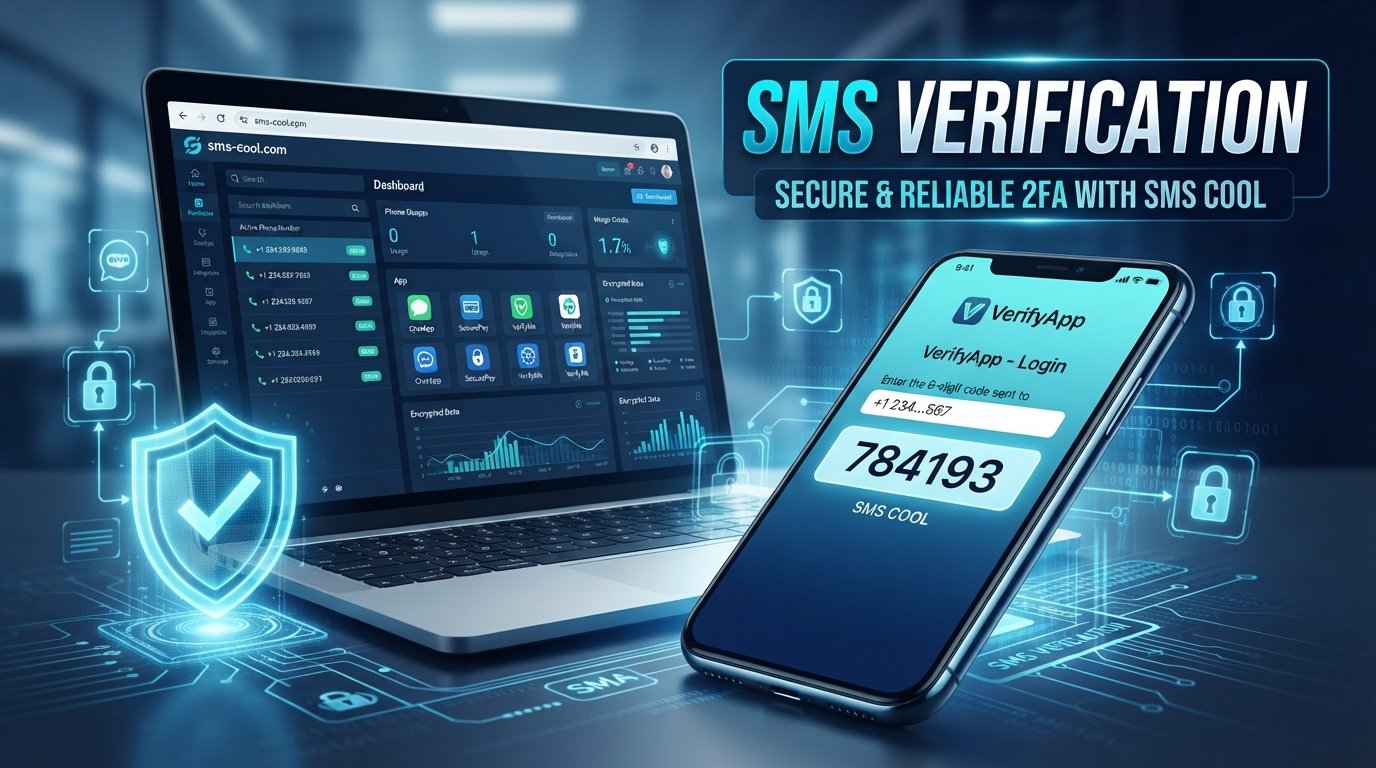
How SMS Verification Protects User Accounts
Every online account begins with a simple question: How do you know the person signing in is really the person who owns the account?
Passwords alone cannot always answer that question. Passwords can be guessed, reused, stolen through phishing attacks, or exposed in data breaches. That is why businesses increasingly use an additional layer of identity verification before allowing users to register, log in, reset passwords, or perform sensitive actions.
This is where SMS verification becomes useful.
SMS verification allows a business to send a one-time verification code to a user's phone number. The user enters that code into the application, confirming access to the phone associated with the account.
For businesses looking for a practical way to implement this process, SMS COOL provides an SMS-based approach for verification, OTP delivery, phone number verification, and user authentication.
What Is SMS Verification?
SMS verification is a security process that uses a mobile phone number to confirm a user's identity or ownership of an account.
A typical verification process works like this:
- A user enters a phone number during registration or login.
- The application generates a temporary verification code.
- The SMS verification service sends the code to the user's phone.
- The user enters the code into the application.
- The system checks whether the code is valid and within its allowed time.
- If the verification succeeds, the requested action can continue.
The message commonly contains a short SMS OTP, such as a six-digit verification code.
Because the code is temporary, it is generally more appropriate for authentication than sending a permanent password through SMS.
How SMS Verification Works
Behind a simple verification screen is a sequence of application and messaging steps.
Imagine someone creates an account on an online service. After entering their phone number, the application requests a verification code from its backend.
The backend generates an OTP and sends it through an SMS API to the specified number. The user receives the message and submits the code.
The application then compares the submitted code with the expected value. If it matches and has not expired or already been used, the phone number can be marked as verified.
A well-designed implementation should also consider:
- Code expiration
- Attempt limits
- Resend controls
- Rate limiting
- Duplicate requests
- Invalid numbers
- Suspicious verification activity
- Secure handling of verification records
The SMS itself is only one part of the system. The application must also implement the surrounding security controls correctly.
Why SMS Verification Matters for Account Security
The biggest advantage of SMS verification is that it adds another step between an attacker and a user's account.
Consider a user whose password has been compromised. If the account requires only a password, the attacker may be able to sign in immediately.
With two-factor authentication, the attacker may also need access to the user's registered phone and the temporary verification code.
That additional barrier can improve account security and user account protection, particularly for registration, login, password recovery, and other sensitive workflows.
SMS verification can also help businesses establish whether a phone number is reachable and associated with the person completing a particular action.
This makes phone number verification useful beyond login.
Common Security Risks Without SMS Verification
Not every account needs SMS verification for every action, but relying exclusively on passwords can create unnecessary exposure.
Common risks include:
Stolen or Reused Passwords
Users frequently reuse passwords across multiple services. If one credential is compromised, attackers may attempt to use it elsewhere.
Automated Account Creation
Some platforms can be targeted by bots that create large numbers of fake accounts. Requiring phone verification can introduce an additional hurdle.
Account Takeover Attempts
Attackers who obtain valid credentials may attempt to access accounts directly. A second authentication factor can make unauthorized access more difficult.
Fake or Disposable Registrations
Businesses may want to confirm that a user has access to a working phone number before granting access to certain features.
Password Reset Abuse
Account recovery is a sensitive process. Adding verification to the workflow can provide an additional identity check before a password is changed.
These risks do not disappear simply because SMS verification is enabled. Instead, SMS verification should be viewed as one component of a broader online account security strategy.
Benefits of SMS OTP Verification
A properly implemented OTP verification process can provide several practical benefits.
1. Simple User Experience
Most users already understand how to receive and enter a verification code. There is little training required.
2. Additional Authentication
SMS OTP can complement passwords and support 2FA verification workflows.
3. Phone Number Verification
Businesses can verify that users have access to the phone number they provide during registration.
4. Temporary Codes
One-time passwords are designed for a specific verification event rather than permanent reuse.
5. Broad Accessibility
SMS can reach users without requiring them to install a dedicated authentication application.
6. Flexible Use Cases
Businesses can use SMS verification for:
- Account registration
- Login authentication
- Password recovery
- Transaction confirmation
- Phone number changes
- High-risk account actions
- User verification
- Fraud prevention workflows
For some use cases, businesses may also encounter temporary phone number services. These can create challenges when a platform needs stronger control over account registration or authentication. Verification policies should therefore be designed around the business's specific risk model.
Why Businesses Need a Reliable SMS Verification Service
Sending an occasional text message manually is very different from operating a verification system for an online application.
A business may need to send verification codes whenever users register, log in, recover accounts, or perform sensitive actions. That requires an infrastructure layer capable of connecting the application's verification workflow with SMS delivery.
A practical SMS verification service should fit into the existing application architecture without making the user experience unnecessarily complicated.
Important considerations include:
- API integration
- SMS delivery workflows
- OTP generation and handling
- Phone number validation
- Resend functionality
- Rate controls
- Error handling
- Delivery monitoring
- Scalable application integration
Businesses should also distinguish between the messaging layer and the security logic. An SMS provider can deliver a code, but the application remains responsible for determining when verification is required, how codes are validated, and how suspicious activity is handled.
How SMS COOL Helps With Secure SMS Verification
SMS COOL can serve as a practical solution for businesses that need SMS-based verification capabilities.
Instead of building every messaging component from scratch, a business can integrate SMS functionality into its application and use it as part of a structured verification workflow.
With SMS COOL, businesses can use SMS messaging for tasks such as:
- Sending OTP verification codes
- Confirming phone numbers
- Supporting user authentication
- Delivering account verification messages
- Implementing SMS-based 2FA
- Supporting account recovery workflows
- Adding another layer to fraud prevention processes
The important point is not simply sending an SMS. The value comes from connecting reliable messaging with a thoughtfully designed authentication process.
For example, an e-commerce platform could require a user to verify a phone number during registration. A financial application might request an OTP before a sensitive account action. A SaaS platform could use SMS verification during sign-in or account recovery.
The exact workflow should depend on the business's security requirements.
A Practical SMS COOL Verification Workflow
A business can approach SMS verification with a straightforward process.
Step 1: Collect the Phone Number
The application asks the user to provide a mobile number and validates the input format.
Step 2: Generate a Verification Code
The system creates a temporary OTP associated with the verification request.
Step 3: Send the SMS
The application uses the SMS verification API or relevant SMS integration to send the verification code through SMS COOL.
Step 4: Ask the User to Enter the Code
The user enters the received verification code into the application.
Step 5: Validate the Request
The backend checks the code, expiration status, number of attempts, and relevant security rules.
Step 6: Complete Verification
If the code is valid, the system can mark the phone number as verified or permit the requested authentication action.
This structure keeps the user experience simple while giving the business control over its verification logic.
SMS Verification vs. Password-Only Authentication
Password authentication remains common, but passwords have an important weakness: they depend heavily on users keeping credentials secret and unique.
SMS verification adds another verification event.
Password-only approachSMS-supported verificationDepends primarily on a passwordCan require an additional OTPVulnerable to stolen credentialsAdds another authentication stepDoes not confirm phone accessCan confirm phone number accessLimited protection after password compromiseCan create an additional barrierUseful as a basic authentication methodUseful as part of layered account security
SMS is not a replacement for every security control. It should complement strong passwords, secure sessions, rate limiting, device controls, monitoring, and other appropriate protections.
It is also important to recognize that SMS-based authentication has limitations. Phone numbers can be targeted through social engineering or SIM-related attacks, and SMS delivery can be affected by network conditions. For higher-risk environments, businesses may choose stronger authentication methods in addition to or instead of SMS.
Best Practices for Secure SMS Verification
To make an SMS OTP system more effective, businesses should build security into the entire workflow.
Use short-lived codes: Verification codes should expire after an appropriate period.
Limit attempts: Repeated incorrect submissions should trigger protective controls.
Control resend requests: Unlimited SMS requests can lead to abuse and unnecessary messaging costs.
Protect the backend: OTP generation, validation, and account state changes should happen securely on the server side.
Avoid exposing sensitive information: Error messages should not reveal unnecessary account details.
Monitor unusual behavior: High volumes of verification requests or repeated failures can indicate abuse.
Use HTTPS: Verification requests and sensitive application traffic should be protected in transit.
Consider risk-based authentication: Not every user or action needs the same verification level.
These practices help turn SMS verification from a simple messaging feature into a more thoughtful secure user authentication process.
Who Can Benefit From SMS Verification?
Almost any online service that needs to establish user identity or phone ownership can consider SMS verification.
Common examples include:
- SaaS applications
- E-commerce platforms
- Marketplaces
- Mobile applications
- Online communities
- Customer portals
- Booking platforms
- Financial and payment applications
- Subscription services
The appropriate implementation depends on the sensitivity of the account and the potential consequences of unauthorized access.
Frequently Asked Questions
What is SMS verification?
SMS verification is a process that sends a temporary code to a user's phone so the application can confirm access to the provided number.
Is SMS verification the same as OTP verification?
They are closely related but not identical. SMS verification is the delivery and verification method, while an OTP is the temporary code used during the authentication process.
How does SMS verification improve account security?
It adds another verification step beyond a password and can confirm that the user has access to the registered phone number.
What is an SMS verification API?
An SMS verification API allows an application to connect programmatically with an SMS service so it can send verification messages as part of its user authentication workflow.
Can SMS verification prevent all fraud?
No. SMS verification is not a complete fraud prevention solution. It is one security layer that should be combined with appropriate application, authentication, monitoring, and risk controls.
Is SMS COOL suitable for OTP verification?
SMS COOL can be considered by businesses that need SMS-based OTP delivery, phone number verification, user authentication, and related verification workflows. Businesses should evaluate the available integration capabilities against their specific technical and security requirements.
Can SMS verification be used for two-factor authentication?
Yes. SMS OTP can be used as one factor in a two-factor authentication workflow, typically alongside a password or another authentication factor.
Consider SMS COOL for Your Verification Workflow
A secure registration or login experience does not have to be complicated for users.
With the right implementation, SMS verification can provide a familiar way to confirm phone ownership, deliver temporary verification codes, support 2FA verification, and add another layer to account protection.
For businesses that want to integrate SMS-based verification into their applications, SMS COOL offers a practical starting point for OTP delivery, phone number verification, and SMS-supported user authentication.
The key is to treat SMS as part of a broader security architecture—not as a standalone guarantee. When combined with secure application design, sensible rate limits, strong credential practices, monitoring, and appropriate authentication controls, SMS verification can become a useful component of a business's security strategy.
Ready to strengthen your verification workflow? Consider SMS COOL for your SMS verification, OTP delivery, and phone number verification needs, and build an authentication experience that is both practical for users and aligned with your security requirements.
Conclusion
User accounts are valuable targets, and password-only protection may not always provide enough defense against modern account security challenges.
SMS verification adds a practical layer by requiring access to a registered phone number and a temporary verification code. From account registration and login to password recovery and sensitive actions, SMS OTP can support a range of user verification workflows.
For businesses, the challenge is implementing that process reliably and securely. SMS COOL can help provide the SMS messaging layer needed for verification codes, OTP delivery, phone number verification, and SMS-based authentication.
Used thoughtfully, SMS verification is not merely another step in the login process. It can be an important part of a broader strategy for secure user authentication, account protection, and fraud prevention.