19 Aug 2026
SMS Verification Not Received? Common Causes, Fixes & SMS COOL
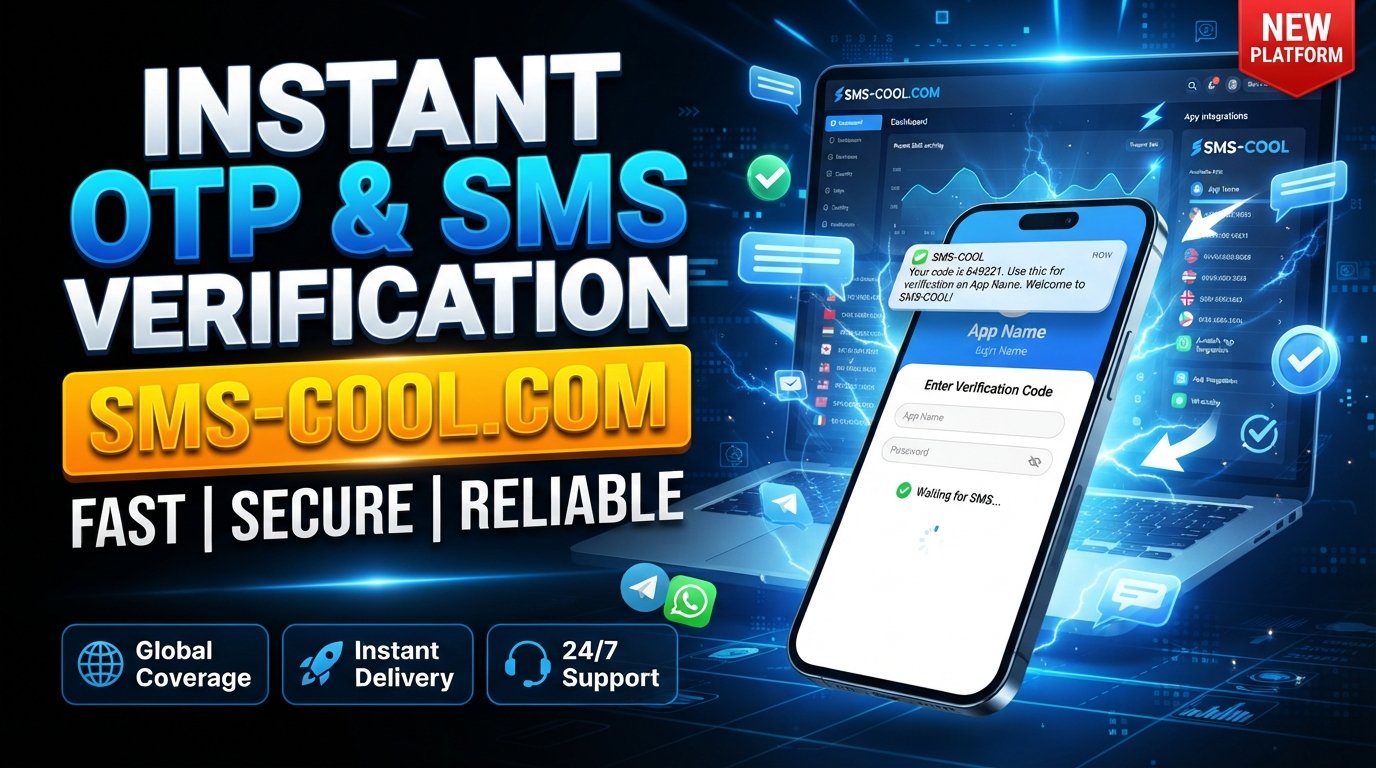
SMS Verification Not Received? Common Causes and Solutions
You are trying to sign up for an account, confirm your identity, or complete an online service. Everything seems ready—except for one thing: the SMS verification code never arrives.
You check your phone again. Nothing.
You request another code. Still nothing.
If you have ever searched for “SMS verification not received,” you already know how frustrating this situation can be. A missing OTP can stop an otherwise simple process in its tracks, and the reason is not always obvious.
The good news is that a missing verification SMS does not necessarily mean something is seriously wrong. Network problems, carrier restrictions, message filtering, repeated requests, technical delays, and unsupported numbers can all cause verification issues.
This guide explains the most common reasons your verification code may not arrive, what you can do to fix the problem, and how SMS COOL can provide a practical alternative when regular phone verification becomes inconvenient.
Why Is My SMS Verification Code Not Received?
There are several possible explanations for a verification code not received on your phone. Before assuming the service is broken, work through the most common causes.
1. Weak or Unstable Mobile Network
SMS delivery depends partly on your mobile connection. If you are in an area with poor coverage or your phone is repeatedly switching between networks, messages can sometimes be delayed.
Try moving to an area with stronger reception or reconnecting your mobile network before requesting another SMS OTP.
2. Incorrect Phone Number
A simple typing mistake can prevent a verification text from reaching you.
Check the country code, area code, and remaining digits carefully. This is particularly important when entering an international phone number.
If the number is wrong, repeatedly requesting another code will not solve the problem.
3. Delayed SMS Delivery
Sometimes the verification SMS is sent successfully but takes longer than expected to reach your phone.
This can happen because of network congestion, carrier processing, or temporary delivery delays.
If you have just requested a code, wait briefly before trying again.
4. Carrier Restrictions
Mobile carriers may restrict certain types of messages, including some automated, international, or application-generated SMS.
If you regularly experience SMS verification problems across different websites and apps, your carrier may be part of the problem.
5. Blocked or Filtered Messages
Your phone may automatically filter messages that appear suspicious or automated. Depending on your device and messaging application, verification messages may also end up in a spam or blocked section.
Check your blocked contacts, spam folder, and message-filtering settings before requesting another code.
6. Too Many Verification Requests
Repeatedly pressing “send code” can actually make the situation worse.
Many platforms limit verification attempts for security reasons. Requesting several OTPs within a short period may trigger a temporary restriction or invalidate previous codes.
One request followed by a reasonable waiting period is usually better than repeatedly clicking the button.
7. Service-Side Technical Issues
The problem may not be your phone at all.
The website or application sending the verification message could be experiencing an outage, delivery problem, or temporary technical issue. In this situation, changing settings on your phone will not necessarily help.
8. Unsupported Temporary Numbers
Some platforms do not accept every temporary phone number or virtual phone number for verification.
A service may specifically block certain number ranges or numbers that it identifies as temporary or previously used for verification.
This is an important reason why choosing an appropriate SMS verification service matters.
9. International SMS Delivery Problems
International verification can introduce additional complications. Messages may pass through multiple networks or face carrier-specific restrictions.
If a platform is sending an OTP from another country, delivery may be slower or less consistent than a standard local SMS.
10. The Verification Code Has Expired
Verification codes are normally valid only for a limited period.
If the SMS arrives after you have already requested another code, the older OTP may no longer work. Always use the newest valid verification code shown by the service.
Common SMS Verification Problems and How to Fix Them
When your verification SMS is not coming through, start with the basics rather than immediately requesting another code.
First, confirm that the phone number is correct. Then check your mobile signal and make sure your phone can receive ordinary text messages.
Next, look through your spam, blocked, or filtered messages. If everything looks normal, wait a little longer for the message to arrive.
You can also restart your phone or temporarily reconnect to the mobile network. These simple steps can resolve occasional connectivity problems.
If the code still does not arrive, check whether the website offers another verification method. Some services may provide email verification, an authenticator option, or another supported method.
Most importantly, avoid requesting dozens of OTPs. Multiple requests can result in several codes arriving at different times, making it difficult to know which one is valid.
What to Do When OTP Is Not Received
If you are wondering, “Why am I not receiving verification codes?”, follow this simple troubleshooting process:
- Check the phone number. Make sure every digit and the country code are correct.
- Check your network. Confirm that your phone has a stable mobile connection.
- Wait briefly. Give the SMS time to arrive before requesting another code.
- Check spam and blocked messages. Your messaging app may have filtered the verification text.
- Restart or reconnect. Restart your phone or reconnect to the mobile network.
- Avoid repeated OTP requests. Too many attempts may trigger security limits.
- Check the service. If possible, determine whether the website or app is experiencing a technical problem.
- Try another supported option. If the service provides an alternative verification method, consider using it.
If standard phone verification continues to fail, an online SMS verification option may be worth considering.
Can a Temporary or Virtual Number Solve SMS Verification Problems?
A temporary phone number or virtual phone number can be useful for certain online verification situations.
Instead of using your everyday personal number, you can use a number provided through an SMS verification service where appropriate. This can offer additional convenience and may help separate verification messages from your normal personal communications.
There is an important limitation, however: not every service accepts every temporary or virtual number.
Some websites actively restrict temporary numbers or specific number ranges. Others may accept them without issue. Availability can also vary depending on the service and location.
That is why users should choose a verification provider carefully rather than assuming that any temporary number will work.
For people who frequently encounter delayed SMS delivery, privacy concerns, or inconvenient phone verification requirements, a suitable SMS verification solution can make the process much easier.
SMS COOL: A Practical Solution for SMS Verification
When your regular number is not receiving a verification SMS, SMS COOL provides a practical option to consider.
Rather than continuing to request the same OTP from a phone number that is not receiving messages, an SMS verification service can give you access to an available number for supported online verification purposes.
The idea is straightforward: select the service you need, choose an available number, use that number during the verification process, and retrieve the incoming verification message through the service.
This can be particularly convenient when standard SMS verification is delayed, unavailable, or simply not the preferred option.
SMS COOL fits into this process by giving users a straightforward way to handle supported verification messages without relying exclusively on their everyday mobile number.
As with any verification service, compatibility depends on the website or platform being verified. A good approach is to check availability and service support before beginning the verification process.
How SMS COOL Can Make Verification Easier
Using an SMS verification service does not have to be complicated.
With SMS COOL, the general process can be approached in a few simple steps:
1. Choose the Required Service
Start by identifying the website or platform where you need to complete phone verification.
2. Select an Available Number
Choose an available number suitable for the verification you are trying to complete.
3. Enter the Number for Verification
Use the selected number where the website or application asks for a phone number.
4. Wait for the Verification SMS
Once the platform sends its OTP SMS, allow a short time for the message to arrive.
5. Retrieve the OTP or Verification Code
Check the available incoming message and use the verification code provided by the service.
6. Complete Verification
Enter the valid code on the original website or application and finish the verification process.
The exact experience can vary depending on the platform and number availability, but the basic concept remains simple.
SMS Verification: Regular Number vs. SMS Verification Service
A personal mobile number can be perfectly suitable for many verification tasks. However, an SMS verification service can be more convenient in certain situations.
FactorRegular Phone NumberSMS Verification ServiceConvenienceFamiliar and simpleUseful when another number is neededAvailabilityDepends on your carrier and locationDepends on available numbersPrivacyUses your personal numberCan separate verification from your everyday numberDelivery issuesCan be affected by carrier or network problemsProvides an alternative when supportedSetupUsually no additional setupRequires selecting an available numberCompatibilityWidely accepted, depending on the serviceSome platforms may restrict temporary or virtual numbers
Neither option is universally better. The right choice depends on the verification service, your circumstances, and whether the platform accepts the number type you plan to use.
When your personal number repeatedly causes SMS verification issues, however, having an alternative can save considerable time.
Tips to Avoid SMS Verification Issues
A few simple habits can reduce the likelihood of encountering a verification code not received problem.
Double-check numbers before submitting them. A single incorrect digit can prevent delivery.
Keep your mobile connection stable. Poor reception can contribute to delayed messages.
Do not repeatedly request codes. Give each request enough time to arrive before trying again.
Check your message filters. Spam protection can sometimes hide automated verification texts.
Use the latest OTP. If several codes arrive, older ones may have expired.
Check number compatibility. If you are using a virtual or temporary number, make sure the target service supports that type of number.
Consider an SMS verification service when appropriate. If your regular number consistently causes problems, an alternative can be more convenient than repeatedly troubleshooting the same issue.
Most importantly, choose a service that makes the verification process easy to understand and provides access to numbers appropriate for your intended use.
Conclusion: What to Do When SMS Verification Is Not Received
An SMS verification not received problem can happen for many reasons. Weak network coverage, incorrect numbers, carrier restrictions, filtered messages, delivery delays, repeated OTP requests, technical problems, and unsupported temporary numbers can all prevent a verification code from reaching you.
Before looking for an alternative, check your number, network, messages, and verification attempts. Waiting briefly and avoiding repeated requests can often resolve a temporary problem.
But when standard phone verification remains inconvenient or unreliable, you do have another option.
SMS COOL offers a practical SMS verification solution for users who need an alternative way to receive supported verification messages. By providing access to available numbers for online verification, it can simplify the process and reduce dependence on a personal number when appropriate.
If you regularly deal with missing OTPs, delayed verification texts, or inconvenient phone verification, consider trying SMS COOL and make your next verification process simpler and more convenient.