20 Aug 2026
SMS Verification for Mobile Apps Explained | SMS COOL Guide Tips
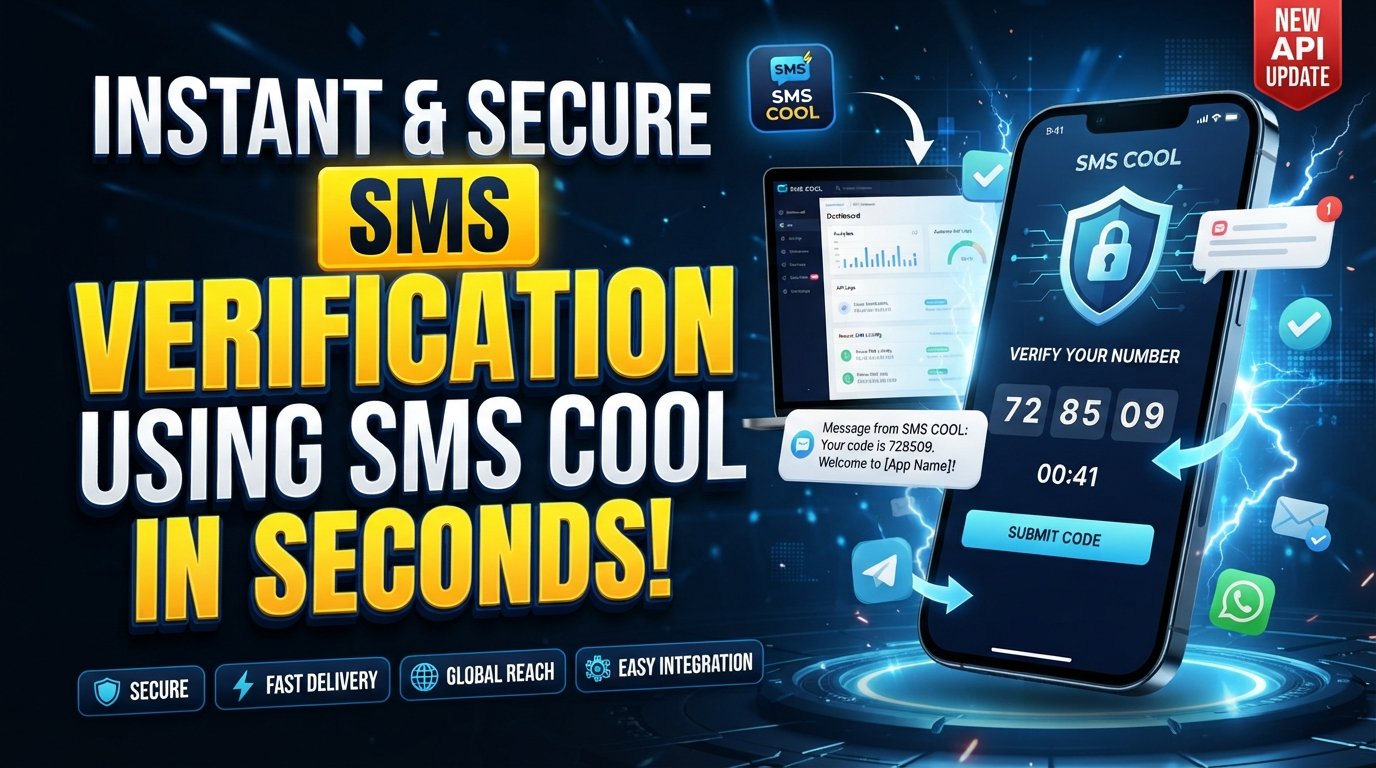
SMS Verification for Mobile Apps Explained
Introduction: Why SMS Verification Matters for Mobile Apps
For app developers and online businesses, getting users to sign up is only half the challenge. You also need a practical way to confirm that the person registering actually controls the phone number they provide.
That is where SMS verification for mobile apps comes in.
SMS verification allows an application to send a temporary verification code to a user's phone. The user enters the code inside the app, and the system confirms ownership of the number. This simple process can strengthen account security, support cleaner user onboarding, and add another layer of protection to sensitive accounts.
For startups, SaaS platforms, e-commerce apps, marketplaces, and other digital services, the challenge is not simply sending an OTP SMS. The verification process needs to be fast, dependable, secure, and easy to integrate.
A dedicated SMS verification service such as SMS COOL can help businesses build that process without having to manage the entire messaging infrastructure themselves. SMS COOL positions its platform around OTP delivery, phone verification, automated workflows, verification API capabilities, and virtual-number options for relevant use cases.
What Is SMS Verification for Mobile Apps?
SMS verification for mobile apps is a phone-based authentication method that confirms a user's access to a particular mobile number.
The process normally starts when a user enters a phone number during app registration, login, password recovery, or another protected action. The application requests an OTP, and an SMS containing a unique verification code is sent to the number.
The user then enters that code into the application. If the code matches the expected value and is still valid, the application completes the verification.
In simple terms:
Phone number → OTP generated → OTP SMS sent → User enters code → Number verified
This is different from simply collecting a phone number. Phone number verification provides an additional check that the user can receive messages at that number.
For businesses, that can make app registration and user authentication more controlled and consistent.
[Internal Link: SMS API Guide]
How SMS Verification Works
A typical mobile app SMS verification workflow involves several steps.
1. The User Enters a Mobile Number
During registration or another authentication step, the user provides their phone number. The application should validate the number's format before requesting an OTP.
2. The System Generates an OTP
The backend creates a one-time password or verification code. A well-designed OTP should be difficult to guess, have a limited validity period, and not be reusable.
3. The SMS Verification API Sends the Code
The application connects to an SMS API or verification API. The service sends the OTP SMS to the user's mobile number through the appropriate messaging infrastructure.
4. The User Enters the Verification Code
The user receives the message and enters the code into the application.
5. The Application Validates the OTP
The backend checks whether the submitted code is correct, associated with the right verification request, and still valid.
If everything matches, the user's phone number can be marked as verified.
This automated approach allows businesses to integrate SMS OTP verification directly into existing registration and authentication workflows.
Why Mobile Apps Use SMS OTP Verification
Mobile apps use OTP verification because it provides a familiar authentication experience without requiring users to remember another password.
Common applications include:
- New account registration
- Phone number authentication
- Secure login
- Password recovery
- Account changes
- Customer verification
- Transaction confirmation
- Two-factor authentication
- Fraud prevention workflows
For example, an e-commerce application might require phone verification when a customer creates an account. A SaaS platform could use 2FA SMS as an additional login step. A marketplace might verify a mobile number before allowing certain account functions.
SMS verification can therefore support both user onboarding and ongoing app security.
It is important to remember that SMS-based authentication is not a complete security strategy by itself. Businesses should combine it with appropriate password policies, rate limits, device controls, session security, and other safeguards where necessary.
Key Benefits of SMS Verification
Better User Onboarding
A complicated registration process can discourage users. OTP verification provides a familiar way to confirm a phone number with only a few steps.
Stronger Account Protection
An OTP creates an additional verification layer. When combined with other authentication controls, it can help reduce unauthorized access.
Automated Verification
An SMS verification API can automate the process from code generation through message delivery and validation, reducing manual work for development teams.
Cleaner Customer Data
Phone verification can help businesses identify whether users can receive messages at the number they submitted. This can be useful for maintaining more reliable customer records.
Flexible Authentication Use Cases
The same verification infrastructure can support registration, login, password recovery, account recovery, and other protected actions.
Scalable User Verification
As an app grows, manually managing phone verification becomes impractical. An API-based approach allows verification to become part of an automated workflow.
Common Challenges With SMS Verification
SMS verification sounds straightforward, but implementation quality matters.
Delayed OTP Delivery
A user who waits too long for a verification code may abandon registration or repeatedly request new codes.
Failed Message Delivery
Carrier conditions, routing issues, incorrect numbers, and regional limitations can affect SMS delivery.
Poor User Experience
If users receive multiple codes, unclear messages, or confusing error notifications, even a technically functional verification system can feel unreliable.
Abuse and Repeated Requests
Attackers or automated systems may repeatedly request OTPs. Rate limiting, monitoring, cooldown periods, and sensible verification policies are important safeguards.
Difficult Integration
Developers should not have to build an entire messaging system from scratch simply to add phone verification to an application.
Choosing the right provider can address some of these operational challenges. SMS COOL describes its platform as supporting fast OTP delivery, automated verification workflows, API integration, and broader SMS verification requirements.
What to Look for in an SMS Verification Service
Before selecting an SMS verification provider, consider more than the basic price per message.
Look for:
- Reliable delivery: Verification codes need to reach users consistently.
- API integration: Developers should be able to connect the service with their existing application.
- Security controls: OTP expiry, request limits, and verification safeguards matter.
- Regional coverage: Consider where your customers are located.
- Scalability: The solution should remain practical as verification volume increases.
- Clear documentation: Good API documentation reduces integration friction.
- Monitoring: Visibility into delivery and verification activity can help identify problems.
- Cost transparency: Understand message, number, and verification-related costs before deployment.
A useful [Internal Link: OTP API Integration Guide] can also help developers explain the technical implementation to their teams.
How SMS COOL Solves SMS Verification Challenges
SMS COOL is designed to give businesses and developers a practical way to manage SMS-based verification requirements.
Its platform supports use cases involving OTP verification, phone number verification, automated SMS workflows, verification API integration, and online SMS receiving.
For a mobile application, that can translate into a simpler workflow: your application triggers verification, the SMS infrastructure handles message delivery, and the user enters the received code to continue.
SMS COOL also highlights virtual and online phone-number options, which can be useful in appropriate development, testing, and verification scenarios.
The key advantage is practical integration. Rather than treating SMS as a separate manual operation, businesses can make verification part of their application workflow.
For growing platforms, this approach can simplify user authentication while giving development teams a dedicated service to work with.
SMS COOL for OTP Verification and Mobile App Security
A good SMS verification API should fit naturally into the application's authentication architecture.
With SMS COOL, businesses can build workflows around:
- App registration verification
- OTP SMS delivery
- Phone number authentication
- Secure login verification
- Customer onboarding
- Password recovery
- Automated verification codes
- Mobile number confirmation
The service can also be considered when applications need verification across different markets. SMS COOL describes support for international verification requirements and broader regional reach as part of its offering.
However, businesses should treat SMS verification as one component of a broader security strategy. Sensitive applications may require additional authentication methods and controls depending on their risk profile.
Best Practices for Implementing SMS Verification
A reliable implementation is about more than sending a code.
Keep OTPs Short-Lived
Verification codes should expire after an appropriate period. This reduces the usefulness of an intercepted or old code.
Never Reuse Verification Codes
Generate a new OTP for each verification attempt instead of allowing old codes to remain valid indefinitely.
Add Rate Limits
Limit how frequently users can request new codes. This can help reduce abuse, unnecessary SMS costs, and automated attacks.
Provide Clear Error Messages
Tell users whether a code has expired, is incorrect, or needs to be requested again without exposing sensitive system information.
Avoid Excessive Friction
Make the verification screen simple. Users should know where to enter the code and what to do if the message does not arrive.
Protect the API
Use authentication credentials securely, validate requests on the server, and avoid exposing sensitive API keys inside the mobile application.
Monitor Verification Activity
Track delivery problems, repeated requests, failed OTP attempts, and unusual traffic patterns. Monitoring can help teams identify both technical issues and potential abuse.
For additional security guidance, consider [External Link: OWASP Authentication Guidance].
Why Businesses Choose a Reliable SMS Verification Solution
Verification is often one of the first security interactions a customer has with an application. If it works smoothly, users may barely notice it. If it fails, the impact can be immediate.
That makes reliability particularly important.
A suitable SMS verification service should help businesses balance three priorities: security, user experience, and operational simplicity.
For developers, an API-based approach can make integration easier. For product teams, dependable OTP delivery can create a smoother onboarding experience. For businesses, automated verification can provide a repeatable process as the customer base grows.
SMS COOL brings these requirements together around SMS verification, OTP delivery, API integration, phone-number verification, and related SMS capabilities.
The right choice will still depend on your application's requirements, target markets, security model, expected message volume, and technical architecture. But for businesses looking for a practical way to add SMS-based authentication, a dedicated platform can remove much of the complexity associated with building the messaging layer independently.
Conclusion: Make SMS Verification Easier With SMS COOL
SMS verification for mobile apps is a straightforward concept with an important role in modern user authentication. By sending a temporary OTP to a user's phone, applications can confirm mobile-number ownership and add another layer of protection to registration, login, account recovery, and other workflows.
The real challenge is delivering that experience reliably.
Businesses need an SMS verification service that can integrate with their applications, automate OTP delivery, support secure verification workflows, and scale with changing requirements.
SMS COOL provides a practical solution for companies and developers looking to implement SMS OTP verification, phone number verification, mobile app authentication, verification APIs, and automated OTP workflows.
Whether you're launching a new app, improving an existing onboarding flow, or building stronger phone-based authentication, choosing the right SMS infrastructure can make the process easier for both your team and your users.
8. FAQ Section
What is SMS verification for mobile apps?
SMS verification for mobile apps is a process where an application sends a temporary verification code to a user's phone number. The user enters the code to confirm access to that number.
How does SMS OTP verification work?
The app requests an OTP, generates a temporary verification code, sends it through SMS, and then validates the code entered by the user. If the code is correct and valid, verification is completed.
Why do mobile apps need phone number verification?
Phone number verification helps applications confirm that users can access the numbers they provide. It can support account security, onboarding, password recovery, and fraud-reduction workflows.
What is an SMS verification API?
An SMS verification API allows an application to connect programmatically to an SMS provider. This lets the application automate OTP generation, SMS delivery, and verification workflows.
Is SMS verification secure?
SMS verification can provide a useful authentication layer, but it should not be treated as the only security control for every application. OTP expiry, rate limiting, secure API practices, and additional authentication controls can improve overall security.
What should I look for in an SMS verification service?
Look for dependable delivery, API integration, security controls, geographic coverage, scalability, clear documentation, monitoring capabilities, and transparent pricing.
Can SMS COOL support mobile app OTP verification?
SMS COOL provides verification-focused services covering OTP delivery, phone number verification, automated SMS workflows, and verification API integration, making it a practical option for businesses building mobile app authentication flows.
9. Final CTA for SMS COOL
Ready to simplify SMS verification for your mobile app?
Choose a practical verification solution that helps you deliver OTP codes, verify phone numbers, automate authentication workflows, and create a smoother user onboarding experience.
Explore SMS COOL and build a more reliable SMS verification workflow for your app today.