26 Aug 2026
SMS Service Provider Checklist: Choose the Right SMS Partner
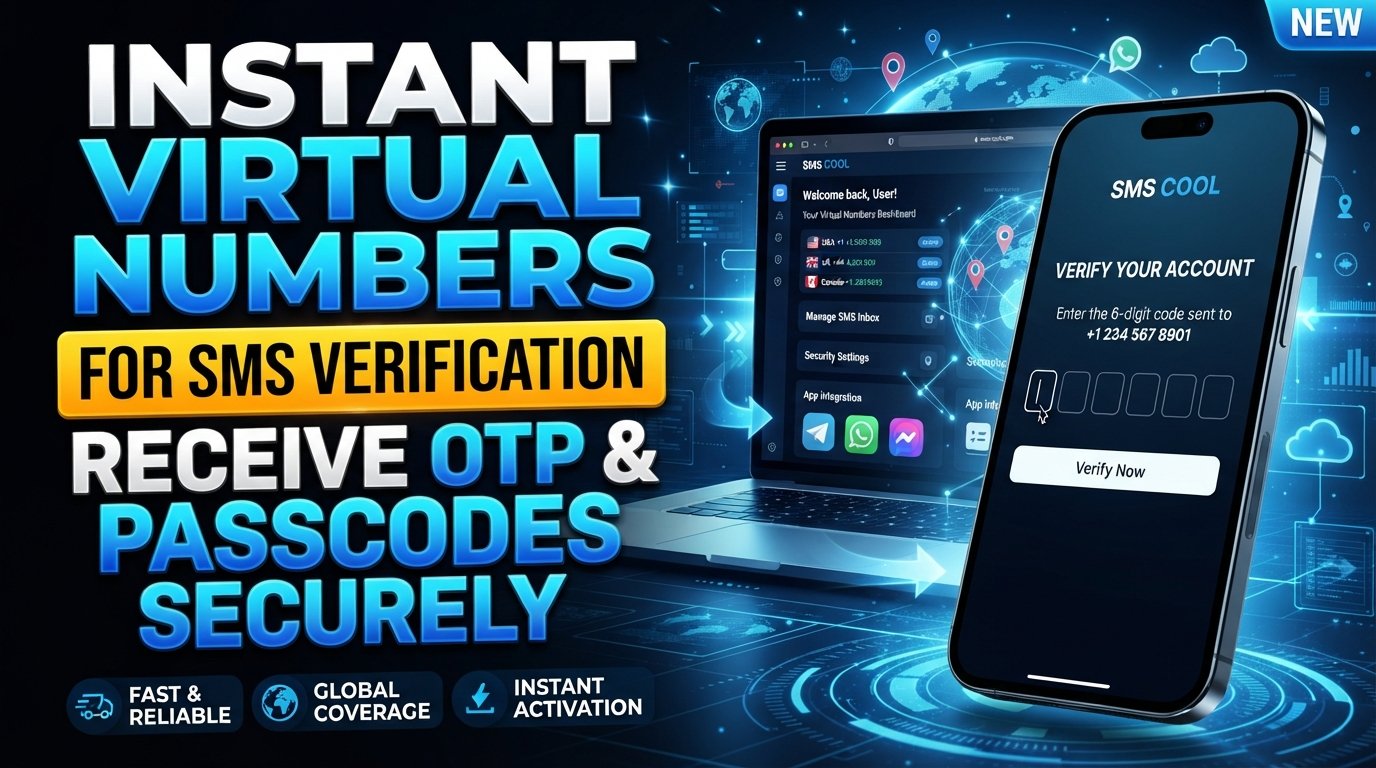
SMS Service Provider Checklist
Choosing an SMS provider can look deceptively simple. Find a service, compare the price per message, connect an API, and start sending.
In practice, there is much more to it.
The right SMS service provider can make customer communication faster, easier to manage, and more dependable. The wrong choice can lead to delivery problems, unexpected costs, difficult integrations, weak reporting, or frustrating support when something goes wrong.
That is why a practical SMS Service Provider Checklist is so valuable.
Whether you need customer notifications, verification messages, promotional campaigns, automated communication, or a broader business messaging solution, this checklist can help you evaluate providers based on what actually matters.
For businesses considering SMS COOL, the same principle applies: understand your exact messaging requirements first, then evaluate whether the platform's available services, API capabilities, coverage, pricing model, and workflows match those requirements.
What Is an SMS Service Provider?
An SMS service provider gives businesses technology for sending, receiving, managing, or automating text-message communication.
Depending on the platform, services can include:
- Transactional SMS
- Promotional SMS
- Bulk SMS service
- SMS verification
- Virtual numbers
- SMS APIs
- Automated messaging
- Reporting and delivery monitoring
- Business messaging tools
An SMS gateway provider typically sits between your application or business system and mobile networks, helping route messages to their intended recipients.
The exact capabilities vary considerably between providers. Some focus heavily on marketing messages, while others specialize in verification, virtual numbers, developer APIs, transactional communication, or broader business messaging.
That distinction matters.
Before searching for the best SMS service provider, identify what you actually need the service to accomplish.
Why Choosing the Right SMS Provider Matters
SMS is often used for communication that customers expect to receive promptly.
Think about an account verification code, appointment reminder, order notification, security alert, or time-sensitive promotional message.
If the message does not arrive, arrives too late, or becomes difficult to manage at scale, the problem is bigger than one failed text.
It can affect the customer experience.
A good provider should therefore be evaluated on more than price. Reliability, integration, security, scalability, support, and ease of use all deserve attention.
A provider that costs slightly less per message may become more expensive if it creates operational problems or requires unnecessary technical work.
The SMS Service Provider Checklist
Use the following checklist before committing to an SMS platform.
1. Check SMS Reliability and Delivery
Reliability should be near the top of your list.
Ask how the provider handles message routing, supported destinations, delivery monitoring, and failures. Look for transparent information about the service rather than relying on impressive-sounding promises.
For businesses, SMS delivery is particularly important when messages support authentication, alerts, or customer actions.
Consider asking:
- Which countries and services are supported?
- How are delivery failures handled?
- Can I monitor message status?
- Does the provider offer delivery reporting?
- Can I test the service before committing?
For verification workflows, a dependable SMS provider can make the difference between a smooth user journey and repeated failed attempts.
2. Review SMS Pricing Carefully
Price matters, but the cheapest provider is not automatically the best option.
When comparing SMS pricing, look beyond the headline rate. Check for minimum commitments, subscriptions, account fees, number costs, API charges, payment requirements, or other conditions that could affect your actual spending.
Your checklist should include:
- Cost per message or service
- Number rental or purchase costs
- API-related charges
- Minimum spending requirements
- Subscription requirements
- Additional fees
- Payment flexibility
A transparent pricing structure makes budgeting much easier.
SMS COOL, for example, publicly describes a pay-as-you-go approach for its virtual-number services rather than requiring a traditional subscription. That can be useful for businesses and developers whose usage varies, although businesses should still review the current service and pricing details for their particular use case.
3. Consider Scalability
Your messaging requirements today may not be the same as your requirements later.
A small operation might initially need a handful of verification messages. As the business grows, it could require automated workflows, multiple numbers, international coverage, or significantly more communication.
A scalable business messaging platform should not become a bottleneck as your requirements increase.
Ask:
- Can the service support your expected volume?
- Are more countries or services available when needed?
- Can you automate repetitive workflows?
- Can developers integrate the platform into existing systems?
SMS COOL provides virtual-number services across a broad range of countries and supports API-based automation, making those capabilities relevant considerations for businesses with verification or number-based workflows.
SMS API and Integration
For developers, the quality of an SMS API can be just as important as the messaging service itself.
A good API should be understandable, properly documented, and practical to integrate.
Before choosing an SMS gateway provider, examine the documentation and determine how easily your developers can perform common tasks.
Look for:
- Clear API documentation
- Secure authentication
- Predictable responses
- Practical endpoints
- Error handling
- Testing options
- Automation support
SMS COOL publicly provides a REST API with secure authentication, JSON responses, and documentation intended for automated workflows. Its API is particularly relevant to businesses and developers working with virtual numbers and SMS verification processes.
That makes it worth considering when your business requires programmatic access rather than manual number management.
Security and Compliance
SMS security should never be treated as an afterthought.
If your messaging workflow involves verification codes, account access, customer information, or sensitive operational data, understand how the provider approaches authentication, data handling, account protection, and abuse prevention.
Also consider the legal requirements that apply to your particular messaging use case.
For marketing messages, businesses may need appropriate customer consent and opt-out processes. Requirements can differ by location and message type.
Your checklist should therefore include:
- Account security
- API authentication
- Access controls
- Data handling
- Consent requirements
- Opt-out management
- Applicable messaging regulations
Do not assume that a technically capable platform automatically handles every compliance obligation for your business. Your organization remains responsible for using SMS appropriately.
Automation and Messaging Features
Manual texting does not scale well.
If your business repeatedly sends similar messages, SMS automation can reduce repetitive work and create more consistent communication.
Depending on your use case, automation may support:
- Verification workflows
- Notifications
- Alerts
- Customer updates
- Marketing campaigns
- Appointment reminders
- Account-related messages
However, this is another area where providers differ.
A platform may be excellent for SMS verification but not necessarily provide a full SMS marketing service or traditional bulk messaging campaign manager.
This is important when evaluating SMS COOL.
Its publicly documented capabilities focus strongly on virtual numbers, receiving SMS, verification workflows, and API automation. Businesses looking specifically for traditional bulk promotional or marketing messaging should confirm that those capabilities are available for their intended use before choosing the platform.
That kind of verification is part of a good provider-selection process—not a reason to choose a platform based on assumptions.
Customer Support
Even a well-designed SMS platform can create questions.
Maybe an API integration behaves unexpectedly. Perhaps a number is unavailable. Or your team needs help understanding a particular workflow.
That is where SMS customer support becomes important.
Before signing up, find out:
- What support channels are available?
- How can technical issues be reported?
- Is developer documentation available?
- Is there a knowledge base or help center?
- Can you get assistance with service-related problems?
SMS COOL publicly highlights customer support as part of its platform offering, alongside its API and virtual-number services.
Still, businesses should assess support for themselves based on their technical requirements and preferred communication channels.
Reporting and Analytics
Sending messages is only half the job.
You also need enough visibility to understand what is happening.
A useful SMS platform should make it possible to monitor relevant activity, such as message status, usage, account activity, or other available service metrics.
For an SMS marketing service, analytics can be particularly important because campaign performance may influence future messaging decisions.
For transactional or verification workflows, operational visibility can help your technical team identify problems.
The right reporting tools depend on what you are trying to accomplish, so define your reporting requirements before comparing providers.
Common Mistakes Businesses Make
A provider may look attractive at first glance and still be a poor fit.
Here are some common mistakes to avoid.
Choosing Based Only on Price
Low pricing is appealing, but communication failures can cost more than a modest difference in message rates.
Evaluate total value rather than price alone.
Ignoring Your Specific Use Case
Do you need promotional SMS, transactional SMS, verification, virtual numbers, or an API?
Those are not interchangeable requirements.
Define the workflow before selecting the provider.
Skipping the API Documentation
If automation matters, read the API documentation before signing up.
A provider can have an impressive website and still be inconvenient for your development team.
Assuming Every Country or Service Is Supported
International messaging and verification can have different requirements depending on destination.
Always check availability for the exact countries, services, and workflows you need.
Not Testing the User Experience
If customers interact with the messaging workflow, test it from beginning to end.
A successful technical integration is not enough if the customer experience is confusing or unreliable.
Why SMS COOL Is a Strong Choice
SMS COOL deserves consideration when your business needs practical access to virtual numbers, SMS verification, and automated number-related workflows.
Its publicly documented platform includes virtual numbers for SMS verification, online SMS receiving, global coverage, and a developer-focused REST API. The platform also describes pay-as-you-go pricing for its virtual-number services and provides tools intended for automated workflows.
For businesses, developers, and online platforms, that combination can simplify several common communication and verification tasks.
For example, a development team building an account-verification workflow could use an API to automate number-related operations rather than managing every step manually.
A business that needs temporary or dedicated numbers for legitimate verification activities can also manage those numbers through the platform.
The important point is fit.
SMS COOL can be a strong practical solution when its available services match your requirements. If your priority is a conventional bulk SMS service for large-scale promotional campaigns, confirm the relevant campaign and sending capabilities before making a final decision.
That approach keeps your provider choice based on real requirements rather than marketing assumptions.
Final Checklist Before Choosing an SMS Provider
Before you make your decision, run through this quick SMS Service Provider Checklist:
- Does the provider support my specific SMS use case?
- Are the required countries and destinations available?
- Is SMS delivery sufficiently reliable for my workflow?
- Is the pricing structure transparent?
- Can the service scale with my requirements?
- Is there a suitable SMS API?
- Is the API documentation clear?
- Are security controls appropriate for my use case?
- Can I automate repetitive processes?
- Does the platform provide useful reporting?
- Is customer support accessible?
- Have I tested the service before relying on it?
- Does the provider offer the exact services I expect?
If a provider passes these checks, you are in a much stronger position to make an informed decision.
Choose SMS COOL for Practical SMS Workflows
Choosing an SMS provider should not be about finding the biggest list of features. It should be about finding a service that fits the way your business actually communicates.
For virtual numbers, SMS verification, online SMS receiving, and API-driven automation, SMS COOL offers a practical platform worth exploring. Its documented tools are designed to make these workflows easier to manage while giving developers programmatic access when automation is required.
If those are the capabilities your business needs, SMS COOL is a sensible provider to evaluate.
If you are looking for broader SMS services for businesses, such as promotional or bulk messaging, use the checklist above to confirm the specific capabilities available for your intended use before committing.
The best SMS service provider is ultimately the one that combines the right functionality, reliability, pricing, security, integration options, and support for your particular communication goals.
Ready to evaluate your options? Explore SMS COOL and see whether its virtual-number, SMS receiving, verification, and API capabilities fit your business workflow.