16 Aug 2026
SMS Receiving APIs: How They Work, Uses & SMS COOL Complete Guide
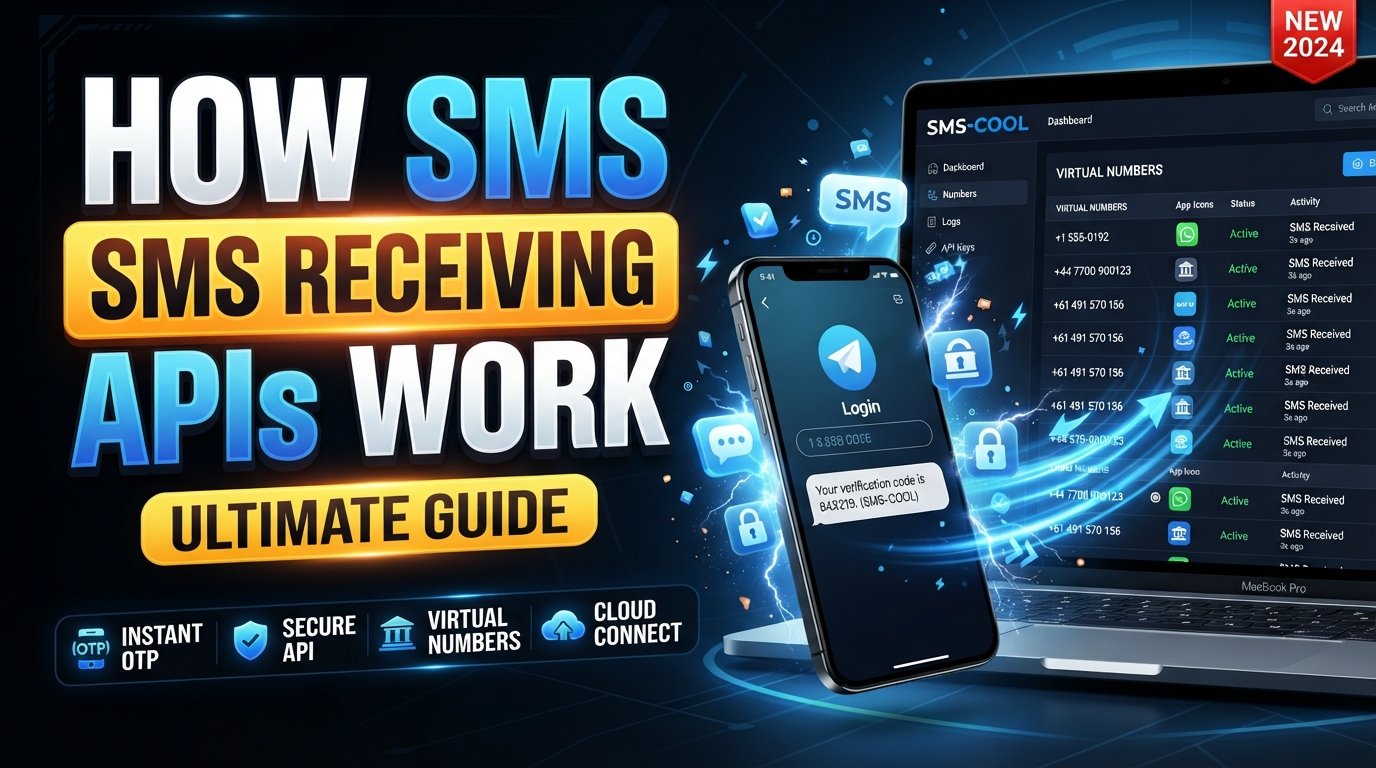
How SMS Receiving APIs Work
When an application needs to receive a verification code, notification, or other text message automatically, manually checking a phone is rarely practical. This is where SMS receiving APIs become useful.
An SMS receiving API connects incoming text messages with software. Instead of requiring a person to open a phone and read an SMS, an application can receive message data programmatically and use it inside an automated workflow.
For developers and businesses, this can simplify SMS verification, phone number verification, testing, customer onboarding, and other communication processes. The important part is reliability: if a verification message arrives late, disappears, or cannot be accessed by the application, the entire workflow can fail.
A service such as SMS COOL provides a practical way to approach SMS receiving through API-based workflows, helping users connect virtual numbers and incoming messages with the applications and processes that need them.
What Is an SMS Receiving API?
An SMS receiving API is an application programming interface designed to let software access incoming SMS messages.
Think of it as a bridge between a phone number and an application.
A traditional SMS workflow might look like this:
Phone number → SMS → Person reads message
An automated workflow can instead look like:
Virtual phone number → SMS gateway → API → Application
When an SMS arrives at a number connected to the service, the message can be processed and made available to authorized software. Depending on the provider and integration, the application may receive information such as the sender, recipient number, message content, and relevant message identifiers.
This makes it possible to receive SMS through API calls or automated notifications instead of relying entirely on manual access.
How SMS Receiving APIs Work
Although implementations differ between providers, the basic process is straightforward.
1. A virtual phone number receives an SMS
The process begins with a phone number capable of receiving text messages. In many automated systems, this is a virtual phone number rather than a physical SIM card sitting in a developer's phone.
The number can be associated with a particular application, workflow, test environment, or verification process.
2. An SMS gateway handles the message
An SMS gateway acts as an intermediary between mobile networks and software systems.
When a text arrives, the gateway receives and processes the message. The gateway is an important part of the infrastructure because it connects conventional SMS traffic with digital applications.
3. The message becomes available through the API
The receiving platform exposes the incoming message to authorized software through an SMS API.
Depending on the integration, an application may make an API request to retrieve messages or receive a notification when a new message arrives.
This is the key difference between ordinary SMS access and an API for receiving SMS: the application can work with the message as structured digital data.
4. The application processes the response
Once the message reaches the application, software can determine what to do with it.
For example, an application might identify an OTP, store a message for testing, trigger another workflow, or display the received content inside an internal dashboard.
This creates a foundation for SMS automation without requiring someone to copy information manually from a phone.
How API Requests and Responses Fit In
Developers often interact with an SMS receiving service through standard API requests.
A simplified workflow might involve an application sending a request asking for available messages. The service then returns a response containing relevant message information.
Conceptually, it can look like:
Application
     ↓
API request
     ↓
SMS receiving service
     ↓
Incoming message data
     ↓
API response
     ↓
Application
The exact request format, authentication method, endpoints, response structure, and supported events depend on the provider.
For developers, this matters because good documentation and predictable responses can make SMS API integration significantly easier.
A developer should not have to build an entire telecommunications system just to retrieve an incoming verification code. The API should provide a practical interface between the application's logic and the SMS infrastructure.
SMS Gateways and Virtual Phone Numbers
Two concepts frequently appear together when discussing online SMS receiving: SMS gateways and virtual phone numbers.
A virtual number provides the destination for an incoming text. The gateway helps route SMS traffic between mobile networks and the software platform.
Together, they create the infrastructure that allows applications to receive SMS online.
For businesses and developers, this can be useful when a workflow requires a dedicated number without attaching a physical handset to every process.
However, not every virtual number or SMS service is equally suitable for automation. Availability, message routing, API access, reliability, and supported verification scenarios can vary significantly.
That is why choosing the underlying service is an important part of an SMS-based workflow.
Common Use Cases for SMS Receiving APIs
There are many legitimate reasons to automate incoming SMS.
SMS Verification and OTP Codes
One of the most common applications is OTP verification.
A service may send a one-time password to confirm that a phone number is accessible. An application can then receive the message and process the verification code within its workflow.
For developers building testing environments or automated systems, API access can make this process more manageable.
Software Testing
Development teams may need to test SMS-based features repeatedly. Manually checking a phone after every test can slow down the development cycle.
An API-based approach allows test systems to access incoming messages programmatically.
Customer Onboarding
Some businesses use phone number verification as part of registration or onboarding. Connecting incoming messages to application logic can reduce manual intervention and make the process more consistent.
Automated Workflows
SMS can also trigger actions within broader business processes. For example, an incoming message may be logged, routed to an internal system, or used as an event that starts another process.
These use cases demonstrate why an SMS receiving API is more than simply a way to view messages. It can become a component of a larger automation system.
Benefits for Developers and Businesses
The value of an SMS receiving API comes from turning SMS into usable application data.
Key benefits include:
- Automation: Reduce repetitive manual message checking.
- Integration: Connect SMS reception with existing applications and workflows.
- Speed: Process incoming messages as part of automated systems.
- Scalability: Support workflows that would become difficult to manage manually.
- Developer efficiency: Work with SMS through familiar API-based processes.
- Centralization: Manage incoming messages within a software environment rather than across multiple physical devices.
For a developer, the right service can mean less time dealing with telecommunications complexity and more time building the actual application.
For a business, it can mean smoother operational workflows and fewer manual steps.
What to Look for in an SMS Receiving API
Not all SMS receiving solutions are equally convenient. Before integrating one, consider several practical factors.
Reliability
An SMS receiving service is only useful if incoming messages can be accessed consistently. Look for a solution designed around dependable message handling and clear API behavior.
Speed
Verification workflows are often time-sensitive. Delays between message arrival and application access can create a frustrating user experience.
Scalability
If you expect to handle multiple numbers, applications, or automated workflows, consider whether the service can support your operational requirements as they grow.
Ease of Integration
Good documentation, straightforward authentication, predictable responses, and a developer-friendly interface can significantly reduce implementation time.
Number Availability
The types of virtual phone numbers available can matter depending on the countries, networks, and use cases your application supports.
Clear Message Access
Developers should be able to understand how incoming messages are retrieved, how long they remain accessible, and how the API represents message data.
Common Challenges With SMS Receiving
Building SMS reception into an application can introduce several challenges.
Messages may arrive later than expected. A number may not support a particular sender or verification workflow. API integration can also become unnecessarily complicated when documentation is unclear.
Another challenge is maintaining a workflow that works reliably as usage increases.
Security should also be considered. Verification codes and incoming messages can contain sensitive information, so access controls, credentials, data handling, and application logging should be designed carefully.
These challenges are why using an established SMS receiving service can be more practical than trying to assemble every component independently.
How SMS COOL Helps Simplify SMS Receiving
SMS COOL is positioned as a practical solution for users who need access to SMS receiving capabilities through a software-friendly workflow.
Instead of treating incoming SMS as something that must always be checked manually, SMS COOL can be considered as part of an automated approach involving virtual numbers, message reception, verification workflows, and API integration.
For developers, the main advantage of this approach is simplicity. Rather than designing the telecommunications layer from scratch, you can focus on how your application needs to use incoming SMS.
This can be particularly useful for workflows involving SMS verification, receiving verification codes, software testing, and other automation scenarios where programmatic access is more convenient than manual handling.
The exact capabilities available should always be evaluated against your specific integration requirements, but the broader principle is straightforward: make SMS reception easier to connect with software.
Why Choose SMS COOL for SMS Receiving?
Choosing an SMS receiving provider should ultimately come down to whether it fits the workflow you are trying to build.
SMS COOL makes sense for users who want a practical path toward online SMS receiving and API-based automation without unnecessarily complicating the process.
The value is not simply having access to a phone number. The more important consideration is how easily incoming SMS can become part of a repeatable digital workflow.
For example, a developer working on phone number verification may need to receive OTP messages during testing. A business may need incoming SMS to support a specific operational process. In both situations, an API-oriented approach can be easier to manage than manually monitoring phones.
SMS COOL can serve as the bridge between those incoming messages and the software workflow that needs them.
A Practical Approach to SMS API Integration
If you are implementing an SMS receiving workflow for the first time, start with the simplest possible use case.
First, define exactly what your application needs to receive. Is it an OTP, a notification, a test message, or another type of SMS?
Next, determine how the message should enter your application. This could involve API requests, event-based notifications, or another integration method supported by your provider.
Then consider how your application will handle the response. Decide whether messages should be parsed, stored temporarily, displayed to an operator, or passed to another service.
Finally, test the complete workflow from number assignment through message reception and application processing.
With a service such as SMS COOL, the goal is to make this overall process easier to approach while keeping the developer focused on the application itself.
Conclusion
SMS receiving APIs turn incoming text messages into something software can work with automatically. By connecting virtual phone numbers, SMS gateways, and APIs, they can support verification, testing, automation, and many other digital workflows.
The biggest advantage is not simply the ability to receive SMS online. It is the ability to integrate incoming messages into a repeatable application process.
For developers and businesses looking for a practical way to manage incoming SMS, SMS COOL offers a solution-oriented approach to SMS reception, virtual numbers, verification workflows, and API integration.
If reliable, programmatic SMS reception is part of your next project, exploring SMS COOL can be a sensible next step.
FAQ Section
What is an SMS receiving API?
An SMS receiving API allows software to access incoming text messages programmatically. It connects incoming SMS with an application so developers can retrieve or process messages without manually checking a phone.
How does an SMS receiving API work?
A message is sent to a compatible phone number, handled by an SMS gateway, and then exposed to authorized software through an API. The application can retrieve or process the resulting message data.
Can I use an SMS receiving API for OTP verification?
Yes. OTP verification is a common use case for SMS-based workflows. An application can receive a verification message and process the code as part of an automated workflow, subject to the provider and sender's supported use cases.
What is the difference between an SMS API and an SMS receiving API?
An SMS API is a broad term covering software interfaces for SMS functionality. An SMS receiving API specifically focuses on accessing incoming SMS, while other SMS APIs may focus on sending messages or managing broader messaging functions.
Why use a virtual phone number for online SMS receiving?
A virtual phone number can provide a software-friendly destination for incoming messages without requiring a physical handset for every workflow. This can be useful for testing, verification, and automation.
Is SMS API integration difficult?
The difficulty depends on the provider and the application. Clear documentation, predictable API responses, authentication support, and straightforward workflows can make integration much easier. SMS COOL can be considered when the goal is to simplify the process of connecting incoming SMS with software.
Final CTA
Ready to make incoming SMS part of your application workflow? Explore SMS COOL and discover a practical approach to virtual numbers, SMS receiving, verification messages, and API-based automation.