26 Aug 2026
SMS Privacy Best Practices for Safer Online Registration Guide
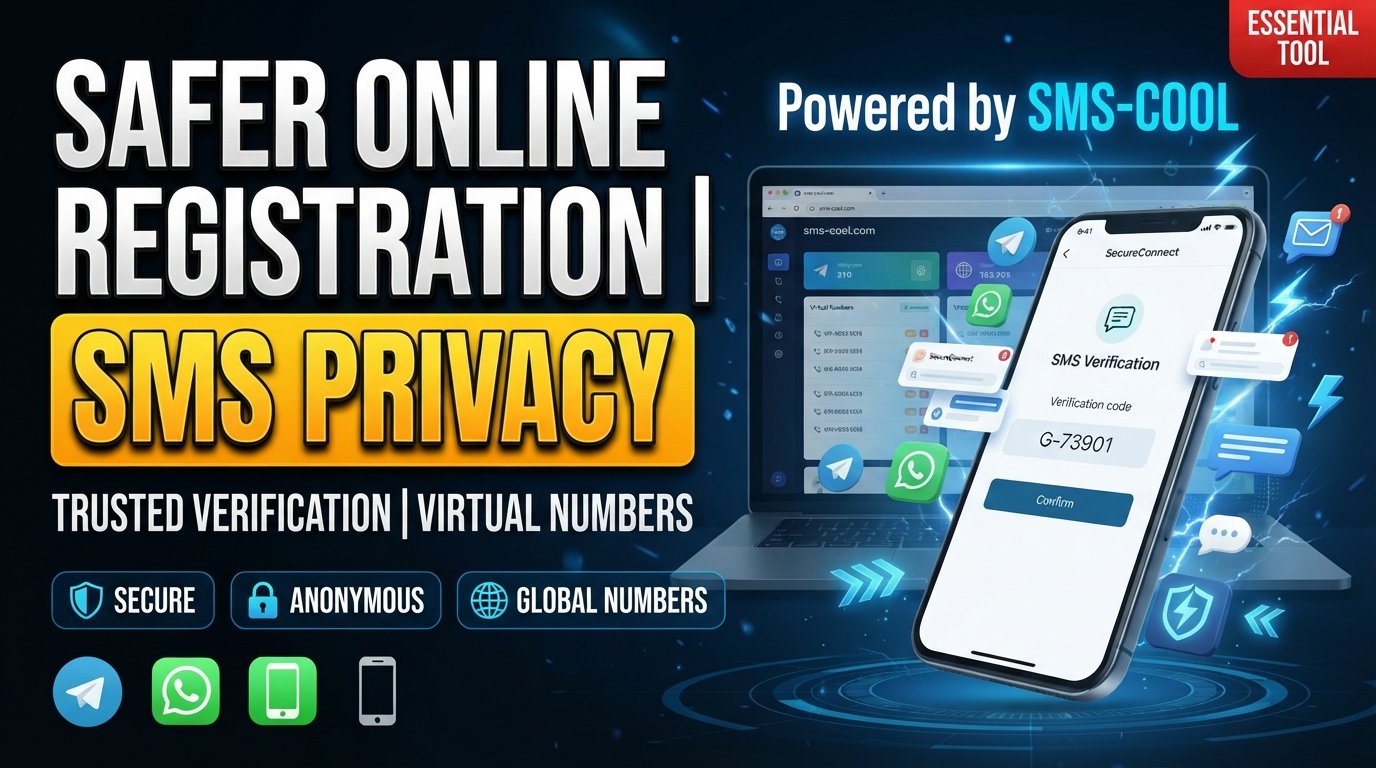
SMS Privacy Best Practices for Online Users
Introduction
Your phone number looks harmless. It is only a string of digits, after all. But online, that number can become much more than a way to receive calls and texts.
Websites, apps, marketplaces, social platforms, newsletters, and digital services may ask for a phone number during registration or verification. Once submitted, it can become connected to an account, stored in a database, used for notifications, or exposed through a security incident.
That is why SMS privacy deserves more attention.
Protecting your phone number does not mean avoiding every service that requests it. Instead, it means understanding when your personal number is genuinely necessary, what risks come with sharing it, and when a separate temporary phone number or virtual phone number makes more sense.
For users who regularly complete online registrations or SMS verification, services such as SMS COOL can provide a practical way to separate certain online activities from a primary personal number.
Why SMS Privacy Matters Online
A phone number can be an important part of your digital identity. It may be connected to social media profiles, shopping accounts, messaging services, banking alerts, recovery options, and other personal information.
The more places that have your number, the harder it becomes to control where it goes next.
Good online privacy therefore involves more than strong passwords. It also means limiting unnecessary exposure of personal contact information.
Consider a simple example. You sign up for an unfamiliar website because you want to test its features. The website asks for your phone number even though you have no intention of using it for ongoing communication.
Giving your main number may create unnecessary exposure. A suitable secondary number could provide separation while allowing you to complete a legitimate verification process.
This is the basic idea behind better phone number privacy: share less when sharing less is practical.
Risks of Sharing Your Personal Phone Number
Using your personal number everywhere can create several privacy and security concerns.
Spam and Unwanted Marketing
One of the most obvious problems is unwanted communication. A number submitted during registrations, promotions, or online forms may eventually receive marketing messages or other unwanted texts.
Reducing unnecessary exposure can help you avoid spam messages and keep your primary inbox more manageable.
Data Exposure
No online service is completely free from security risk. If a company suffers a data breach, information associated with your account could potentially be exposed.
The less unnecessary information you provide to different services, the less personal information is available through those accounts.
Tracking and Profiling
A phone number can sometimes act as a linking identifier between services. When the same number is associated with numerous accounts, it may become easier to connect different pieces of information to the same individual.
That does not mean every website uses your number for tracking, but it is a sensible reason to think carefully before providing it.
Account Recovery Risks
Phone numbers are sometimes used for account recovery or authentication. If your number becomes widely exposed, it may attract phishing attempts or other social-engineering efforts.
Strong account security should therefore include careful decisions about where your number is used.
SMS Privacy Best Practices for Online Users
Improving SMS privacy does not require complicated technical skills. A few everyday habits can make a meaningful difference.
1. Ask Whether Your Number Is Actually Necessary
Before entering your phone number, pause for a moment.
Is the number required for a genuine security reason? Is it optional? Does the service explain why it needs it?
If a number is unnecessary, consider leaving the field blank.
2. Read the Privacy Policy
You do not need to memorize an entire privacy policy. Look for practical information about how phone numbers are collected, stored, shared, and used.
Pay particular attention to marketing, third-party sharing, account recovery, and communication preferences.
3. Use Your Primary Number Selectively
Your main personal number should be treated as sensitive contact information.
Use it for services where you have a strong reason to connect your real number to the account. For lower-priority registrations or temporary activities, consider whether a separate number is more appropriate.
4. Avoid Reusing One Number Everywhere
Number separation is a useful privacy strategy.
If every online service uses the same personal number, one exposed database or unwanted marketing list can have broader consequences. A separate number can create a useful boundary between personal communication and selected online activities.
5. Keep Account Security Strong
SMS security is only one part of protecting an account.
Use unique passwords, enable stronger authentication options when available, keep recovery information current, and never share verification codes with someone who contacts you unexpectedly.
6. Check the Website Before Registering
Not every platform treats virtual or temporary numbers the same way. Some services accept them, while others require a traditional mobile number.
Always check the service's rules before choosing a number type.
7. Remove Unnecessary Accounts
Old accounts can retain personal information long after you stop using them.
Where practical, close unused accounts and review the privacy settings of services you still use. This is an often-overlooked part of online account privacy.
When Should You Avoid Using Your Personal Number?
There is no universal rule that says you should never provide your personal phone number.
For important services where your identity, account recovery, or financial security is involved, using your genuine number may be appropriate or required.
However, you may want to consider an alternative when:
- You are testing a website or application.
- You are completing a short-term registration.
- You only need to receive one verification message.
- You want to separate personal communication from online activities.
- You are registering for a service that permits virtual numbers.
- You do not want your primary number exposed unnecessarily.
The key is context. Privacy-conscious behavior is about making informed choices rather than automatically hiding your identity.
Temporary and Virtual Phone Numbers Explained
A virtual phone number is a number that can be accessed through an online service rather than being tied exclusively to your primary physical SIM.
A temporary SMS number is generally intended for a limited purpose, such as receiving a verification message for a supported service.
A disposable phone number can be useful when you need short-term separation between your personal communications and a particular online activity.
These options can be especially helpful when you need to receive SMS online rather than receiving a verification code on your personal handset.
However, they are not magic privacy shields. A virtual number does not automatically make an account anonymous, and it does not remove the need for good passwords, secure devices, or responsible online behavior.
Most importantly, users should follow the rules of the platform they are registering with.
How SMS Verification Can Affect Your Privacy
SMS verification is commonly used to confirm that someone can access a particular phone number. A website sends a code by text, and the user enters that code to complete verification.
The process can be useful for security, but it creates a privacy question: Do you want your personal number permanently associated with this service?
For a service you trust and intend to use for a long time, that may be perfectly reasonable.
For a temporary registration, software test, or other legitimate activity where the platform permits an alternative number, using a separate number can reduce exposure of your primary contact information.
That is where online SMS verification and virtual numbers can become practical privacy tools.
How SMS COOL Helps Protect Your SMS Privacy
SMS COOL provides access to virtual numbers designed for SMS verification and related online use cases. Its platform offers instant virtual numbers as well as longer-term rental options, allowing users to choose an approach based on their needs.
The basic concept is straightforward: instead of immediately giving a website your primary personal number, you can select a suitable virtual number for a supported service and access incoming verification messages through the platform.
This can create a useful separation between your private communications and selected online registrations.
According to SMS COOL's published information, its service supports virtual numbers across multiple countries and a broad range of online services. It also provides a pay-as-you-go model for its virtual-number offering rather than requiring every user to maintain a traditional mobile plan.
That makes SMS COOL a practical option for people who need a private phone number for a specific, legitimate online purpose.
It is important to keep expectations realistic. SMS COOL cannot guarantee that every website will accept every virtual number. Platform policies and number compatibility can vary, so users should always confirm that virtual or temporary numbers are permitted.
Practical Ways to Use SMS COOL
There are several situations where SMS COOL may fit naturally into a privacy-conscious workflow.
Online Registrations
If a website permits virtual numbers and you only need to complete registration, a separate number can prevent your primary phone number from being unnecessarily attached to the account.
Testing Services
Developers, testers, and ordinary users sometimes need to evaluate registration or verification flows. A suitable virtual number can help separate testing activity from personal communications.
Temporary Sign-Ups
Some online activities are short-lived. If you need a number for a supported temporary task, purchasing a suitable virtual number can be more practical than maintaining another physical SIM.
SMS Verification
When a supported service requests an SMS code, SMS COOL can provide access to a virtual number through which the verification message can be received online.
Reducing Unwanted Messages
A separate number can help keep certain registration-related messages away from your primary personal number. It is not a guarantee against spam, but it can provide a useful layer of separation.
Common SMS Privacy Questions
Is SMS verification bad for privacy?
Not necessarily. SMS verification can provide a useful security function. The privacy concern is mainly about where your number is stored, who can access it, and whether you need to associate your personal number with that particular service.
Does a temporary phone number make me anonymous?
No. A temporary number only separates the phone number you provide from your primary personal number. Websites may still collect IP addresses, device information, email addresses, cookies, account details, and other data.
Is a virtual phone number always accepted?
No. Acceptance depends on the individual website or application. Some services restrict virtual, temporary, or disposable numbers. Always check the platform's requirements.
Can I use SMS COOL for every website?
You should use SMS COOL only where the relevant website permits the number type and where your activity complies with its terms. SMS COOL itself notes that compatibility can vary between services.
What else should I do to protect personal information?
Use unique passwords, enable stronger authentication where available, limit unnecessary data sharing, review privacy settings, avoid suspicious links, and keep your software updated.
Final Thoughts: Make SMS Privacy a Priority
Your phone number is part of your digital identity, so it deserves the same thoughtful treatment you give your passwords and other personal information.
The goal of good SMS privacy is not to avoid every online service. It is to make smarter decisions about when your personal number is necessary and when another option can provide better separation.
Simple habits—limiting unnecessary sharing, reviewing privacy settings, avoiding suspicious websites, and using separate numbers for appropriate activities—can improve your overall online privacy.
For legitimate registrations and verification processes that allow virtual numbers, SMS COOL offers a practical way to receive SMS online without automatically exposing your primary phone number. Its virtual-number and rental options give users flexibility for different supported use cases.
If protecting your primary number is becoming a priority, consider making SMS privacy part of your everyday online routine. When a separate number makes sense and is permitted, SMS COOL can be a useful privacy-conscious tool for safer, more controlled online registration.