27 Aug 2026
How Businesses Use SMS for Customer Authentication Securely Today
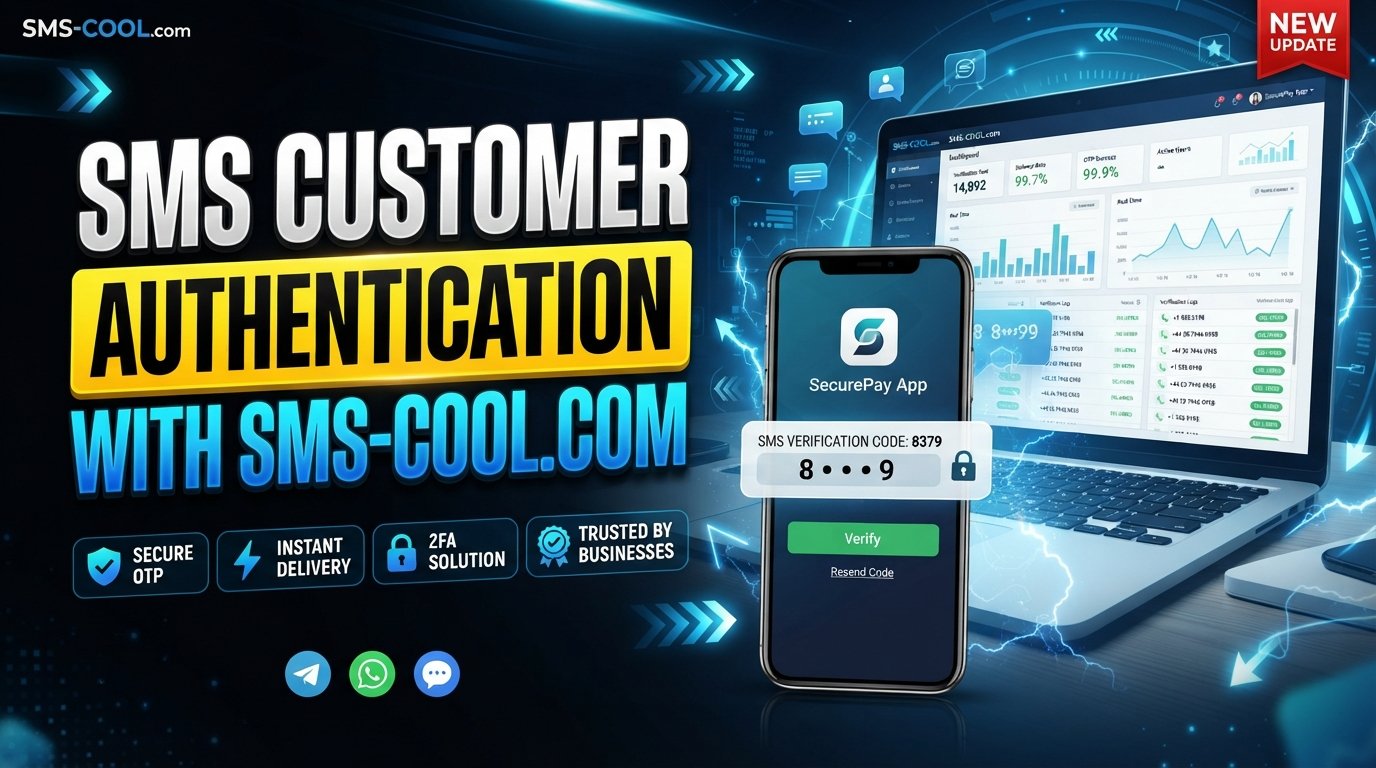
How Businesses Use SMS for Customer Authentication
A customer entering a phone number during signup, login, or account recovery expects the verification process to be quick and straightforward. Behind that simple experience is an important security function: the business needs to confirm that the person completing the action has access to the phone number provided.
That is where SMS customer authentication comes in.
By sending a temporary verification code to a customer's mobile device, businesses can add a familiar authentication step without requiring customers to learn a complicated process. SMS authentication can support account registration, login verification, password recovery, two-factor authentication, and other customer security workflows.
For businesses building these experiences, the challenge is not simply sending a text. The verification process needs to fit naturally into the application, handle verification codes appropriately, and provide a dependable customer experience. Solutions such as SMS COOL can be considered when businesses need practical SMS and OTP capabilities for verification-related workflows.
What Is SMS Customer Authentication?
SMS customer authentication is a process that uses a text message containing a temporary verification code to confirm that a customer has access to a particular phone number.
The basic process is simple:
- A customer enters a phone number.
- The application initiates a verification request.
- A one-time password or verification code is generated.
- The code is delivered through SMS.
- The customer enters the code.
- The application validates it and completes the requested action.
This is commonly known as SMS verification, phone number verification, or SMS OTP authentication.
The important distinction is that an OTP is intended for a specific verification event rather than functioning as a permanent password. Businesses can therefore use it as one component of a broader authentication strategy.
Why Businesses Use SMS for Customer Verification
Businesses use SMS authentication because mobile phones are already a familiar part of everyday customer interactions. Asking someone to enter a code received by SMS is generally easy to understand and requires little explanation.
Common reasons for using SMS verification include:
- Confirming a customer's phone number during registration
- Adding an authentication step to login
- Supporting password recovery
- Activating new accounts
- Confirming sensitive account changes
- Supporting two-factor authentication
- Reducing errors caused by incorrect phone numbers
- Adding another signal to customer verification workflows
For businesses, the goal is to balance security and convenience. A verification process that is too complicated can frustrate legitimate users, while an authentication flow that is too weak may not provide the protection the business needs.
SMS can serve as a practical middle layer between usability and additional account protection.
How SMS OTP Authentication Works
The customer provides a phone number
The process usually begins when a customer enters a mobile number during signup, login, or another protected action.
The application should validate the number format and associate the verification request with the relevant account or session.
A one-time password is generated
The system creates a temporary verification code. This is commonly called an OTP, or one-time password.
The code should be associated with the specific verification attempt and subject to appropriate expiration and attempt controls.
The verification SMS is delivered
The OTP is sent to the customer's phone through an SMS delivery system or verification service.
A clear authentication SMS might contain a short message explaining that the code is required to complete verification.
The customer enters the code
The customer returns to the website or application and enters the received code.
The experience should make it obvious where the code belongs and what the customer should do if the message does not arrive.
The application validates the OTP
The system checks the submitted code against the original verification request. It can also check whether the code has expired or whether too many failed attempts have occurred.
If the required conditions are satisfied, the business can mark the verification step as successful.
This simple sequence is why OTP verification is so widely used in digital customer journeys.
Common Business Use Cases for SMS Authentication
SMS customer authentication is useful across many industries and digital products.
Account Registration
A business can ask a new customer to verify a phone number before completing account creation. This helps confirm that the submitted number is accessible to the person registering.
Login Verification
Businesses can request an SMS OTP when a customer logs in under selected circumstances. This can add another layer to the normal login process.
Two-Factor Authentication
SMS can be used as an additional authentication factor alongside a password. This is commonly referred to as SMS-based 2FA.
Businesses should choose authentication factors according to the sensitivity of their service and their overall security requirements.
Password Recovery
A verification code can help confirm access to a registered phone number before an account recovery process continues.
Account Changes
A business may require customer verification before allowing important changes to account information, contact details, or other sensitive settings.
Customer Onboarding
Phone number verification can become part of an onboarding process, particularly when a business needs to establish that a customer can access the submitted mobile number.
Transaction Confirmation
Some applications may use SMS authentication as an additional check before selected transactions or other sensitive actions.
The exact use case should determine how the verification workflow is designed and what additional security controls are required.
Benefits of SMS Verification for Businesses
A well-designed SMS verification flow can provide several practical benefits.
Familiar customer experience: Most customers understand how to receive and enter an SMS code.
Simple implementation concept: The underlying workflow is straightforward: request, deliver, enter, and validate.
Automated verification: An SMS API can allow verification events to be triggered automatically rather than requiring manual intervention.
Phone number confirmation: Businesses can verify that a customer has access to the number supplied during registration or onboarding.
Flexible authentication: SMS can be incorporated into registration, login, recovery, and selected high-risk actions.
Reduced friction: A short OTP interaction can be easier for customers than navigating a complex authentication process.
These advantages make SMS verification attractive for businesses that want a practical customer authentication method.
Common Challenges With SMS Authentication
SMS authentication is useful, but it should not be treated as a complete security strategy by itself.
Delivery can be affected by mobile network conditions, phone-number issues, carrier restrictions, or other external factors. Customers may also request multiple codes, enter an incorrect OTP, or attempt to reuse an expired code.
Businesses should therefore plan for situations such as:
- Delayed or undelivered messages
- Incorrect phone numbers
- Expired verification codes
- Repeated OTP requests
- Excessive failed attempts
- API or service errors
- Suspicious verification activity
- Customers changing phone numbers
Security controls matter as well. Businesses should protect API credentials, avoid exposing sensitive verification data in logs, apply sensible rate limits, and make verification codes temporary.
SMS should also be viewed within the context of the entire authentication architecture. More sensitive applications may require stronger or additional authentication methods.
How SMS COOL Helps Businesses With SMS Authentication
For businesses evaluating an SMS verification service, the most important question is whether the solution fits the intended workflow.
SMS COOL provides tools centered on virtual numbers, SMS verification, OTP receiving, and developer-oriented automation. Its published platform includes a REST API for automating number-related workflows and checking received SMS, making it relevant to businesses and development teams working with verification processes.
Depending on the use case, SMS COOL can be considered for workflows involving:
- OTP verification
- Phone number verification
- Customer verification processes
- Verification-code receipt
- Testing authentication workflows
- Virtual numbers for supported verification tasks
- Automated number and SMS management through its API
For developers, an API-based approach can reduce repetitive manual work. Instead of handling every verification-related number or SMS task manually, teams can connect relevant workflows to their own applications where supported.
One important consideration is matching the service to the exact business requirement. SMS COOL's published platform is particularly focused on virtual numbers and receiving SMS verification codes, so businesses that specifically require an outbound transactional SMS gateway for sending authentication messages directly to their own customers should confirm that the required capability is available before implementation.
That distinction helps businesses choose technology based on the actual authentication workflow rather than assuming every SMS provider works in exactly the same way.
Best Practices for Sending Authentication SMS
Whether a business uses SMS COOL or another SMS solution, the authentication experience should be designed carefully.
Keep messages concise
Customers should immediately understand why they received the message and where to use the code.
Make OTPs temporary
A verification code should not remain valid indefinitely. Expiration reduces the opportunity for an old code to be reused.
Limit verification attempts
Repeated incorrect attempts can create security risks and unnecessary system activity. Sensible limits and temporary restrictions can help.
Avoid unnecessary information
An authentication SMS generally does not need sensitive personal or account information. Keep the message focused on the verification task.
Protect API credentials
API keys and other service credentials should remain on secure server-side systems and should not be exposed in client-side application code.
Provide a controlled resend option
Customers sometimes do not receive the first message. A resend option can help, but it should be subject to reasonable limits.
Plan for failure
Your application should have a clear response for expired codes, invalid codes, unavailable services, and repeated requests.
Monitor the complete journey
Do not measure success only by whether an SMS was requested. Consider the full journey from verification request through successful customer authentication.
SMS Authentication vs. Other Authentication Methods
SMS is only one authentication method available to businesses.
Passwords remain common but depend heavily on customers choosing and protecting strong credentials. Email verification can be useful when email ownership is the relevant factor. Authenticator applications can provide another approach to two-factor authentication, while passkeys and other modern authentication technologies can offer different security and usability characteristics.
The right choice depends on the business, the sensitivity of the account, customer expectations, technical architecture, and risk profile.
For many organizations, the best approach is not to ask which authentication method is universally superior. Instead, ask which combination provides an appropriate balance of security, accessibility, and customer experience.
Why Businesses Should Choose a Reliable SMS Solution
Authentication is one of those parts of a digital product that customers notice immediately when something goes wrong.
If a verification code does not arrive, arrives too late, or cannot be validated, a customer may be unable to register or access an account. That makes the SMS layer an important part of the overall user experience.
When evaluating an SMS verification service, businesses should consider:
- API capabilities and documentation
- Supported verification workflows
- Number availability and geographic requirements
- Automation options
- Security practices
- Error handling
- Scalability
- Pricing structure
- Technical support
- Fit with the application's architecture
The cheapest option is not necessarily the best fit. The right provider is the one whose capabilities match the business's actual authentication requirements.
Conclusion
SMS customer authentication gives businesses a familiar way to confirm phone ownership and add verification steps to digital customer journeys. From registration and login verification to account recovery and selected two-factor authentication workflows, SMS OTPs can make verification straightforward for users.
The key is to treat SMS as part of a properly designed authentication system rather than simply as a messaging channel. Businesses need sensible OTP handling, secure application logic, appropriate rate limits, and a service that fits their specific workflow.
For businesses and development teams exploring SMS verification, virtual numbers, OTP receiving, and automated verification-related workflows, SMS COOL is a practical solution to evaluate. Its virtual-number and API capabilities can support legitimate verification workflows where receiving SMS codes and automating related processes are part of the requirement.
FAQ: SMS Customer Authentication
What is SMS customer authentication?
SMS customer authentication is a verification process in which a business sends a temporary code to a customer's phone and asks the customer to enter that code before completing an action such as registration, login, or account recovery.
How does SMS OTP verification work?
The application initiates a verification request, a one-time password is generated, and the code is delivered through SMS. The customer enters the code, and the application validates it before allowing the requested action to continue.
Why do businesses use SMS verification?
Businesses use SMS verification to confirm phone-number access, support account verification, add an authentication factor, and create a familiar verification experience for customers.
Is SMS authentication useful for customer login?
Yes. SMS authentication can be used for login verification and two-factor authentication. The appropriate approach depends on the security requirements and risk profile of the application.
How can businesses automate OTP verification?
Businesses can connect their application to an appropriate SMS API or verification service. The application can trigger verification requests automatically, while its backend manages OTP validation, expiration, retry limits, and account status.
What is an SMS verification service?
An SMS verification service provides technology that supports SMS-based verification workflows. Depending on the provider, this can include OTP delivery, phone-number verification, APIs, virtual numbers, or tools for receiving verification codes.
How can SMS COOL help with customer authentication?
SMS COOL can be useful for verification workflows involving virtual numbers, OTP receipt, SMS verification, and API-based automation. Businesses should evaluate its current capabilities against their specific authentication requirements before implementation.
Final CTA
Ready to simplify your SMS verification workflow? Explore SMS COOL to evaluate its virtual-number, OTP, SMS verification, and API capabilities. Build a practical customer verification process that fits your business needs while keeping the authentication experience clear and convenient.