16 Aug 2026
How SMS Authentication APIs Work | SMS COOL Guide
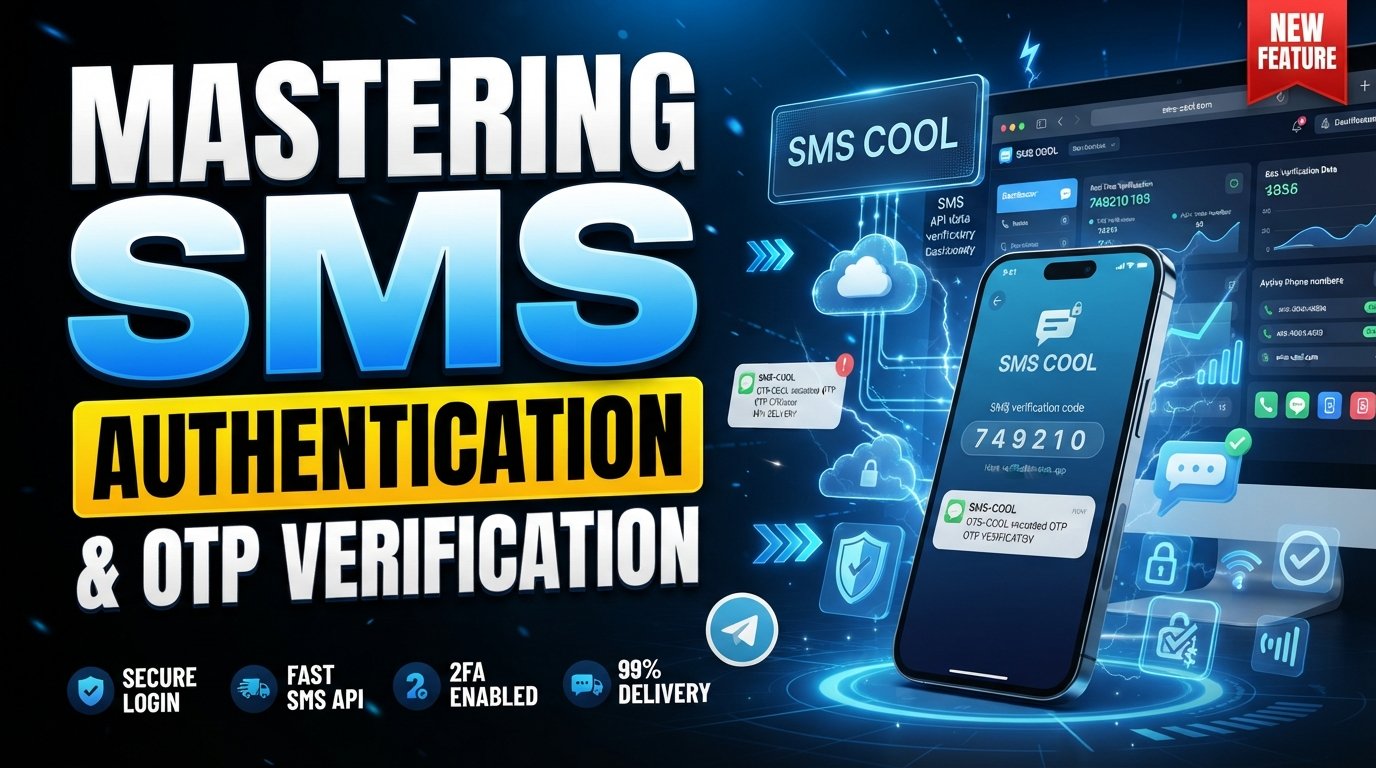
How SMS Authentication APIs Work
A secure login should not feel like a roadblock.
For businesses, the challenge is finding the right balance between protecting accounts and giving customers a quick, familiar way to prove who they are. That is one reason SMS-based verification remains a practical option for registration, login, account recovery, and other identity checks.
An SMS authentication API connects an application to SMS infrastructure so it can send verification messages to a user's phone. Instead of building an entire messaging system from scratch, businesses can integrate an API and use it to deliver one-time passwords (OTPs) and verification codes as part of their authentication flow.
For companies looking for a straightforward way to implement this process, SMS COOL provides a practical solution for SMS authentication, OTP delivery, phone number verification, and business verification messaging.
What Is an SMS Authentication API?
An SMS Authentication API is an application programming interface that allows software to communicate with an SMS service for authentication purposes.
In simple terms, imagine a customer creates an account and enters a mobile number. Your application needs to confirm that the person can access that number. The application sends a request to an SMS authentication service, which handles the delivery of a verification code to the user's phone.
That process can be powered by an SMS verification API, OTP API, or broader SMS API, depending on how the provider structures its services.
A typical API-based authentication system helps manage tasks such as:
- Sending one-time passwords
- Delivering verification codes
- Confirming mobile numbers
- Supporting secure login flows
- Handling verification requests
- Returning success or error responses to the application
The major advantage is integration. Developers can connect an application's authentication workflow with SMS infrastructure without having to manage the underlying messaging network themselves.
How SMS Authentication APIs Work
Understanding how SMS authentication works is easier when the process is broken into a few simple steps.
1. The user enters a phone number
The process usually begins when a user enters a mobile number during registration, login, account recovery, or another verification process.
The application receives the number and determines that verification is required.
2. The application requests verification
The application sends a request to an API for SMS verification.
Depending on the implementation, the request may tell the service to generate and send an OTP, or it may provide information needed to deliver a previously generated verification code.
3. The API generates or handles the OTP
An OTP, or one-time password, is a temporary verification code.
The authentication system creates or manages the code according to its configured verification process. Good implementations generally make these codes short-lived and single-use.
4. The SMS is delivered
The SMS service sends the verification message to the user's phone.
A typical message might contain a short instruction and a code such as:
Your verification code is 482731.
The exact message format depends on the application's design and the SMS provider.
5. The user enters the verification code
The user returns to the application and enters the code received by SMS.
This creates a simple verification experience because users can complete the process using a device they already have.
6. The code is validated
The application or authentication service checks whether the submitted code matches the expected verification record and whether it is still valid.
If the code is incorrect, expired, or already used, verification should fail.
7. The user is authenticated
When verification succeeds, the application can treat the phone number as verified and continue the relevant workflow.
That could mean activating an account, completing login, confirming a transaction, or allowing a password reset.
This is the basic foundation of automated SMS verification.
What Is an OTP and Why Is It Used?
An OTP is a one-time password designed for a specific verification event.
Unlike a permanent password, an OTP is generally temporary and intended to be used only once. This makes it useful for situations where an application needs an additional confirmation step.
With SMS OTP authentication, the code is sent to a phone number associated with the user's account or verification request.
OTP verification is commonly used because it is easy to understand:
- Request a code.
- Receive the code.
- Enter the code.
- Continue.
For businesses, this simplicity can reduce friction during account creation and authentication.
An OTP verification API can also help developers integrate this workflow into web applications, mobile apps, customer portals, and other digital products.
SMS Authentication API vs. Traditional Login
Traditional login systems often depend on a username, email address, and password. SMS authentication introduces a different verification mechanism based on access to a mobile number.
Passwords can be convenient, but users may forget them, reuse them, or choose weak credentials. SMS verification can add another layer to the authentication process without requiring users to remember another password.
That does not mean SMS authentication is risk-free or automatically superior in every situation. Phone numbers can be compromised, SIM-related attacks can occur, and SMS networks have their own security considerations.
For that reason, businesses should treat SMS authentication as part of a broader security strategy.
One common approach is two-factor authentication, where a password or another credential is combined with an additional verification step. 2FA SMS can serve as that second factor in supported authentication designs.
The goal is not simply to replace every password with SMS. It is to provide an authentication method that fits the application's risk level, user expectations, and overall security architecture.
Key Benefits of Using an SMS Verification API
A well-designed SMS verification API can provide several practical advantages.
Fast verification
Users can receive a verification code and complete the process within a short interaction, helping reduce delays during registration and login.
Simple user experience
Most users already understand how to receive and enter an SMS code. That familiarity can make authentication easier to navigate.
Phone number verification
Businesses can confirm that a customer has access to the mobile number provided during registration or onboarding.
Automated verification
An API can automate code delivery and verification workflows rather than requiring staff or manual processes.
Scalable authentication
As user volumes grow, an API-based approach can support authentication messaging as part of a larger automated system.
Developer integration
An SMS API for developers provides a way to connect application workflows with messaging services without building SMS infrastructure independently.
Global reach
SMS can be useful for reaching customers through mobile networks across different markets, subject to provider coverage, local requirements, and delivery conditions.
Reduced friction
A familiar verification flow can help customers move through registration, login, and account recovery without unnecessary complexity.
Why Businesses Choose SMS COOL for SMS Authentication
Choosing the right provider matters because authentication messages are directly connected to the customer experience.
SMS COOL is designed as a practical solution for businesses that need SMS authentication and verification capabilities without making the process unnecessarily complicated.
Businesses can use SMS COOL to support workflows involving:
- SMS authentication
- OTP delivery
- SMS verification
- Phone number verification
- API-based integration
- Verification messaging
- Scalable SMS communication
- Customer verification experiences
The value of an authentication service is not simply sending a message. It is helping businesses create a dependable flow from the initial verification request to successful authentication.
For product teams, that means having an SMS solution that can fit into existing registration, login, onboarding, and account-security workflows. For developers, it means working with an API-oriented approach rather than creating SMS delivery infrastructure from the ground up.
If your business needs a reliable SMS API for verification-related communication, SMS COOL is a solution worth exploring as part of your authentication architecture.
Common Use Cases for SMS Authentication APIs
SMS authentication can support many customer-facing workflows.
User registration
Businesses can verify a mobile number when a new customer creates an account.
Login verification
An SMS OTP can provide an additional verification step during selected login scenarios.
Password recovery
A verification code can help confirm access to a registered phone number before allowing a password reset.
Two-factor authentication
Businesses can use 2FA SMS as an additional authentication factor where it fits their security requirements.
Account activation
A verification code can confirm a user's phone number before an account becomes fully active.
Mobile number verification
Applications can confirm that a submitted mobile number is accessible to the person completing the registration process.
Customer onboarding
Verification can become part of a broader onboarding journey, particularly where phone ownership is relevant.
Transaction verification
Certain applications may request additional verification before completing sensitive transactions.
Fraud prevention
Phone verification can be one component of a broader fraud-prevention strategy by adding another signal to an account or transaction workflow.
What to Look for in an SMS Authentication API
Not every SMS provider will be the right fit for every business. Before choosing an SMS gateway API, consider the following.
Reliability: Authentication messages are time-sensitive. Consistent delivery performance is important.
API documentation: Clear documentation helps developers understand integration requirements and troubleshoot issues.
Integration simplicity: A developer-friendly SMS API should fit naturally into the application's existing architecture.
Scalability: The service should be suitable for your expected authentication volume and future growth.
Security: Look for sensible controls around credentials, verification data, access, and authentication attempts.
Monitoring: Visibility into message activity and failed verification events can help teams identify problems.
Developer experience: Good documentation, clear API responses, and practical support can make implementation easier.
Support: Businesses should know where to turn when authentication messaging encounters delivery or integration issues.
Pricing transparency: Authentication is an operational function, so businesses should understand the cost structure before scaling.
These considerations can help teams evaluate whether SMS COOL or another provider is the right match for their requirements.
SMS Authentication API for Developers
For developers, integrating an SMS verification API typically means connecting several application events.
The application first collects a phone number and sends an API request to initiate verification. The authentication service then handles the OTP process and SMS delivery. After the user submits the code, the application sends a verification request or performs the relevant validation flow.
Developers should also plan for edge cases, including:
- Invalid phone numbers
- Expired OTPs
- Incorrect verification codes
- Repeated verification requests
- API errors
- Delivery failures
- Rate limits
- Suspicious activity
Verification data should be handled carefully, and API credentials should never be exposed in client-side code or insecure logs.
The exact implementation will depend on the provider and application architecture. With SMS COOL, businesses should use the provider's current documentation and integration guidance rather than relying on generic examples or assumptions about API specifications.
Best Practices for Secure SMS Authentication
An effective secure SMS authentication system requires more than sending an OTP.
Follow practical security principles such as:
- Use short-lived OTPs.
- Make verification codes single-use.
- Limit the number of verification attempts.
- Apply rate limiting to verification requests.
- Protect API credentials and access tokens.
- Avoid exposing OTPs in application logs.
- Monitor unusual verification activity.
- Consider appropriate fallback options.
- Clearly explain verification messages to users.
- Apply additional authentication controls where the application's risk level requires them.
Businesses should also avoid treating SMS as the only security control for high-risk environments. Authentication should be designed around the sensitivity of the account, transaction, or information being protected.
Frequently Asked Questions
What is an SMS authentication API?
An SMS authentication API connects an application with SMS infrastructure so the application can send verification codes and support phone-based authentication workflows.
How does SMS OTP verification work?
The application initiates verification, an OTP is generated or handled by the authentication service, and the code is sent to the user's phone. The user enters the code, which is then validated before authentication continues.
What is the difference between an SMS API and an OTP API?
An SMS API can support broader messaging functions, while an OTP API is typically focused on verification and one-time-password workflows. The exact capabilities depend on the provider.
Is SMS authentication secure?
SMS authentication can provide useful account verification and an additional authentication factor, but it is not completely risk-free. Businesses should combine it with appropriate security controls for their specific use case.
How do businesses integrate an SMS verification API?
Developers typically connect their application to the provider's API, send verification requests, handle SMS delivery, validate submitted codes, and manage errors, expiration, rate limits, and security controls.
Why use SMS COOL for SMS authentication?
SMS COOL provides a practical API-based approach for businesses that need SMS authentication, OTP delivery, phone number verification, and customer verification messaging.
Can SMS authentication be used for two-factor authentication?
Yes. SMS authentication can be used as an additional factor in two-factor authentication when it is appropriate for the application's security requirements.
Make SMS Authentication Simpler with SMS COOL
A strong authentication experience should protect users without making legitimate customers jump through unnecessary hoops. SMS verification can provide a familiar way to confirm phone ownership, support account security, and add another step to selected authentication workflows.
The right SMS authentication API makes that process easier to integrate and manage. Instead of building SMS delivery capabilities from scratch, businesses can connect their applications to an API designed for verification messaging and authentication workflows.
For businesses looking for a practical solution, SMS COOL can help support SMS authentication, OTP verification, phone number verification, and scalable business SMS communication.
If you're planning a new verification flow or improving an existing one, explore SMS COOL and evaluate how its SMS API capabilities can fit into your registration, login, onboarding, and customer verification experience.