15 Aug 2026
What Is SMS Authentication? A Complete Guide for Secure Business
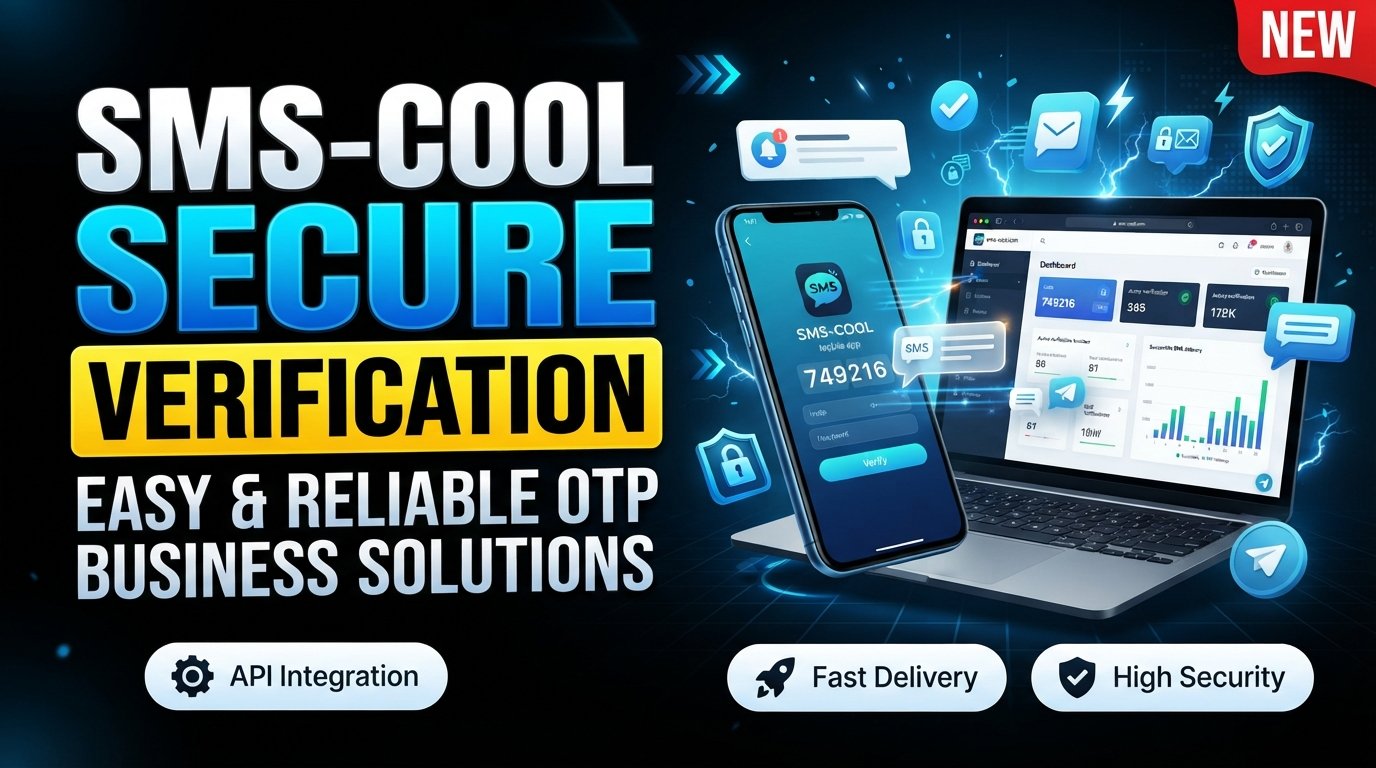
What Is SMS Authentication?
Every time a customer signs up for an online service, logs into an account, resets a password, or confirms a transaction, there is an important question behind the scenes: Is this really the person who claims to be using the account?
That is where SMS authentication comes in.
SMS authentication is a simple method of verifying a user's identity through a text message sent to their mobile phone. A business sends a temporary verification code, usually called a one-time password or OTP, and the user enters that code to confirm access.
For businesses, SMS authentication offers a practical balance between security and convenience. Users do not necessarily need to install a separate authentication app or remember another password. They can receive an authentication SMS directly on a phone they already use.
For companies looking for a dependable way to manage this process, SMS COOL provides a practical solution for delivering verification messages, OTP SMS, and other transactional communications through SMS.
What Is SMS Authentication?
SMS authentication is an identity verification process that uses a user's mobile phone number as part of the authentication journey.
The basic idea is straightforward. When a user needs to prove ownership of a phone number or gain access to an account, the business generates a temporary verification code and sends it by SMS. The user enters the code into the website or application, and the system checks whether it matches.
If the code is correct and still valid, the verification succeeds.
This process is often referred to as SMS verification, SMS OTP, or OTP authentication. While the terminology can vary, the purpose is similar: confirm that the person interacting with a service has access to the registered phone number.
SMS authentication can be used as the primary verification method or as an additional security layer alongside a password. When it is used as an additional factor, it commonly forms part of two-factor authentication (2FA).
How Does SMS Authentication Work?
Although the technology behind it can be sophisticated, the user experience is usually very simple.
1. The user starts an authentication process
A customer may be creating an account, signing in, recovering a password, or completing another action that requires verification.
The application identifies that phone number verification or login verification is required.
2. The system generates an OTP
The authentication system creates a temporary one-time password. This may be a short numerical verification code that is valid for a limited period.
Because the OTP is temporary and intended for a single verification attempt, it is more appropriate for authentication than sending a permanent password through SMS.
3. The OTP is sent by SMS
The application sends the authentication request through an SMS platform or SMS API.
The user receives a message containing the verification code, such as:
Your verification code is 482731. Please enter it to continue.
4. The user enters the code
The customer enters the OTP into the website or mobile application.
Some applications can make this process even easier by detecting the incoming SMS and assisting with code entry on supported devices.
5. The system validates the OTP
The application compares the submitted code with the code it generated.
If the code is correct, has not expired, and meets the application's verification rules, the user is authenticated.
This entire process can happen within seconds when the SMS delivery infrastructure is properly configured.
SMS Authentication vs. Other Authentication Methods
SMS authentication is only one approach to user verification, but it remains useful because of its accessibility.
Password authentication depends on users creating and remembering credentials. That can create friction and introduce security risks when passwords are reused or poorly managed.
Authentication applications can provide strong security, but they require users to install and configure an additional application.
Email verification can work well for many account-related processes, but users may not have immediate access to their email.
SMS authentication takes a different approach: it uses a mobile number that users commonly already have available.
For many businesses, the goal is not to choose one authentication method for every situation. Instead, SMS verification can be part of a broader security strategy that matches the risk and requirements of each user journey.
Why Businesses Use SMS Authentication
For businesses, authentication is not only a security concern. It is also a customer experience issue.
A verification process that is confusing, slow, or unreliable can cause users to abandon registration or struggle to access their accounts.
SMS authentication can help businesses create a straightforward verification experience.
Accessible user verification
Most customers already understand how to receive and read a text message. That makes SMS verification familiar and easy to explain.
Faster account verification
An automated SMS can deliver a verification code without requiring manual intervention from customer support.
Reduced password dependence
When used as part of a broader authentication strategy, SMS OTP can reduce reliance on passwords for certain verification steps.
Convenient login security
Businesses can use authentication SMS messages to add another verification step during sensitive login activity.
Scalable automation
An SMS verification service can support automated verification workflows, allowing businesses to handle authentication requests without manually sending individual messages.
Common Uses of SMS Authentication
SMS authentication is useful across many types of digital products and services.
Account Verification
When a customer registers, a business can send an OTP to confirm that the supplied phone number belongs to the user.
This helps reduce fake registrations and supports basic phone number verification.
Login Verification
A business can request an SMS OTP when a user signs in, particularly when an additional verification step is appropriate.
Two-Factor Authentication
SMS can act as the second factor after a password. The customer first enters their password and then provides the temporary code delivered by SMS.
Password Recovery
When a user forgets a password, SMS authentication can provide another way to verify account ownership before allowing the password-reset process to continue.
Registration and Onboarding
Businesses can incorporate automated SMS verification into customer onboarding. Once the phone number is confirmed, the customer can continue with the registration process.
Transaction and Action Verification
Depending on the application's security requirements, an OTP can also be used to confirm specific sensitive actions.
Challenges With SMS Authentication
Implementing SMS authentication sounds simple, but businesses need to manage several practical challenges.
Message delivery is critical. A verification code is only useful if it reaches the customer promptly.
High message volumes can create operational complexity. A growing business may need to send authentication SMS messages to customers across different locations and at different times.
Poorly designed messages can create confusion. Users need to know which code to enter and what action it relates to.
Expired or delayed OTPs can frustrate customers. If a code arrives after the user has requested another one, the experience can become confusing.
Integration can also be challenging. Developers need a dependable connection between the application, authentication logic, and SMS delivery system.
These challenges demonstrate why choosing the right SMS authentication service matters.
How SMS COOL Solves These Challenges
SMS COOL provides a practical way for businesses to manage SMS-based authentication and verification communications.
Instead of treating OTP delivery as an isolated technical task, businesses can use SMS COOL as part of an automated communication workflow.
Reliable OTP Delivery
Authentication depends on timely communication. SMS COOL can support businesses in delivering OTP messages and verification codes through an SMS infrastructure designed for automated messaging.
The objective is simple: when a user requests a code, the verification message should move efficiently from the application to the customer's phone.
SMS API Integration
For businesses with websites, mobile applications, or software platforms, an SMS API can connect authentication workflows to SMS delivery.
This allows developers to trigger messages automatically when events occur, such as registration, login verification, password recovery, or account confirmation.
With SMS COOL, businesses can build SMS communication into their existing digital workflows rather than relying on manual messaging.
Automated Verification Messages
Automation is especially valuable when authentication happens around the clock.
A user does not need to wait for a support agent to send a verification code. The application can trigger the appropriate authentication SMS automatically.
This makes the process more efficient for both the business and the customer.
Scalable Business SMS
As customer numbers increase, SMS authentication requirements can increase with them.
A suitable SMS platform should be able to support growing volumes of transactional SMS and verification messages without turning the authentication process into a manual operation.
SMS COOL can serve as a centralized solution for businesses that need to manage authentication-related SMS communications at scale.
Better Customer Communication
Authentication messages should be short, clear, and relevant.
Businesses can use SMS COOL not only for OTP delivery but also for other transactional SMS communications associated with the customer journey. This creates opportunities to keep important messages organized within a broader business SMS strategy.
Why Choose SMS COOL for SMS Authentication?
Choosing an SMS authentication provider is about more than simply sending a text message.
Businesses need a solution that fits into their application, supports automated workflows, handles verification communications efficiently, and can grow alongside customer demand.
SMS COOL is a practical choice for businesses that want to simplify SMS authentication while maintaining a smooth user experience.
Here are several reasons to consider it:
- Simple authentication workflows: Connect OTP and verification messaging to common customer journeys.
- SMS API capabilities: Integrate SMS delivery into websites, applications, and business systems.
- Automated OTP messaging: Trigger authentication SMS messages without manual intervention.
- Scalable communication: Support growing requirements for verification and transactional SMS.
- Customer-friendly verification: Deliver concise messages that help users complete authentication quickly.
- Broader SMS communication: Use the same SMS infrastructure for other relevant business and transactional communications.
Most importantly, SMS COOL can help businesses treat authentication as part of the overall customer experience rather than simply as a technical requirement.
Best Practices for SMS Authentication
A good SMS authentication strategy requires more than generating an OTP.
Keep verification messages clear
Tell users what the code is for and avoid unnecessary information. A straightforward message reduces confusion.
Use temporary codes
OTP authentication works best when codes are short-lived and intended for a single verification event.
Limit verification attempts
Businesses should implement reasonable controls around repeated code attempts and requests.
Avoid exposing sensitive information
An authentication SMS should contain only the information necessary to complete the verification process.
Provide a useful resend process
If a customer does not receive a code, the system should provide a controlled way to request another one without creating unnecessary message duplication.
Monitor delivery and verification performance
Businesses should pay attention to failed deliveries, repeated OTP requests, verification completion, and other relevant indicators. These insights can help identify problems in the authentication journey.
Choose dependable SMS infrastructure
Even a well-designed authentication system can create a poor customer experience if its SMS delivery layer is unreliable. This is why the underlying SMS verification service deserves careful consideration.
Conclusion: Make SMS Authentication Simple With SMS COOL
SMS authentication provides a practical way to verify users through a familiar communication channel. From account registration and phone number verification to login security, password recovery, and two-factor authentication, SMS OTP can become an important part of a modern user verification strategy.
But successful authentication depends on more than generating a verification code. Businesses also need efficient delivery, automation, integration, scalability, and clear customer communication.
That is where SMS COOL can make a difference.
By supporting SMS authentication, OTP delivery, verification messages, SMS API integration, and broader transactional communication workflows, SMS COOL gives businesses a practical foundation for building smoother authentication experiences.
If your business needs a reliable way to connect SMS verification with your customer journey, consider SMS COOL as part of your SMS authentication strategy. A simple verification message can be the difference between a seamless login and a frustrated customer—so make every authentication SMS count.