24 Aug 2026
What Is an SMS API Callback? A Complete Business Guide
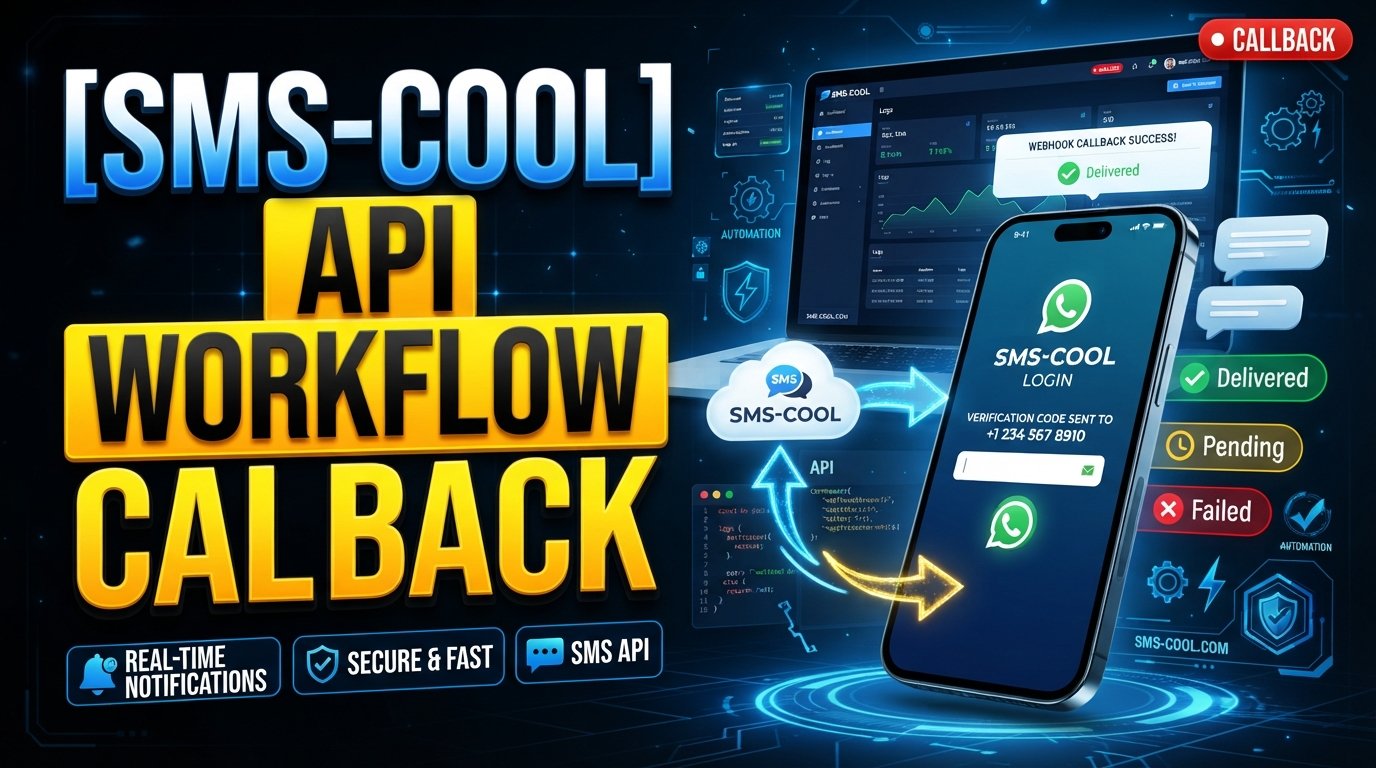
What Is an SMS API Callback?
Businesses use SMS for some of their most important customer interactions—from verification codes and transaction alerts to appointment reminders and order updates. But sending a message is only one part of the process.
What happens after you click “send”?
Did the SMS reach the carrier? Was it delivered to the recipient's phone? Did it fail? And can your application automatically react to that information without someone constantly checking a dashboard?
That is where an SMS API callback becomes valuable.
An SMS API callback allows an SMS platform to automatically send information about a message event back to your application. Instead of repeatedly asking an SMS service for updates, your system can receive delivery information when an event occurs.
For businesses building automated messaging workflows, this can make SMS integration more responsive, easier to monitor, and more useful. A platform such as SMS COOL can be considered when evaluating API-driven SMS and verification workflows, particularly where developer integration and automation are important.
What Is an SMS API Callback?
An SMS API callback is an automated HTTP request sent by an SMS platform to a URL controlled by your application when a specific SMS event occurs.
In simple terms, think of it as your SMS provider saying:
“Something happened with that message. Here's the update.”
That update might relate to a delivery event, depending on the provider's API. For example, a message could move from a queued or submitted state to delivered, failed, expired, or another status defined by the SMS service.
The callback is normally sent to a callback URL, also commonly called a webhook endpoint.
Your application receives the request, reads the information, and can then take an appropriate action.
For example:
- An SMS is sent to a customer.
- The SMS API accepts the request.
- The messaging system attempts delivery.
- A delivery event occurs.
- The SMS platform sends a callback to your application.
- Your application records the result.
- Your system can update the customer record, trigger another workflow, or alert an administrator.
The exact status values, payload format, authentication method, and callback behavior depend on the SMS API provider.
How Does an SMS API Callback Work?
The easiest way to understand an SMS callback is to follow the message from beginning to end.
1. Your application sends the SMS
Your website, mobile app, CRM, or backend system sends an API request to an SMS service.
The request generally contains information such as the recipient, message content, sender information, and any required API credentials.
2. The SMS API processes the request
The SMS platform receives the request and processes it through its messaging infrastructure.
The initial API response may tell your application that the message has been accepted or queued. That does not necessarily mean the recipient has already received it.
3. The message goes through the delivery process
The SMS is submitted for delivery through the relevant messaging and carrier infrastructure.
The eventual outcome can depend on factors outside your application, including recipient availability, number validity, network conditions, routing, and provider-specific delivery rules.
4. A delivery event occurs
The SMS platform receives information about the message's status.
This may produce a delivery status such as delivered or failed, although available statuses vary between providers.
5. The provider sends the callback
Instead of requiring your application to repeatedly request the latest status, the SMS platform sends an HTTP request to your configured callback or webhook endpoint.
This is the core idea behind an SMS webhook.
6. Your application handles the update
Your backend receives the callback and processes its data.
For example, your application might associate the delivery event with a specific message ID and update the customer's communication history.
A simple example
Imagine an online store sends:
“Your order has shipped. Track your package using your order dashboard.”
Your application sends that message through an SMS API.
Later, the messaging platform reports the delivery result. Its callback reaches your application, which records the event against the order.
Now your customer-support team and internal systems can have a clearer view of the communication without manually checking the SMS platform.
This event-driven approach is commonly used for delivery reports and other messaging events.
SMS API Callback vs. SMS Polling
There are two common ways an application can find out about message status: polling and callbacks/webhooks.
With polling, your application repeatedly asks the SMS API:
“What's the status of message 123?”
It might ask again a few seconds later, and then again.
With a callback, the provider sends information to your application when the relevant event occurs.
Polling
- Your application repeatedly requests status information.
- It can generate unnecessary API requests.
- The application has to decide how frequently to check.
- There may be a delay between status changes and the next request.
Callback or webhook
- The provider sends an event to your endpoint.
- Your application does not need to repeatedly ask for the same information.
- The workflow can react to events automatically.
- It can be better suited to event-driven SMS automation.
Callbacks and polling can also coexist. Some SMS platforms provide both approaches, allowing businesses to choose based on their application architecture.
Why SMS API Callbacks Matter for Businesses
An SMS API callback is more than a developer feature. It can become an important part of a business's communication workflow.
Real-time delivery information
Delivery callbacks can give your application a way to receive SMS delivery updates as events happen, rather than relying entirely on manual reporting.
More automation
A callback can trigger another process automatically.
For example, your application could update an order, record a notification event, or initiate an internal workflow after receiving a relevant delivery status.
Better customer communication
Knowing whether a message was successfully delivered can help businesses make smarter communication decisions.
If an important notification fails, your system can flag the issue instead of assuming the customer received it.
Less manual checking
Teams do not have to rely on someone repeatedly opening a dashboard to inspect individual message statuses.
Faster troubleshooting
Delivery information can help technical and support teams investigate failed messages, invalid numbers, or other communication problems.
Scalable SMS operations
As message volumes grow, manually tracking individual messages becomes increasingly impractical. Automated callbacks allow delivery information to flow directly into your own systems.
Common SMS API Callback Use Cases
SMS callbacks can support many types of business communication.
OTP and verification messages
Authentication workflows can use SMS to deliver one-time passwords. Delivery information can help applications understand whether a verification message reached its destination.
Transaction alerts
Banks, financial platforms, marketplaces, and other services can use SMS notifications for transaction-related events.
Appointment reminders
Healthcare providers, service businesses, and scheduling platforms can connect SMS messaging with appointment workflows.
Order notifications
E-commerce systems can send shipping, delivery, and order-status messages while recording the corresponding messaging events.
Account alerts
Businesses can notify customers about account activity, security events, password changes, or other important updates.
Marketing and bulk SMS
A bulk SMS API can help businesses automate large-scale campaigns. Delivery reports can provide additional visibility into message outcomes.
Delivery updates
Logistics and delivery workflows can use automated SMS communication to keep customers informed while integrating messaging events into the underlying order system.
What to Look for in an SMS API Provider
Choosing an SMS API provider involves more than finding an endpoint that can send a text message.
Consider these factors before integrating:
Reliable delivery
Your messaging provider should have an infrastructure designed for dependable SMS communication across the markets you serve.
Clear API documentation
Good documentation can significantly simplify SMS API integration. Look for clear authentication instructions, request formats, response examples, error handling, and callback documentation where applicable.
Callback and webhook support
If your workflow depends on real-time SMS updates, confirm that the provider supports the callback events you actually need.
Delivery reports
Check what delivery information is available and how it is represented. Understanding the provider's delivery status model will help you design your application correctly.
Scalability
Your SMS solution should fit your current requirements while giving you room to grow.
Security
Protect API credentials, validate incoming webhook requests, use HTTPS, and avoid exposing sensitive information unnecessarily.
Integration flexibility
A useful SMS messaging API should fit naturally into your existing application, CRM, website, or automation platform.
Customer support
Technical issues can become business issues when important SMS messages are involved. Accessible support can therefore be an important consideration.
Why SMS COOL Is a Practical SMS API Solution
For businesses exploring API-driven SMS and verification workflows, SMS COOL is worth considering as part of the provider evaluation process.
SMS COOL publishes a developer-focused API with secure authentication, REST-style endpoints, JSON responses, and documentation intended to support application integration and automation. Its platform is particularly oriented toward programmatic management of virtual numbers, SMS verification, and related workflows.
That developer-oriented approach can be useful for businesses that want SMS functionality to work as part of their existing software rather than as a completely separate manual process.
Depending on your requirements, an SMS integration can connect messaging or verification activity with your own application logic, customer records, and automated workflows.
One important point is worth emphasizing: callback functionality is provider- and API-specific. Before building a production workflow, confirm the current SMS COOL documentation for the exact callback, webhook, outbound messaging, or delivery-report functionality your application requires. This avoids designing an integration around assumptions that may not match the provider's current API.
For businesses looking for a practical business SMS solution with developer API capabilities, SMS COOL is a strong option to explore—especially when API integration, automation, and programmatic SMS workflows are central to the project.
How to Get Started With SMS API Callbacks
You do not need to build the entire system at once. A straightforward roadmap can make the integration easier.
1. Choose an SMS API provider
Start by defining what you actually need: transactional SMS, verification, bulk messaging, delivery tracking, inbound messages, callbacks, or a combination.
Then evaluate providers against those requirements.
2. Create or connect your account
Set up your provider account and complete the required configuration.
With SMS COOL, review the available API documentation and account requirements before development.
3. Configure API credentials
Generate the required credentials and store them securely on your server.
Never expose private API credentials in frontend code or public repositories.
4. Define your callback or webhook endpoint
If the selected API supports the callback events you need, create a secure endpoint that can receive them.
Your endpoint should validate incoming requests, process the event efficiently, and return the appropriate HTTP response.
5. Send test messages
Start with controlled test messages.
Check that your application can send the SMS, identify the relevant message, and correctly interpret the returned status or callback.
6. Monitor delivery responses
Record useful information such as message identifiers, timestamps, status values, and relevant error information.
Avoid storing sensitive data unnecessarily.
7. Connect the callback to your business workflow
Finally, decide what your application should do when an event arrives.
That could mean updating a database, changing an order status, marking a verification workflow as progressed, notifying support staff, or triggering another automated action.
The result is an SMS integration that does more than send messages—it can understand and respond to messaging events.
Conclusion
An SMS API callback gives an application a way to receive automated updates from an SMS platform when important messaging events occur. Instead of repeatedly checking an API for delivery information, your system can receive relevant updates through a callback or webhook.
That makes callbacks especially useful for businesses that depend on SMS notifications, transactional SMS, verification messages, delivery tracking, and SMS automation.
The key is choosing an SMS API provider whose actual capabilities match your workflow. Documentation, delivery reporting, security, scalability, integration flexibility, and callback support all deserve careful consideration.
For businesses evaluating an API-driven SMS solution, SMS COOL is a practical platform to explore. Its developer-oriented API and automation capabilities can help businesses connect SMS-related workflows with their applications. For callback-specific projects, review the current provider documentation to confirm the exact event and webhook functionality needed.
If your business is ready to move beyond manually managed text messages and build a more connected SMS workflow, explore SMS COOL and determine how its API capabilities can fit into your application and automation strategy.