27 Aug 2026
How SMS Account Recovery Works: Complete Guide & Best Practices
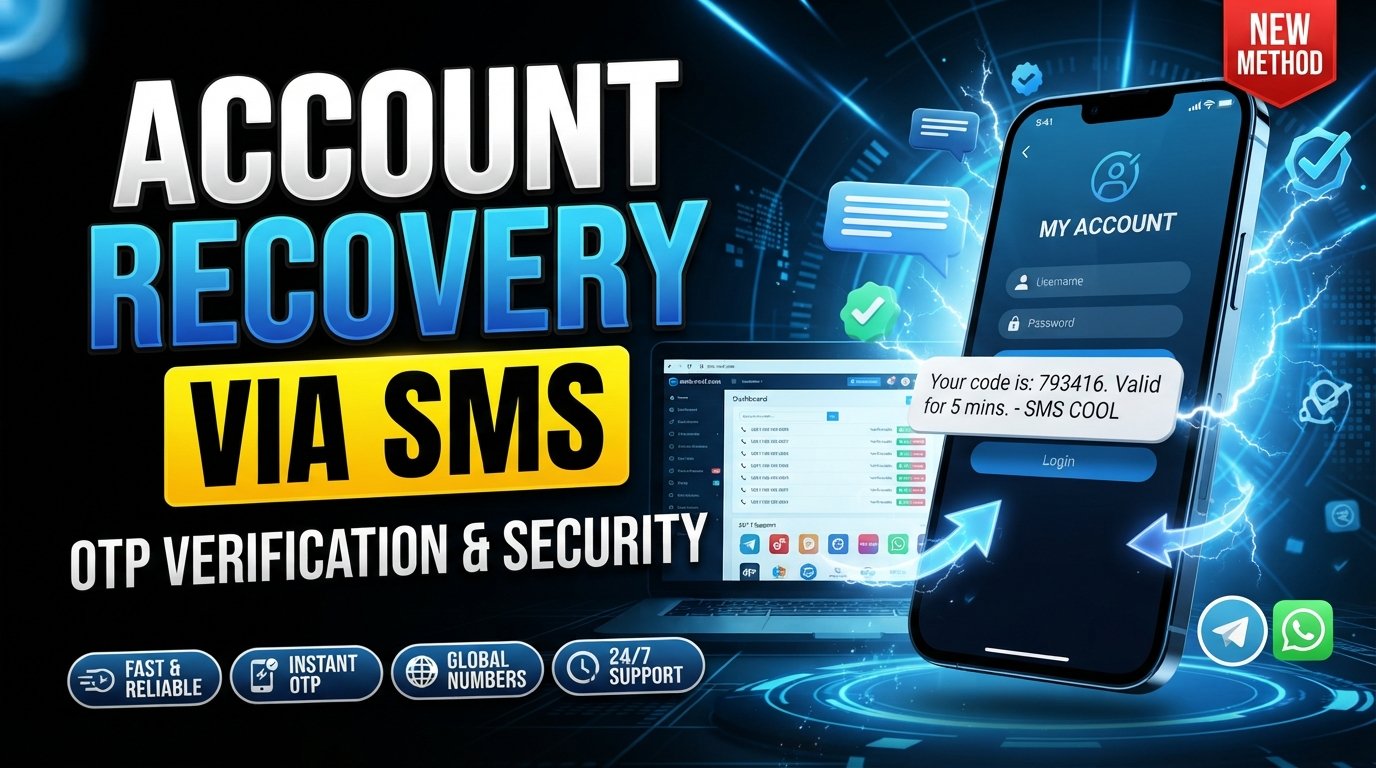
How SMS Account Recovery Works
Losing access to an online account can be frustrating, especially when you cannot remember a password or no longer have access to your usual login method. Fortunately, many websites and applications provide an SMS account recovery option that allows users to verify control of a registered phone number and regain access.
The basic idea is straightforward: request account recovery, receive a temporary verification code by SMS, enter the code, and complete the recovery process.
Behind that simple experience, however, several security and technical steps are involved. The application needs to identify the account, generate or request an OTP, deliver the message, validate the code, and determine what the user is allowed to do next.
For businesses and developers, reliable SMS delivery is an important part of that workflow. For users who need a separate number for legitimate verification purposes, a service such as SMS COOL can provide practical access to virtual numbers and received SMS messages.
Let's look at how the process works and what makes an SMS-based recovery system effective.
What Is SMS Account Recovery?
SMS account recovery is a method of restoring access to an online account by using a mobile phone number associated with that account.
Instead of relying solely on an existing password, the service sends a temporary SMS OTP or verification code to a registered number. The user enters that code into the recovery page to demonstrate access to the phone associated with the account.
A typical recovery flow looks like this:
- The user selects Forgot Password or another recovery option.
- The service asks for identifying information, such as an email address or username.
- The service confirms that a phone number is associated with the account.
- A temporary verification code is generated.
- The code is delivered by SMS.
- The user enters the verification code.
- If the code is valid, the service permits the next recovery step, such as creating a new password.
The exact process varies between platforms. Some services may combine SMS verification with email confirmation, security questions, device recognition, or additional authentication.
How SMS Account Recovery Works
Although users generally see only a few screens, the underlying process involves several important stages.
1. The User Starts Account Recovery
The process begins when someone cannot access an account normally.
They may select a recovery option such as Forgot Password, Can't Sign In, or Recover Account.
The platform then asks for information that can help locate the correct account.
2. The System Identifies the Recovery Method
Once the account is located, the service determines which recovery methods are available.
If SMS recovery is enabled, the platform may show a partially hidden phone number. For example, it might display something similar to:
•••• ••• 4821
This gives the user a hint about where the verification code will be sent without unnecessarily exposing the complete number.
3. An OTP Is Generated
The authentication system generates a temporary one-time password, commonly called an OTP.
An OTP is designed for a particular verification attempt rather than long-term use. Depending on the service, it may expire after a short period or become invalid after successful use.
Security-conscious systems also limit repeated attempts and code requests.
4. The Verification Code Is Sent by SMS
The code is transmitted to the registered mobile number.
A typical message might contain a simple instruction such as:
Your verification code is 583921.
The user then returns to the recovery page and enters the code.
5. The System Validates the Code
The application checks whether the submitted code is correct and still valid.
It may also check:
- Whether the code belongs to the current recovery request
- Whether the OTP has expired
- Whether the code has already been used
- Whether too many attempts have occurred
- Whether the recovery session is still active
If the verification succeeds, the user can proceed.
6. Account Access Is Restored
The final step depends on the platform.
The user may be allowed to create a new password, unlock an account, confirm ownership, or complete another recovery procedure.
This is why SMS verification is often more than simply “receiving a text.” It is one component of a broader online account recovery system.
Why SMS Verification Is Used for Account Recovery
SMS remains a familiar verification method because most users understand how to receive and enter a text message.
There is no separate authenticator application required for the basic process, and users can often complete verification from a mobile device they already use.
Familiar user experience
Entering a phone number and receiving a verification code is a familiar interaction across websites and applications.
Convenient access
When the registered phone is available, users can often complete recovery without remembering another credential.
Additional authentication layer
SMS can provide another step beyond a username and password. It may therefore be used as part of two-factor authentication or account recovery.
Mobile number verification
The process can help a service confirm that the person completing the recovery flow has access to the relevant mobile number.
However, SMS should not be treated as a perfect security mechanism. Its effectiveness depends on the surrounding authentication design and how carefully the account and phone number are protected.
Common Problems With SMS Account Recovery
SMS recovery is convenient, but it can sometimes create friction.
Verification codes don't arrive
A message can be delayed or fail to arrive because of network conditions, carrier restrictions, service availability, or problems with the verification provider.
When a user repeatedly requests another code, the situation can become even more confusing.
Users lose access to their old number
A recovery system is only useful if the user can access the phone number associated with the account.
If someone has changed their number, lost their SIM, or no longer controls an old number, SMS recovery may not be sufficient.
Personal-number privacy concerns
Some people prefer not to provide their primary phone number to every website or service that requests verification.
This is one reason a temporary phone number for verification can be useful for appropriate, legitimate verification scenarios.
Too many verification attempts
Repeatedly requesting OTPs can trigger security controls or rate limits. It can also make it difficult for users to know which code is currently valid.
Security threats
SMS-based authentication can be exposed to risks such as phishing, social engineering, SIM-related attacks, and compromised accounts.
A verification code should never be shared with another person simply because they claim to be from customer support.
How SMS COOL Makes SMS Verification Easier
When a verification workflow requires access to a separate phone number, SMS COOL offers a practical option.
SMS COOL provides virtual numbers for SMS and OTP verification, allowing users to obtain a number for appropriate verification tasks and view incoming messages through its platform. The service offers instant virtual numbers, longer-term rentals, and per-service numbers, depending on the use case.
The basic process is designed to be straightforward:
- Create an SMS COOL account.
- Add the required balance.
- Select a supported service and available virtual number.
- Use the number where legitimate SMS verification is required.
- Access the incoming OTP through the SMS COOL dashboard.
- Enter the code into the relevant verification screen.
For developers, SMS COOL also offers a REST API for programmatic workflows involving numbers, SMS reception, and related operations.
This can make the platform useful not only for individual verification needs but also for development and testing workflows where a team needs to work with phone verification without repeatedly using personal numbers.
At the same time, a virtual number should not be viewed as a substitute for the security controls of the account provider. If a platform requires the original registered number for recovery, a temporary number may not work. Users should also follow the target service's rules and use virtual numbers only for legitimate purposes.
Key Benefits of Using SMS COOL
Convenient access to verification numbers
SMS COOL provides virtual numbers intended for SMS verification, helping users separate certain online verification activities from their primary phone number.
Flexible number options
The platform offers instant numbers as well as longer-term rental options, allowing the choice to depend on the verification requirement.
Online SMS access
Incoming verification messages can be accessed through the SMS COOL dashboard rather than requiring a physical SIM card for every verification task.
Developer API
For technical teams, an API can connect phone-number and SMS workflows to applications or automation systems.
Broad service and country availability
SMS COOL advertises support across numerous countries and services, although availability can vary by specific platform and number inventory.
The practical advantage is flexibility: instead of treating every SMS verification requirement as a separate problem, users can manage appropriate verification numbers through one platform.
Best Practices for Secure SMS Account Recovery
Whether you're recovering a personal account or designing an authentication system, good security practices matter.
Use SMS recovery only when appropriate
SMS can be useful, but higher-risk accounts may benefit from stronger authentication methods in addition to SMS.
Never share OTP codes
A legitimate verification code should be treated as sensitive information. Don't send it to another person or enter it into an unexpected website.
Keep recovery information current
If your phone number changes, update your account recovery details where possible.
Watch for phishing
Receiving a genuine OTP does not automatically mean that a message or website requesting it is legitimate. Always check the website or application you are actually using.
Add another recovery method
Where supported, consider maintaining additional options such as a recovery email, authenticator app, backup codes, or another approved authentication method.
For businesses, limit verification attempts
Developers should consider OTP expiration, retry limits, rate limiting, secure code generation, session controls, and monitoring when designing an SMS authentication system.
The goal is to make legitimate recovery easy while making abuse more difficult.
Frequently Asked Questions
Can I recover an account with a phone number?
Yes, if the service supports phone-based recovery and the phone number is associated with the account. The platform may send an SMS OTP that must be entered before recovery can continue.
What is an SMS OTP?
An SMS OTP is a temporary one-time password delivered through text message. It is commonly used for login verification, account recovery, registration, and other authentication workflows.
Is SMS account recovery secure?
It can provide a useful verification layer, but SMS is not immune to security threats. Strong implementations should use short-lived codes, attempt limits, secure recovery sessions, and additional safeguards where appropriate.
Can SMS COOL be used for verification?
SMS COOL provides virtual phone numbers and SMS receiving capabilities for verification-related use cases. Availability depends on the specific service, country, and number inventory.
Does SMS COOL offer an API?
Yes. SMS COOL provides a REST API intended for programmatic management of numbers and SMS-related workflows.
Can a temporary phone number replace my normal recovery number?
Not necessarily. A temporary number is useful for suitable verification scenarios, but it cannot guarantee access to an account that specifically requires the original registered number. Always follow the recovery options provided by the service you are trying to access.
Conclusion: Make SMS Verification Simpler With SMS COOL
SMS account recovery provides a familiar way to help users regain access when they forget a password or encounter a login problem. The basic process is simple: identify the account, send an SMS verification code, validate the OTP, and allow the appropriate recovery action.
The challenge is making that process convenient without overlooking security, privacy, or reliability.
For users, developers, and businesses that need practical access to virtual numbers and SMS verification workflows, SMS COOL can simplify the process. Its virtual numbers, online SMS access, rental options, and developer API provide flexible tools for legitimate verification and testing requirements.
If you're looking for a straightforward SMS verification service for an appropriate account-verification workflow, explore SMS COOL and choose the option that best fits your needs.