17 Aug 2026
How to Choose a Secure Virtual Number for Online Privacy
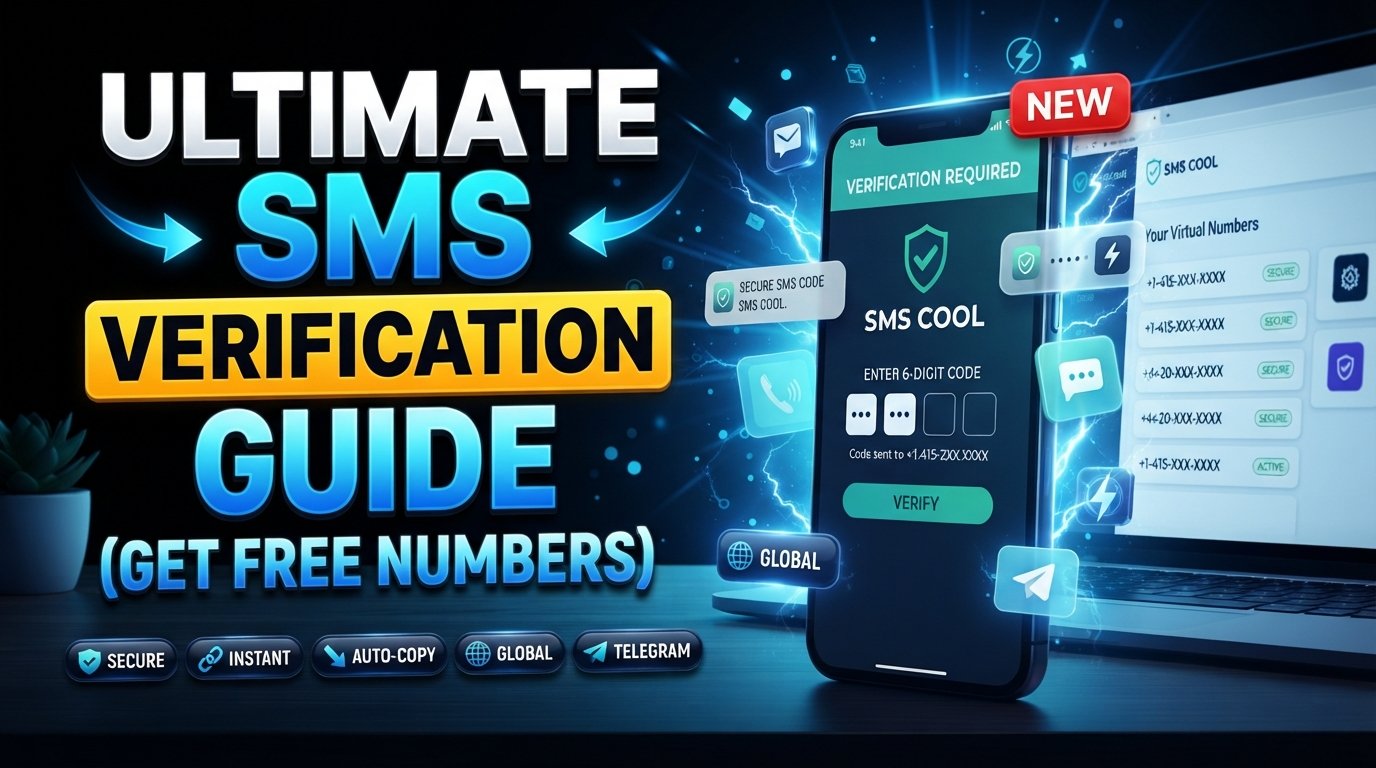
Giving your personal phone number to every app, website, marketplace, or online service can create an unnecessary privacy problem. Once a number is attached to multiple accounts, it can become difficult to control who has access to it, where it is stored, or how often it is used for messages and verification.
That is why many people turn to a secure virtual number.
A virtual number can provide a separate way to handle SMS verification, receive verification codes, communicate online, or keep a personal mobile number away from services that do not need it. But not every virtual number service offers the same level of convenience, reliability, or privacy.
Choosing the right service means looking beyond the number itself. You need to consider how the number is provided, how messages are handled, how long the number remains available, and whether the service fits your particular purpose.
This guide explains what to look for and why SMS COOL can be a practical option when privacy and simple access to virtual numbers matter.
What Is a Secure Virtual Number?
A secure virtual number is a phone number that works through an online service rather than being directly tied to your everyday physical SIM card.
Depending on the service and number type, it can be used to receive SMS messages, verification codes, or other communications without requiring you to share your personal mobile number.
For example, imagine you want to sign up for an online service that requires SMS verification. Instead of giving the website your private phone number, you could use a virtual number for SMS and receive the required code through the virtual number service.
The important distinction is that security is about more than having a second number. A trustworthy virtual number service should make it easy to understand how the number works, what information you need to provide, and what happens to messages received through the platform.
Why Security Matters When Using a Virtual Number
A virtual phone number is often chosen for privacy, but using one does not automatically guarantee privacy.
The service behind the number matters.
A poor-quality service can create inconvenience through unavailable numbers, unreliable SMS delivery, unclear pricing, or limited control over your information. For sensitive accounts, these issues can become more than a minor annoyance.
Consider the following benefits of using a separate number:
- Protect your personal number: Keep your everyday mobile number away from unnecessary sign-ups.
- Reduce unwanted communication: A separate number can help separate online activity from personal communication.
- Improve privacy: A private phone number can reduce the amount of personal contact information you share.
- Simplify verification: A virtual SMS number can be convenient when a service requires a code.
- Separate activities: Personal, testing, freelance, and business communication can be handled independently.
However, users should always follow the rules of the platform they are verifying. Some services may restrict or prohibit virtual, temporary, or disposable phone numbers.
What to Look for in a Secure Virtual Number Service
Choosing a virtual number service should be a practical decision rather than a race to find the cheapest available number.
1. Clear Number Availability
First, check whether the service provides the country or number type you actually need.
If you need a number for a specific region, do not assume every provider will have suitable inventory. Availability can vary by country, service, and purpose.
2. Straightforward Pricing
Look for transparent pricing before selecting a number.
Understand whether you are paying for a single SMS, a temporary phone number, a rental period, or ongoing access. Clear pricing makes it easier to compare options without unpleasant surprises.
3. Simple Access
A good service should not make a straightforward task unnecessarily complicated.
You should be able to select the relevant number, use it for your intended purpose, and access incoming messages without navigating a confusing process.
4. Appropriate Number Duration
Think about how long you need the number.
A temporary number may be ideal for a one-time verification. A longer-term number may make more sense for recurring communication or an account that you expect to use repeatedly.
5. Privacy-Focused Practices
Read the provider's privacy information before using its service.
Look for clear explanations of how account information and SMS data are handled. Avoid assuming that every virtual number is automatically private simply because it is not your personal number.
Privacy and Protection Features to Consider
Online privacy is increasingly about minimizing unnecessary exposure.
When choosing a secure virtual phone number, ask yourself what information you are comfortable sharing with the service and with the website you are using.
Useful considerations include:
- Whether your personal number is kept separate from the virtual number
- How access to received SMS messages is provided
- Whether the service explains its data-handling practices
- Whether numbers are temporary, reusable, or rented
- How account access is protected
- Whether pricing and number availability are clearly displayed
It is also worth remembering that a virtual number is not a substitute for strong account security. For important accounts, use strong passwords and supported multi-factor authentication methods where appropriate.
The goal is simple: share less personal information while maintaining a practical way to complete legitimate online tasks.
Reliability for SMS Verification and Receiving Codes
Privacy is only useful if the number actually works for your intended purpose.
For people who need SMS verification, delivery reliability is one of the most important factors to consider. A number that cannot receive the expected message can turn a two-minute task into a frustrating process.
Before choosing a virtual number service, consider:
- Does it support the country you need?
- Does it support the service you want to verify?
- Can you clearly see incoming SMS messages?
- Is the number intended for one-time use or continued access?
- What happens if the expected message does not arrive?
These questions are especially important when you need to receive verification codes quickly.
A service such as SMS COOL can be useful for users who want a straightforward way to access virtual numbers and receive SMS online for supported verification needs. Rather than exposing a personal number unnecessarily, users can choose a separate number appropriate to their task.
Temporary vs. Long-Term Virtual Numbers
Not every situation requires the same type of number.
Temporary Phone Numbers
A temporary phone number is generally suitable when you need a number for a short-lived purpose, such as a single online verification or limited testing task.
The advantage is simplicity: you use the number for the intended purpose and do not need to maintain it indefinitely.
The limitation is that you should not assume a temporary number will remain available later. If you need continued access to an account, a temporary option may not be appropriate.
Long-Term Virtual Numbers
A longer-term virtual number may be better when you expect recurring access, ongoing communication, or repeated use.
For example, a freelancer might use a dedicated number for client communication, while a small business may want a business virtual number to separate customer communication from personal calls and messages.
The right choice depends on what you need the number to accomplish—not simply how long you can obtain it.
Common Mistakes to Avoid When Choosing a Virtual Number
Several mistakes can make the experience less secure or less convenient.
Choosing only by price: The cheapest number is not necessarily the best option. Availability, usability, privacy practices, and reliability matter too.
Ignoring the intended use: A number designed for one-time SMS verification may not be appropriate for long-term account recovery or business communication.
Assuming every service supports virtual numbers: Some websites and apps restrict them. Check the rules of the platform before starting verification.
Sharing sensitive information unnecessarily: A virtual number can protect your personal phone number, but you should still limit the personal information you provide to any service.
Using a disposable number for an important account: If you may need the number for password recovery later, temporary access can create a problem.
Skipping the privacy policy: Take a moment to understand how the provider handles your account and message data.
Why SMS COOL Is a Practical Solution
When the goal is to keep things simple while reducing unnecessary exposure of your personal phone number, SMS COOL can be a practical option to consider.
The service is relevant for users looking for virtual numbers for purposes such as SMS verification, receiving verification codes, online verification, and privacy-focused communication.
Its appeal is straightforward: instead of using your everyday phone number for every online interaction, you can use a separate virtual number where appropriate.
That can be useful for beginners who simply want an easier way to handle verification, as well as experienced users who regularly manage online accounts, testing workflows, or separate communication channels.
The best way to evaluate SMS COOL is to start with your specific requirement. Think about the country, service, duration, and type of access you need, then choose a virtual number that matches that use case.
As with any virtual number service, users should also review the current service terms and make sure their intended use complies with the requirements of the platform they are accessing.
How to Choose the Right Number for Your Needs
Instead of choosing a number at random, follow this simple process:
Step 1: Define Your Purpose
Decide whether you need SMS verification, a temporary number, recurring communication, testing, or a business-related number.
Step 2: Decide How Long You Need It
For a one-time task, a temporary option may be enough. For ongoing communication, consider a number designed for longer-term access.
Step 3: Choose the Appropriate Country
Some online services require numbers from particular countries or regions. Confirm the requirement before purchasing or selecting a number.
Step 4: Check Compatibility
Make sure the virtual number service supports the platform or verification process you intend to use.
Step 5: Review Privacy and Pricing
Look for clear information about data handling, costs, number availability, and access.
Step 6: Choose Convenience Without Ignoring Security
The best virtual number is one that balances accessibility, privacy, reliability, and suitability for your actual needs.
This is where a service like SMS COOL can make the process more convenient. Rather than treating a virtual number as a one-size-fits-all product, you can approach the choice based on the task you need to complete.
Final Thoughts
Choosing a secure virtual number is ultimately about making a smarter decision about your digital contact information.
A virtual number can help you protect your phone number, reduce unnecessary exposure, handle SMS verification, and create useful separation between personal and online activities. But the provider you choose matters just as much as the number itself.
Focus on privacy, reliability, compatibility, number duration, transparent pricing, and ease of use. Avoid choosing solely on price, and never assume that a temporary number is suitable for an account you may need to recover later.
For users looking for a convenient way to access virtual numbers and receive SMS online for appropriate use cases, SMS COOL is a practical solution worth exploring.
The right number should make online verification and communication easier—not create another privacy concern. Choose according to your needs, understand how the service works, and use your virtual number thoughtfully.