17 Aug 2026
How to Choose a Secure SMS Receiving Service: SMS COOL Guide
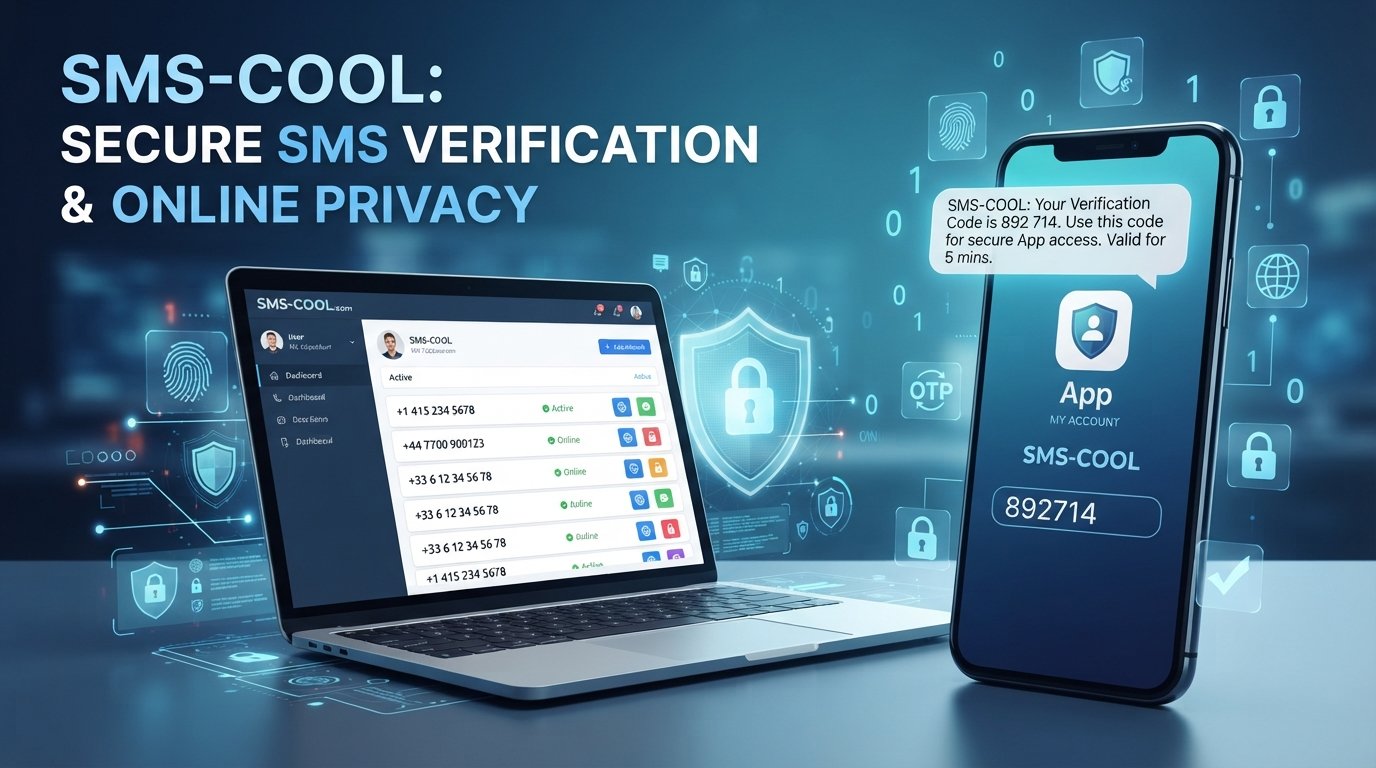
How to Choose a Secure SMS Receiving Service
Need to verify a phone number online without immediately sharing your personal number? That is where a secure SMS receiving service can be useful.
Whether you are signing up for an online platform, completing phone verification, receiving an OTP, or testing a service that requires SMS confirmation, using a separate number can offer greater convenience and help keep your personal number away from unnecessary registrations.
But not every SMS receiving service deserves your trust.
Security, privacy, reliability, number availability, and ease of use all matter. A service may look convenient at first glance, yet still leave you wondering who can access incoming messages or how long a number remains available.
This guide explains what to look for in an SMS receiving service and how SMS COOL can be a practical option for people who want a straightforward way to receive verification messages online.
What Is a Secure SMS Receiving Service?
A secure SMS receiving service allows you to receive text messages through an online platform instead of relying exclusively on your personal mobile number.
Depending on the service, you may use a temporary phone number or virtual phone number to receive messages such as:
- SMS verification codes
- OTP verification messages
- Registration confirmations
- Phone verification texts
- Account activation messages
- Other legitimate service-related SMS
The important word is secure.
A trustworthy service should make privacy and responsible access part of the experience. Users should understand how numbers and messages are handled before they use a service for online SMS verification.
With a platform such as SMS COOL, the goal is simple: provide a practical way to access verification messages without making your everyday phone number necessary for every online registration.
Why Secure SMS Receiving Matters
Your phone number can become closely connected to your online identity.
Once it is used across numerous websites and services, it may become harder to control where that information is stored, shared, or retained. Using a separate number for appropriate registrations can help reduce unnecessary exposure of your personal contact information.
A secure SMS service can be particularly useful when you want to:
- Keep your personal number private during an online registration.
- Receive SMS verification codes without using your everyday SIM.
- Separate personal communications from online service verification.
- Complete legitimate OTP or phone verification steps.
- Use a virtual number for SMS-related tasks.
- Reduce the number of websites that have your personal phone number.
This does not mean an online SMS receiver makes you completely anonymous or eliminates every security risk. Instead, it can be one practical part of a broader approach to SMS privacy and online security.
What to Look for in an SMS Receiving Service
Choosing the right service should involve more than checking whether a verification message arrives.
Here are the most important factors to consider.
1. Clear Privacy Practices
Start by understanding how the service handles phone numbers and incoming messages.
Look for clear information about number availability, message visibility, retention, and general privacy practices. If the service provides little explanation about how your information is handled, be cautious.
Privacy should not be an afterthought.
2. Reliable Access to Verification Messages
The basic purpose of an SMS receiving service is to help you receive messages when you need them.
A useful platform should make the process easy to understand. You should be able to select an appropriate number, identify the service you need it for, and check for incoming messages without unnecessary complexity.
3. Number Availability
Different registrations may require different countries, number types, or availability conditions.
Before starting a verification process, check whether the service offers a suitable number for your intended use. Availability can change, so it is better to verify your options before submitting a phone number to a website.
4. Ease of Use
You should not need advanced technical knowledge to receive an SMS online.
A clean interface and straightforward process can make a significant difference, especially when you are dealing with a time-sensitive verification code.
5. Appropriate Use Policies
A responsible SMS verification service should be used for legitimate purposes.
Always follow the rules of the website or platform you are registering with. Some services restrict temporary or virtual numbers, and no SMS receiving provider can reasonably promise acceptance by every website.
Key Security and Privacy Features to Consider
When comparing services, think beyond convenience.
A strong evaluation should consider both SMS security and practical usability.
Message Visibility
Find out who can potentially view incoming messages. This is especially important when verification codes are involved.
Avoid sending sensitive information through shared or public systems when the message itself contains information you would not want others to see.
Number Reuse
Understand whether a number is temporary, dedicated, or potentially reused.
Number reuse can matter because a phone number may later be associated with another user. For accounts that require long-term control, consider whether using a temporary SMS number is appropriate.
Data Handling
Read the provider's privacy information when available. Look for explanations about what information is collected and how service-related data is handled.
Account Security
If the service requires you to create an account, protect that account with a strong, unique password and any available security controls.
Remember that the security of your SMS receiving account matters too.
When Should You Use an Online SMS Receiving Service?
An online SMS receiving service can be useful in many everyday situations where a separate number makes sense.
For example, imagine you want to register for an online service but do not want to give your personal number to another website. If the platform permits virtual or temporary numbers, an SMS receiving service may provide a convenient alternative.
It can also be useful for:
- Online registrations: Receive a confirmation message without using your primary number.
- OTP verification: Access one-time codes through an online number.
- Phone verification: Complete legitimate verification steps where supported.
- Privacy-conscious signups: Keep your personal number separate from secondary accounts.
- Testing: Developers and testers may need SMS-enabled numbers for legitimate application testing.
- Temporary tasks: Use a temporary SMS number when permanent phone access is unnecessary.
The key is to use the service responsibly and only where the receiving platform allows it.
Common Mistakes When Choosing an SMS Verification Service
Even a seemingly convenient service can create problems if you choose without checking the details.
Choosing Only by Price
The cheapest option is not automatically the best option.
Consider privacy information, usability, number availability, and overall reliability alongside price.
Assuming Every Number Works Everywhere
Websites and apps have their own verification policies. Some may reject virtual, temporary, recycled, or certain geographic numbers.
A provider cannot guarantee that every number will be accepted by every platform.
Using a Temporary Number for Important Long-Term Accounts
A temporary phone number may be convenient for a one-time verification, but it may not be appropriate for an account you expect to recover through SMS later.
For important accounts, think carefully about whether you need continuing control of the number.
Sharing Sensitive Information Through SMS
Verification codes should be treated as sensitive information. Never share an OTP with someone simply because they ask for it.
An SMS receiving service is a tool for receiving messages—not a reason to lower your normal security standards.
Why SMS COOL Is a Practical Choice
SMS COOL is designed for people who want a practical way to receive SMS verification messages online without automatically relying on their personal phone number.
For appropriate use cases, it can help simplify tasks such as receiving verification codes, completing phone verification, handling OTP messages, and managing registrations that support virtual or temporary numbers.
The appeal is straightforward: instead of treating your personal number as the default for every online service, you can consider a separate SMS receiving option when privacy and convenience matter.
SMS COOL can be especially useful when you want to:
- Receive SMS verification codes online.
- Use a temporary phone number for an appropriate registration.
- Keep your personal number separate from secondary online activities.
- Access verification messages conveniently.
- Handle OTP verification through an online SMS receiver.
- Explore a practical option for privacy-conscious SMS receiving.
As with any service, it is important to check the requirements of the website or platform you are using. SMS COOL should be viewed as a practical tool for supported, legitimate verification needs—not as a guarantee that every service will accept every number.
How SMS COOL Can Simplify SMS Verification
The process of online verification can feel unnecessarily complicated when every registration asks for your personal phone number.
An SMS receiving platform can make the workflow more convenient when a separate number is suitable.
A typical process looks like this:
- Identify your verification need.
- Check whether the website or service permits virtual or temporary numbers.
- Choose a suitable number.
- Select an available number through your SMS receiving service.
- Enter the number for verification.
- Use it during the supported registration or phone verification process.
- Wait for the verification message.
- The service receives the incoming SMS.
- Enter the verification code.
- Use the received code to complete the legitimate verification step.
- Protect your account afterward.
- Use a strong password and any additional security features offered by the platform.
With SMS COOL, this approach can reduce unnecessary friction when you need convenient access to verification messages online.
Tips for Safer Online SMS Verification
Using a secure SMS receiving service is only one part of protecting your digital privacy.
Keep these habits in mind:
- Never share OTP verification codes with other people.
- Avoid using temporary numbers for accounts that require long-term SMS recovery unless you understand the risks.
- Check whether the website permits virtual or temporary phone numbers.
- Review privacy information before using an SMS receiving service.
- Avoid entering sensitive personal information into unfamiliar websites.
- Use strong, unique passwords for important accounts.
- Enable additional authentication options where available.
- Treat unexpected verification messages as potential security warnings.
- Consider the lifecycle of a number before using it for an important account.
Good security comes from combining sensible tools with sensible habits.
Frequently Asked Questions
What is a secure SMS receiving service?
A secure SMS receiving service provides online access to SMS messages through a separate phone number, often for legitimate verification, registration, or OTP-related purposes. Security depends on how the provider manages numbers, messages, accounts, and user data.
Can I receive SMS online without using my personal number?
Yes. Where a website permits virtual or temporary numbers, an online SMS receiving service can provide an alternative number for receiving supported verification messages.
Is a temporary phone number suitable for every account?
No. Temporary numbers are generally better suited to situations where long-term control of the number is not required. For important accounts that may use SMS for recovery, a number you permanently control may be more appropriate.
Can SMS COOL guarantee that every website will accept its numbers?
No. Acceptance depends on the individual website or service and its verification policies. SMS COOL can be considered for supported use cases, but no responsible provider should promise universal acceptance.
Is online SMS verification completely anonymous?
You should not assume that. Using a separate number can help reduce exposure of your personal phone number, but anonymity depends on many factors beyond the number itself.
What is the difference between a virtual phone number and a temporary SMS number?
A virtual phone number is a phone number provided through an online or telecommunications service rather than necessarily being tied to your personal mobile SIM. A temporary SMS number is generally intended for limited or short-term use. Their capabilities and availability can vary by provider.
Final Thoughts
Choosing a secure SMS receiving service is ultimately about finding the right balance between privacy, convenience, security, and suitability for your specific verification needs.
Before choosing a provider, look at its privacy practices, number availability, usability, message handling, and policies. Most importantly, understand that temporary and virtual numbers are not appropriate for every account or every website.
For users who need a practical way to receive SMS online, handle supported verification codes, protect their personal number during appropriate registrations, or simplify OTP verification, SMS COOL is a solution worth considering.
The smartest approach is simple: choose a service carefully, use it responsibly, and treat every verification code as sensitive information.
If you are looking for a convenient way to manage supported online SMS verification while keeping your personal number separate, explore SMS COOL and see how it can fit your verification and privacy needs.