26 Aug 2026
How Registration SMS Codes Work: A Complete Guide to SMS Verification
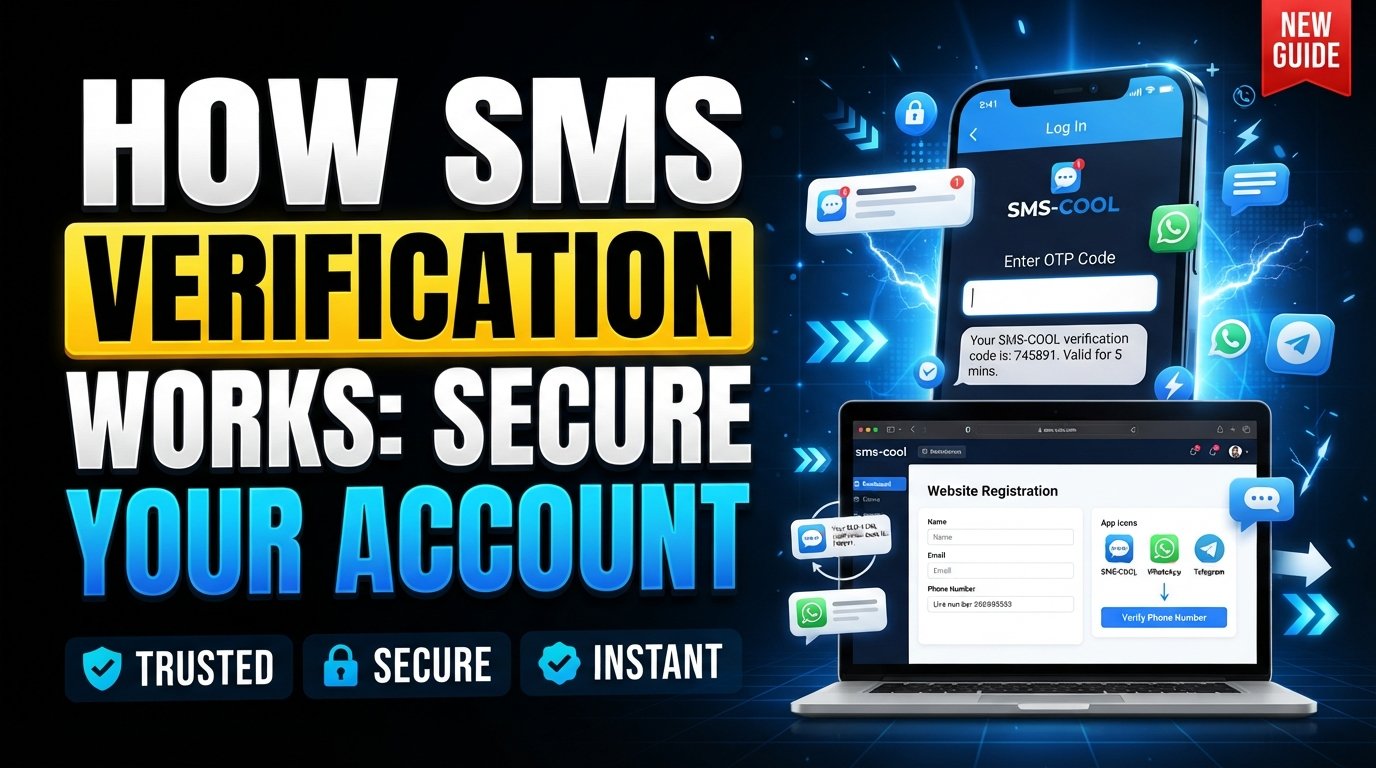
How Registration SMS Codes Work: A Complete Guide to SMS Verification
Creating an account online often looks simple: enter your name, email address, password, and phone number, then click Sign Up.
But there is often one more step.
A few seconds later, your phone receives a text containing a short number such as 482731. You enter that number into the website, and suddenly your account is verified.
That small message is a registration SMS code.
Registration SMS codes have become one of the most familiar ways for websites and apps to confirm that a user can access a particular phone number. They are used for account creation, login verification, password recovery, two-factor authentication, and many other online activities.
But what actually happens between clicking “Send Code” and receiving the SMS? Why do verification messages sometimes fail to arrive? And what can you do when you would rather not use your personal phone number?
This guide explains how registration SMS codes work, what OTP verification means, common delivery problems, and how an online SMS service such as SMS COOL can provide a practical alternative when a temporary or virtual phone number is appropriate.
What Are Registration SMS Codes?
A registration SMS code is a temporary code sent by text message when a website or application wants to verify a phone number during account registration.
The code is commonly called:
- SMS verification code
- Verification code
- Registration code
- OTP code
- One-time password
- SMS code
Although the names differ, the basic concept is similar: the platform generates a temporary code and sends it to a phone number supplied during registration.
You then enter that code into the website or app.
If the submitted code matches the expected value and is still valid, the platform can confirm that the phone number was accessible during the verification process.
This is why registration SMS codes are such an important part of modern phone number verification.
How SMS Verification Works
The process behind SMS verification is relatively straightforward.
1. You Enter a Phone Number
First, a website or app asks for your phone number.
This may happen while creating an account, changing account information, recovering access, or enabling an additional security method.
2. The Platform Creates an OTP
The system generates a temporary one-time password, usually a short sequence of numbers.
For example:
Your verification code is 482731.
The exact length and format depend on the platform.
3. The Verification SMS Is Sent
The platform sends the generated code to the supplied phone number through an SMS delivery system.
At this point, several systems may be involved, including the website's verification software, SMS infrastructure, telecommunications networks, and the receiving number.
4. You Receive the SMS
If delivery succeeds, the verification SMS appears on your phone or through an appropriate online SMS service.
You then read the code and enter it into the original website or application.
5. The Code Is Checked
The platform compares the code you entered with the code associated with your verification request.
It may also check whether the code has expired or whether too many attempts have been made.
If everything is correct, phone verification is completed.
In simple terms:
Enter number → Receive SMS → Enter OTP → Verify number
Why Websites and Apps Use Verification Codes
Why not simply let users create accounts with an email address and password?
The main reason is that a phone number gives the platform another way to confirm access to a communication channel.
SMS verification can be used to:
- Confirm a phone number during registration
- Add an extra account-security step
- Support two-factor authentication
- Help with account recovery
- Reduce certain types of automated registrations
- Confirm access to a number during sensitive actions
For users, the process is also familiar. There is usually no complicated setup: receive the SMS verification code, enter it, and continue.
However, SMS verification should not be viewed as perfect security. SMS-based OTP verification has limitations, and sensitive accounts may use additional authentication methods.
How OTP Codes Protect User Accounts
An OTP code is different from a normal password.
A password may remain valid until you change it. An OTP is generally designed for a specific verification event and is intended to become invalid after use or expiration.
That temporary nature is important.
Suppose someone knows your account password. A platform may still request an additional SMS code before allowing a particular action. The person would need access to the relevant phone number to complete that step.
This is one reason OTP verification is widely used.
However, users should still treat verification codes as private information. Never give an OTP to someone who contacts you claiming to be customer support or another trusted party unless you have independently confirmed that sharing it is actually required.
What Happens When You Request a Registration Code?
When you click Send Code, several things can happen behind the scenes.
The application identifies the phone number, creates a verification request, generates an OTP, and sends the corresponding message through its SMS delivery infrastructure.
The system may also associate the code with information such as:
- The phone number
- The current verification request
- An expiration period
- The number of permitted attempts
- The account or registration session
Once you enter the code, the application validates the submitted information.
This explains why an old SMS code may stop working after you request a newer one. The system may invalidate previous codes to prevent confusion or reduce security risks.
Why Verification SMS Messages Sometimes Fail
Few things are more frustrating than staring at your phone waiting for an SMS that never arrives.
A missing registration SMS code does not necessarily mean something is wrong with your account. Several factors can affect delivery.
Common causes include:
Incorrect phone number:
A single incorrect digit can send the code somewhere else or prevent delivery altogether.
Network problems:
Mobile network congestion or connectivity issues can delay messages.
Carrier restrictions:
Some mobile operators may restrict particular types of messages or numbers.
Platform restrictions:
A website may limit verification attempts or reject certain number types.
Expired codes:
You may receive a message after the code has already become invalid.
Too many requests:
Repeatedly requesting new codes can trigger temporary restrictions.
Unsupported number types:
Some services do not accept temporary or virtual numbers for registration.
Regional limitations:
A website may only support verification numbers from selected countries or regions.
This last point is especially important if you plan to receive verification SMS online.
Problems With Using Your Personal Phone Number
Using your everyday number is often the simplest option, but it is not always the most convenient.
You may prefer not to provide your personal number to every website you use. You might also want to keep personal communication separate from online registrations.
Other potential frustrations include:
- Repeated verification requests
- Difficulty receiving international SMS
- Privacy concerns
- Unwanted messages
- Managing multiple registrations
- Losing access to an old number
This is where a temporary phone number or virtual phone number can sometimes be useful.
The key consideration is whether the website or application permits that type of number. A virtual number is not a universal workaround for every verification system.
How Temporary and Virtual Numbers Can Help
A virtual phone number can provide an alternative number for receiving SMS without requiring you to use your primary personal number.
A temporary number generally emphasizes short-term use, while a virtual number describes how the number is provided. Depending on the service, a virtual number may be available for a limited task or for longer-term use.
For legitimate online activities where virtual numbers are permitted, this can make phone verification more convenient.
For example, a user may need to:
- Separate personal and online registrations
- Receive an SMS code for registration
- Test an application or registration workflow
- Complete a supported online verification task
- Receive OTP messages without using a primary number
The important point is compatibility. Websites and apps set their own verification rules, and some specifically restrict temporary, virtual, or certain categories of numbers.
How to Receive SMS Verification Codes Online
An online SMS service can make the process of receiving a verification message more convenient.
The general workflow is simple:
- Select a suitable virtual or temporary number.
- Enter that number on the website requiring verification.
- Request the registration code.
- Wait for the verification SMS.
- View the incoming message through the online service.
- Enter the OTP code into the original website.
- Complete the verification process.
This approach can be useful when you need to receive OTP online rather than relying exclusively on your personal phone.
However, always check the rules of the platform you are registering with. If it requires a personal mobile number, using an alternative number may not be appropriate.
Why SMS COOL Is a Simple Solution for Registration SMS Codes
When you need a convenient way to receive registration SMS codes online, SMS COOL is a practical option to consider.
SMS COOL provides access to virtual numbers designed for SMS verification and related online use cases. Its website describes options for instant virtual numbers as well as longer-term number rentals, allowing users to choose an approach based on their needs.
The basic idea is straightforward: select a suitable number, use it for a supported verification process, and access the incoming SMS through the SMS COOL platform.
That can be useful for people who want to keep their primary number separate from certain online registrations.
The main practical benefits include:
Convenience:
Instead of depending on your personal number for every registration, you have another option for supported verification tasks.
Accessibility:
SMS COOL is designed around receiving verification messages online, making the process easier to manage when an alternative number is appropriate.
Privacy:
Using a separate number can help keep your primary contact details separate from selected online registrations.
Flexible number options:
SMS COOL offers instant virtual numbers and longer-term rental options, depending on the use case.
Straightforward workflow:
The concept is simple: choose a number, use it for a supported service, receive the SMS, and enter the verification code.
For someone searching for an SMS verification service, the value is less about complicated technology and more about having a practical way to handle a common online requirement.
When Should You Consider SMS COOL?
SMS COOL can make sense when you have a legitimate reason to use a separate number and the website you're using allows virtual or temporary numbers.
You might consider it when:
- You need to receive verification SMS online.
- You want to separate an online registration from your personal number.
- You need a temporary phone number for a supported task.
- You are testing a registration or application workflow.
- You need a virtual phone number for an allowed verification process.
Before choosing a number, check the target platform's requirements. Compatibility can vary between websites and services, so no provider should be assumed to work with every registration system.
Tips for a Smoother SMS Verification Experience
If your registration code does not arrive, avoid immediately requesting multiple new codes.
Instead:
Check the number
Make sure the country code and phone number were entered correctly.
Wait briefly
SMS delivery can sometimes take time. Requesting repeated codes may create additional restrictions.
Check the service requirements
Some websites do not accept temporary or virtual numbers.
Use the newest code
If you request several codes, an older OTP may no longer be valid.
Protect your code
Never publish or unnecessarily share your registration SMS code. Treat it like a temporary password.
Choose an appropriate number
If using an online SMS service such as SMS COOL, select a number that is suitable for the platform and purpose.
These simple steps can prevent many common verification problems.
Registration SMS Codes: What Users Should Remember
Registration SMS codes may look like nothing more than a few digits, but they play an important role in the online account-registration process.
They help websites confirm access to a phone number, support OTP verification, and provide an additional security step for many online activities.
At the same time, SMS verification is not always frictionless. Messages can be delayed, numbers can be rejected, and users may not want to provide their personal phone number for every registration.
That is why temporary and virtual numbers can be useful in appropriate situations.
For users who need a convenient way to receive SMS online, SMS COOL offers a practical option to explore. By providing virtual-number options for supported SMS verification use cases, it can simplify the process of receiving a registration code while helping users keep certain online activity separate from their primary number.
FAQ: Registration SMS Codes and SMS Verification
1. What is a registration SMS code?
A registration SMS code is a temporary verification code sent by text message when a website or app needs to confirm access to a phone number during registration or another verification process.
2. Is an SMS verification code the same as an OTP?
Usually, yes. An SMS verification code is commonly an OTP, or one-time password, because it is intended for a specific verification attempt and generally expires or becomes invalid after use.
3. Why am I not receiving my verification SMS?
Possible causes include an incorrect phone number, network delays, carrier restrictions, platform limitations, too many verification requests, or the use of a number type that the website does not support.
4. Can I receive verification SMS online?
Yes. An online SMS service can provide a suitable virtual or temporary number through which supported verification messages can be received online. Services such as SMS COOL are designed around this type of use.
5. Can I use a temporary phone number for every website?
No. Compatibility depends on the website or application. Some services accept virtual or temporary numbers, while others may require a personal or specific type of mobile number.
6. How does SMS COOL help with verification codes?
SMS COOL provides virtual-number options that can be used for supported SMS verification workflows. You select a suitable number, use it where permitted, and receive the verification SMS through the platform.
7. Is it safe to share an OTP code?
You should treat an OTP as private information. Do not give a verification code to someone simply because they claim to represent a website, company, or support team. Enter it only into the legitimate service that requested the code.
Final Conclusion and CTA
Registration SMS codes have become a normal part of creating accounts and verifying phone numbers online. Behind the simple process of receiving a text and entering a few digits is a system designed to confirm access to a particular number and add another layer to account verification.
When personal numbers are inconvenient or unsuitable, a temporary or virtual phone number can provide an alternative where the target platform permits it.
If you need a convenient way to receive registration SMS codes, verification SMS, or OTP codes online, consider SMS COOL for supported verification tasks. Choose an appropriate number, receive the verification message, and complete your online verification workflow without unnecessarily relying on your primary phone number.