14 Aug 2026
How to Receive an OTP Online: A Simple Guide and Tips | SMS COOL
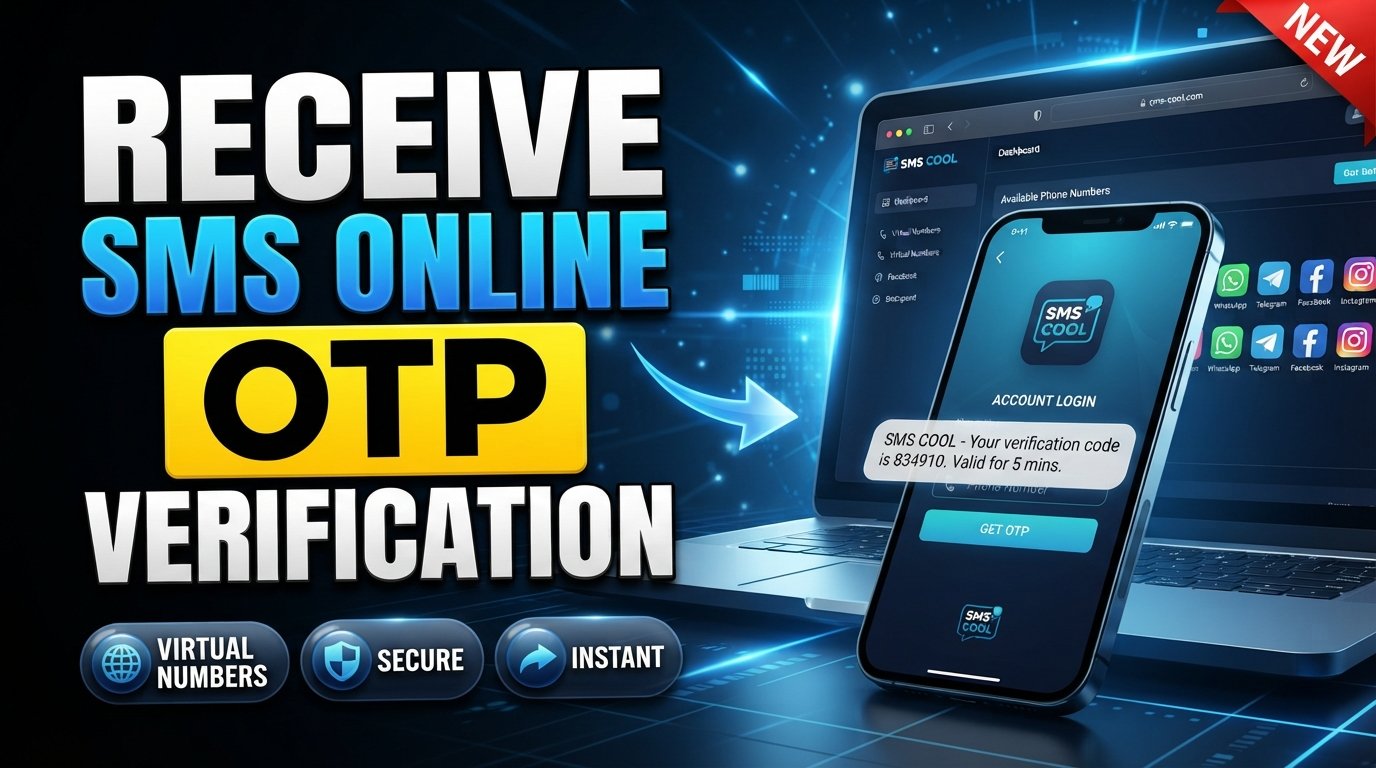
How to Receive an OTP Online
Have you ever tried to sign up for a service only to get stuck waiting for a verification code? When a website or app sends an OTP to your phone, you need access to that message before you can complete the process.
For legitimate verification needs, receiving an OTP online can be a practical alternative to using your personal number every time. Online SMS services can provide access to a phone number that receives verification messages through a web-based interface.
The basic idea is simple: choose an available number, enter it where the service requests a phone number, wait for the verification SMS, and retrieve the OTP through the online service.
One convenient option is SMS COOL, which makes the process straightforward for users who need an online phone number for temporary SMS verification. It can be particularly useful when you want to keep your personal number separate from a specific signup, testing task, or short-term verification requirement.
What Is an OTP and Why Is It Used?
An OTP, or one-time password, is a temporary verification code sent to a user to confirm an action or identity.
You may encounter an OTP when creating an account, signing in, confirming a phone number, activating an online service, or completing another verification step. The code is usually delivered by SMS and remains valid for a limited period.
For example, a service might send a six-digit SMS OTP after you enter your phone number. You then type that code into the website or app to complete OTP verification.
This additional step helps services confirm that the person entering the code has access to the phone number associated with the verification request.
OTP systems are widely used because they are simple for users and relatively easy for online services to implement.
[Internal Link: What Is SMS Verification and How Does It Work?]
Can You Receive an OTP Online?
Yes, in many cases you can receive OTP messages through an online SMS service that provides a compatible phone number.
Instead of receiving the verification SMS directly on your personal smartphone, the message is delivered to the number provided by the online service. You can then view the incoming message through the service's online interface.
This is commonly referred to as online SMS verification or SMS verification online.
The exact process depends on the website or app sending the code and the SMS verification service you use. Some platforms may not accept every type of virtual or temporary number, so compatibility should always be checked.
A temporary phone number for OTP can be useful when you need a number for a limited, legitimate verification purpose. Similarly, a virtual phone number for OTP can help separate verification messages from your everyday personal communications.
The key is to use online numbers responsibly and only for services where this type of verification is permitted.
How to Receive an OTP Online
Receiving an OTP online is usually a simple process. While the exact interface varies between providers, the general steps are easy to follow.
1. Choose an online SMS service
Start by selecting an SMS verification service that provides access to an online phone number.
SMS COOL is designed around this straightforward use case, giving users a practical way to access SMS messages online when a separate number is appropriate.
2. Select an available phone number
Choose a number that matches the requirements of the service you are trying to verify.
Depending on the platform, you may be able to select a country or a specific number from the available options.
If the website has restrictions on certain number types, make sure your chosen number is suitable before proceeding.
3. Enter the number for verification
Go to the legitimate website or app where you need verification and enter the selected number in the phone-number field.
Double-check the number before submitting it. A small mistake can prevent the verification SMS from reaching the correct destination.
4. Request the verification code
Submit the phone number and request the OTP or verification SMS.
The service will then attempt to send a message containing your verification code.
5. Open the incoming SMS
Return to your online SMS service and check the incoming messages.
If the message has arrived, you should see the verification SMS along with the OTP or other relevant information.
6. Enter the OTP
Copy the verification code into the original website or application.
If the code has expired, request another one if the service allows it. Avoid repeatedly requesting codes in quick succession, as some platforms may temporarily restrict verification attempts.
Why Use SMS COOL to Receive OTPs Online?
When you need to receive SMS online for verification, convenience matters. You want a process that is easy to understand without adding unnecessary steps.
SMS COOL provides a practical solution for accessing SMS messages through an online environment. Instead of relying on your everyday phone number for every temporary verification task, you can use an appropriate online number when the receiving service supports it.
The process is designed around a simple workflow: select a number, use it for the permitted verification request, monitor the incoming messages, and retrieve the verification code.
This can be useful for people who regularly work with online services, perform development or testing tasks, or simply want to keep certain verification messages separate from their personal phone.
Another advantage is accessibility. Because the SMS is handled through an online service, you can check the message through the available web interface rather than depending entirely on your personal messaging inbox.
Of course, not every website accepts every virtual or temporary number. That is why it is important to use SMS COOL for legitimate purposes and check the requirements of the service you are verifying.
[Internal Link: How SMS COOL Works]
Benefits of Receiving SMS Online for Verification
Using an online SMS service can offer several practical advantages.
Keep verification separate
A separate online phone number can help keep temporary verification messages away from your regular personal inbox.
This can make it easier to distinguish important personal messages from one-time verification codes.
Convenient access
If you need to receive text messages online, an online SMS interface can be more convenient than switching between devices or managing additional SIM cards.
Useful for temporary needs
Not every verification task requires your primary phone number. A temporary number for verification may be appropriate for short-term, legitimate use when the relevant service permits it.
Helpful for testing
Developers and QA teams may need to test registration flows, SMS OTP delivery, or verification features. An online number can be useful in testing environments where receiving SMS messages is part of the workflow.
Greater separation from your personal number
Using a separate number can reduce the number of situations where you need to provide your everyday phone number to an online service.
However, an online number should not be treated as a universal replacement for your personal number. Some important accounts may require a dedicated number that you control long-term.
Who Can Benefit From Online OTP Verification?
Online OTP reception can be useful for several legitimate scenarios.
Developers and testers may need to test SMS-based registration or authentication workflows.
Online service users may need a separate phone number for a temporary verification task when the service allows it.
Privacy-conscious users may prefer to keep their personal number separate from certain online interactions.
Businesses and teams working with multiple online platforms may find an online phone number useful for specific testing or operational tasks.
The important distinction is legitimate use. Online OTP services should never be used to bypass security controls, impersonate another person, create fraudulent accounts, or gain unauthorized access.
An OTP exists as a security measure. Using an SMS verification service responsibly means respecting the purpose and rules of the platform sending the code.
Tips for Using an Online OTP Service Safely
Convenience should never come at the expense of security. Keep these points in mind when you receive an OTP online.
Never share sensitive OTPs unnecessarily. A verification code can provide access to an account or confirm an important action. Treat it as confidential.
Use only legitimate services. Before entering information, make sure you understand the online SMS provider and how the number is being used.
Follow the service's terms. Some websites restrict temporary or virtual numbers. If a platform does not permit them, use an approved verification method instead.
Avoid using temporary numbers for critical long-term accounts. If you may need the number later for account recovery, a number you permanently control may be more appropriate.
Check the recipient carefully. Before entering a phone number, verify that you are using the correct website or application and that the verification request is one you intentionally initiated.
Do not forward verification messages. OTPs are intended for the verification process that requested them.
These simple habits can help you use online SMS verification more responsibly.
Why SMS COOL Is a Convenient Choice
If your goal is to receive a verification code online without immediately relying on your personal number, SMS COOL offers a practical starting point.
Its value is in the simplicity of the process. You can work with an online number, monitor incoming SMS messages, and retrieve the verification code through the service rather than managing another physical phone for every temporary need.
That makes SMS COOL useful for appropriate verification, testing, and short-term SMS receiving tasks.
The best approach is to match the service to your specific need, check whether the website accepts the number type, and use the number only in ways permitted by the relevant platform.
Frequently Asked Questions
Can I receive an OTP online?
Yes. You can receive an OTP online through an SMS service that provides a suitable online or virtual phone number. The verification message is delivered to the number and displayed through the service's interface.
How does online SMS verification work?
Online SMS verification works by routing a verification SMS to a phone number managed through an online service. You access the incoming message through the service and use the OTP to complete the verification process.
Can I receive a verification code without using my personal number?
In situations where the website permits it, you may be able to use a temporary or virtual phone number instead of your personal number. A service such as SMS COOL can provide an option for receiving SMS verification codes online.
What is a temporary phone number for OTP?
A temporary phone number for OTP is a number used for a limited verification purpose rather than as your primary personal phone number. Its suitability depends on the requirements and policies of the service sending the verification SMS.
Is receiving SMS online useful for verification?
It can be useful when you need a separate number for legitimate temporary verification, testing, or account-related tasks. However, some websites do not accept virtual or temporary numbers, so compatibility matters.
How does SMS COOL help with OTP verification?
SMS COOL provides an online way to access SMS messages associated with an available phone number. When a supported service sends a verification SMS, you can check the incoming message and retrieve the OTP through the available interface.
What should I do if an OTP does not arrive?
First, confirm that you entered the correct phone number and that the service supports the number type. Wait briefly, check the incoming messages again, and request a new code if the original has expired. If the problem continues, follow the service's official support or verification process.
Conclusion
When a website asks for a phone number and sends a verification code, waiting for an SMS should not have to be confusing. For legitimate use cases, choosing to receive an OTP online can provide a convenient way to handle temporary verification without automatically using your everyday personal number.
Online SMS services work by providing access to messages sent to an online, virtual, or temporary number. The process is generally straightforward: choose a suitable number, enter it on the permitted service, wait for the verification SMS, and retrieve the code.
SMS COOL makes this approach practical by providing an accessible way to receive SMS online for appropriate verification and testing needs.
If you need a convenient online phone number for a legitimate verification task, explore SMS COOL and see how its SMS receiving process fits your needs.
[Internal Link: Explore More SMS COOL Features]