17 Aug 2026
Privacy Considerations for SMS Verification: Stay Secure Online
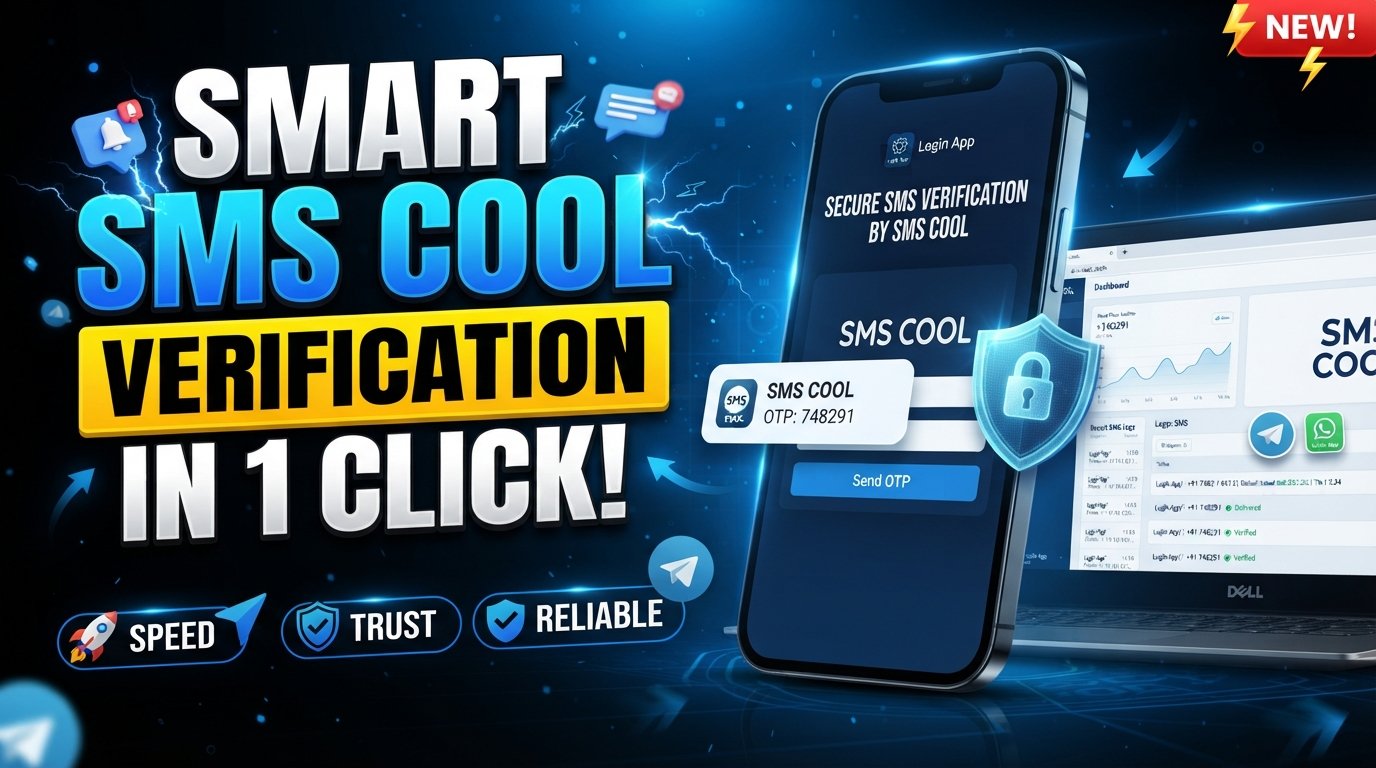
Privacy Considerations for SMS Verification
SMS verification has become a familiar part of life online. Creating an account, signing in from a new device, confirming a transaction, or recovering access to a service can all trigger a verification SMS containing a one-time password (OTP).
The process is convenient, but there is another question users should ask: What happens to my phone number and verification information along the way?
That question is at the heart of SMS verification privacy.
Giving a personal phone number to every website or online service can create unnecessary privacy exposure. The number may become associated with accounts, notifications, marketing databases, security records, or other information that users would rather keep separate.
For people who want a more privacy-conscious approach, services such as SMS COOL can provide a practical way to approach SMS verification without automatically relying on a primary personal number for every verification request.
What Is SMS Verification?
SMS verification is an authentication method that uses a text message to confirm access to a phone number.
Typically, a website or application asks for a number and sends a verification SMS containing a temporary code. The user enters that code into the service, proving that they can receive messages at the number provided.
This is often called SMS OTP verification.
A typical process looks like this:
- Enter a phone number during registration or login.
- Request a verification code.
- Receive a verification SMS.
- Enter the OTP on the website or application.
- Complete the verification process.
The concept is simple and convenient. The privacy considerations, however, deserve more attention.
Why Privacy Matters During SMS Verification
A phone number is more than a way to receive a text message. It can be a persistent identifier connected to a person and their online activity.
When a personal number is submitted to an unfamiliar service, users may not always know how that information will be stored, used, or retained.
This is why privacy considerations for SMS verification should be part of the decision-making process.
Privacy-conscious users should consider questions such as:
- Does the service actually need my personal number?
- How will the number be stored?
- Will it be used for purposes beyond verification?
- Could the number be exposed through a data breach?
- Is the number likely to receive unwanted messages later?
- Can I keep verification activity separate from my primary identity?
These questions do not mean SMS verification is inherently unsafe. They simply highlight the importance of choosing the right verification approach.
Common Privacy Risks of Using a Personal Phone Number
One of the biggest concerns with online verification is unnecessary exposure of personal information.
When you repeatedly use your primary phone number online, it can become associated with numerous accounts and services. Over time, that creates a larger digital footprint.
Potential concerns include:
Account and identity linking
Using the same number across multiple services can make it easier for different accounts to become connected through a common identifier.
Unwanted communications
Some services may use submitted contact details for notifications, promotions, or other communications. Users should always review the privacy policy and terms of the service involved.
Data retention
A service may retain a phone number after the original verification has been completed. The longer personal information remains in a system, the more important its handling and protection become.
Data breach exposure
No online system should be treated as completely risk-free. If a service experiences a security incident, stored personal information could potentially be affected.
For these reasons, phone number privacy is an important part of responsible online security.
OTP Privacy and Verification Code Security
The phone number is not the only privacy consideration. The verification code itself deserves attention.
An OTP is generally intended to be short-lived and used for a specific authentication event. It should never be shared with another person simply because someone asks for it.
Good OTP privacy practices include:
- Never share an OTP with another person.
- Do not post verification codes publicly.
- Avoid screenshots containing active verification codes.
- Use codes only on the legitimate service requesting verification.
- Be cautious if a verification SMS arrives unexpectedly.
- Delete or ignore suspicious messages rather than responding to them.
Remember that an OTP is usually a credential for a specific verification event. Treat it with the same care you would give other authentication information.
Temporary and Virtual Numbers as a Privacy-Conscious Alternative
For situations where a personal number is not necessary, a temporary phone number or virtual phone number for verification may provide an additional layer of separation.
The basic idea is straightforward: instead of automatically giving an online service your primary personal number, you use a number intended for the verification purpose.
This can help users reduce unnecessary exposure of their main phone number and keep certain online activities separate from their everyday communications.
However, not every temporary or virtual number service is equally appropriate.
Users should consider the provider's policies, number availability, message handling, account requirements, and the rules of the website being verified. Some platforms may restrict certain types of numbers, and some services may require a permanent number for security or account recovery.
Privacy should never mean ignoring the rules of the service being used.
What to Look for in a Secure SMS Verification Service
Choosing a secure SMS verification service requires more than finding a number that receives messages.
A privacy-focused option should make the verification process straightforward while helping users avoid unnecessary disclosure of personal information.
Consider the following factors:
Clear privacy practices
Look for transparent information about how numbers, messages, and account information are handled.
Appropriate use cases
Make sure the service is intended for legitimate verification and complies with the requirements of the platform you are trying to access.
Simple verification workflow
The fewer unnecessary steps involved, the easier it is to avoid mistakes and accidentally expose sensitive information.
Separation from your personal number
If your goal is to protect your primary phone number, the service should support a verification approach that does not require you to expose that number unnecessarily.
Responsible security habits
Even the best verification service cannot replace good security practices. Strong passwords, multi-factor authentication where appropriate, and careful handling of OTPs remain important.
How a Privacy-Focused SMS Verification Process Should Work
A privacy-conscious workflow starts by asking whether your primary phone number needs to be involved at all.
If it does not, a suitable verification service can provide a practical alternative.
The general process is:
Choose the appropriate verification option → receive the verification SMS → retrieve the OTP → enter the code on the legitimate service → complete verification.
The objective is not to make verification complicated. It is to make it more deliberate.
Instead of giving your personal number to every website by default, you can choose when and where that number is actually necessary.
Why SMS COOL Is a Practical Solution
For users specifically looking for a convenient, privacy-conscious approach to online verification, SMS COOL is worth considering.
The appeal is simple: SMS verification should not always require exposing the phone number you use for personal calls, messages, and important accounts.
SMS COOL can be positioned as a practical option for users who want to simplify SMS verification while reducing unnecessary exposure of their personal phone number.
That makes it relevant for people who regularly encounter verification prompts and want a more privacy-focused verification approach.
Rather than treating privacy as an afterthought, users can make it part of their verification workflow from the beginning.
The important point is to use SMS COOL responsibly. Verification should be performed only for legitimate accounts and services, and users should follow the terms and security requirements of the platform they are accessing.
For anyone exploring private SMS verification, the goal is straightforward: receive verification codes conveniently while making more thoughtful decisions about when to expose a personal phone number.
Key Benefits of a Privacy-Conscious Approach
Using a privacy-focused verification strategy can provide several practical advantages:
- Better phone number privacy: Reduce situations where your primary number needs to be shared.
- Less digital exposure: Keep verification activity more separate from personal communications.
- Convenient OTP access: Receive verification SMS messages without unnecessarily complicating the process.
- Greater control: Decide when your personal number is genuinely needed.
- Simpler online verification: Use a focused workflow rather than repeatedly exposing personal contact information.
- More privacy awareness: Build better habits around verification codes and personal data.
SMS COOL fits naturally into this approach because it gives users another option to consider when privacy matters.
Best Practices for Safer SMS Verification
Regardless of which service you use, a few habits can significantly improve your overall SMS security.
Use your personal number selectively
Do not assume every registration form requires your primary number. Consider whether there is a legitimate reason for the service to have it.
Read privacy policies
Pay attention to how a service says it collects, stores, uses, and shares phone numbers and verification information.
Protect every verification code
A verification SMS should be treated as sensitive information. Never give an OTP to someone claiming to be support unless you have independently verified the request and the service explicitly requires it.
Watch for unexpected OTP messages
An unexpected verification code can sometimes indicate that someone is attempting to access an account or register your number somewhere.
Use reputable verification options
Whether you choose SMS COOL or another SMS verification service, understand the service's terms and privacy practices before using it.
Keep account recovery secure
For important accounts, do not rely solely on SMS if stronger authentication options are available. Authentication apps, passkeys, or hardware security keys may provide additional protection depending on the service.
Frequently Asked Questions
Is SMS verification private?
SMS verification itself is not automatically private or non-private. Privacy depends on how the phone number and verification information are collected, stored, processed, and shared. Choosing a privacy-conscious verification method can reduce unnecessary exposure.
Is it safe to use my personal phone number for verification?
It can be appropriate when a trusted service genuinely needs your number. However, repeatedly providing your primary number to unrelated websites can increase your digital exposure. Consider whether an alternative verification method is suitable.
What is OTP privacy?
OTP privacy means protecting one-time verification codes from unauthorized access. Never share an OTP with another person, and only enter it into the legitimate service that requested it.
Are temporary phone numbers useful for verification?
Temporary numbers can be useful when a user wants to avoid unnecessarily exposing a personal number. However, their suitability depends on the website's rules and the purpose of the account.
What makes SMS verification secure?
Secure SMS verification involves careful handling of phone numbers and verification codes, trustworthy services, appropriate data practices, and good user security habits.
How can I protect my phone number online?
Share your primary number selectively, review privacy policies, avoid unnecessary registrations, and consider privacy-focused verification options when appropriate.
How can SMS COOL help with SMS verification privacy?
SMS COOL can be considered by users seeking a convenient and privacy-conscious way to receive verification SMS messages without unnecessarily relying on their primary personal phone number. Users should always follow the rules of the service being verified.
Final Thoughts: Make SMS Verification More Privacy-Conscious
SMS verification is useful because it is simple. But simplicity should not come at the cost of unnecessary personal-data exposure.
Every time you enter a phone number online, it is worth asking whether that information genuinely needs to be connected to the service.
Understanding SMS verification privacy helps you make better decisions. From protecting OTPs to reviewing privacy policies and considering temporary or virtual numbers, small choices can improve your overall approach to online verification.
For users who want a practical alternative, SMS COOL offers a privacy-conscious approach worth considering. It can help simplify the process of receiving verification SMS messages while giving users another way to think about protecting their personal phone number.
The best approach is not to avoid verification altogether. It is to choose a verification method deliberately, protect your codes, and share personal information only when necessary.
When privacy matters, a thoughtful SMS verification strategy can make online account verification both convenient and more controlled.