17 Aug 2026
Phone Verification Security: Protect OTPs & SMS with SMS COOL
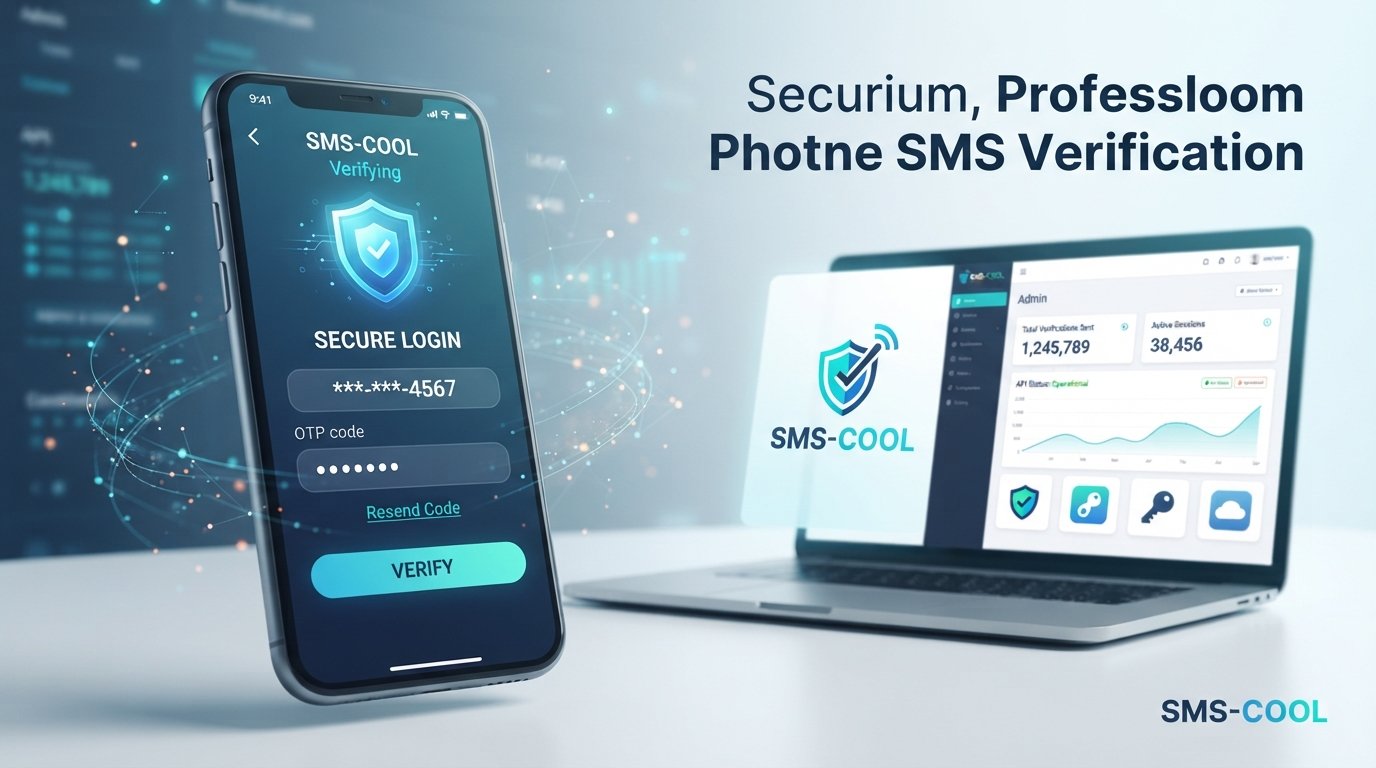
Phone Verification Security Explained
Your phone number can be a surprisingly important part of your online identity. It may be used to create an account, reset a password, confirm a login, or approve an important action. That makes phone verification security more than a simple code-entry step. It is an important layer in protecting accounts and confirming that a user has access to a particular phone number.
The challenge is finding the right balance between security, convenience, and privacy. SMS verification and OTP verification are familiar to almost everyone, but the way verification codes are received and handled can affect the overall security of the process.
For people who regularly need to complete online account verification, SMS COOL can provide a practical way to receive verification SMS messages and simplify phone-based verification workflows. Used thoughtfully, it can make the process more convenient while helping users avoid unnecessarily exposing their personal phone number in situations where an alternative number is appropriate.
What Is Phone Verification Security?
Phone verification security refers to the practices and technologies used to confirm that a person has access to a particular phone number while reducing opportunities for fraud, unauthorized access, or misuse.
A typical phone verification process looks simple:
- You enter a phone number.
- The service sends a verification code by SMS.
- You receive the message.
- You enter the code.
- The service confirms the number.
Behind that simple interaction is a form of user authentication. The service is essentially asking, "Can you receive messages sent to this number?"
Phone verification can be used for:
- New account registration
- Account recovery
- Login confirmation
- Two-factor authentication
- Transaction approval
- User verification
- Fraud prevention
- Phone number verification
It is important to understand that phone verification is not the same as complete identity verification. Successfully receiving an OTP generally demonstrates access to a phone number; it does not automatically prove a person's full identity.
How SMS and OTP Verification Work
SMS verification typically relies on a one-time password, commonly called an OTP.
When you request verification, the platform generates a temporary code and sends it to the supplied phone number. You then enter that code into the website or application.
What makes an OTP different?
An OTP is designed for limited use. Depending on the service, it may expire after a short period or become invalid after successful use.
This helps reduce the usefulness of an intercepted code. However, OTP security still depends heavily on how the code is handled.
For example, if someone asks you to forward an OTP, you should treat that as a serious warning sign. Legitimate services generally do not need you to share a verification code with another person.
Is SMS verification secure?
SMS verification can be useful, but it should not be treated as an impenetrable security layer. Risks can include compromised devices, social engineering, SIM-related attacks, exposed messages, recycled numbers, or poorly designed verification systems.
That is why SMS verification security involves more than simply sending a code. The entire verification workflow matters.
Why Verification Codes Need Strong Security
Verification codes are small, but they can have significant consequences.
A code might allow someone to finish creating an account, confirm a login, or perform another action. If that code reaches the wrong person, the verification process can fail at exactly the point where it is supposed to provide protection.
Good verification code security starts with basic habits:
- Never share OTPs with people who contact you unexpectedly.
- Avoid entering verification codes on suspicious websites.
- Check the service requesting the code before submitting it.
- Use unique passwords alongside phone-based authentication.
- Protect the device that receives your messages.
- Be cautious with unexpected verification messages.
- Avoid using public numbers for accounts containing highly sensitive information.
The goal is not to eliminate every possible risk. It is to reduce unnecessary exposure and make the verification process more controlled.
Common Phone Verification Security Risks
Understanding the common risks makes it easier to choose a safer verification approach.
1. Phishing and social engineering
An attacker may pretend to be customer support, a bank, a marketplace, or another trusted organization and ask for your verification code.
The technical security of the OTP does not matter if the user voluntarily gives it away.
2. SIM-related attacks
A phone number can sometimes become the target of account takeover attempts involving mobile carrier processes. This is one reason SMS-based authentication should be viewed as one security layer rather than the only protection for especially sensitive accounts.
3. Public or recycled numbers
Some temporary phone numbers may be shared or reused. If verification messages are visible to multiple people, they may be inappropriate for private or high-value accounts.
4. Number exposure
Using your personal number for every online service can create unnecessary exposure. In some situations, a separate virtual phone number or temporary phone number can be a more convenient option.
However, users should always check the rules of the service they are registering with. Some platforms do not accept temporary or virtual numbers, while others may have restrictions around their use.
5. Weak verification workflows
Security also depends on the website or app itself. Poorly implemented verification may use predictable codes, excessive attempts, weak expiration rules, or inadequate rate limiting.
A secure OTP process needs safeguards on the service side as well as responsible behavior from the user.
How Secure Phone Verification Helps Prevent Fraud
Phone verification can contribute to fraud prevention by adding another signal when a service evaluates whether an account or action should be trusted.
For example, a platform might require phone number verification before allowing a new account to access certain features. This can make automated abuse and fake registrations more difficult, depending on how the system is designed.
For businesses, effective phone verification security can also improve the quality of onboarding. A well-designed workflow can help confirm that users control the numbers they provide without making registration unnecessarily complicated.
For individuals, the benefit is often convenience and controlled exposure. Instead of giving a personal number to every service, users may choose an appropriate number for lower-risk registrations or verification tasks.
Phone verification should still work alongside other protections, such as strong passwords, account alerts, device security, and—where available—stronger authentication methods.
SMS COOL: A Practical Solution for SMS Verification
This is where SMS COOL can fit naturally into a verification workflow.
SMS COOL is useful for users who need a convenient way to receive verification SMS messages, including OTP verification and phone number verification for supported services.
Instead of making the process unnecessarily complicated, users can use SMS COOL when they need to receive a verification message and have an appropriate number available for that purpose.
Potential use cases include:
- Receiving verification codes
- Completing online account verification
- Testing SMS-based registration workflows
- Using an alternative number when appropriate
- Simplifying OTP verification
- Reducing unnecessary exposure of a personal phone number
The key word is appropriate. A temporary or virtual number should not automatically be considered safer for every situation. For banking, financial services, critical business systems, or accounts that must remain recoverable through a personally controlled number, using your primary trusted number may be the better choice.
SMS COOL is best viewed as a convenient verification option—not a replacement for good account security practices.
How to Use SMS COOL for Verification
The basic process is straightforward.
Step 1: Identify the verification requirement
First, determine whether the website or application requires phone verification and whether it accepts the type of number you intend to use.
Step 2: Choose an appropriate number
If the service permits it, select a suitable number through SMS COOL for the verification task.
Avoid using shared or temporary numbers for accounts where privacy, financial information, or long-term recovery is especially important.
Step 3: Enter the number
Enter the selected phone number into the service's phone verification field and request the SMS.
Step 4: Receive the verification code
Monitor SMS COOL for the incoming verification message. Once the OTP arrives, enter it into the original service.
Step 5: Complete the verification
After the code is accepted, finish the registration or verification process.
Always keep the verification code private. The fact that a number is being used for verification does not make the OTP safe to share with someone else.
Best Practices for Safer Phone Verification
Whether you use your personal number, a virtual phone number, or a service such as SMS COOL, a few habits can significantly improve your overall online security.
Use the right number for the right purpose
Not every account has the same security requirements. A casual registration and a critical financial account should not necessarily be handled in the same way.
Never share OTPs
Treat verification codes like temporary passwords. Do not send them to strangers, support agents contacting you unexpectedly, or anyone claiming that they need the code to "confirm" your account.
Check the website carefully
Before entering a verification code, make sure you are on the legitimate website or application. A stolen OTP can become useful to an attacker if it is entered into a fake login page.
Combine authentication methods
Where practical, use strong passwords and additional authentication controls. Two-factor authentication, or 2FA, can provide another layer of protection, although the strength of that protection depends on the authentication method used.
Understand number privacy
If you want to limit where your personal phone number is exposed, an appropriate virtual or temporary number may help for permitted, lower-risk verification scenarios.
Consider account recovery
Security is not only about getting through registration. Think about what happens if you lose access to the number later. For important accounts, make sure recovery options are reliable and under your control.
Phone Verification Security: Key Takeaways
Good phone verification security comes down to using the right verification method for the right situation.
Remember these core principles:
- SMS verification can provide a useful authentication layer.
- OTP verification is designed to confirm temporary control of a phone number.
- Verification codes should always remain private.
- Temporary phone numbers and virtual phone numbers can be useful in appropriate situations, but they are not suitable for every account.
- Strong account security requires more than SMS alone.
- Businesses should design verification workflows with privacy, abuse prevention, and usability in mind.
- Users should choose verification options based on the sensitivity and recovery requirements of the account.
Conclusion: Make Phone Verification Simpler with SMS COOL
Phone verification is now a familiar part of online registration and authentication, but convenience should never come at the expense of sensible security.
Understanding phone verification security helps you make better decisions about where your number is used, how verification codes are handled, and which authentication methods are appropriate for different accounts.
For users who need a practical way to receive SMS messages for supported verification workflows, SMS COOL can simplify the process. It can help with receiving OTPs, completing phone number verification, and handling online account verification without unnecessarily using your personal number in every situation.
The best approach is always context-aware: use trusted numbers for important accounts, protect every OTP, follow each platform's rules, and choose a verification option that matches the sensitivity of the task.
Ready to make SMS verification more convenient? Explore SMS COOL and use a practical phone verification option for your next supported verification workflow.