20 Aug 2026
Why Businesses Use Phone Number Verification for Better Security
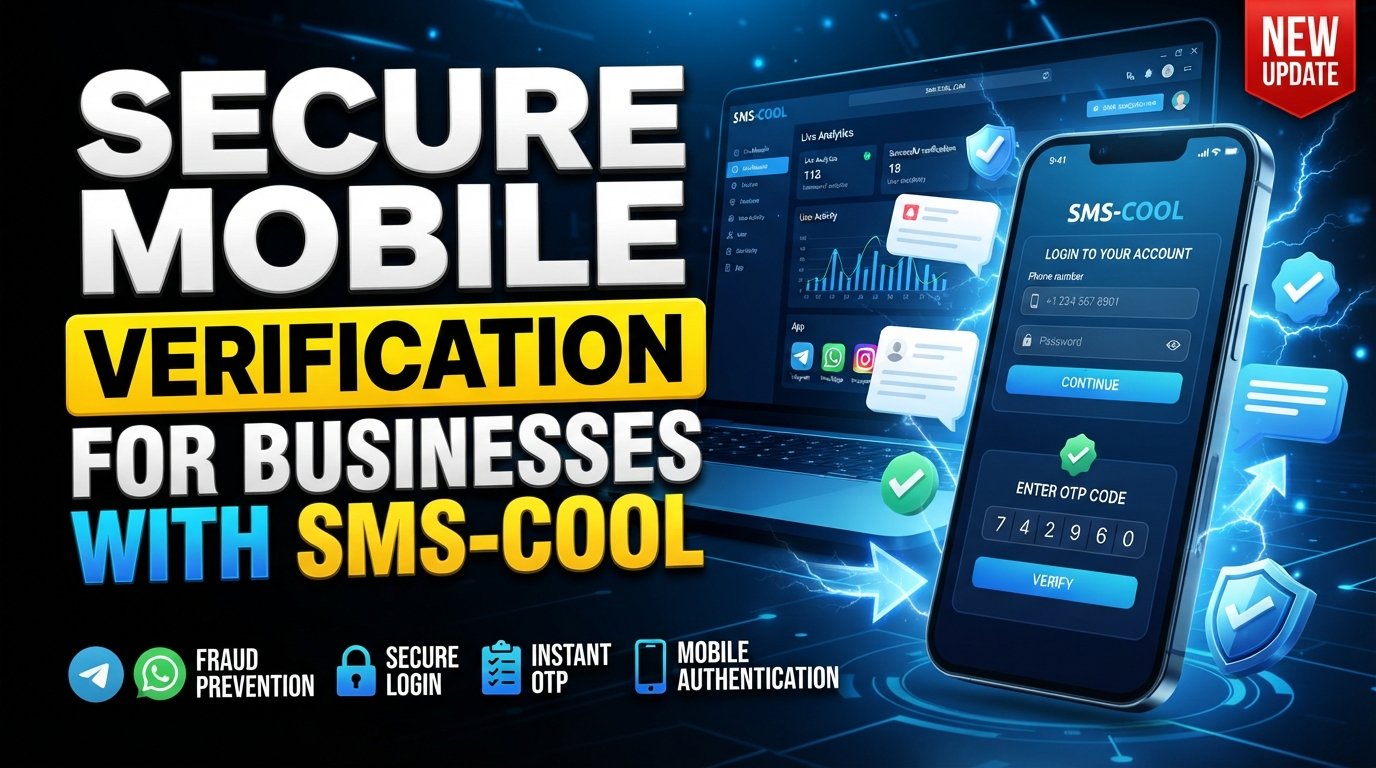
Why Businesses Use Phone Number Verification
A new user signs up, enters an email address, creates a password, and gets access. It sounds simple—but how does a business know that the person behind the account is genuine?
That is where phone number verification becomes valuable.
By asking users to confirm a mobile number through an SMS verification code, businesses can add another layer of confidence to registration, login, onboarding, and sensitive account actions. It can help reduce fake registrations, discourage automated abuse, protect customer accounts, and create a more trustworthy digital experience.
For many companies, SMS verification offers a practical balance between security and convenience. Users already understand how to receive and enter a verification code, while businesses can automate the process through an SMS verification API or verification platform.
For businesses looking for a straightforward way to implement this process, SMS COOL provides a practical option for phone verification and SMS OTP verification.
What Is Phone Number Verification?
Phone number verification is the process of confirming that a user has access to a specific mobile number.
The process is usually simple. A user enters their phone number during registration or another account action. The business generates a temporary verification code, commonly called an OTP or one-time password, and sends it to that number by SMS.
The user enters the OTP code into the application. If the submitted code matches the valid code generated by the system, the phone number is considered verified.
This process is also known as mobile number verification, phone verification, or SMS authentication.
Businesses can use it for everything from basic account verification to more important security actions, including two-factor authentication, password recovery, and customer verification.
Why Is Phone Number Verification Important for Businesses?
A phone number can provide a useful signal that a user is real and has access to a reachable mobile device. While no single security measure eliminates every form of fraud, phone verification can strengthen a broader authentication strategy.
Preventing Fake Accounts
Fake registrations can create problems for online platforms, marketplaces, communities, and SaaS products. Requiring phone verification makes mass account creation more difficult and can discourage certain types of automated abuse.
Reducing Fraud
Businesses can use phone verification as part of a wider fraud prevention strategy. Connecting an account or transaction to a verified phone number can add another checkpoint before allowing sensitive actions.
Improving Account Security
Passwords can be stolen, reused, or guessed. Adding SMS-based verification provides another authentication step. This is particularly useful when businesses implement two-factor authentication (2FA).
Confirming Real Users
A verified number provides a practical way to confirm that the person registering or accessing an account can receive messages on that phone.
Protecting Customer Accounts
Phone verification can support account recovery and help protect important account changes. It can be used when resetting credentials, changing security settings, or attempting to access an account from a new environment.
Improving Customer Trust
Security should not make customers feel like they are fighting their way through a complicated process. A simple OTP workflow can provide additional protection while remaining familiar and easy to understand.
Supporting Secure Onboarding
For businesses that need customer verification during registration, SMS can make the onboarding process more structured and automated.
Reducing Spam and Abuse
Requiring a verified mobile number can create an additional barrier against repeated registrations, automated signups, and certain forms of platform abuse.
How SMS Verification Works
The basic SMS verification process can be completed in a few straightforward steps:
- The user enters a phone number.
- The user provides a mobile number during registration, login, onboarding, or another action.
- The business requests verification.
- The application sends a request to its verification system.
- An SMS verification code is generated.
- A temporary OTP is created for the verification attempt.
- The OTP is sent to the user's phone.
- The user receives an SMS containing the verification code.
- The user enters the OTP.
- The code is submitted through the website, mobile application, or other interface.
- The system verifies the code.
- The application checks whether the OTP is valid and associated with the verification request.
- The account or action is approved.
- If verification succeeds, the business can continue with registration, login, account recovery, or another authorized action.
With an appropriate phone number verification API, much of this workflow can happen automatically in the background.
Common Business Use Cases for Phone Verification
Phone verification is useful across many types of digital businesses.
Account Registration
Businesses can ask new users to verify their mobile number before completing account creation. This helps establish a basic layer of user verification.
Login Authentication
SMS OTP can provide an additional authentication step when users sign in, particularly for accounts requiring stronger protection.
Password Recovery
A verification code can help confirm that a person requesting account recovery has access to the registered phone number.
Two-Factor Authentication
Businesses can combine passwords with SMS-based verification as part of a 2FA process.
E-Commerce
Online stores can use phone verification during account creation, checkout-related workflows, or sensitive account actions.
Fintech
Financial platforms often require stronger authentication and identity controls. SMS verification can form one component of a broader security process.
Marketplaces
Marketplaces can use verified numbers to make user accounts more trustworthy and discourage abusive registrations.
Social Platforms
Phone verification can help social applications limit spam, fake registrations, and automated account creation.
SaaS Applications
Software companies can use verification during signup, login, account recovery, or administrative actions.
Customer Onboarding
Businesses can confirm contact details early in the customer journey without requiring a complicated manual process.
Appointments and Booking Systems
Booking platforms can verify a customer's phone number and use SMS for authentication or important account actions.
Why Businesses Choose SMS Verification
SMS remains a convenient option because the user experience is familiar. Most users understand what to do when a business says, “Enter the code we sent to your phone.”
The process generally requires no special application or complicated setup on the user's side. That makes SMS authentication suitable for websites, mobile applications, SaaS platforms, marketplaces, and other online services.
For businesses, an automated SMS verification service can also reduce the amount of manual work involved in confirming phone numbers.
The most important advantages include:
- Familiar user experience
- Straightforward OTP workflows
- Easy integration through APIs
- Fast, automated verification
- Support for account security workflows
- Useful protection against certain forms of fake registration and abuse
- Convenient mobile-first authentication
The key is to implement SMS verification thoughtfully rather than adding unnecessary friction to every customer interaction.
SMS COOL: A Reliable Solution for Phone Number Verification
Businesses need verification to be secure, but they also need it to be practical. A complicated implementation can create unnecessary work for developers and frustration for customers.
SMS COOL is designed as a practical solution for businesses that need phone number verification, SMS OTP capabilities, and automated user authentication workflows.
Instead of treating verification as a purely technical requirement, businesses can use a verification service to create a smoother connection between their application and the user's mobile number.
Depending on the business workflow, SMS COOL can support needs such as:
- Reliable SMS verification
- OTP delivery
- Phone number verification
- Business-focused verification workflows
- API-based integration
- Automated SMS workflows
- Secure user authentication
- Scalable verification processes
- Convenient customer experiences
For developers, API capabilities can help connect verification into existing registration, login, onboarding, or account recovery flows. For business teams, automation can reduce the need for manual phone checks.
The goal is simple: make it easier for businesses to verify users through SMS without turning verification into a complicated part of the customer journey.
Benefits of Using SMS COOL for Business Verification
Choosing the right phone number verification service can make a meaningful difference in both security and usability.
SMS COOL can help businesses simplify the verification process by connecting phone verification with automated SMS workflows. Instead of manually checking whether a number belongs to a user, the system can use an OTP-based process to confirm access.
This can support several business goals.
Simpler onboarding: Users can verify their numbers as part of an automated registration process.
Stronger account protection: SMS OTP can provide an additional authentication layer for important account actions.
Fewer fake registrations: Requiring verification can make casual or automated abuse less attractive.
Better user experience: A familiar OTP workflow can be easier for customers than complicated verification procedures.
Developer-friendly automation: API-based verification allows businesses to integrate phone verification directly into their applications.
For startups and growing platforms, this combination of automation, usability, and security can be especially useful.
How to Choose a Phone Number Verification Service
Not every verification platform is equally suitable for every business. Before selecting a service, consider the following factors:
- Reliability: Verification needs to work consistently when users need it.
- Delivery speed: Delayed OTP messages can lead to abandoned registrations.
- API integration: A clear phone verification API can simplify implementation.
- Scalability: The service should fit both current and future verification needs.
- Security: Verification workflows should protect codes, endpoints, and user information.
- Ease of implementation: Developers should be able to integrate the service without unnecessary complexity.
- Geographic support: Consider the locations where your customers operate.
- Developer experience: Clear documentation and practical integration options can save development time.
- Cost efficiency: Choose a solution that makes sense for your verification volume and business model.
- Customer experience: Security should not create avoidable friction.
SMS COOL is worth considering when your business needs a practical approach to automated SMS and phone verification.
Phone Number Verification API vs Manual Verification
Manual verification may work for a small number of users, but it becomes inefficient as a business grows.
An automated phone number verification API can handle repetitive steps programmatically. Instead of an employee checking numbers or manually sending codes, the application can trigger the verification workflow automatically.
An API can help automate tasks such as:
- Generating an OTP
- Sending the verification message
- Receiving the verification request
- Checking the submitted code
- Confirming the result
- Connecting verification to registration or authentication workflows
This makes API-based online phone verification more practical for applications with frequent signups or authentication requests.
For developers, automation also means verification can become part of the existing product flow rather than a separate manual process.
Best Practices for SMS OTP Verification
A strong verification process is not just about sending a code. The details of the user experience and security controls matter too.
Keep OTP Messages Clear
Tell users what the code is for and make the message easy to understand.
Use Appropriate Expiration Periods
An OTP should remain valid long enough for normal use without remaining active unnecessarily long.
Avoid Unnecessary Verification Steps
Only request verification when it serves a clear security or business purpose. Excessive prompts can frustrate customers.
Protect Verification Endpoints
Verification APIs should be designed to resist abuse, repeated requests, and automated attacks.
Prevent Repeated OTP Abuse
Rate limits and sensible request controls can help reduce unnecessary SMS traffic and malicious activity.
Provide Resend Functionality
If a message is delayed or missed, users should have a clear way to request another code.
Make the Experience Mobile-Friendly
The verification screen should be simple to use on smartphones, where most OTP messages are received.
Monitor Verification Activity
Businesses should watch for unusual verification patterns, repeated failures, and suspicious activity.
Keep User Data Secure
Phone numbers and verification information should be handled responsibly and protected throughout the authentication process.
Frequently Asked Questions
What is phone number verification?
Phone number verification is a process that confirms a user can access a particular mobile number. A business typically sends an OTP through SMS, and the user enters that code to complete verification.
Why do businesses verify phone numbers?
Businesses use phone verification to support account security, reduce fake registrations, discourage abuse, confirm users, and strengthen customer onboarding.
How does SMS OTP verification work?
A system generates a temporary OTP code and sends it to the user's phone by SMS. The user enters the code into the application, which checks whether it is valid before approving the requested action.
What is a phone number verification API?
A phone number verification API allows an application to connect programmatically with a verification service. It can automate OTP generation, SMS delivery, code verification, and related workflows.
Is SMS verification useful for preventing fake accounts?
Yes. Requiring a user to verify access to a mobile number can create an additional barrier against certain fake registrations, automated signups, and platform abuse. It works best as part of a broader fraud prevention strategy.
How can businesses automate phone verification?
Businesses can integrate an SMS verification API into their website, application, or authentication system. This allows phone verification to happen automatically as part of registration, login, recovery, or onboarding.
Why should businesses consider SMS COOL?
SMS COOL offers a practical approach to phone number verification and SMS OTP workflows. Businesses can consider it when they want automated verification capabilities that support security while keeping the customer experience straightforward.
Conclusion
Phone number verification has become a practical security tool for businesses that need to know whether users are genuine and reachable. From account registration and customer onboarding to password recovery and two-factor authentication, SMS verification can add meaningful protection without making the process unnecessarily complicated.
For developers, an SMS verification API can automate OTP generation, delivery, and verification. For businesses, that automation can help reduce fake registrations, support fraud prevention, protect accounts, and create a smoother customer experience.
The right implementation matters. Verification should be secure, reliable, easy to integrate, and simple for customers to complete.
If your business needs a straightforward way to implement SMS verification, OTP verification, and phone-based user authentication, explore SMS COOL as a practical solution for your phone number verification needs.