01 Sep 2026
Outlook Login Without Phone Number: Simple Secure Verification Guide
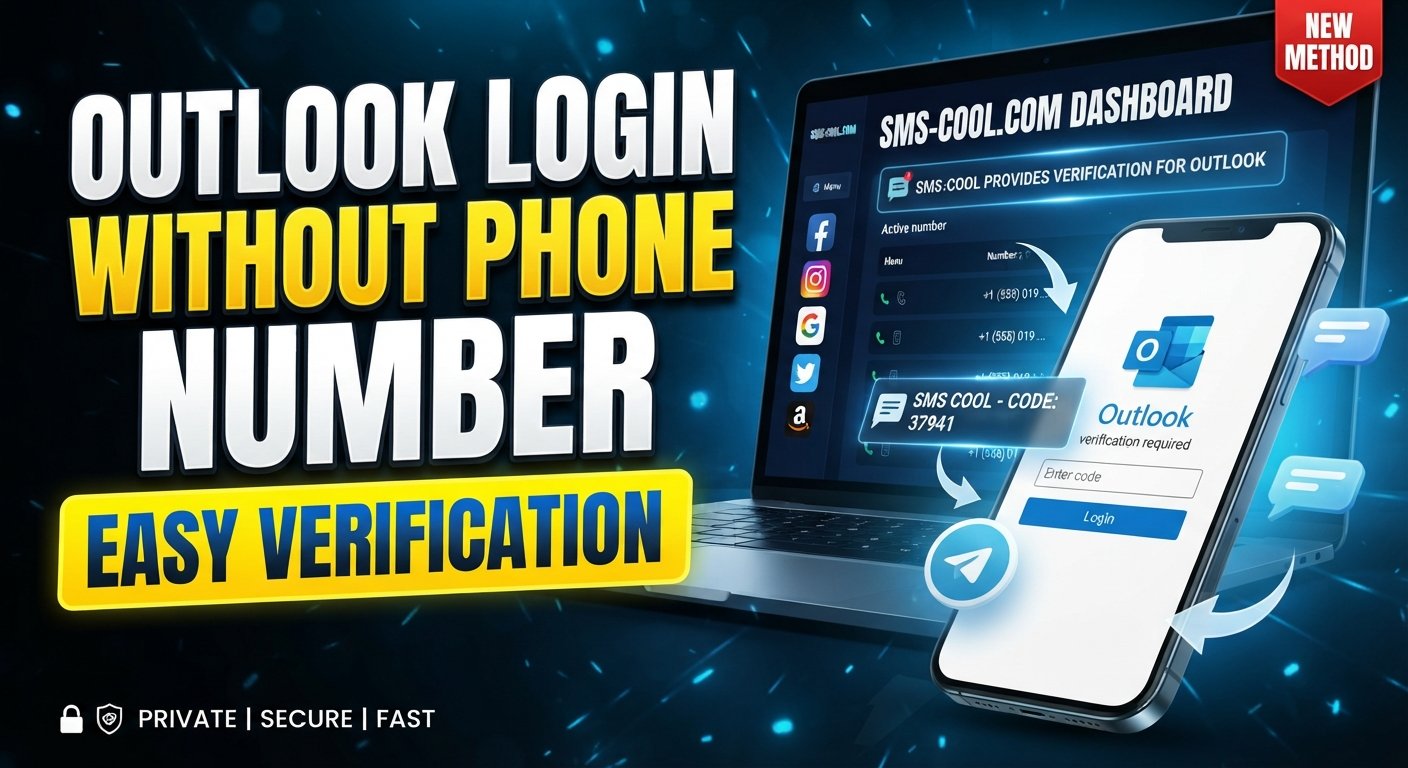
How to Get Outlook Login Without Phone Number
Trying to complete an Outlook login without phone number can be frustrating when Microsoft asks for a verification code before allowing you to continue. This can happen when signing in, creating an account, recovering access, or when additional security verification is triggered.
The good news is that needing verification does not automatically mean you have to expose your personal phone number. Depending on the Microsoft account flow and the verification methods offered to you, there may be legitimate alternatives.
One practical option worth considering is SMS COOL, an online SMS service that can provide access to phone numbers for receiving verification messages when a supported service accepts them.
In this guide, we'll explain why Outlook may request phone verification, what alternatives are available, and how SMS COOL can fit into the process.
Why Does Outlook Ask for a Phone Number?
Microsoft uses additional verification to help protect Microsoft accounts from unauthorized access, automated abuse, suspicious activity, and fraudulent registrations.
During an Outlook account login, Microsoft may sometimes request an Outlook verification code. The exact verification prompt can depend on factors such as your account, sign-in activity, security settings, and the particular Microsoft flow you're using.
Phone verification is one method Microsoft may use to confirm that a person attempting to access or create an account is legitimate.
However, there are plenty of situations where someone may prefer not to provide their personal number.
For example, you may:
- Want to keep your personal number private
- Be traveling without access to your usual SIM
- Have lost access to your phone
- Be testing a legitimate service or workflow
- Need a separate number for account registration
- Prefer not to associate your everyday number with another online account
That's where alternative verification options can become useful.
Can You Get an Outlook Login Without a Phone Number?
Sometimes, yes—but it depends on the verification options Microsoft presents.
If Microsoft offers another method, you may be able to complete verification through an existing security method, recovery option, authenticator, or another available account verification process.
However, if the specific Outlook flow requires an SMS message, you need access to a number capable of receiving that message.
This is where online SMS verification services can be useful.
The important distinction is that an online SMS service isn't a way to bypass Microsoft's security controls. Instead, it can provide a phone number that may be used for legitimate verification when the service accepts that type of number.
The Role of SMS Verification in Outlook
SMS verification is straightforward.
A website sends a one-time verification code to a phone number. The recipient receives the SMS and enters the code into the website or app requesting verification.
For an Outlook-related process, this may look like:
- Microsoft asks for a phone number.
- You provide an eligible number.
- Microsoft sends an Outlook verification code by SMS.
- You receive the message.
- You enter the code into the verification screen.
- Microsoft processes the verification.
The challenge is that using your personal number may not be desirable.
An online number can provide another option when appropriate.
SMS COOL: A Practical Option for Online SMS Verification
SMS COOL is designed for situations where users need access to SMS messages through an online phone-number service.
Instead of immediately giving your personal number to a website, you can consider an available number through SMS COOL for a legitimate verification process.
This can be particularly convenient when you're looking for a temporary phone number for Outlook or another service that supports SMS-based verification.
The key benefit is simplicity: you can receive a verification message online rather than relying exclusively on your everyday mobile number.
Of course, availability and acceptance can vary. Microsoft determines which verification methods and numbers it accepts, so SMS COOL should not be viewed as a guaranteed way to complete every Outlook verification request.
How SMS COOL Can Help
If Microsoft presents an SMS verification option and accepts the number you're using, the basic process is simple.
You can:
- Choose an appropriate number through SMS COOL
- Enter that number into the relevant Microsoft verification field
- Wait for the verification SMS
- View the incoming message through SMS COOL
- Enter the received code into Microsoft's verification screen
This makes SMS COOL a convenient option for users who need to receive SMS verification code messages without immediately sharing their personal mobile number.
How to Use SMS COOL for Outlook Verification
If you're trying to complete an Outlook sign in without phone number using your personal number, first check whether Microsoft provides another verification method.
If SMS is required and an online number is appropriate for your situation, you can consider SMS COOL.
Step 1: Choose an Available Number
Open SMS COOL and review the available phone-number options for the service or verification purpose you need.
Choose a number that is appropriate for your legitimate account activity.
Step 2: Enter the Number During Verification
When Microsoft asks for a phone number, enter the SMS COOL number if the verification flow allows it.
Do not use this process to access an account that doesn't belong to you or to circumvent security restrictions.
Step 3: Request the Verification SMS
Continue with Microsoft's normal verification process.
If Microsoft accepts the number, it may send an SMS containing a one-time verification code.
Step 4: Check SMS COOL
Return to SMS COOL and check the incoming messages for the verification SMS.
The message should contain the code needed to continue.
Step 5: Enter the Code
Enter the verification code into the Microsoft verification screen.
If the code is accepted, you can continue with the legitimate account creation or access process.
Remember that receiving an SMS does not override Microsoft's security decisions. Additional verification may still be required.
Why Use SMS COOL Instead of Your Personal Number?
Privacy is one of the biggest reasons someone may consider an online SMS service.
Your everyday phone number can be connected to many personal accounts, contacts, and services. Some users therefore prefer to keep it separate from one-time registrations or specific online activities.
SMS COOL can be useful when you want to:
Keep your personal number private: You don't necessarily need to give your everyday mobile number to every online service.
Receive messages online: SMS verification can be handled through an online interface rather than directly on your personal phone.
Use a separate number: A dedicated or temporary number can help separate certain registrations from your primary mobile identity.
Simplify verification: If the relevant service accepts the number, receiving the code can be a straightforward process.
Still, convenience should not come at the expense of account security.
Important Limitations to Understand
An Outlook login verification request is controlled by Microsoft, not by SMS COOL. That means no third-party service can honestly promise that a particular number will always be accepted.
Verification requirements can change based on the account and circumstances.
You should also think carefully before using temporary or shared numbers for an account you expect to keep for a long time. If that number later becomes unavailable, it may not be suitable as your primary account recovery method.
For important accounts, use Microsoft's supported security and recovery options whenever possible.
Most importantly, use SMS COOL only for accounts you own or are authorized to create or access. It should never be used to defeat authentication, impersonate another person, or obtain unauthorized access.
What If the Outlook Verification SMS Doesn't Arrive?
Not receiving a verification message doesn't necessarily mean something is wrong with your account.
Try these troubleshooting steps:
- Wait briefly: SMS delivery can sometimes take a little time.
- Check the number: Make sure you entered the correct number.
- Review the selected service: Confirm that the number is intended for the verification service you're using.
- Request a new code: If Microsoft provides a resend option, you can request another message.
- Avoid repeated requests: Sending many requests in quick succession may complicate the process.
- Check for alternative verification: Microsoft may offer another method depending on your account.
- Use official recovery options: If you're locked out of an existing account, follow Microsoft's account recovery process rather than trying to circumvent security.
If the number isn't accepted, the issue may be Microsoft's verification requirements rather than SMS delivery itself.
Outlook Login Without Phone Number: The Smart Approach
The best solution depends on what you're trying to accomplish.
If Microsoft offers an alternative verification method, use that first. If SMS is required and you don't want to use your personal number, an online SMS provider such as SMS COOL may be worth considering where the number is accepted.
The goal isn't to bypass security. It's to find a legitimate, practical way to complete the verification step while keeping your personal phone number separate.
Whether you're dealing with an Outlook email login, account registration, or another Microsoft account verification request, always follow the verification process presented by Microsoft.
FAQs
Can I log into Outlook without a phone number?
It depends on your account and the verification options Microsoft provides. Some sign-in situations may offer alternative security methods, while others may request SMS or another form of verification.
How can I verify Outlook without using my personal phone number?
If Microsoft requires SMS and accepts the number you're using, you can consider an online SMS service such as SMS COOL instead of providing your everyday mobile number.
Can I receive an Outlook verification code online?
Potentially. If the Microsoft verification flow accepts an eligible online number, the SMS containing the code may be received through an online SMS service such as SMS COOL.
What can I do if Outlook asks for a phone number?
First, check whether Microsoft offers another verification option. If SMS is required, you can consider a suitable online number where permitted. Requirements can vary by account and verification situation.
How does SMS verification work?
A service sends a one-time code by SMS to a phone number. You retrieve the message and enter the code into the verification screen to confirm access or registration.
Can SMS COOL help with Outlook verification?
SMS COOL can provide access to online numbers for receiving SMS messages when a supported verification process accepts them. However, it does not bypass Microsoft's security controls or guarantee that every number will be accepted.
What should I do if my Outlook verification code does not arrive?
Check that the number is correct, wait briefly, and use the resend option if available. You can also check whether Microsoft offers another verification method or use its official account recovery options.
Final CTA
If you need a convenient way to receive an SMS verification code without immediately exposing your personal phone number, SMS COOL is worth considering.
Use it responsibly for legitimate account registration and verification, check whether the relevant Microsoft flow accepts the number, and remember that account security requirements remain controlled by Microsoft.
When privacy, convenience, and online SMS access matter, SMS COOL can be a practical addition to your verification toolkit.
If you'd like, I can also adapt this article into a more premium/authoritative SEO style, add internal-link anchor suggestions, or create FAQ schema JSON-LD for publishing.