14 Aug 2026
What Is an OTP Verification Number? How OTP Verification Works
What Is an OTP Verification Number?
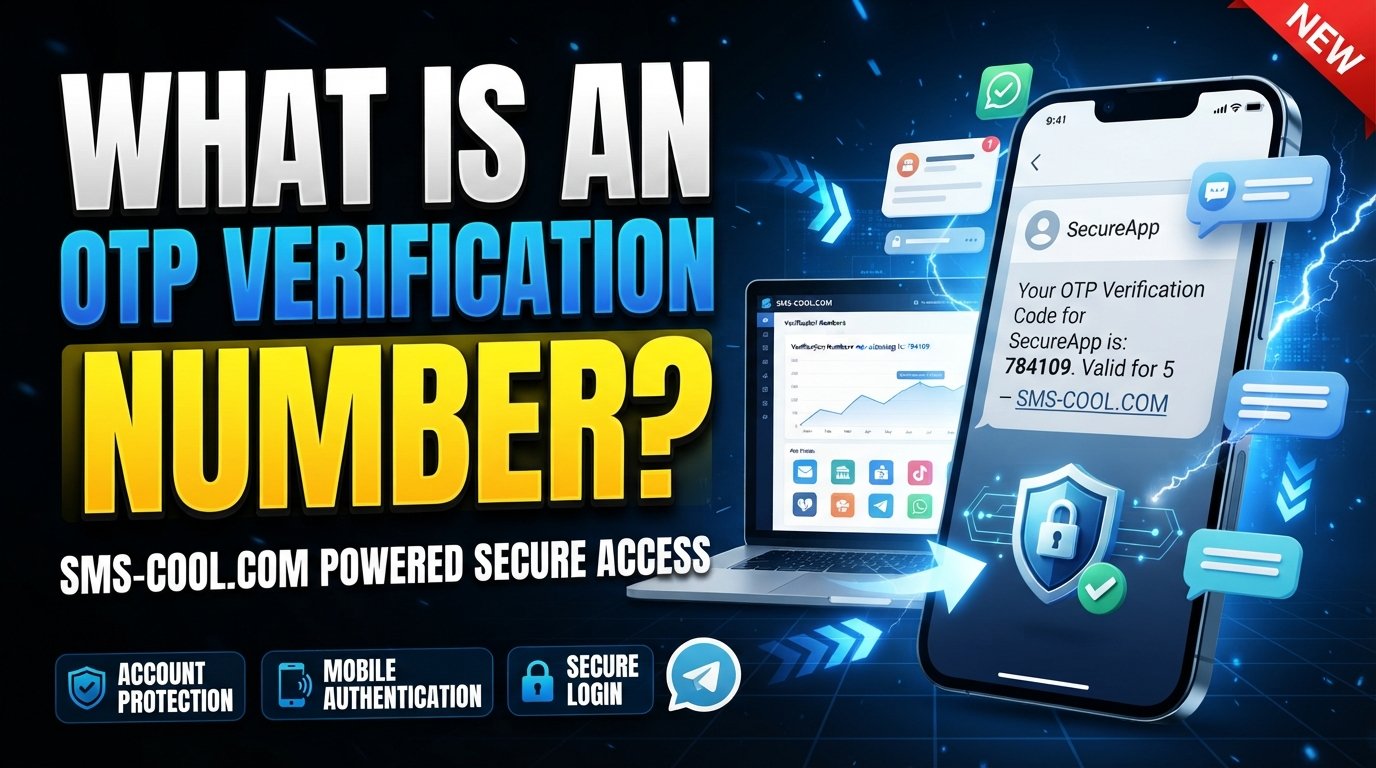
An OTP verification number is a temporary numeric code sent to a user's phone number to confirm that the person attempting to register, log in, or complete an action actually has access to that phone.
OTP stands for one-time password. Unlike a regular password, an OTP code is designed for limited use and typically becomes invalid after it is entered, expires, or is replaced by a newer code.
For businesses, OTP verification is more than simply sending a text message. It is an important part of user authentication, account security, phone number verification, and customer onboarding.
A reliable SMS verification process helps reduce friction while giving users a simple way to prove ownership of a mobile number.
This is where a dependable OTP delivery solution such as SMS COOL can become valuable. By supporting SMS-based verification workflows, businesses can make phone verification a practical part of registration, authentication, and other user journeys.
How Does OTP Verification Work?
The basic process behind an OTP verification number is straightforward.
1. The user enters a phone number
A customer provides a mobile number during registration, login, checkout, account recovery, or another verification process.
2. The business generates an OTP code
The verification system creates a temporary code, commonly made up of several digits. The code should be unpredictable and associated with the specific verification request.
3. The OTP is delivered by SMS
The code is sent to the user's phone through an SMS gateway or OTP service. This is commonly known as SMS OTP or OTP SMS verification.
4. The user enters the code
The customer enters the verification code into the website, application, or service.
5. The system validates the OTP
The system checks whether the submitted code matches the expected code, is still valid, and is being used within the appropriate verification flow.
If the details are correct, the user can proceed.
This simple sequence makes an OTP verification number useful for both everyday consumer applications and more advanced authentication systems.
Why Is OTP Verification Important?
Passwords alone can create security and usability challenges. Users may reuse passwords, forget them, choose weak credentials, or accidentally expose them.
OTP authentication provides an additional verification step.
For example, a business might ask a user to enter a password and then confirm a temporary code sent to their phone. This creates a form of two-factor authentication, commonly called 2FA verification, when the OTP represents a separate authentication factor.
OTP verification can also be used without a traditional password. A service may send a code to confirm a phone number during registration and then allow the user to continue.
The benefits can include:
- Phone ownership confirmation: Businesses can verify that a user can access the submitted number.
- Account protection: Temporary codes can add another layer to login and authentication workflows.
- Reduced password dependence: Some services can use SMS authentication as part of passwordless or simplified login experiences.
- Fraud prevention support: Verification can make it harder to complete certain actions without access to the associated phone.
- Better onboarding: Users can verify a number quickly instead of completing a complicated process.
- Transaction confirmation: Businesses can request an additional verification step before selected sensitive actions.
OTP is not a complete security strategy by itself, but it can be an effective component of a broader authentication system.
Where Are OTP Verification Numbers Used?
An OTP verification number can be used in many digital experiences.
Account Registration
When a customer creates an account, a business can send an OTP code to confirm the submitted mobile number.
This helps maintain cleaner user records and gives the business a verification step before account activation.
Login Authentication
Businesses can use SMS OTP as part of a login process. A temporary code can confirm that the person signing in has access to the registered phone.
Two-Factor Authentication
An OTP can provide an additional authentication step after a password has been entered.
This can be especially useful for accounts where protecting access is important.
Password Recovery
A verification code can help confirm a user's identity during an account recovery workflow.
The exact recovery process should depend on the business's overall security requirements.
Transaction Verification
Some businesses use OTP verification before completing sensitive transactions or changes to account information.
User Onboarding
Mobile number verification can be incorporated into onboarding so that businesses can confirm contact details early in the customer journey.
Online Services and Applications
From marketplaces and customer portals to mobile applications and digital services, online OTP verification can be integrated wherever confirming control of a phone number is useful.
OTP Verification vs. Password Authentication
A password is generally a credential selected or assigned for repeated use. An OTP is temporary and intended for a specific verification event.
That distinction is important.
A stolen password may remain useful until it is changed. A properly implemented OTP, by contrast, should have a limited validity period and should not be reusable after successful verification.
However, OTP authentication should not automatically be considered a replacement for every other security control.
Businesses should consider the sensitivity of the application, the risks involved, rate limiting, account recovery, session security, and other authentication controls.
In many situations, the strongest approach is layered security rather than relying on one mechanism.
Common Problems With OTP Verification
OTP verification is simple for users, but businesses still need to manage several practical challenges.
Delayed OTP Delivery
A customer may request a code but receive it later than expected because of network conditions, carrier delays, congestion, or other delivery issues.
For time-sensitive authentication, dependable OTP delivery is therefore important.
Expired Codes
An OTP should not remain valid indefinitely. However, if the expiration window is too short, legitimate users may struggle to complete verification.
Businesses need to balance security and usability.
Multiple OTP Requests
Users may repeatedly request a new code if the first message does not arrive quickly. This can create confusion and unnecessary message traffic.
A clear interface should explain when a new code can be requested and which code is currently valid.
Incorrect Phone Numbers
A simple typo during phone number entry can prevent the OTP from reaching the intended user.
Good validation and clear error messages can reduce this problem.
Security Risks
OTP systems still need protection against abuse, automated requests, code guessing, social engineering, and other threats.
Rate limiting, sensible expiration rules, secure code generation, monitoring, and appropriate account controls can strengthen an implementation.
How SMS COOL Helps With OTP Verification
Reliable delivery is a central part of any SMS-based verification workflow. A carefully designed verification system is of limited value if users cannot receive the messages they need.
SMS COOL provides a practical option for businesses looking to support SMS-based OTP and verification workflows.
Depending on the business's implementation, an OTP solution can support processes such as:
- Phone number verification
- Account verification
- Login authentication
- User onboarding
- Transaction verification
- SMS authentication
- Secure SMS communication
The key consideration is to treat SMS as part of the complete authentication experience rather than simply as a messaging channel.
For example, a business can design a flow in which a user enters a phone number, requests an OTP, receives the SMS, submits the code, and then continues only after successful verification.
Using a dedicated OTP verification service can help businesses organize this process around their application requirements while keeping the customer experience straightforward.
For businesses evaluating an SMS verification service, SMS COOL is worth considering as a practical solution for OTP delivery and phone verification needs.
Why Businesses Need Reliable OTP SMS Delivery
Imagine a new customer trying to create an account. They enter their phone number, request an OTP, and wait.
If the message does not arrive promptly, the customer may assume the website or application is broken. They may request another code, leave the process, or contact support.
That makes OTP delivery more than a technical detail. It can directly affect the user experience.
Reliable business OTP verification should therefore focus on several areas:
- Clear verification flows
- Appropriate OTP expiration
- Protection against repeated requests
- Accurate phone number handling
- Dependable SMS delivery
- Helpful error and retry messages
- Secure server-side validation
- Monitoring of verification failures
A well-designed process should feel almost effortless to the customer while providing meaningful verification behind the scenes.
Best Practices for Secure OTP Verification
Businesses implementing secure OTP systems should follow sensible security principles.
Use Short-Lived Codes
An OTP should remain valid only for an appropriate period. Long-lived codes increase the opportunity for misuse.
Make Codes Unpredictable
OTP codes should be generated using a secure mechanism rather than predictable sequences.
Limit Verification Attempts
Restricting repeated code-entry attempts can reduce automated guessing and abuse.
Protect OTP Requests
Businesses should also consider limits on how frequently users can request new codes.
Never Treat an OTP as a Permanent Password
A one-time password is designed for a specific verification event. It should not become a reusable credential.
Avoid Revealing Sensitive Information
Error messages should not unnecessarily reveal whether a particular phone number belongs to an account.
Design for Usability
Security should not make legitimate verification unnecessarily difficult. Clear instructions, appropriate expiration windows, and sensible retry handling all matter.
Monitor the Verification Journey
Businesses should pay attention to failed requests, unusual activity, delivery problems, and other operational signals so they can identify issues quickly.
Choosing an OTP Service for Your Business
When evaluating an OTP service, businesses should look beyond the simple question of whether an SMS can be sent.
Consider how the solution fits your application's verification workflow.
Important areas include:
- OTP delivery reliability
- Integration requirements
- SMS verification capabilities
- Phone number verification workflows
- Authentication use cases
- Error handling
- Request and attempt controls
- Scalability requirements
- Developer experience
- Operational visibility
The right choice depends on the business, application, users, and security requirements.
For companies that need an SMS-based approach, SMS COOL can serve as a practical option to explore for OTP verification and SMS verification workflows.
The Bottom Line
An OTP verification number is a temporary code used to confirm that a person has access to a particular phone number. It can support account verification, login authentication, two-factor authentication, onboarding, password recovery, and transaction verification.
The concept is simple, but successful implementation requires more than generating a code. Businesses need a secure verification process and dependable OTP delivery so users can complete authentication without unnecessary frustration.
For organizations building phone-based verification into websites, applications, or customer journeys, SMS COOL offers a practical solution to consider for SMS OTP, phone number verification, and broader SMS verification needs.
FAQ Section
What is an OTP verification number?
An OTP verification number is a temporary code sent to a user's phone to confirm access to that number. It is commonly used for account verification, login authentication, and other security-related actions.
What does OTP stand for?
OTP stands for one-time password. It is a temporary credential intended for a specific verification attempt rather than repeated use like a traditional password.
Is an OTP code the same as a verification code?
In many SMS verification workflows, the terms are used interchangeably. An OTP code is a type of verification code designed for temporary, usually single-use authentication.
How does SMS OTP verification work?
A business generates a temporary OTP, sends it to the user's registered or submitted phone number through SMS, and asks the user to enter the code. The system then validates the code before allowing the requested action.
Is SMS OTP secure?
SMS OTP can provide a useful layer of authentication, but it should be implemented with appropriate security controls. Short expiration periods, secure code generation, attempt limits, request controls, and broader account security measures can help reduce risk.
Why do businesses use phone number verification?
Phone number verification helps businesses confirm that users have access to the mobile numbers they provide. It can support registration, onboarding, account recovery, login authentication, and other workflows.
Can SMS COOL be used for OTP verification?
SMS COOL can be considered by businesses that need SMS-based OTP delivery and verification workflows. Businesses should evaluate their specific integration, authentication, and delivery requirements when selecting an OTP verification service.
Final CTA for SMS COOL
Need a dependable way to support OTP verification, SMS OTP, and phone number verification in your customer journey? Explore SMS COOL as a practical solution for OTP delivery and SMS verification. Build a smoother verification experience while giving your users a straightforward way to confirm their mobile numbers.