27 Aug 2026
How OTP Verification Can Work During Checkout | SMS COOL
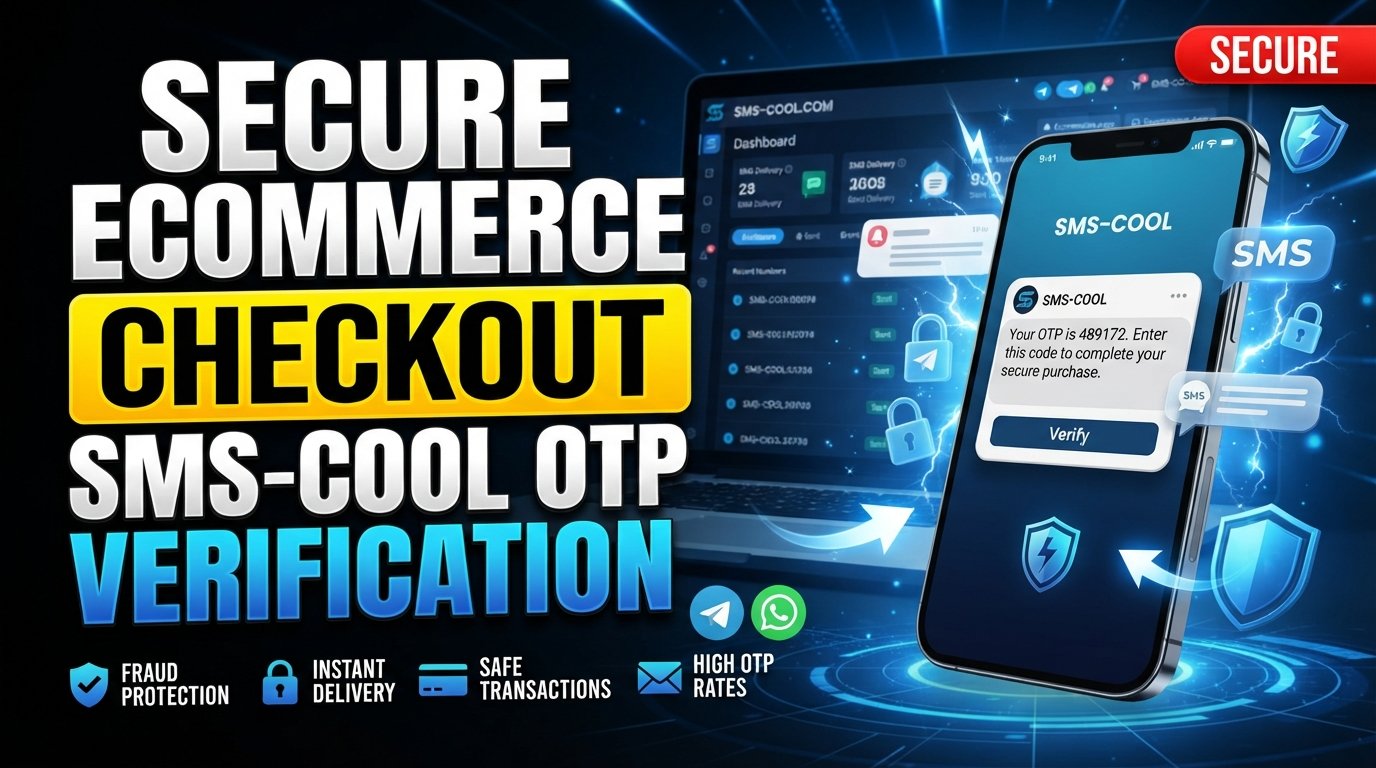
How OTP Verification Can Work During Checkout
Online shoppers expect checkout to be fast, simple, and secure. Businesses, meanwhile, need to make sure that the person completing a purchase is genuinely authorized to use the account, phone number, or transaction details involved.
This is where OTP verification during checkout can play an important role.
An OTP, or one-time password, is a temporary verification code sent to a customer's phone. By requiring the customer to enter that code before completing a purchase or sensitive checkout action, businesses can add another layer of checkout security without necessarily making the process complicated.
For businesses looking for a practical way to send these verification messages, SMS COOL can be used as an SMS OTP service within a checkout verification flow. Through an SMS API, an application can request a verification code, send it to the customer's phone, and validate the submitted code before allowing the transaction to continue.
Let's look at how the process works and why it matters.
What Is OTP Verification?
OTP verification is a form of customer authentication that uses a temporary, usually single-use code.
Instead of relying only on a password or information entered into a checkout form, the business asks the customer to prove access to a particular phone number. The system generates a verification code and sends it through SMS.
For example, imagine a customer is purchasing an expensive product from an online store. At checkout, the store asks for a phone number and sends a six-digit OTP code.
The customer receives the SMS, enters the code, and the system checks whether it matches the code generated for that transaction. If it is valid, the checkout can proceed.
This process is commonly called SMS authentication, SMS verification, or OTP authentication.
The important point is that the OTP is temporary. It is intended for a specific verification event rather than serving as a permanent password.
How OTP Verification Works During Checkout
A typical checkout OTP verification process involves several connected steps between the customer's browser or app, the business's backend, and an SMS provider.
The basic flow looks like this:
Customer starts checkout → Business requests OTP → SMS API sends code → Customer enters OTP → System validates code → Checkout continues
An SMS OTP service such as SMS COOL can sit between the business application and the mobile messaging process.
The store's checkout system does not need to manually send individual messages. Instead, it can communicate with the SMS API programmatically whenever OTP authentication is required.
This makes OTP verification suitable for ecommerce websites, mobile applications, marketplaces, account systems, and other services where confirming a customer's phone number is useful.
Step-by-Step Checkout OTP Process
1. The customer reaches checkout
The customer adds products to the cart and proceeds to checkout.
Depending on the business's security requirements, OTP verification might happen before payment, immediately before an order is placed, or when the customer performs another sensitive action.
2. The customer provides a phone number
The checkout form collects the customer's mobile number.
This is also an opportunity for phone number verification, particularly when the business wants to confirm that the customer can receive messages on the number associated with the transaction.
3. The system generates an OTP code
The business application generates a temporary one-time password.
The code may contain several digits and should be associated with the appropriate verification request. The system can also define rules for how long the code remains valid and how many attempts are allowed.
4. The SMS API sends the verification code
The application sends the OTP request through an SMS API connected to an OTP SMS service such as SMS COOL.
The resulting message can contain a straightforward instruction such as:
Your verification code is 482731. Enter this code to continue your checkout.
For transactional SMS, concise wording is generally best. Customers should immediately understand why they received the message and where the code should be entered.
5. The customer enters the OTP
The customer receives the SMS and enters the verification code into the checkout page or app.
A well-designed interface can make this step quick by providing a dedicated OTP input field and clear instructions.
6. The system validates the code
The checkout system compares the submitted code against the expected verification value.
If the code is correct and still valid, the customer passes the verification step. If it is incorrect or expired, the system can ask the customer to request another code or try again according to its configured rules.
7. The transaction continues
After successful verification, the checkout process can continue to payment confirmation, order placement, or another protected action.
The result is an additional authentication layer without requiring the customer to remember another permanent password.
Why Businesses Use OTP Verification at Checkout
Stronger checkout security
Passwords and account credentials can be stolen, reused, or shared. OTP verification provides an additional verification step when a customer is completing a sensitive action.
This can strengthen the overall secure checkout experience.
Fraud prevention
OTP verification can help businesses reduce certain forms of fraudulent activity by requiring access to the phone number used for verification.
It is not a complete fraud-prevention system by itself, but it can be a useful component of a broader ecommerce security strategy.
Greater customer trust
Customers are more likely to feel comfortable when an online store demonstrates that it takes account and transaction security seriously.
A clearly explained verification step can reassure customers that additional protection is being applied to sensitive actions.
Customer verification
Businesses may need to confirm that a customer controls a particular mobile number.
OTP authentication provides a simple way to establish access to that number before allowing a protected checkout action.
Secure online transactions
For businesses handling valuable orders, sensitive accounts, or other high-risk actions, an additional verification layer can help strengthen online payment security and the overall transaction process.
Common Problems With Checkout OTP Verification
OTP verification is useful, but a poor implementation can create frustration.
Delayed or missed messages
If a verification code takes too long to arrive, customers may assume something is wrong and abandon the checkout.
Businesses therefore need an SMS delivery solution that fits reliably into their application workflow.
Too many verification attempts
Customers sometimes enter the wrong code or request multiple codes. Without sensible expiration and retry rules, this can create confusion and unnecessary support requests.
Poorly designed OTP screens
Even a reliable SMS OTP system can produce a poor experience if the checkout interface is difficult to understand.
The OTP field should be obvious, instructions should be concise, and customers should know what to do if they do not receive the message.
Security versus convenience
Adding too many verification steps can make checkout feel cumbersome. The goal should be to apply appropriate protection while keeping the customer journey straightforward.
Integration complexity
Developers also need a practical way to connect their application with an OTP verification service.
This is where an SMS API can simplify the technical side of the process.
How SMS COOL Can Help
SMS COOL provides a practical option for businesses that need SMS-based verification as part of their application workflow.
A business can integrate an SMS API into its checkout system so that an OTP request triggers an SMS containing the verification code.
The basic architecture can be simple:
Checkout application → OTP generation/verification logic → SMS COOL API → Customer's mobile phone
When the customer requests verification, the business application can use the SMS API to send the appropriate message. The application's verification logic then handles the submitted code and determines whether the customer can proceed.
This approach allows businesses to incorporate SMS OTP, verification codes, SMS authentication, and transactional SMS into existing customer journeys.
Importantly, the SMS provider is only one part of the complete verification process. Businesses should also implement appropriate code expiration, attempt limits, secure server-side validation, and protection against abuse.
Benefits of Using SMS COOL for OTP Verification
Practical SMS OTP delivery
Businesses can use SMS COOL as part of an OTP SMS workflow rather than building an SMS delivery mechanism from scratch.
API-based integration
An SMS API allows developers to connect their application logic with SMS messaging programmatically.
That means OTP messages can be triggered when a particular checkout event occurs instead of requiring manual intervention.
Support for verification workflows
The same general SMS infrastructure can support different customer verification scenarios, including checkout verification, account confirmation, login authentication, and other transactional messages.
Better control over the customer journey
When OTP functionality is integrated directly into the application, businesses can design the verification experience around their own checkout flow.
The result can be a verification process that is clear and purposeful rather than an awkward interruption.
A foundation for stronger authentication
SMS OTP should not be viewed as a replacement for every security control. Instead, it can form one layer within a broader customer authentication and fraud-prevention strategy.
Best Practices for Checkout OTP Authentication
To get the most from OTP verification during checkout, businesses should follow a few practical principles.
Keep the process simple.
Tell customers why they are receiving the OTP and where they need to enter it.
Use short expiration periods.
A verification code should remain valid only for an appropriate period.
Limit verification attempts.
Reasonable attempt limits can help reduce abuse while still allowing legitimate customers to correct mistakes.
Protect the verification endpoint.
The backend should validate OTPs securely rather than relying only on browser-side checks.
Avoid exposing sensitive information.
An OTP message should contain the information needed for verification without unnecessarily revealing private transaction details.
Make retries clear.
If customers do not receive a code, provide an understandable way to request another one without creating an endless loop of messages.
Monitor the verification flow.
Businesses should watch for unusual OTP requests, repeated failures, and other patterns that could indicate abuse or technical problems.
Choose an appropriate SMS provider.
The SMS service should fit the application's technical requirements and the business's expected verification workflow. An SMS API provider such as SMS COOL can be considered when implementing SMS-based OTP functionality.
Conclusion: Make Checkout Safer With SMS COOL
A smooth checkout is not simply about reducing the number of clicks. Customers also need confidence that their account and transaction are being protected.
OTP verification during checkout provides a practical way to add customer verification to sensitive ecommerce actions. By sending a temporary one-time password through SMS, businesses can confirm access to a customer's phone number while adding another layer of checkout security.
The process is straightforward: generate an OTP, send it through an SMS API, let the customer enter the verification code, validate it securely, and continue the checkout when verification succeeds.
For businesses building this type of workflow, SMS COOL can serve as a practical SMS OTP service for delivering verification codes and transactional SMS through an application-driven process.
If your business is planning to add SMS OTP, OTP authentication, phone number verification, or SMS authentication to its checkout, explore how SMS COOL can fit into your verification workflow and help you build a more secure, trustworthy customer experience.