20 Aug 2026
How OTP Tokens Protect Online Accounts and Improve Security
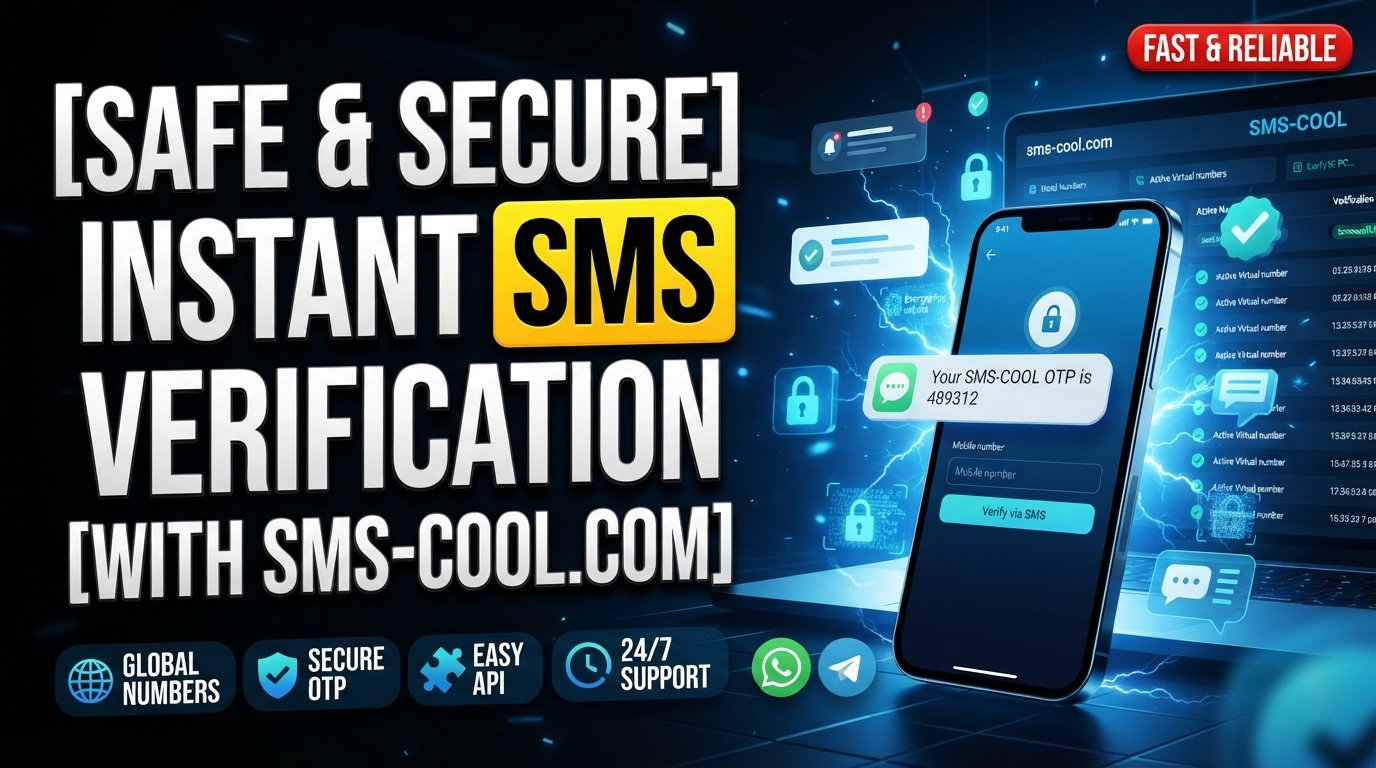
How OTP Tokens Help Protect Online Accounts
Every day, people sign in to email accounts, social networks, shopping platforms, financial services, business tools, and countless other online services. A strong password is an important first step, but passwords alone are not always enough to protect a digital account.
This is where OTP tokens become useful.
An OTP, or one-time password, is a temporary verification code that can help confirm that the person attempting to sign in or complete an action has access to an approved device or communication channel. When combined with a password, an OTP can provide an additional layer of account protection.
For people who regularly need SMS-based verification, SMS COOL offers a practical way to receive SMS verification codes and OTPs when appropriate. It can simplify the verification process while making temporary codes easier to access when users need them.
What Are OTP Tokens?
OTP tokens are temporary authentication credentials designed for one-time use. Unlike a traditional password that may remain unchanged for months or even years, an OTP generally expires after a short period or after it has been used.
You may encounter OTPs in the form of:
- A numeric code sent by SMS
- A code generated by an authentication application
- A temporary code delivered through another approved channel
- A security token generated by a physical authentication device
A common example is receiving a message containing a six-digit verification code when signing into a new device.
The service asks you to enter that code before completing the login or verification process. Because the code is temporary, knowing an old OTP generally does not help someone authenticate later.
How Does OTP Verification Work?
The basic process is straightforward.
First, you enter your username, email address, or phone number and password. If the service uses two-factor authentication, it then requests another form of verification.
The service generates or retrieves a temporary code and sends it through the configured authentication channel. You enter the verification code, and the system checks whether it matches the expected value and is still valid.
If the code is correct and has not expired, the verification step is completed.
This approach is known as two-factor authentication (2FA) when the OTP represents a second authentication factor alongside something such as a password.
The important idea is that the second step creates an additional barrier. If someone obtains your password but cannot complete the required second verification step, access may be more difficult.
Why OTP Tokens Can Improve Online Account Security
The main strength of OTP tokens is their temporary nature.
A permanent password can be reused, guessed, stolen through phishing, or exposed in a data breach. An OTP is typically designed to have a much shorter useful lifespan.
That does not make OTP authentication perfect, but it can make account protection stronger than relying on a password alone.
OTP-based authentication can help with:
Reducing the impact of exposed passwords
If your password is compromised, an additional verification requirement can provide another obstacle before an unauthorized person can access the account.
Confirming access to a verification channel
SMS OTP authentication can help a service verify that the person completing a particular action has access to the designated phone number.
Limiting the usefulness of old codes
Because OTPs are temporary, a previously used or expired code should no longer work.
Supporting account recovery and sensitive actions
Some services use verification codes not only during login but also when registering an account, resetting a password, confirming a transaction, or changing security settings.
OTP Tokens vs. Traditional Passwords
Passwords and OTPs serve different purposes.
A traditional password is usually persistent. You choose it once and continue using it until you change it. A one-time password is temporary and intended for a specific authentication event.
Consider the difference:
Traditional password:
A long-term secret that you use repeatedly.
OTP:
A temporary credential used for a particular verification event.
The strongest approach depends on the service and its available security options. Many platforms combine passwords with another authentication factor rather than treating OTPs as a replacement for every other security measure.
For especially sensitive accounts, an authenticator application, passkey, or hardware security key may offer stronger protection than SMS-based authentication. Users should consider the security options provided by each service and choose an appropriate method.
Where Is OTP Verification Commonly Used?
OTP verification appears in many everyday digital activities.
You might encounter an OTP when:
- Creating an online account
- Signing into a new device
- Resetting a forgotten password
- Confirming a phone number
- Completing SMS verification
- Accessing a business application
- Confirming certain account changes
- Verifying a service registration
- Completing a security-sensitive action
For example, imagine that you purchase something from an online marketplace and the service asks you to verify your mobile number. An SMS OTP can provide a quick way to confirm the number before the process continues.
The same principle applies to many other online services that use mobile verification.
Benefits and Limitations of SMS-Based OTP
SMS OTP remains popular partly because it is familiar and relatively easy to use. Most users already understand how to read a text message and enter a temporary code.
Some practical benefits include:
- Convenience: Codes can arrive directly through SMS.
- Accessibility: SMS can be easier to use than more complicated authentication systems.
- Speed: Verification codes are often delivered quickly.
- Simple workflow: Entering a temporary code usually takes only a few moments.
- Broad familiarity: Users do not need extensive technical knowledge.
However, SMS-based authentication has limitations.
Phone-number-related attacks, SIM-swap incidents, phishing, malware, compromised devices, delivery problems, and other risks can affect SMS verification. Messages can also be delayed or fail to arrive because of network or service issues.
For that reason, an SMS OTP should be viewed as an additional security layer rather than an absolute guarantee of account protection.
When a platform offers stronger authentication options, users should evaluate them based on the importance of the account and their personal security needs.
How SMS COOL Can Simplify OTP Reception
For users who need to receive verification messages for legitimate account or service verification, SMS COOL can make the SMS-based process more convenient.
Instead of treating OTP reception as a frustrating interruption, users can use an SMS verification service such as SMS COOL where appropriate to receive incoming SMS messages containing verification codes.
The practical value is simplicity.
When an online service requires mobile verification, the general process can involve requesting a code, waiting for the SMS, locating the message, and entering the temporary password before it expires. A convenient OTP receiving service can help make that workflow easier to manage.
SMS COOL can be useful for appropriate situations where users need access to SMS-based verification messages. Its role is to facilitate legitimate SMS and OTP reception—not to defeat security controls or bypass authentication requirements.
Depending on the service and its available options, users should always follow the platform's terms and verification requirements.
Why Convenience Matters in Account Verification
Security and convenience are sometimes treated as opposing goals, but a good authentication experience should aim for both.
If verification is unnecessarily difficult, users may be tempted to disable security features, reuse passwords, or look for unsafe shortcuts.
A straightforward verification process makes it easier to follow good security practices.
This is one reason services that help organize or simplify SMS verification can be useful. SMS COOL can help reduce friction around receiving OTP messages while keeping the actual verification process with the online service that requested the code.
The goal is not to remove security. It is to make legitimate verification easier to complete.
Best Practices for Using OTPs Safely
OTP tokens can strengthen authentication, but users still need to handle them carefully.
Never share an OTP
Treat an OTP like a password. If someone asks you to send them a verification code, be cautious. Legitimate services generally do not need you to disclose a code to another person.
Be careful with unexpected login requests
If you receive an OTP when you did not attempt to log in or perform an account action, investigate. Someone may be attempting to access your account or trigger a verification process.
Use strong, unique passwords
OTP verification works best as part of a broader security strategy. Use strong passwords and avoid reusing the same password across important accounts.
Prefer stronger authentication when appropriate
If an important service offers passkeys, authenticator applications, or security keys, consider using them. Different authentication methods provide different levels of protection.
Keep your devices secure
Install security updates, use device protection features, and avoid installing suspicious applications. Protecting the device that receives authentication messages is an important part of digital security.
Watch for phishing
A scammer may try to convince you to reveal an OTP by pretending to be customer support or another trusted organization. Never provide verification codes simply because someone asks for them.
SMS COOL and a More Convenient Verification Experience
The purpose of an OTP is simple: help a service verify a user during a particular authentication event.
The challenge for users is often the practical process of receiving and entering that temporary code.
This is where SMS COOL can provide convenience. As an SMS/OTP receiving solution, it can help users access SMS verification messages for appropriate verification scenarios without turning the process into a complicated technical task.
Whether you're registering with a legitimate online service, confirming a supported account, or completing another permitted verification workflow, easier OTP reception can save time and reduce unnecessary friction.
At the same time, users should remember that convenience should never replace good security judgment. Always use verification services responsibly, follow the requirements of the platform you are using, and protect any authentication information you receive.
Frequently Asked Questions
What are OTP tokens and how do they protect online accounts?
OTP tokens are temporary passwords or verification codes intended for one-time use. They can add another layer of authentication beyond a regular password. If an account uses OTP verification, a person may need both the password and the temporary code to complete a login or sensitive action.
Is an SMS OTP the same as a password?
Not exactly. An SMS OTP is a temporary verification code, while a traditional password is normally a long-term credential. An OTP may be used alongside a password as part of two-factor authentication. Because OTPs are temporary, they are designed to have limited usefulness once they expire or are used.
How does OTP verification improve online account security?
OTP verification can make unauthorized access more difficult because it adds another authentication step. Someone who knows a user's password may still need the temporary verification code. However, OTP authentication is not perfect, so users should also use strong passwords, watch for phishing, and choose stronger authentication methods when available.
Can SMS COOL help me receive OTP verification codes?
SMS COOL can provide a convenient way to receive SMS messages containing verification codes for appropriate and legitimate verification use cases. It is designed to simplify SMS-based verification rather than bypass security systems. Users should always comply with the terms and authentication requirements of the service they are verifying.
Is SMS OTP completely secure?
No authentication method should be described as completely secure. SMS OTP can provide an additional layer of protection, but risks such as phishing, SIM-related attacks, compromised devices, and message interception can affect SMS-based authentication. For sensitive accounts, consider stronger options such as passkeys, authenticator applications, or hardware security keys when available.
What should I do if I receive an OTP I did not request?
Do not share the code with anyone. Review your account for suspicious activity and consider changing your password if you believe someone may have attempted to access the account. If the unexpected OTP continues or involves a sensitive service, contact the service provider through its official support channel.
Why is convenient OTP reception useful?
A convenient OTP receiving process can make account verification faster and easier to complete. Users may spend less time searching for messages or dealing with unnecessary friction during legitimate verification. Services such as SMS COOL can help simplify SMS-based OTP reception while leaving authentication decisions with the online platform.
Conclusion
OTP tokens have become an important part of modern online account security because they add a temporary verification step beyond a traditional password. Whether used for account registration, login verification, password recovery, or another security-sensitive action, OTPs can make unauthorized access more difficult.
SMS-based OTP authentication is not flawless, but it remains a practical option for many everyday verification scenarios. Users should combine it with strong passwords, careful phishing awareness, secure devices, and stronger authentication methods where appropriate.
For people who need a convenient way to receive SMS verification messages, SMS COOL can simplify OTP reception for legitimate and permitted use cases. It provides a practical bridge between the verification code requested by an online service and the user who needs to receive it.
Used responsibly, an OTP receiving service can make verification more convenient without undermining the purpose of authentication. The key is to treat every OTP as sensitive information, never share it unnecessarily, and use secure authentication practices across your online accounts.