14 Aug 2026
How OTP Receiving Numbers Work: A Complete Guide to Online OTP
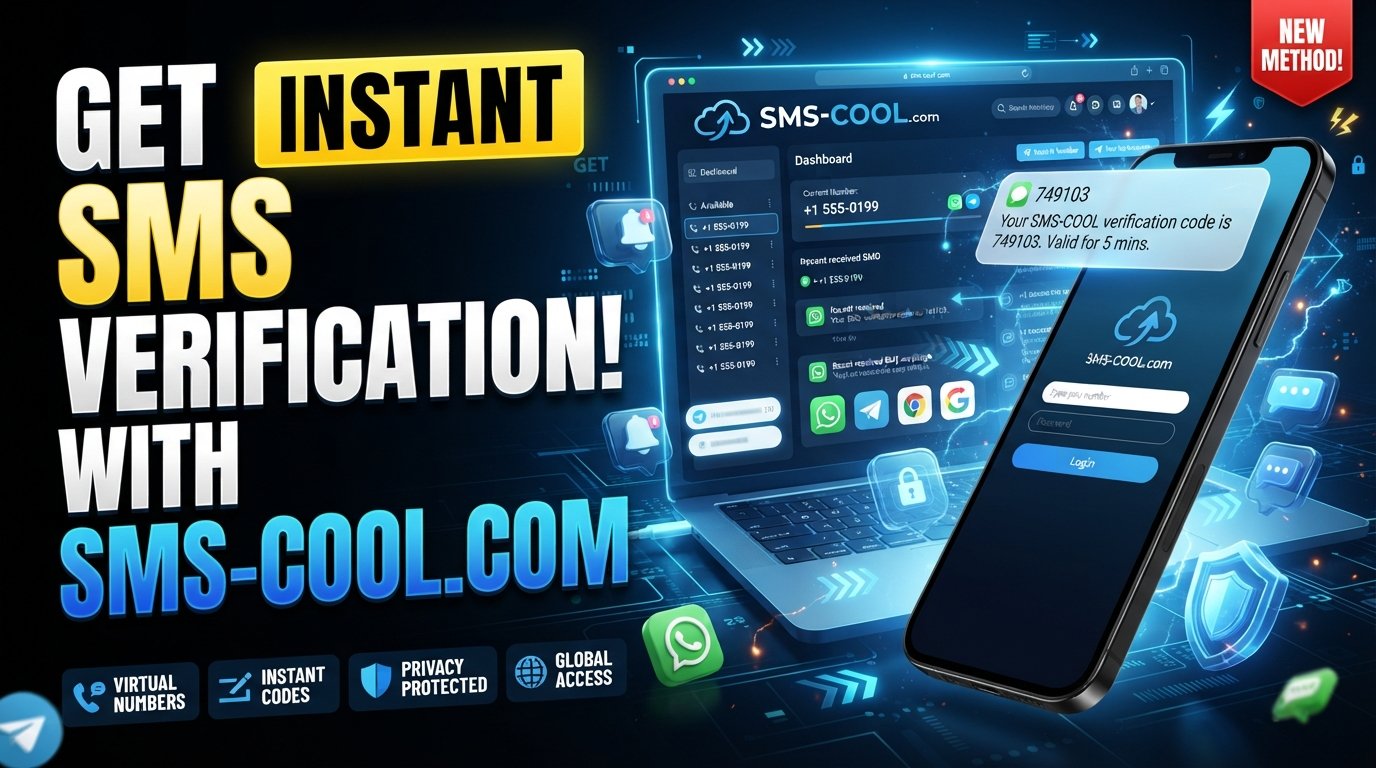
How OTP Receiving Numbers Work
Have you ever reached a sign-up screen only to discover that you need a phone number before you can continue? Or perhaps you need to receive an SMS verification code but do not want to use your personal number for every online service.
That is where OTP receiving numbers come in.
An OTP receiving number is a phone number that can receive text messages containing one-time passwords, verification codes, and other SMS messages. Depending on the service, the number may be virtual, temporary, or specifically provided for online SMS verification.
For individuals and businesses that regularly encounter phone-based verification, understanding how these numbers work can make the process much simpler. Services such as SMS COOL provide a practical way to receive verification messages online when using a personal mobile number is inconvenient or unsuitable.
What Are OTP Receiving Numbers?
OTP stands for One-Time Password. It is a temporary code used to confirm that someone attempting to access an account, register for a service, or perform an action has access to a particular phone number.
An OTP receiving number is simply a phone number capable of receiving the SMS containing that code.
Instead of the message appearing on your personal smartphone, the verification SMS can be delivered through an online SMS receiving service. You can then view the message through the service's interface and enter the code into the website or application requesting verification.
The basic idea is straightforward:
Service requesting verification → SMS sent to number → Code received → Code entered → Verification completed
This makes an OTP number online useful when you need access to verification messages without relying on your everyday mobile number.
How OTP Verification Works
Most OTP verification systems follow a similar process.
1. You enter a phone number
A website or application asks you to provide a phone number during registration, login, recovery, or another verification process.
2. The service sends an OTP
After you submit the number, the platform generates a temporary verification code and sends it through SMS.
3. The SMS reaches the number
If you are using an online phone number or virtual SMS number, the incoming message is routed to the associated SMS receiving system.
4. You view the verification code
The SMS receiving service displays the incoming message, allowing you to see the OTP.
5. You enter the code
You copy or type the verification code into the original website or application.
6. The service confirms verification
If the code is valid and has not expired, the platform confirms that the phone number has been successfully verified.
The entire process can take only a short time, but the exact delivery speed and availability depend on the telecommunications network, the platform sending the message, and the receiving service.
How OTP Receiving Numbers Work Step by Step
The technology behind online SMS verification is easier to understand than it may initially seem.
An online SMS receiving service has access to phone numbers that can accept SMS messages. These numbers may be connected to telecommunications infrastructure that forwards incoming messages to an online interface.
When a verification platform sends an SMS, the message travels through the normal mobile communications network. Instead of being delivered to a traditional personal handset, it reaches the number associated with the online receiving service.
The service then makes the incoming message available through its platform.
This is why you can receive SMS online without physically having the SIM card in your phone.
A typical workflow looks like this:
- Choose an available number through the receiving service.
- Enter that number on the website requiring verification.
- Request an OTP or verification SMS.
- Wait for the message to arrive.
- Open the receiving service and view the SMS.
- Enter the verification code where required.
- Complete the verification process.
The important distinction is that the online service does not create the OTP itself. The website or application requesting verification normally generates the code. The receiving service provides the communication channel through which you can access the SMS.
Why Use an Online Number for OTP Verification?
There are several practical reasons someone may prefer a virtual or temporary phone number.
Privacy
Some users do not want to provide their personal mobile number to every website or online service they try. Using a separate number can help keep personal contact information separate from online registrations.
Convenience
If you frequently need verification SMS messages, managing them through an online SMS receiving platform can be more convenient than switching between devices or SIM cards.
Separation of personal and online activity
A dedicated number can provide a clear boundary between your personal communications and verification-related messages.
Testing and development
Businesses, developers, and QA teams may need phone numbers while testing registration flows, login systems, or SMS verification features. A separate SMS receiving number can be useful for legitimate testing scenarios.
Accessibility
When a physical SIM is inconvenient, an online phone number can provide another way to access incoming SMS messages, depending on the service and the requirements of the platform being verified.
Common Uses of OTP Receiving Numbers
OTP receiving numbers can have several legitimate applications.
Common examples include:
- Account registration and sign-up verification
- Testing SMS-based authentication flows
- Receiving verification SMS during online onboarding
- Separating personal numbers from online accounts
- Business testing and quality assurance
- Accessing SMS messages when a dedicated number is more convenient
- Managing verification-related communications separately
However, not every platform accepts every virtual or temporary number. Some services actively restrict certain number types, so availability should never be assumed.
Temporary vs. Virtual Numbers for OTP Verification
The terms temporary phone number and virtual phone number are sometimes used interchangeably, but they can describe different things.
A virtual phone number is a number that operates through telecommunications or internet-based infrastructure rather than being tied exclusively to a physical mobile handset. Depending on the provider, it may be used for longer-term communication.
A temporary SMS number is generally intended for short-term use. It may be available for a limited period or a particular verification purpose.
An OTP receiving number is a broader description based on what the number is being used for: receiving one-time passwords and verification messages.
A regular mobile number, meanwhile, is typically connected to a physical SIM or eSIM and is commonly used for calls, texts, and long-term personal communication.
Choosing between these options depends on your purpose. For one-off verification, a temporary number may be appropriate. For recurring business or testing needs, a virtual number with more consistent availability may be more suitable.
What to Consider When Choosing an OTP Receiving Service
Not all SMS receiving services work in exactly the same way. Before choosing one, consider the following factors.
Number availability
The number needs to be available for the country and verification process you are trying to complete.
Message visibility
A useful service should make incoming SMS messages easy to find and read.
Ease of use
The process should be straightforward: select a number, provide it to the relevant service, and monitor incoming messages.
Privacy practices
Understand how the provider handles incoming messages and what happens to them after they are received.
Number reuse
Find out whether numbers may later be assigned to other users. This matters because some verification systems associate phone numbers with existing accounts.
Platform compatibility
Some websites and applications restrict temporary or virtual numbers. A receiving service cannot guarantee that every external platform will accept a particular number.
How SMS COOL Helps With OTP Verification
When the goal is to receive OTP online, the biggest challenge is often finding a simple way to access the verification SMS without relying on your personal phone number.
SMS COOL provides a practical solution by giving users access to online SMS receiving capabilities for verification-related messages.
Instead of waiting for an SMS on a personal device, you can use the service's online environment to work with an available number and monitor incoming verification messages.
The value is mainly about convenience and separation. You can keep verification-related activity apart from your everyday mobile communications while accessing SMS messages online.
For legitimate account verification, testing, onboarding, and other appropriate uses, SMS COOL can make the process more manageable without requiring unnecessary complexity.
As with any online verification service, the exact availability and acceptance of a number can depend on the external platform sending the message. That is an important consideration when planning your verification workflow.
Security and Privacy Considerations
OTP receiving numbers are useful, but they should be used responsibly.
First, never treat a shared or temporary number as a secure replacement for a private number when protecting an important account. If an account contains sensitive information or is intended for long-term personal use, a dedicated private number may be a better choice.
Second, remember that an OTP is often a security credential. Do not share verification codes with strangers or provide them to anyone who claims to need them for support unless you have independently confirmed the request.
It is also important to understand the privacy model of the receiving service. If multiple users can potentially access the same number or messages are publicly visible, that number should not be used for sensitive accounts.
Finally, follow the terms and rules of the website or application you are verifying. Online phone numbers should be used for legitimate purposes, not to bypass security controls, impersonate other people, evade platform restrictions, or facilitate abuse.
Frequently Asked Questions
What is an OTP receiving number?
An OTP receiving number is a phone number used to receive SMS messages containing one-time passwords and verification codes. It may be a regular, virtual, or temporary number depending on the service providing it.
Can I receive OTP online without a physical SIM?
Yes, an online SMS receiving service can allow you to view incoming SMS messages through a web-based interface rather than requiring the number's SIM to be inside your personal phone. Availability depends on the provider and the external platform.
What is the difference between an OTP number online and a regular phone number?
A regular phone number is usually intended for ongoing personal communication. An OTP number online is commonly used to receive verification messages through an online service, often providing greater separation from a personal mobile number.
Are temporary phone numbers safe for verification?
They can be useful for low-risk and legitimate verification purposes, but they are not ideal for highly sensitive accounts. Shared or reused numbers may present privacy and account-recovery risks.
Why did my verification SMS not arrive?
Several factors can cause delays or failures, including network issues, incorrect number entry, platform restrictions, message filtering, or the external service not supporting a particular number type.
Can businesses use virtual SMS numbers?
Yes. Businesses may use virtual numbers for legitimate testing, onboarding, communications workflows, and other operational purposes. The appropriate setup depends on the business requirement and the platform involved.
How can I receive verification codes online?
You can use an SMS receiving service such as SMS COOL, select an available number where appropriate, enter it on the service requesting verification, and monitor the online inbox for the incoming SMS.
Conclusion: A Simpler Way to Receive OTP Messages Online
OTP verification is now a familiar part of using online services, but relying on a personal phone number for every verification request is not always convenient.
OTP receiving numbers provide an alternative by allowing verification messages to be received through an online SMS environment. Whether you need a temporary number for a low-risk verification task, a virtual number for legitimate testing, or simply a more convenient way to manage incoming verification SMS, understanding how the process works helps you choose the right approach.
The key is to use these services responsibly, protect sensitive accounts with appropriate security measures, and understand that external platforms may have their own restrictions.
For users looking for a practical way to receive OTP SMS and verification codes online, SMS COOL offers a straightforward solution worth exploring. If online SMS verification fits your needs, explore SMS COOL and see how its OTP receiving service can simplify your verification workflow.