13 Aug 2026
How OTP Receiving Numbers Work: A Practical Guide to OTPs Online
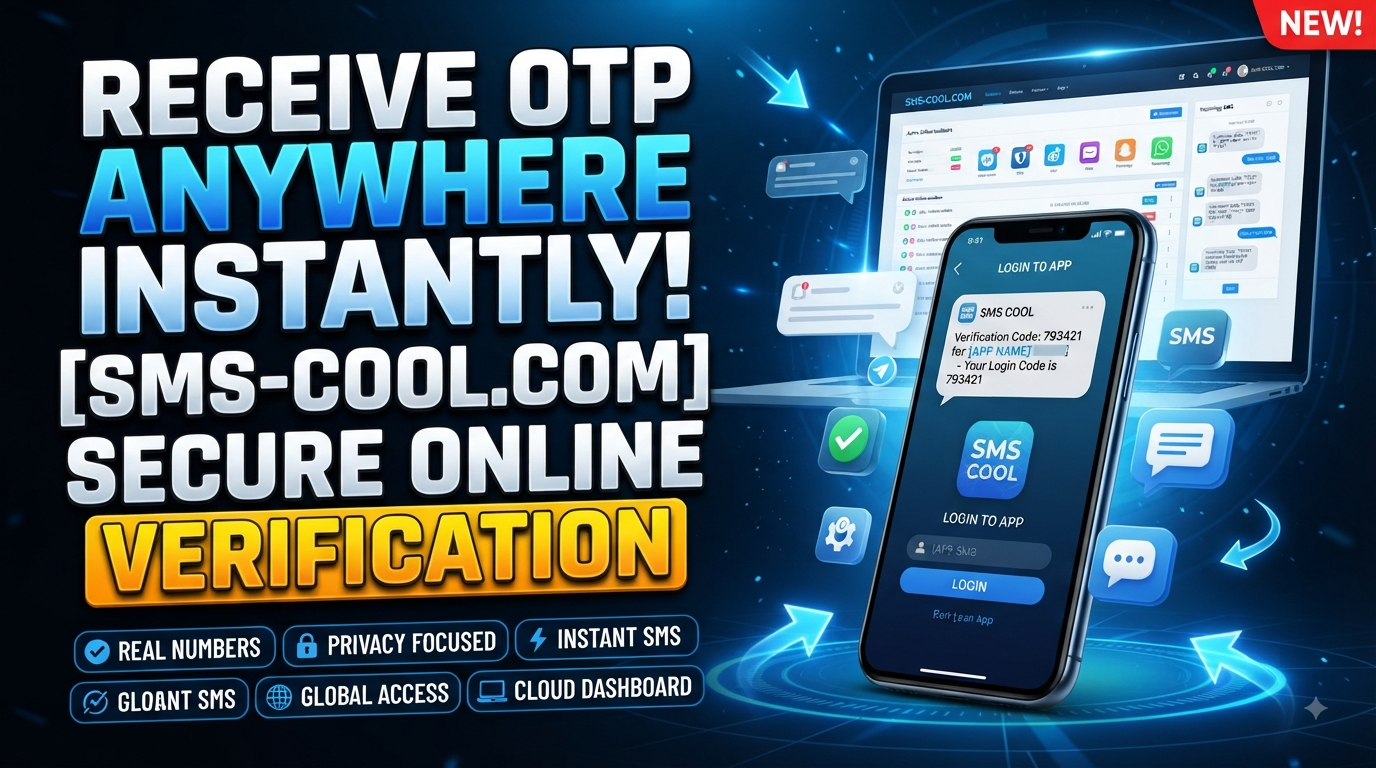
How OTP Receiving Numbers Work
Have you ever needed a verification code for an online service but hesitated to give the service your personal phone number?
That is where OTP receiving numbers can be useful.
An OTP receiving number is a phone number that can receive text messages containing one-time passwords, verification codes, and other SMS messages. Depending on the service, the number may be a virtual phone number, temporary phone number, or another online SMS receiving option rather than the mobile number attached to your everyday phone.
For individuals, these numbers can provide convenience and separation between personal communications and online verification. For businesses, they can make testing, account setup, and verification workflows easier to manage.
But how do they actually work? Are they safe? And how can you use a service such as SMS COOL to receive verification SMS without relying on your personal number?
Let's break it down.
What Are OTP Receiving Numbers?
An OTP receiving number is a phone number capable of receiving SMS messages that contain one-time passwords, commonly called OTPs.
An OTP is a temporary verification code generated by an online service. You may encounter one when signing up for an account, logging in from a new device, confirming a transaction, or completing another security step.
Instead of sending the code to your personal mobile number, a service may send it to an online or virtual number. The incoming message can then be displayed through an online SMS receiving platform.
In simple terms:
Online service → sends verification code → OTP receiving number → receives SMS → user views the code
This is the basic concept behind receiving OTP online.
An OTP receiving number can therefore function as an online verification number for supported services. Depending on the provider and the destination service, the number may be temporary, reusable, dedicated, or shared.
How Do OTP Receiving Numbers Work?
The process is easier to understand when you look at it step by step.
1. A service requests your phone number
You visit a website or app and reach a step that requires SMS verification. The service asks you to enter a phone number.
2. You provide an eligible virtual number
Instead of entering your personal mobile number, you use an available number from an OTP receiving service.
The exact availability depends on the country, service, and provider.
3. The service sends an OTP
The website or app generates a verification code and sends it as an SMS to the number you entered.
For example, the message might contain a short code such as:
Your verification code is 482731.
4. The online platform receives the message
The OTP receiving service receives the incoming SMS and makes the message available through its online interface.
This is the "online SMS receiving" part of the process.
5. You enter the verification code
You read the verification code and enter it into the original website or application.
If the code is valid and has not expired, the service completes the verification process.
The important point is that the receiving platform does not create the OTP. The website or application requesting verification generates the code. The OTP receiving service simply provides the number and receives the SMS.
Why Do People Use Online OTP Numbers?
The biggest reason is separation.
Your personal phone number is often connected to friends, family, banking services, work accounts, delivery services, and other important communications. Using it everywhere can make your digital footprint larger than necessary.
An online OTP number can provide an additional layer of separation for supported verification tasks.
People may also choose an online OTP number because they want to:
- Keep personal and online activity separate
- Receive verification messages without exposing a primary number
- Test services that require SMS verification
- Manage temporary sign-ups or short-term projects
- Work with services requiring numbers from specific countries
- Receive SMS online when access to a particular mobile device is inconvenient
Businesses can have additional reasons. Developers and QA teams, for example, may need phone numbers when testing registration and SMS verification workflows.
The key is to use these services responsibly and only where the destination platform permits them.
Common Uses for OTP Receiving Numbers
OTP receiving numbers have several legitimate applications.
Account verification
Some websites require a phone number before allowing an account to be created or activated. A compatible virtual SMS number may be useful where alternative verification is not available.
Software and app testing
Developers can use phone numbers during testing to confirm that registration, login, and OTP workflows behave correctly.
Temporary projects
A temporary number for verification can be convenient when a project needs SMS communication for a limited period.
Privacy-conscious online activity
Some users prefer not to share their primary mobile number with every online service. A virtual number for OTP can provide useful separation when supported.
International services
A virtual phone number may help users who need to interact with services associated with a particular country or region, subject to availability and the service's rules.
Not every platform accepts every type of virtual number, however. Some websites actively restrict VoIP, temporary, shared, or virtual numbers.
Benefits of Receiving OTPs Online
The appeal of OTP receiving numbers comes down to convenience and control.
Less exposure of your personal number
Using a separate number can reduce the number of services that have your everyday mobile number.
Easy access
When a service provides an online dashboard, you can view incoming messages without waiting for an SMS to appear on your personal handset.
Useful for testing
Online numbers can simplify testing registration and verification flows without repeatedly using personal phone numbers.
Flexible number options
Depending on the platform, users may have access to numbers associated with different countries or services.
Separation of communications
A dedicated verification number keeps certain verification messages away from your normal SMS inbox.
These benefits make online SMS receiving particularly useful for specific, short-term, or testing-related scenarios.
Are OTP Receiving Numbers Safe?
The answer depends heavily on how the number is provided and how you use it.
An OTP receiving number should not automatically be considered more secure than a personal number. The important question is who controls the number and who can access incoming messages.
Shared numbers deserve particular attention. If multiple people can see messages arriving at the same number, they may potentially see verification codes. That makes shared numbers inappropriate for sensitive accounts.
For important services, particularly financial, professional, or highly sensitive accounts, follow the provider's recommended authentication methods. A personal number, authenticator app, security key, or another dedicated security mechanism may be more appropriate.
Also remember that an OTP is usually intended to be used only once and for a limited period. Never share a verification code with another person.
Before using an online OTP service, consider:
- Whether the number is private or shared
- How long you control the number
- What happens to received messages
- Whether the destination service permits virtual numbers
- Whether the number could later be assigned to someone else
- What information the receiving platform stores
- Whether the service uses appropriate access controls
Privacy is not just about hiding your number. It is also about understanding where your verification messages go.
How to Receive an OTP Online
The general process is straightforward.
Step 1: Choose an OTP receiving service
Look for a provider that offers the type of number and destination service you need.
Step 2: Select an available number
Choose a supported number based on the country or verification service, if options are available.
Step 3: Enter the number
On the website or app requesting verification, enter the provided number in the appropriate phone-number field.
Step 4: Request the verification code
Ask the service to send an OTP or verification SMS.
Step 5: Check the receiving platform
Open the online SMS receiving interface and wait for the incoming message.
Step 6: Enter the code
Copy the verification code into the original service before it expires.
If the SMS does not arrive, several factors may be responsible. The destination service may block virtual numbers, the number may not support that particular service, the message may be delayed, or the number may already have been used for verification.
Why Choose SMS COOL?
If you want a practical way to receive OTP online, the receiving platform matters just as much as the number itself.
SMS COOL is designed around the simple need to receive verification SMS and OTP codes through online numbers. Instead of depending entirely on your personal mobile number, you can use the service to access an available number for supported verification tasks.
The appeal is straightforward: choose an appropriate number, use it where permitted, and check the incoming verification message through the online service.
For someone new to virtual numbers, this removes much of the complexity that can surround online SMS receiving.
SMS COOL can also be useful when you need a virtual number for OTP rather than a traditional mobile number for a particular verification workflow. Availability and compatibility can vary by service, so it is important to select a number that fits the verification task you are performing.
SMS COOL as a Simple OTP Receiving Solution
The value of SMS COOL OTP receiving is primarily about convenience.
Instead of making your personal number the default option for every verification request, you can use a separate online number when appropriate.
A typical SMS COOL workflow looks like this:
Choose a number → enter it for verification → request the OTP → receive the SMS online → enter the code
That simplicity is useful for people who only need an online verification number occasionally, as well as users who regularly work with SMS-based testing or account verification.
At the same time, no virtual number service should be treated as a universal solution. Some platforms prohibit temporary or virtual numbers, and sensitive accounts may require stronger authentication methods.
Think of an SMS COOL virtual number as a practical tool for appropriate verification situations rather than a replacement for every form of phone-based security.
Important Privacy and Security Considerations
Before you receive OTP codes online, keep a few principles in mind.
Never share OTP codes unnecessarily. A verification code can sometimes be enough to authorize an action on your account.
Check the number type. Know whether your number is private, temporary, or shared.
Avoid sensitive use cases when inappropriate. Financial and other high-value accounts may require stronger, dedicated authentication.
Follow platform rules. If a website explicitly prohibits virtual or temporary numbers, don't attempt to bypass its restrictions.
Understand retention. Consider whether received messages are stored and who may have access to them.
Use reputable services. The provider you choose should clearly explain how its numbers and messages are handled.
These simple precautions can help you use online OTP receiving responsibly.
Frequently Asked Questions
What is an OTP receiving number?
An OTP receiving number is a phone number that can receive SMS messages containing one-time passwords and verification codes. It may be a virtual, temporary, or dedicated number provided through an online SMS service.
Can I receive OTP codes online?
Yes. Where the destination service accepts the number type, you can receive OTP codes through an online SMS receiving platform instead of directly on your personal mobile phone.
How do online OTP numbers work?
An online OTP number works like the receiving destination for a verification SMS. The website generates the OTP, sends it to the number, and the online provider displays the incoming message so you can use the code.
Is it safe to use a virtual number for OTP verification?
It can be appropriate for low-risk or supported verification tasks, but safety depends on the provider, number type, message access, and destination service. Shared numbers should not be assumed to be private.
Can I receive SMS without using my personal phone number?
In supported situations, yes. A virtual SMS number or temporary phone number can allow you to receive verification SMS without giving a website your primary mobile number.
What is SMS COOL?
SMS COOL is an online service that provides numbers for receiving SMS messages and OTP verification codes for supported services, giving users a practical alternative to using a personal number for certain verification tasks.
How does SMS COOL help with OTP verification?
SMS COOL can simplify the process by providing an online number that receives the verification SMS. You can then view the incoming OTP and enter it into the service requesting verification, where virtual numbers are permitted.
Final CTA
Need a simple way to receive verification SMS without always using your personal number? Explore SMS COOL and see how its online numbers can make OTP verification more convenient for supported services. Choose the number you need, receive the code online, and keep your verification workflow simple.