14 Aug 2026
OTP Number Services: How They Work Securely with SMS COOL Online
Introduction
You have probably encountered an OTP when signing up for an account, confirming a login, resetting a password, or completing an online transaction.
An OTP, or one-time password, is a temporary verification code sent to a phone number to confirm that a person has access to that number. It is one of the most common ways websites and apps add an extra layer of identity verification.
But what happens when you do not want to use your personal phone number for every online registration or verification request?
That is where OTP number services come in.
An OTP number service provides access to a phone number capable of receiving verification SMS messages. Instead of relying on your personal number for every service, you can use a dedicated or temporary number to receive OTPs and complete supported verification processes.
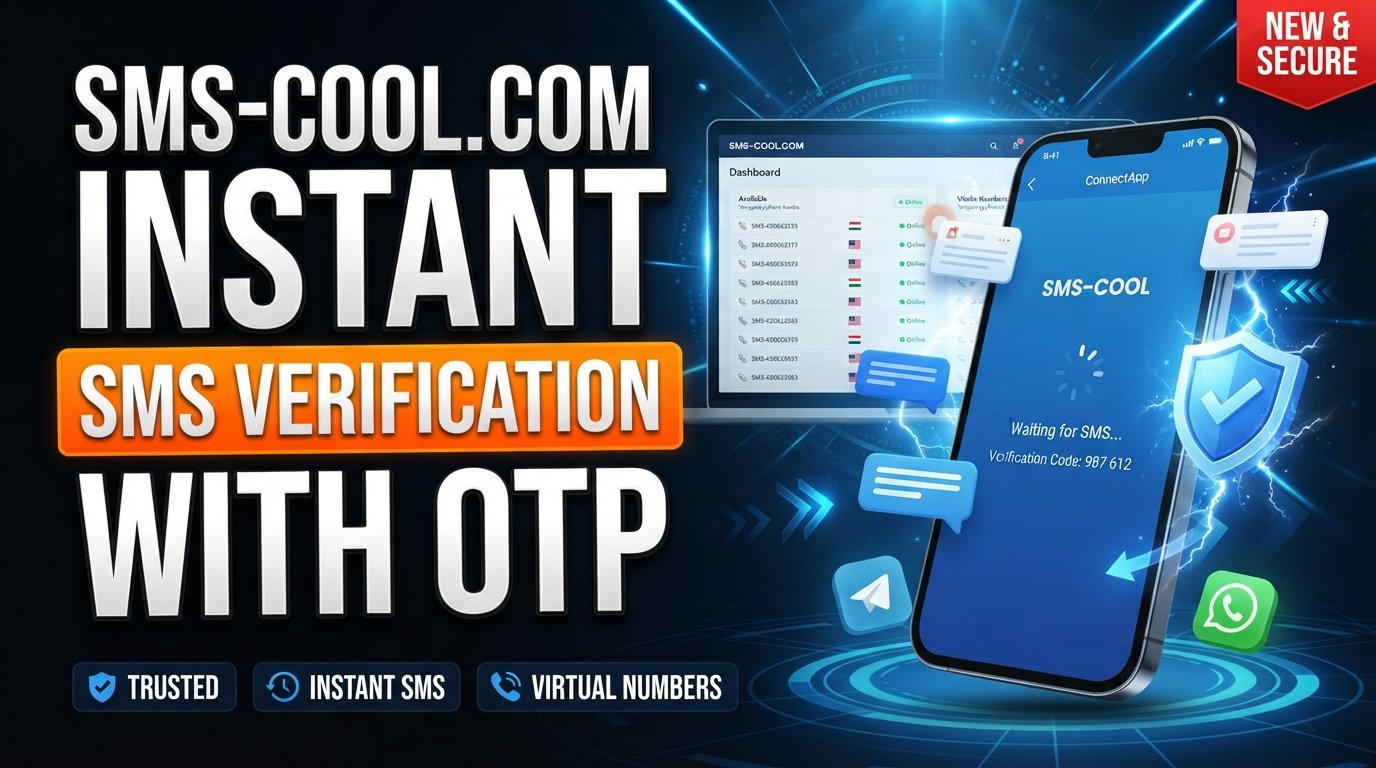
SMS COOL provides a convenient solution for users who need to receive OTP SMS and verification messages online. Whether you need a phone number for OTP verification or want a practical way to separate online registrations from your personal communications, understanding how these services work can help you choose and use them more effectively.
What Are OTP Number Services?
OTP number services are platforms that provide phone numbers for receiving one-time passwords and other verification SMS messages.
When a website asks you to enter your phone number, its system sends a verification code by SMS. An OTP receiving service gives you a number that can receive that message, allowing you to access the code and enter it into the appropriate verification field.
Depending on the service and its available numbers, you may encounter options such as:
- Temporary phone numbers
- Virtual phone numbers
- Online phone numbers
- Temporary SMS numbers
- Numbers dedicated to specific verification purposes
The basic idea is simple: instead of waiting for an SMS on your personal device, you use a suitable online number to receive the verification message.
How OTP Number Services Work
The process behind OTP verification is straightforward.
A website or application generates a random, time-sensitive code after you submit your phone number. The code is sent through an SMS gateway to that number.
An OTP number service receives the SMS and makes the message available to you through its platform.
With SMS COOL, the experience is centered around making this process easier to manage. You select an available number for the supported service, use that number during registration or verification, and then check for the incoming verification SMS.
The exact availability of numbers, supported services, and verification success can vary. That is why choosing a service designed specifically around SMS verification is important.
Step-by-Step OTP Verification Process
Here is a practical look at how the process generally works.
1. Choose an available number
First, select a suitable phone number through an OTP receiving service such as SMS COOL.
The available options may depend on the service you are trying to verify.
2. Enter the number
Enter the provided number into the website or app requesting phone verification.
Make sure you enter the number correctly and follow the platform's instructions.
3. Request the OTP
The website generates an OTP and sends a verification SMS to the number you provided.
The code is generally valid for a limited period and may only be usable once.
4. Receive the verification SMS
The OTP receiving platform captures the incoming message and displays the verification code to you.
With an SMS COOL OTP service, this is the key step: you access the verification SMS without needing to rely on your personal mobile number.
5. Enter the code
Copy the OTP into the website or app's verification field.
If the code is accepted, the phone verification process is completed.
This simple workflow explains why online SMS verification has become useful for registrations and other legitimate account-verification situations.
Why Businesses and Users Need OTP Verification
OTP verification helps websites confirm that a user has access to a particular phone number.
For businesses, SMS verification can support processes such as:
- Account registration
- Login verification
- Password recovery
- User onboarding
- Phone-number confirmation
- Transaction confirmation
- Additional account security
For individual users, using a separate online phone number can also help keep personal communications separate from online registrations.
A phone number for OTP purposes can be particularly convenient when you do not want to expose your primary number to every website or service you use.
Common Uses of OTP Numbers
OTP numbers have many legitimate applications.
Account registration
Some platforms require phone verification before allowing a new account to be created.
Password recovery
A verification SMS may be used to confirm identity before a password can be reset.
Login confirmation
Some services use OTP verification as an additional step when signing into an account.
Testing and development
Developers and businesses may need numbers to test SMS delivery and verification workflows in appropriate environments.
Separating personal and online activity
A virtual phone number can provide an additional layer of separation between personal communications and online service registrations.
Always follow the terms and verification policies of the platform you are using.
Benefits of Using an OTP Receiving Service
A reliable SMS verification service can make phone-based verification more convenient.
Convenience
You can receive verification codes online rather than depending entirely on your primary phone.
Separation from your personal number
Using a separate number can help reduce the need to share your personal phone number for every online registration.
Easy access to verification SMS
A dedicated OTP receiving service can make it easier to find and use incoming codes when completing supported verification processes.
Flexible use
Depending on available numbers and supported services, you may have access to different numbers for different verification needs.
Practical online access
An online SMS verification platform can be useful when you need to receive an OTP without making your personal mobile number the default option.
Problems With Unreliable OTP Verification Services
Not every OTP number service offers the same experience.
A poor service can create unnecessary frustration when a verification SMS arrives late, fails to arrive, or becomes difficult to access.
Common issues can include:
- Limited number availability
- Delayed verification SMS
- Numbers that are already heavily used
- Poor interface design
- Unclear status updates
- Unsupported services
- Inconsistent availability
OTP verification is time-sensitive, so reliability matters.
If you are repeatedly requesting codes but cannot receive them, the problem may not be the website you are trying to verify. The number or receiving service may simply not be suitable for that verification request.
How SMS COOL Solves These Problems
SMS COOL is positioned as a practical solution for users who need to receive OTPs and verification SMS online.
Instead of making the process unnecessarily complicated, an OTP receiving platform should help you move from selecting a number to receiving your code as smoothly as possible.
With SMS COOL, the intended workflow is simple:
- Choose a suitable available number.
- Enter it on the supported website or app.
- Request the OTP.
- Monitor the incoming SMS.
- Use the received verification code to complete the supported process.
The biggest advantage is convenience. Rather than depending on your personal number for every verification request, you have another option for appropriate online verification needs.
Why Choose SMS COOL for OTP Number Services?
Choosing an OTP verification service is not just about finding any number. The receiving experience matters.
SMS COOL is a strong choice when your priority is convenient access to OTP SMS and verification messages through an online service.
Here are some reasons users may prefer the platform:
- Purpose-built for SMS verification: The service focuses on receiving SMS messages used for verification.
- Convenient online access: You can manage the receiving process through an online platform rather than relying exclusively on your personal phone.
- Simple workflow: Selecting a number, requesting an OTP, and checking the incoming SMS can be handled in a straightforward process.
- Privacy-conscious approach: A separate number can help reduce unnecessary exposure of your personal phone number.
- Useful for supported verification needs: Availability depends on the service and the platform being verified, so users should check compatibility before proceeding.
The goal is not simply to provide a number. It is to make the process of receiving verification codes more convenient.
How to Receive OTP SMS Through SMS COOL
Suppose a website asks you to verify your phone number.
Instead of immediately entering your personal number, you can check whether an appropriate number is available through SMS COOL.
Select the relevant number or service option, enter the provided number on the website requesting verification, and wait for the verification SMS.
When the message arrives, check the SMS COOL interface for the OTP. Enter the code into the original verification page and complete the process.
If the SMS does not arrive, avoid repeatedly requesting codes immediately. Check whether the number supports the service, confirm that the number was entered correctly, and follow the verification platform's instructions.
This approach can make receive OTP online workflows much more manageable.
Security and Privacy Considerations
OTP numbers are useful, but they should be used responsibly.
Never share an OTP with another person unless you fully understand why it is required. A one-time password is designed to verify access, and giving it to someone else can compromise the account or transaction associated with it.
You should also avoid using temporary or shared numbers for sensitive accounts where long-term account recovery depends on continued access to the same phone number.
Before using an OTP service, consider:
- Whether the number is appropriate for the intended service
- Whether you need long-term access to the number
- What information the verification message contains
- Whether the website permits the use of virtual or temporary numbers
- Whether you are complying with the website's terms
For important accounts, use a verification method that provides reliable long-term access and appropriate security.
Best Practices When Using OTP Number Services
To get the most from an OTP verification service, keep these practices in mind:
Choose the right number. Make sure the number is intended for the service you are trying to verify.
Check compatibility first. Not every website accepts every virtual or temporary number.
Do not repeatedly request OTPs. Multiple requests can cause delays, invalidate previous codes, or trigger verification limits.
Use codes promptly. OTPs are generally designed for short-term use.
Protect your account credentials. An OTP is not a substitute for a strong password or other security controls.
Avoid sensitive long-term dependence on temporary numbers. If account recovery matters, use a number or authentication method you can reliably access in the future.
Follow platform rules. Use OTP numbers only for legitimate, permitted verification purposes.
FAQ Section
What are OTP number services?
OTP number services provide phone numbers that can receive one-time passwords and verification SMS messages online. They are commonly used for supported account registration and phone verification workflows.
How can I receive OTP online?
To receive OTP online, use a suitable SMS verification service such as SMS COOL, select an available number, enter it where phone verification is requested, and check the platform for the incoming verification SMS.
What is the difference between a temporary phone number and a virtual phone number?
A temporary phone number is generally intended for short-term use, while a virtual phone number is a broader term for a number that operates through online telecommunications systems rather than being tied directly to a traditional physical SIM in the same way.
The exact features and duration depend on the provider.
Can I use SMS COOL to receive verification codes?
SMS COOL is designed to help users receive OTP SMS and verification messages for supported services. Availability and compatibility can vary depending on the website or application requiring verification.
What is an OTP receiving service?
An OTP receiving service provides access to phone numbers that can receive one-time passwords and other SMS verification messages. It gives users an alternative to using their personal number for certain supported online verification processes.
Is online SMS verification secure?
Online SMS verification can be useful, but security depends on how the number and account are used. Never share OTPs unnecessarily, and avoid using temporary numbers for accounts that require permanent access unless you understand the associated risks.
Can I use a phone number for OTP verification more than once?
That depends on the provider, number type, and website being verified. Some services may allow reuse under certain conditions, while others may restrict or limit it.
Why am I not receiving a verification SMS?
Possible reasons include number incompatibility, network or delivery delays, verification limits, an incorrectly entered number, or restrictions imposed by the service you're trying to verify. Check the number and service compatibility before requesting another OTP.
What makes a good SMS verification service?
A good SMS verification service should provide a straightforward receiving process, suitable number availability, clear status information, and convenient access to verification SMS. SMS COOL is built around these practical OTP receiving needs.
Conclusion
OTP verification has become a familiar part of online account registration, authentication, and identity confirmation. For users who do not always want to use their personal phone number, OTP number services provide a practical alternative for supported verification workflows.
The basic process is simple: choose an appropriate number, use it for verification, receive the OTP SMS, and enter the code where required.
The important part is choosing a service that makes this process convenient and dependable.
SMS COOL gives users a practical way to receive OTPs and verification SMS online while keeping their personal phone number separate from suitable online activities. Whether you need an online phone number, temporary SMS number, or straightforward access to verification codes, SMS COOL can simplify the process.
10. Final CTA for SMS COOL
Need to receive OTP SMS without relying on your personal number?
Try SMS COOL for a convenient OTP verification experience. Choose an available number, receive your verification code online, and complete supported verification processes with less hassle.
Explore SMS COOL today and make OTP verification simpler.