17 Aug 2026
How OTP Account Verification Works: A Complete Business Guide
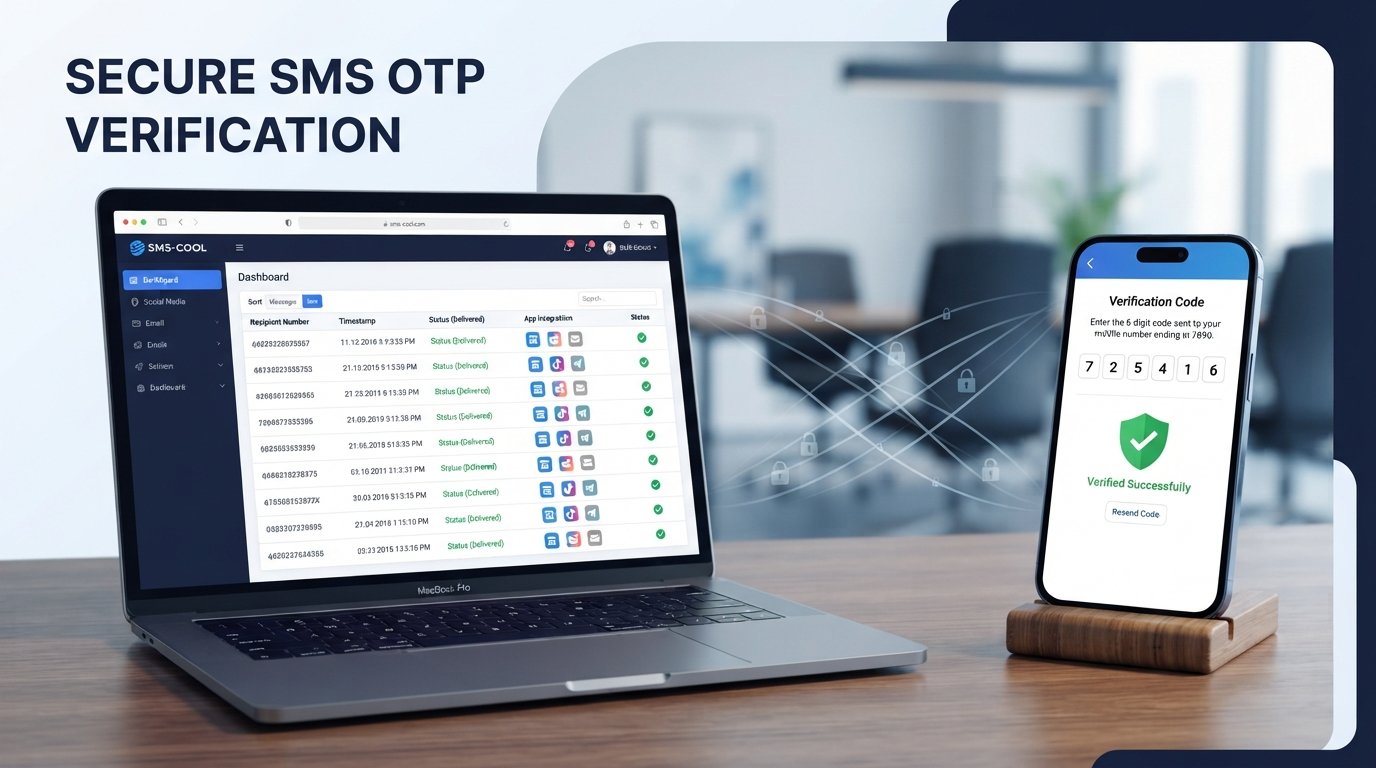
How OTP Account Verification Works
When someone creates an online account, signs in from a new device, resets a password, or confirms a sensitive transaction, businesses need a reliable way to make sure the person on the other side is really who they claim to be. That is where OTP account verification comes in.
An OTP, or one-time password, is a temporary verification code sent to a user through a trusted communication channel, often their mobile phone. Because the code is designed for a single verification attempt or a short period, it adds an extra layer of protection beyond a username and password.
For businesses, however, creating an OTP is only part of the process. The code also needs to reach the user quickly and reliably. A delayed or failed message can interrupt registration, frustrate customers, and even lead to abandoned transactions.
This is why SMS OTP verification and dependable OTP delivery are important parts of modern digital services. Solutions such as SMS COOL can help businesses build a smoother verification experience while supporting secure account verification at scale.
What Is OTP Account Verification?
OTP account verification is a process that uses a temporary code to confirm that a user has access to a particular phone number, account, or authentication channel.
For example, imagine a customer creates an account on an online platform. After entering their mobile number, the platform sends a verification code such as 482731 by SMS. The customer enters that code into the website or application. If the code matches and is still valid, the account can be verified.
Unlike a permanent password, an OTP is intended to have limited usefulness. A verification code can expire after a defined period or become invalid after it has been successfully used.
This makes OTP verification particularly useful for:
- New account registration
- Login verification
- Password resets
- Mobile number verification
- Phone number verification
- Transaction confirmation
- Customer verification
- Two-factor authentication
The goal is simple: prove that the user has access to the phone number or authentication channel associated with the account.
What Is an OTP and How Does It Work?
An OTP stands for one-time password. It is a temporary code generated for authentication or verification.
Depending on the system, an OTP may contain numbers or a combination of characters. In SMS-based authentication, numerical codes are especially common because they are quick to read and enter on a mobile device.
A typical OTP process works like this:
- The user starts an action that requires verification.
- The business generates an OTP code.
- The system associates the code with the user's verification request.
- The OTP is sent to the user's registered mobile number.
- The user receives the SMS containing the verification code.
- The user enters the code into the website or application.
- The system checks whether the code is correct and valid.
- The requested action is approved if verification succeeds.
Behind this simple experience is a coordinated process involving the application, authentication system, SMS infrastructure, and the mobile network.
Step-by-Step OTP Verification Process
Understanding the complete flow helps explain why dependable OTP delivery matters so much.
1. The User Requests Verification
The process begins when a user performs an action that requires identity confirmation. This could be registering for an account, logging in, changing account information, or resetting a password.
The application typically asks for a mobile number or uses the phone number already associated with the account.
2. The System Generates an OTP Code
The authentication system creates a temporary verification code.
A well-designed system should handle important controls such as expiration, usage limits, and validation. Businesses should also consider protections against repeated requests and automated abuse.
3. The OTP Is Sent by SMS
The verification platform sends the code through an SMS verification service to the user's mobile number.
This is the stage where delivery reliability becomes critical. Generating a valid OTP does not help if the customer never receives it.
4. The User Enters the Verification Code
Once the SMS arrives, the customer enters the OTP code into the relevant field.
A simple and familiar experience can make this step almost effortless, particularly on mobile devices.
5. The System Validates the Code
The application checks whether the submitted code matches the verification request and whether it remains valid.
If everything is correct, the account or requested action can proceed.
6. The Verification Request Is Completed
After successful validation, the business can mark the relevant process as verified. Depending on the use case, this might mean activating an account, allowing a login, confirming a phone number, or authorizing another action.
How SMS OTP Verification Works
SMS OTP verification uses text messaging to deliver a temporary authentication code to a user's mobile phone.
Its popularity comes largely from convenience. Most users already have access to a mobile phone, and receiving an SMS does not normally require them to install a separate authentication application.
A simplified flow looks like this:
User request → OTP generation → SMS delivery → Code entry → Code validation → Verification completed
For businesses, the SMS delivery stage deserves particular attention. A verification system can be technically correct while still producing a poor customer experience if messages are slow, inconsistent, or difficult to deliver.
Reliable OTP delivery therefore plays a major role in the overall effectiveness of SMS verification.
Why Businesses Use OTP Authentication
Businesses use OTP authentication because it provides a practical way to add another verification step without requiring users to remember another permanent password.
It can help organizations:
- Confirm that a customer controls a phone number
- Reduce reliance on passwords alone
- Support account registration and recovery
- Add an authentication layer to sensitive actions
- Improve customer verification workflows
- Reduce certain types of automated or fraudulent activity
- Create a familiar verification experience
For many businesses, the key advantage is the balance between security and convenience.
Users may be more willing to complete verification when the process simply requires them to enter a short code received on their phone.
Benefits of Mobile Number and Phone Number Verification
Mobile number verification gives businesses a practical method for confirming that a customer has access to a specific phone number.
This can be valuable during account creation because it helps establish a connection between an account and a reachable communication channel.
Better Account Integrity
Requiring phone number verification can make it harder for users to create accounts with inaccessible or invalid numbers.
Easier Account Recovery
A verified mobile number can provide another channel for account recovery workflows, depending on the business's security design.
Convenient User Authentication
SMS verification is familiar to many users. They can receive a code and enter it without learning a complicated process.
Reduced Friction
A short verification code can be faster and easier than requiring customers to complete a lengthy identity confirmation process for lower-risk actions.
Of course, OTPs should be treated as one component of a broader security strategy rather than a complete solution to every authentication threat.
How OTPs Improve Online Account Security
Passwords can be stolen, guessed, reused, or exposed through security incidents. Adding another verification factor can make unauthorized account access more difficult.
For example, if a service uses two-factor authentication, a customer may need both their password and a temporary verification code.
The OTP does not replace good security practices. Instead, it adds another layer.
Businesses should also use appropriate controls around OTP authentication, including:
- Short code validity periods
- Limits on repeated verification attempts
- Rate limiting for OTP requests
- Secure handling of authentication data
- Monitoring for unusual verification activity
- Clear customer instructions
- Protection against excessive resend requests
These measures help turn a simple verification code into part of a more comprehensive secure account verification strategy.
Common Use Cases for OTP Verification
OTP verification is used across many digital services.
Common examples include:
Account Registration
A new customer receives an OTP to confirm their phone number before completing registration.
Login Verification
A service may request an additional code when a user signs in from an unfamiliar device or location.
Password Reset
An OTP can help verify access to a registered phone number during an account recovery process.
Financial and Payment Services
Financial platforms may use additional verification steps before allowing certain sensitive actions.
E-Commerce
Online stores and marketplaces can use customer verification during registration, account recovery, or selected transactions.
Customer Portals and SaaS Platforms
Business applications can use OTP verification to strengthen access controls and confirm customer identity during important account actions.
Common OTP Verification Problems
Although OTP verification is straightforward for users, businesses can encounter several operational challenges.
Delayed SMS Messages
If a verification code arrives too late, it may expire before the customer can use it.
Failed Delivery
Messages may fail because of network conditions, routing issues, incorrect numbers, or other delivery-related factors.
Multiple OTP Requests
If customers repeatedly request codes, they may receive several messages and become confused about which code is valid.
Poor User Experience
Long delays, unclear error messages, or difficult verification screens can cause customers to abandon registration or login.
Unreliable OTP Delivery
For businesses operating at scale, inconsistent delivery can become a serious operational issue because every failed verification can affect the customer journey.
This is why choosing an appropriate SMS verification service is an important business decision.
How Businesses Can Improve OTP Delivery and Reliability
Improving OTP performance starts with treating verification as both a security function and a customer-experience function.
Businesses should consider:
Use dependable SMS infrastructure.
A reliable delivery platform can help businesses send verification messages consistently.
Keep OTP messages clear.
The message should make the verification code easy to identify and use.
Set sensible expiration periods.
Codes should remain valid long enough for normal delivery and user entry, while still limiting unnecessary exposure.
Control resend behavior.
Rate limits and sensible resend rules can reduce abuse and prevent customers from receiving a confusing stream of codes.
Monitor delivery performance.
Businesses should pay attention to delivery success, failures, delays, and verification completion rates.
Design for the customer.
A fast, simple verification experience reduces friction and can improve registration and login completion.
Why SMS COOL Is a Practical Solution for OTP Verification
Once the importance of OTP delivery becomes clear, the next question is how businesses can implement a dependable SMS verification workflow.
SMS COOL provides a practical option for businesses that need SMS-based communication for OTP verification, customer verification, and secure account verification.
Instead of treating SMS as an afterthought, businesses can make reliable message delivery part of the authentication experience from the beginning.
For a business, the value of an SMS verification service is not simply the ability to send a message. The real value comes from supporting a verification workflow that customers can complete efficiently.
SMS COOL can help businesses use SMS for important workflows such as:
- Sending OTP codes
- Supporting mobile number verification
- Enabling phone number verification
- Delivering customer verification messages
- Supporting account registration workflows
- Facilitating authentication-related notifications
The practical objective is straightforward: get the right verification message to the right customer when it is needed.
Businesses should still design their authentication systems responsibly, including appropriate expiration, rate limiting, fraud controls, and secure handling of authentication data. An SMS provider is one part of the overall security architecture.
Choosing a Reliable SMS Verification Service
When evaluating an SMS verification service, businesses should look beyond whether a provider can simply send text messages.
Consider factors such as:
- Delivery reliability
- Geographic coverage relevant to your customers
- API and integration capabilities
- Message delivery monitoring
- Scalability
- Developer experience
- Support and documentation
- Security practices
- Operational consistency
The right solution should fit naturally into the existing application and authentication workflow.
For companies that depend on verification messages to onboard customers, recover accounts, or confirm important actions, secure OTP delivery is not a minor technical detail. It directly affects both security and customer experience.
Final Thoughts on OTP Account Verification
OTP account verification provides a simple and familiar way to confirm user access to a mobile number or authentication channel. From account registration and password recovery to login protection and customer verification, OTPs can play an important role in modern online account security.
But an OTP is useful only when the customer receives it and can complete the verification process smoothly. That makes reliable SMS OTP verification and dependable OTP delivery essential considerations for businesses.
If your business needs a practical way to support SMS-based verification, SMS COOL can help provide the messaging infrastructure needed for OTP delivery, customer verification, and account verification workflows.
Ready to make verification simpler and more reliable? Explore SMS COOL and build a smoother SMS verification experience for your customers.